This post contains affiliate links. If you buy through them, we may earn a commission at no extra cost to you.
The common mistake with parsnips is treating them like tomatoes: a tray on the windowsill in March, a careful transplant in May, and a row of stunted roots by fall. Parsnip packets say it plainly — starting indoors is not recommended — because a disturbed taproot forks and stalls instead of driving straight down.
So the whole method runs the other way. You sow parsnips once, where they will grow, about 4 months before your first fall frost, and then you mostly leave them alone until the cold does the flavor work.
When to sow
Late spring or early summer is the window Botanical Interests prints on both of its parsnip packets, counted back about 4 months from your average first fall frost date. All American needs 95 to 125 days and Javelin a flat 110, so count back from frost and give the slower variety its full run.
Soil temperature wants 50 to 70°F for germination. In mild climates the calendar flips: sow in fall and harvest the following spring, while northern beds get the one late-spring sowing and nothing else — there is no succession planting with a crop that takes a third of a year.
Sowing: deep enough, marked, and patient
Work the bed deep before a single seed drops. A root headed for 10 to 12 inches needs soil it can push through without meeting a pan of compacted earth halfway down, and stones shoved aside now are straight roots later.
Soak the seed in water for 12 to 24 hours before sowing, a step the Javelin packet recommends because parsnip germination is slow. Then sow a group of 3 seeds every 3 inches, half an inch deep, in rows 18 inches apart.
Drop a few radish seeds along the same row while you are at it. Radishes sprout in days, parsnips in 10 to 25, and the radish row marks the line and breaks the soil crust for the slower seed — pull the radishes as soon as the parsnips show.
| Step | Packet figure | Why it matters |
|---|---|---|
| Soak | 12–24 hours in water | Softens a slow seed before it goes in |
| Depth | 1/2 inch | Deeper delays an already slow emergence |
| Spacing | Group of 3 every 3 inches | Insurance against gaps in a 10–25 day germination |
| Rows | 18 inches apart | Room to fork roots out without spearing the next row |
The long wait, and thinning
Emergence takes 10 to 25 days, and the bed looks empty for most of it. Keep the row watered while you wait, and resist re-sowing over the top of a crop that is simply slow — the radish markers are there to tell you where the parsnips are supposed to be.
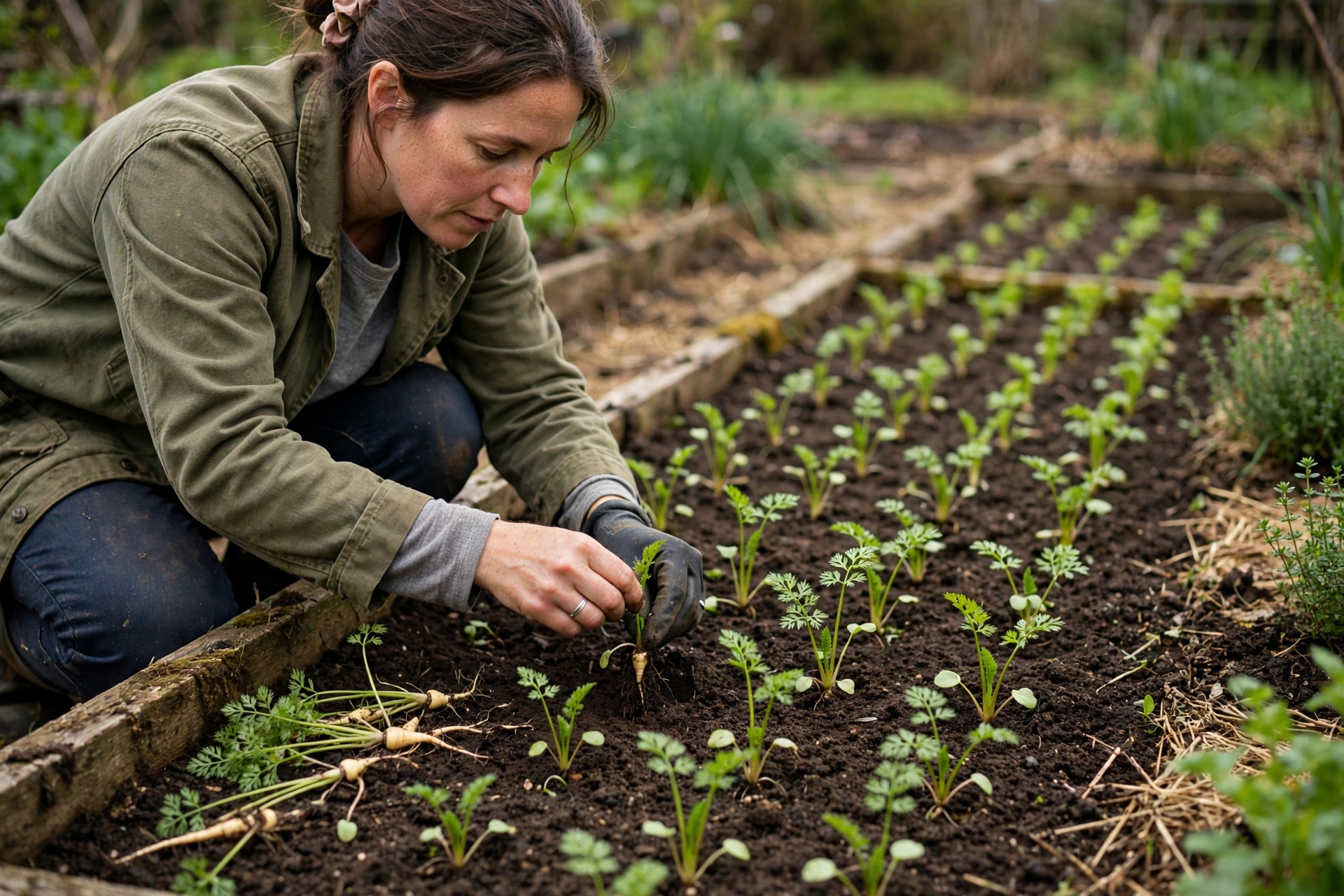
When the seedlings stand 4 inches tall, thin to 1 plant every 3 inches. Do it on time: a crowded parsnip does not catch up later, it just grows thin next to its neighbor, and two roots competing for the same 3 inches both lose.
After thinning, the crop asks for very little. The foliage — broad leaves, like carrot tops gone wide — shades its own row, and the roots are underground doing the only job that matters. I check the row when I pass with the hose and otherwise leave it to thicken.
Harvest: wait for the frost
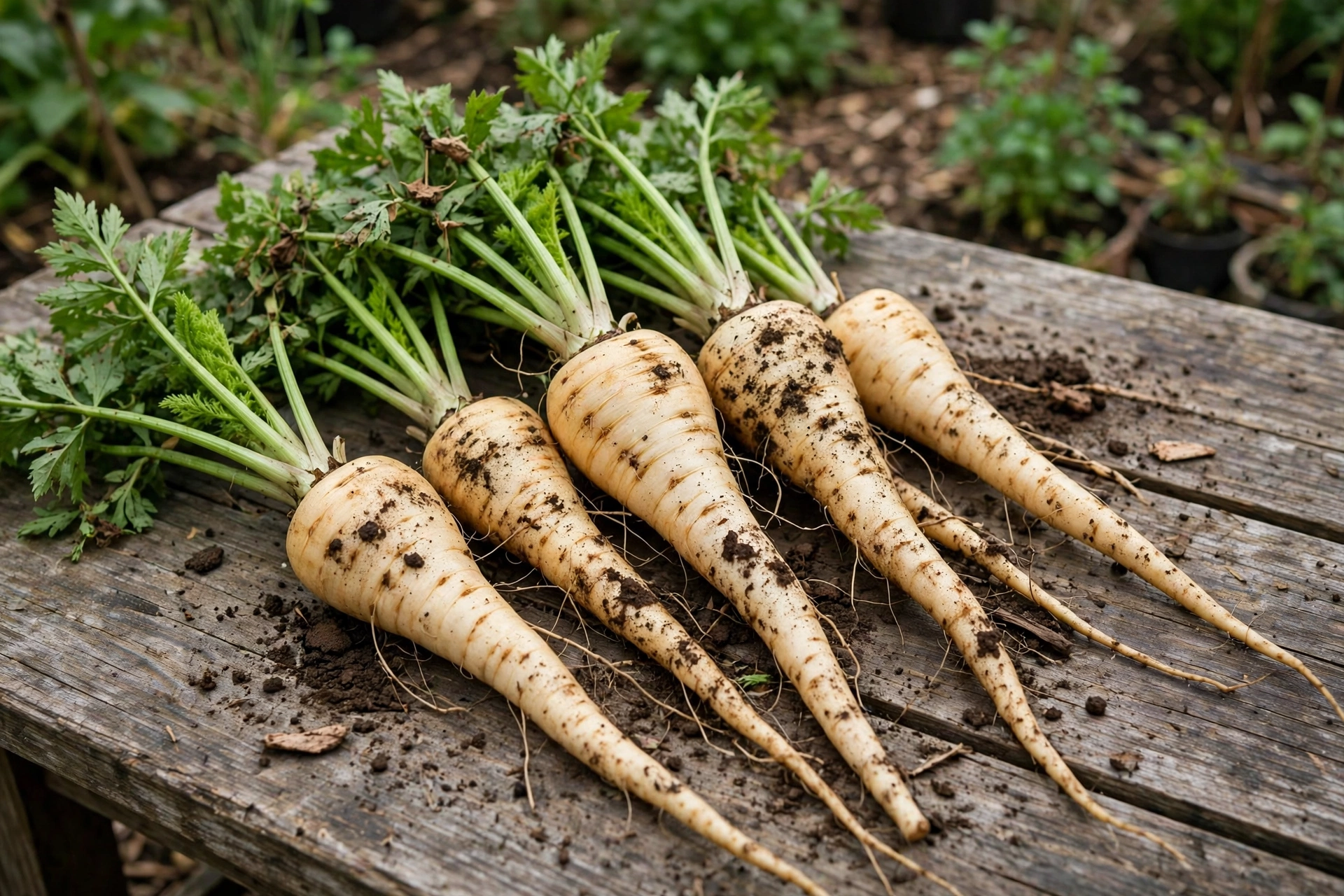
Here is where parsnips separate themselves from almost everything else in the bed. Dug early, they are starchy and mild to the point of bland; left in the ground through frost, the cold converts stored starch to sugar, and the flavor the variety descriptions promise finally shows up.
The packet rule is specific: leave roots in the ground for at least 2 weeks after a hard fall frost before a pre-winter harvest. Dig with a shovel or a garden fork, working from the side of the row so the tool lifts rather than spears a root that may run 12 inches deep.

Roots you dig ahead of deep winter get sweeter still with 2 weeks of storage at 32 to 34°F. Roots you leave in the ground go the other route: mound a few inches of soil over the crowns after the first fall frosts and mulch heavily with straw or compost, then dig through winter as the kitchen asks.
One deadline governs the in-ground method. Harvest before the new tops and seed stalks begin to grow in spring, because a root feeding new growth turns fibrous and loses its flavor — the sweetest parsnips of the year are the early-spring dig, taken just before that turn.
The two packets for this method
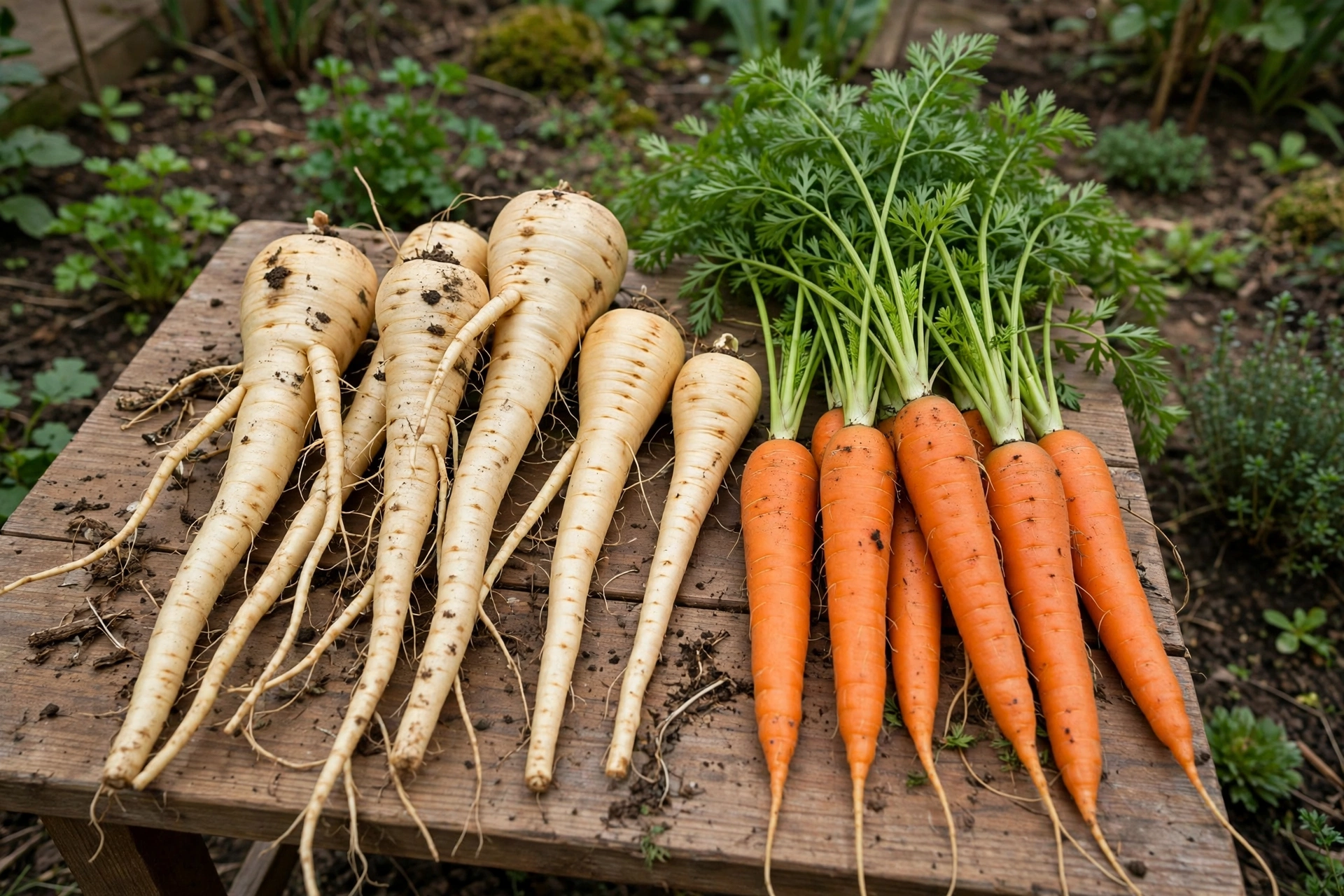
Both Botanical Interests parsnips sow identically, so the choice between them is about your bed, not your technique. The full comparison lives in the parsnip varieties roundup, and if the row could just as easily hold carrots, parsnips vs. carrots works through that decision. Sowing root crops in place, rather than transplanting them, is the same discipline the direct-sowing guide for root vegetables covers across the bed.
All American Parsnip Seeds
95–125 days, roots up to 12 inches, and a packet that sows up to 28 feet.
Check Price at Botanical InterestsJavelin Parsnip Seeds
110 days, canker resistance, and the soak-before-sowing step printed on its own packet.
Check Price at Botanical InterestsSow them where they stand, mark the row, thin once, and then let the season do the slow part. The fork goes in after frost, and the root that comes up sweet is the one you did not rush.