This post contains affiliate links. If you buy through them, we may earn a commission at no extra cost to you.
A carrot is ready in 75 days and forgives a late start, a thin sowing, a second try in July. A parsnip takes 95 to 125 days and forgives none of it — one sowing, one long wait, and a harvest that cannot begin until frost has done its work.
Both roots sit in the same family, Apiaceae, and both will grow in the same bed in the same season. So the choice is rarely about whether you can grow them; it is about how much of your season a single row is allowed to hold, and what you want out of it in October.
The clock decides first
Shin Kuroda, the carrot I am using as the benchmark here, matures in 75 days from a spring sowing, and its packet invites you to sow again every 3 weeks until 10 to 12 weeks before your first fall frost. Miss a sowing and the next one is already on the calendar.
Parsnips offer no such recovery. All American runs 95 to 125 days, Javelin a fixed 110, and both are sown once, about 4 months before the first fall frost, because the root needs that entire stretch to size up. A parsnip row planted late is not a smaller harvest; most years it is no harvest worth digging.
Soil: depth against forgiveness
Carrots meet difficult soil with variety choice. Shin Kuroda is a Chantenay type, 5-inch roots with wide shoulders, bred to grow through heavy soil that would fork a longer carrot — its packet lists it as good for heavy soil, and its heat resistance lets it carry sowings into summer.
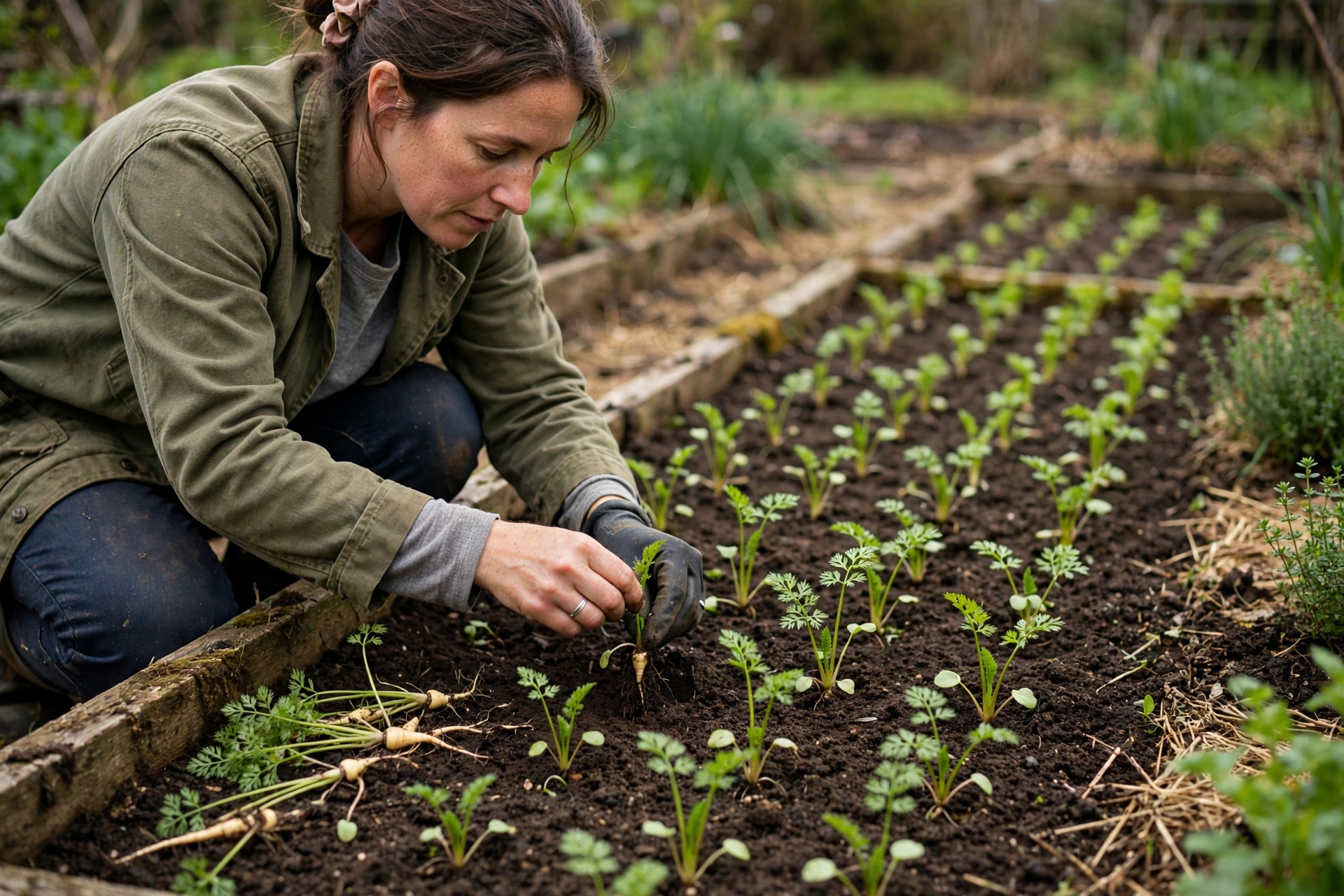
Parsnips ask the bed to do the work instead. A root headed for 10 to 12 inches needs deep, loosened soil the whole way down, and there is no short-rooted parsnip in the Botanical Interests catalog to bail out a shallow bed. Javelin’s canker resistance helps roots sit in that soil longer; it does not shorten the root.
Frost: what it does to each root
Light frost sweetens a fall carrot, and the Shin Kuroda packet says so — then it warns you to harvest before the soil freezes, because frozen ground can destroy the crop. In zone 5 and warmer, heavy mulch buys in-ground storage, but the carrot is still on a deadline.
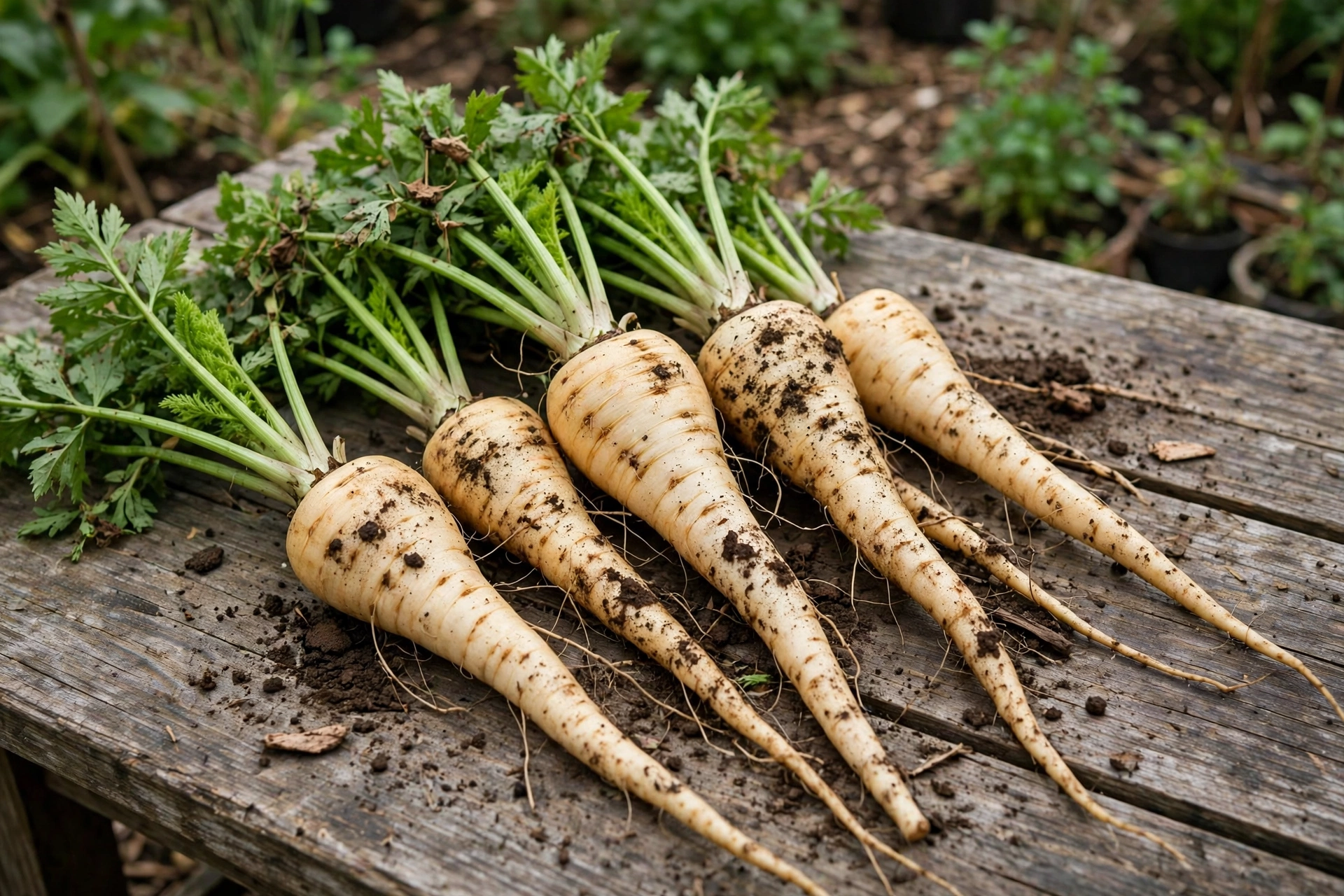
The parsnip runs the opposite schedule. Its packet instructs you to leave roots in the ground at least 2 weeks after a hard frost before digging, because cold converts the root’s starch to sugar; mulched heavily, parsnips overwinter in the bed and reach their sweetest in early spring, just before new growth starts. On a parsnip, frost is the signal to start digging, not a deadline to beat.
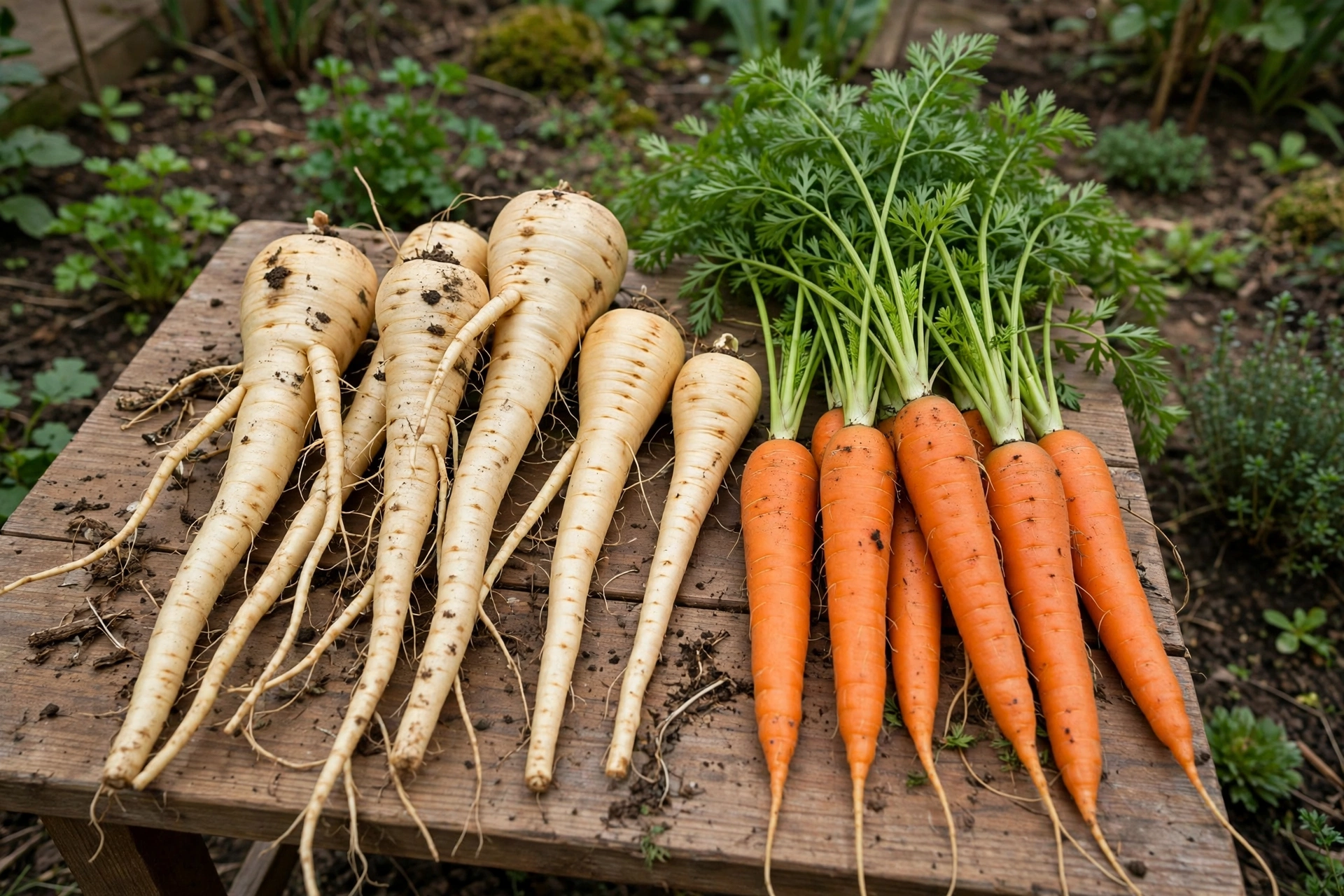
| Question | Parsnips | Carrots (Shin Kuroda) |
|---|---|---|
| Days to maturity | 95–125 (All American), 110 (Javelin) | 75 |
| Sowing pattern | Once, about 4 months before first fall frost | Every 3 weeks through the season |
| Seed depth and spacing | 1/2 inch deep, group of 3 every 3 inches, rows 18 inches | 1/4 inch deep, seeds 1 inch apart, rows 6 inches |
| Root size | Up to 12 inches (All American), 10 inches (Javelin) | 5 inches |
| What frost does | Required — converts starch to sugar; roots overwinter in the ground | Sweetens lightly; harvest before the soil freezes |
The picks on each side
For the parsnip row, the two Botanical Interests varieties split by bed history, covered in full in the parsnip varieties roundup: All American for size and an early finish, Javelin for canker resistance. The growing method for either is in growing parsnips from sowing to harvest.
All American Parsnip Seeds
95–125 days, roots up to 12 inches, and the earlier finish of the two parsnips.
Javelin Parsnip Seeds
110 days with canker resistance, for roots that need to sit in the ground longer.
For the carrot row, Shin Kuroda is the forgiving benchmark: heat resistant, at home in heavy soil, and rated 4.7 out of 5 across 61 reviews. The wider carrot shelf — Nantes types, short-season picks, the rest — is compared in the carrot varieties roundup.
Shin Kuroda Carrot Seeds
75 days, 5-inch Chantenay roots, heat resistant and good for heavy soil.
Which root earns the row
Grow carrots when the season is short, the soil is heavy, or you want roots in hand by midsummer with second and third chances to sow. Grow parsnips when you can hand a row over in late spring and leave it untouched until frost, and when a sweet root dug in February sounds better than a good carrot pulled in July.
If the bed allows only one, my call is parsnips — planted on time, in deep soil, with carrots filling the gaps in the rest of the garden instead. In May that long season looks like a cost. In February, when you are digging a root at its sweetest and the carrot row sits empty under snow, it has paid for itself.