Landscape & Leisure is reader-supported. When you buy through links on our site, including Botanical Interests seed links, we may earn a commission at no extra cost to you. Prices change, so click through to confirm current pricing.
Sunflowers forgive a lot — poor soil, a missed watering, a late start. What they do not forgive is being planted shoulder to shoulder and left to sort it out. By the time a crowded row is knee-high, the season is already decided: thin stems, small heads, and plants leaning on each other for support they were never going to get.
If you have not chosen a variety yet, our best sunflower varieties roundup sorts giants from branching types. If you are deciding what to grow them for — cutting, oil, or snacking — our cutting vs. oil vs. snacking comparison settles that question first.
Why Sunflowers Want to Be Direct-Sown
A sunflower builds a taproot almost as soon as it sprouts, and that root does not like being moved. Botanical Interests does not recommend transplanting sunflowers at all: plants moved late often stall or fail outright. If you must start indoors, sow in biodegradable pots that go straight into the ground, pot and all, so the taproot is never disturbed.
For most gardens, the simpler move is the right one. Sow where the plant will live, 1 to 2 weeks after your average last frost date, once the soil has warmed. Seeds germinate in 10 to 15 days, and from sowing to bloom runs 70 to 120 days depending on the variety, per the University of Missouri Extension. Count back from the bloom date you want, and the planting date finds itself.
Spacing: Give Each Type Its Own Room
Spacing is where height matters. A giant grown at branching-type spacing stays a giant in ambition and a disappointment in fact. The table below follows the packet guidance and Extension spacing together.
| Type | Final spacing | Examples |
|---|---|---|
| Giants | 24–36 in apart | Mammoth, Mongolian Giant |
| Branching types | 18–24 in apart | Evening Sun, Lemon Queen, Vanilla Ice |
| Dwarfs | 12–18 in apart | Teddy Bear Dwarf |
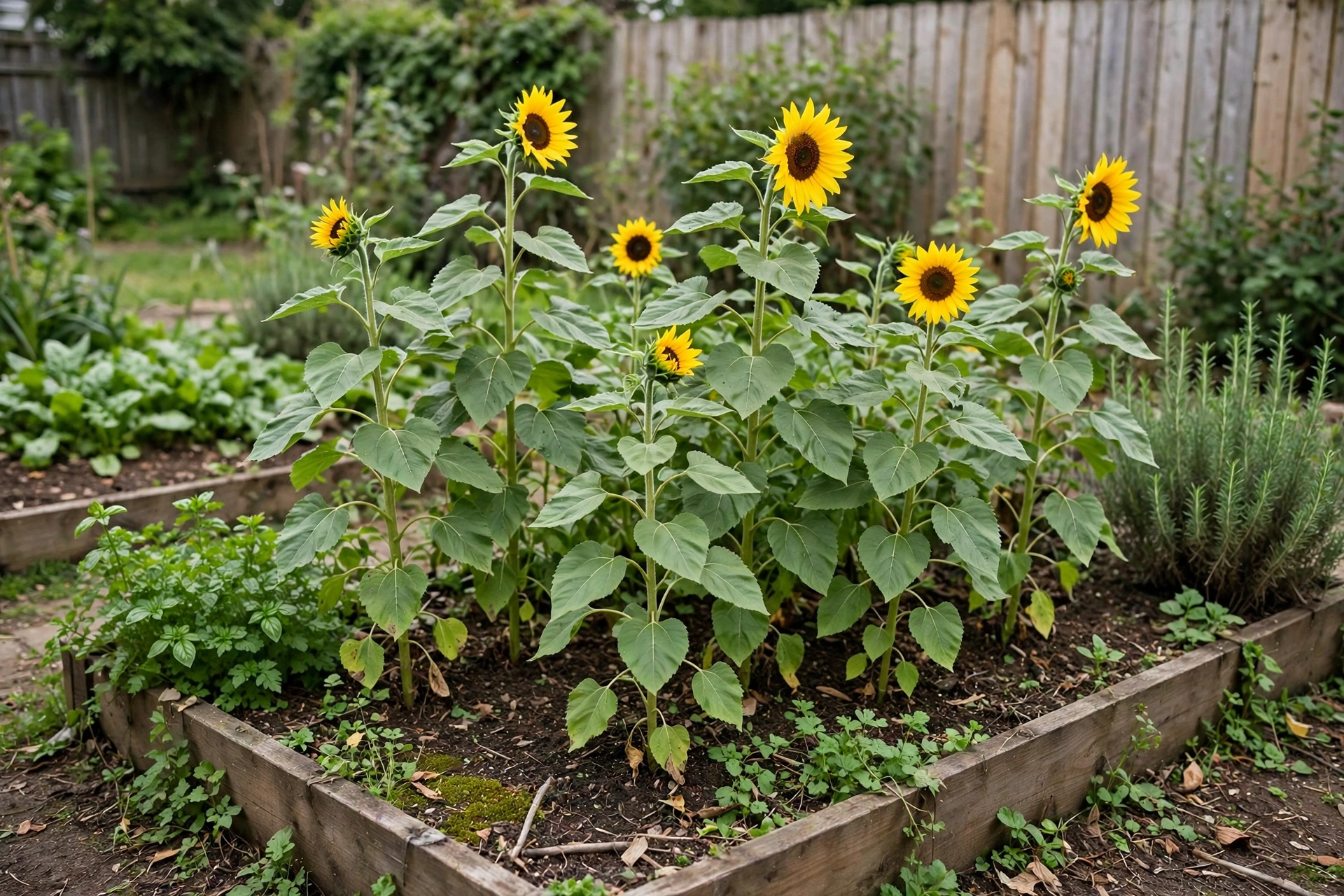
Sow in groups of 3 seeds every 18 to 24 inches for branching types, about a quarter to a half inch deep, and thin to the strongest seedling when plants are about 2 inches tall. Giants go wider — 24 to 36 inches — because a 12-foot plant with a dinner-plate head needs that much ground to stand on. Closer spacing makes smaller flowers and longer, thinner stems, which is useful for cutting types and a mistake for giants.
One more placement rule, from the way sunflowers lean: they track the light, so plant tall types on the north side of the garden where they will not shade everything behind them.
Staking: Set It Early, Not After the Wind Does
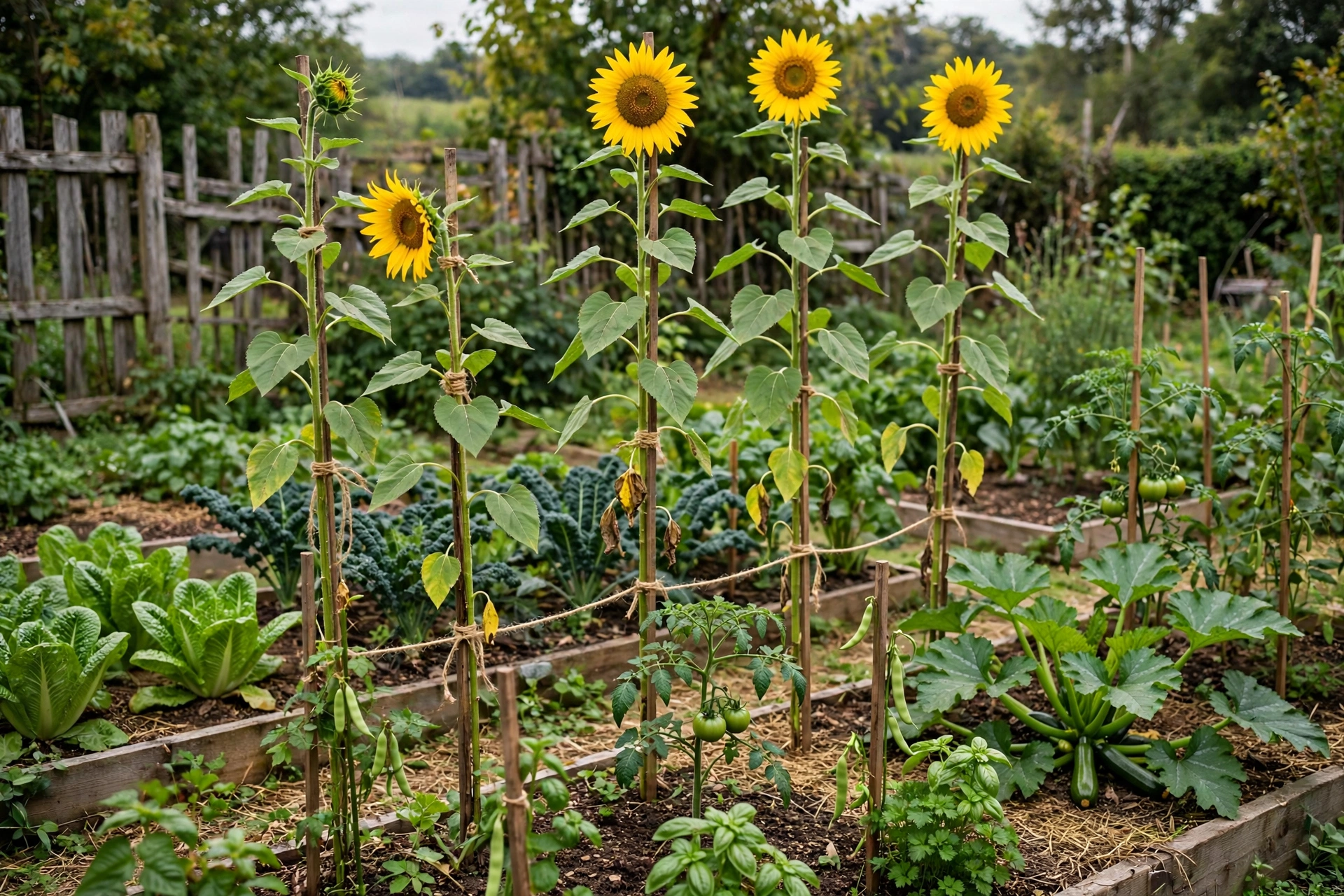
A sunflower that needs a stake in August needed it in June. Tall varieties get top-heavy as their heads fill with seed, and a head-heavy plant snaps at the base in wind. Oregon State Extension advises tying plants to sturdy stakes with soft ties when they are 2 to 3 feet tall — early enough that the plant grows into the support instead of leaning on it after the fact.
Planting in a sheltered spot helps as much as any stake. A fence, a wall, or the north side of the house breaks the wind that flattens an exposed row. Planting in groups helps too: plants in a row or a block shelter each other, while a single sunflower standing alone takes the full wind.
Pros: one stake per giant, set at 2 to 3 feet, prevents the most common sunflower loss; soft ties avoid cutting into the stem.
Cons: staking every plant in a big row is real work — sheltered placement and group planting cut the job down.
Mammoth Sunflower Seeds
A 12-foot single stalk that earns its stake — the giant to practice your staking on.
Cutting for the Vase
Cut in the early morning, before the heat of the day, when the petals have just begun to lift away from the center disc. A bloom cut at lift-off lasts a week or more in the vase; a fully open flower has days. Cut before the flower is completely open, with a long stem, and strip the leaves that would sit below the waterline.
Branching types are the cutting plants — one plant keeps producing stems for weeks. Rouge Royale has one more advantage for the vase: it does not drop its pollen, so arrangements stay clean. Planting cutting types a little closer together produces longer stems and smaller flowers, which is exactly what a bouquet wants.
Harvest: When the Back of the Head Turns
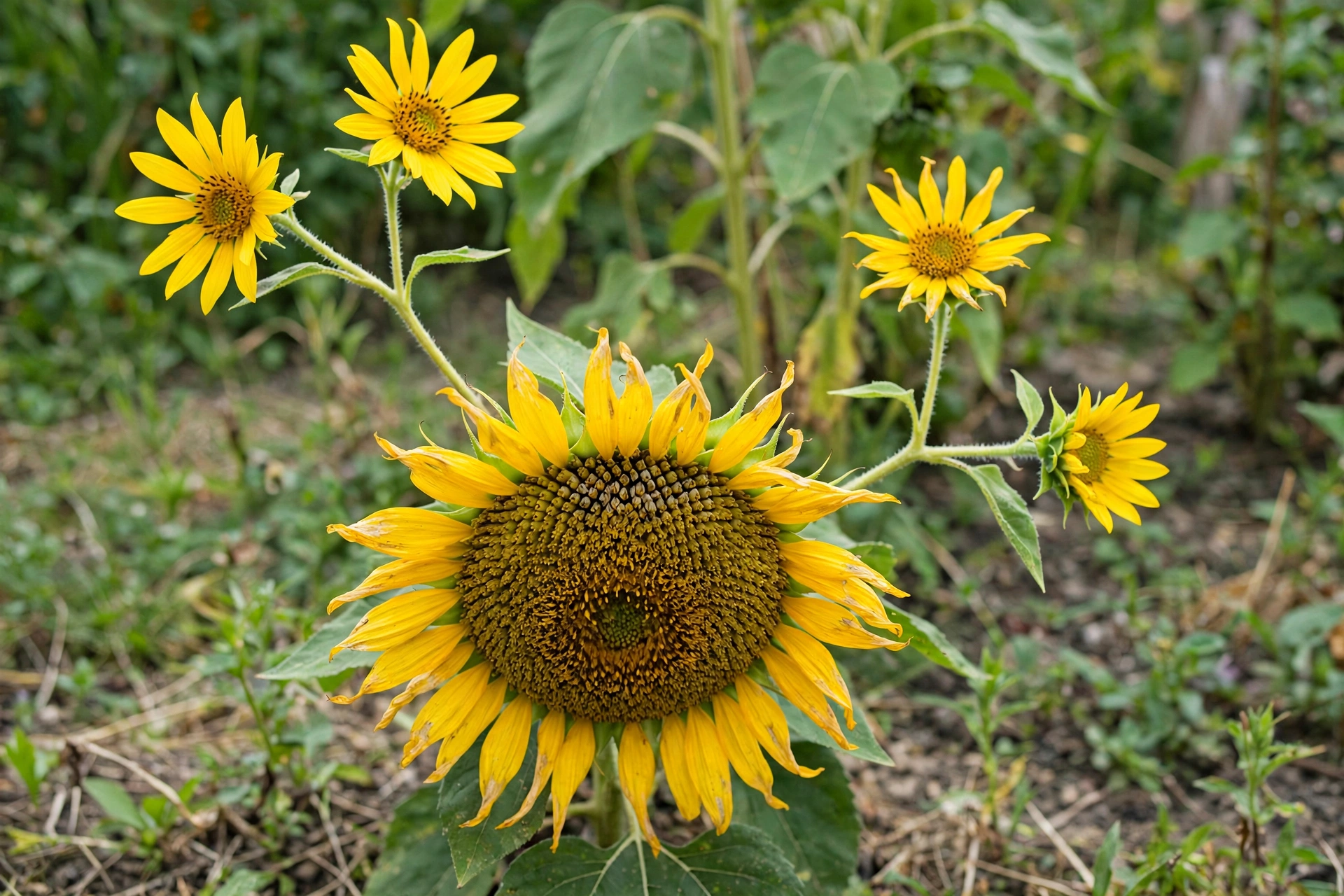
For seed — eating or bird food — wait until the back of the flower head turns from green to yellow-brown, the petals have dried and fallen, and the head starts to droop. That is the plant telling you the seeds are ready. Cut the head with about a foot of stem attached and hang it somewhere warm, dry, and ventilated. Once it is fully dry, rub the seeds out with your fingers or a stiff brush.
The birds know the same signal you do, and they will get there first if you let them. Once the flowers start to droop and lose their petals, cover the heads you want to keep with a paper bag or netting. The packet for Mongolian Giant even includes tips on protecting ripening seed — the birds consider your giants their pantry.
Do not wait too long after the droop. Seeds left on the stalk past readiness scatter in the wind or go to the birds, and a head left in wet weather molds instead of drying.
Succession Sowing: Keep the Season Going
One sowing gives you one wave of bloom. Two or three sowings give you a summer. Lemon Queen can be sown every 2 to 4 weeks, up until 3 months before your first fall frost, for continuous bloom. Mammoth can be sown monthly for the same reason. Mark the sowing date on a calendar when you plant — it is the simplest way to know whether the next batch is due.
Pros: succession sowing turns one wave of bloom into a whole summer; late sowings often dodge the worst of early-season pests.
Cons: each sowing needs its own spacing and staking — a late batch crammed into a full bed repeats the crowding mistake.
Lemon Queen Sunflower Seeds
Sow every 2 to 4 weeks for blooms from June to frost — the easiest succession sunflower here.
Teddy Bear Dwarf Sunflower Seeds
A 2- to 3-foot plant that fits a pot or a small bed — no staking, no shading the neighbors.
What to Watch Next
The first sign your spacing worked is stems that stand straight without leaning on their neighbors. The first sign it did not is a row of plants all bending the same way, reaching for light they cannot get. If you see that, thin harder next sowing — sunflowers recover from generous spacing far better than they recover from crowding. And when the heads start to droop, bag the ones you want to keep before the birds make the decision for you.