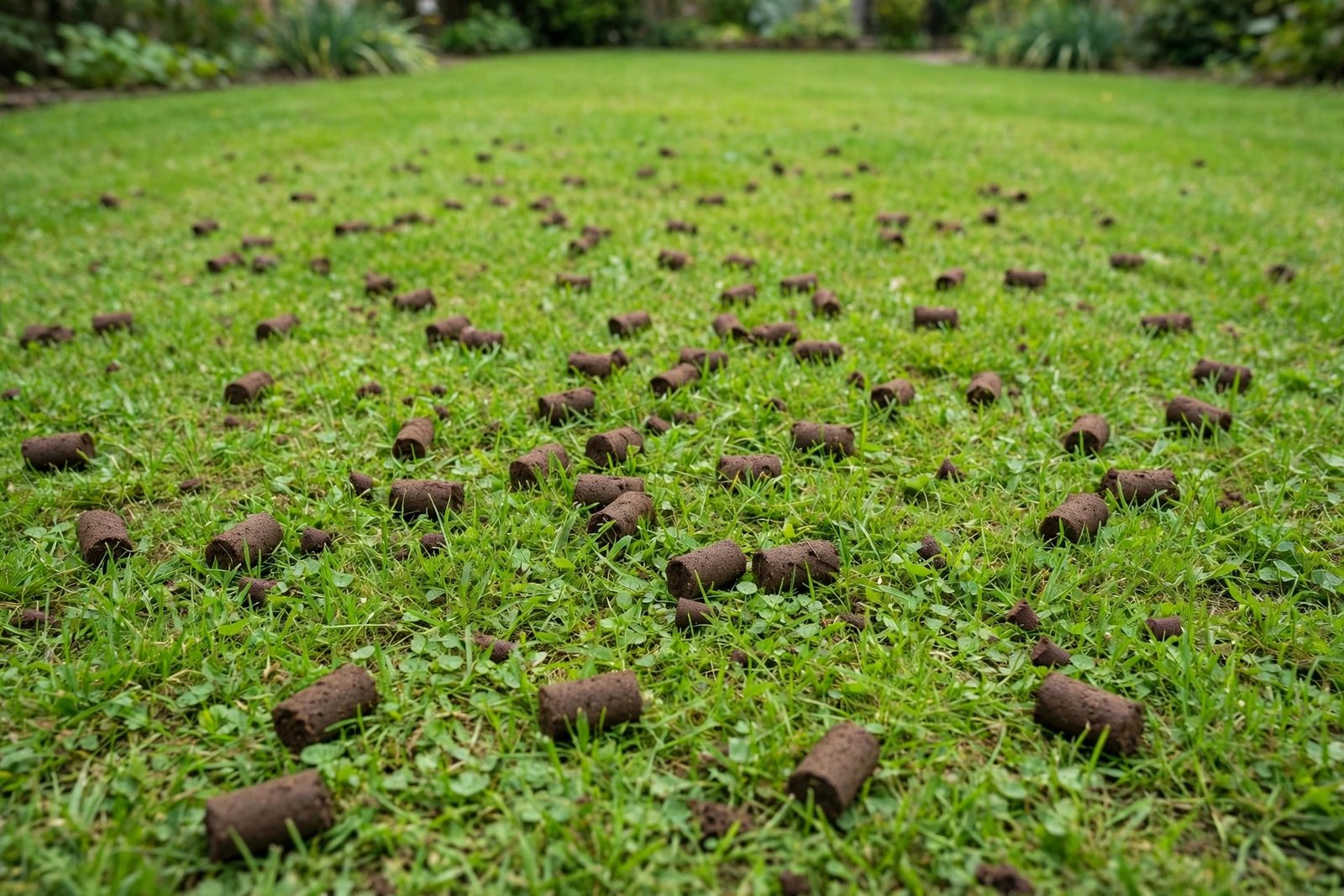
The mistake is mowing the lawn the morning after aerating it, because the lawn looks messy and the mower is right there. Fresh core holes are open, the soil is loose, and the plugs sitting on the surface are the free topdressing aeration is supposed to leave behind. Mow over them too soon and the deck drags plugs around, packs soil back into the holes, and turns a job meant to relieve compaction into a job that causes it.
The short answer, in two cases
Whether you seeded changes everything. Without seed, the wait is short. With seed, the seedlings set the schedule, not the calendar.
| Situation | When to mow | How to mow |
|---|---|---|
| Aerated only, no seed | About 5 to 7 days, once plugs have softened | Normal height, sharp blade, dry day |
| Aerated and overseeded | When new grass reaches about 3.5 inches, usually 12 to 21 days | Cut to about 3 inches, sharp blade, no tight turns |
| Spike aeration, no seed | A few days, once the soil firms up | Normal height; no plugs to manage |
Why the plugs matter
Core aeration pulls small plugs of soil and thatch out of the lawn and leaves them on the surface. Left alone, they break down over two to three weeks, returning soil and microbes to the lawn — the same material, put back where it helps. That breakdown is why extension guidance and lawn-care writers alike say to leave the plugs where they fall. Mowing while the plugs are still hard and whole scatters them, dulls the blade, and leaves an uneven cut. Wait until rain or watering has softened them and the mower breaks them up gently instead of flinging them.
If you overseeded: height is the trigger
New seedlings tear out easily. A mower turning sharply on soft, freshly aerated soil can pull seedlings up by the roots before they have anchored. The rule that works is height, not days: wait until the new grass is about 3.5 inches tall, then cut it back to about 3 inches with a sharp blade. Perennial ryegrass gets there faster than Kentucky bluegrass, which can take two to four weeks to germinate — so a bluegrass overseed needs the longer end of the wait. The full sequence, including why seed goes down after aeration rather than before, is in should you aerate before or after overseeding.
While you wait, keep foot traffic off the seeded areas and keep the top inch of soil damp with short, frequent watering. Hold off on weed control until after the second mowing; most herbicides are not safe on brand-new seedlings, and the label is the authority on timing.
The first mow back: do this, not that
Do mow high. Set the deck to the top of your grass type’s recommended range for the first cut back. Tall grass shades the soil and keeps seedlings from drying out.
Do use a sharp blade. A dull blade tears grass instead of cutting it, and torn seedlings do not recover the way established grass does.
Do not turn sharply on the lawn. Make wide turns on the driveway or path, or lift and reposition the mower. Pivoting in place on soft soil ruts it and tears seedlings.
Do not bag the plugs. If plugs are still visible after the first mow, leave them. They will finish breaking down on their own, and raking them up removes the very material aeration put there. For what comes after the mow — feeding and topdressing — see should you topdress after aerating and the best fertilizer for your lawn after aerating.
What to do next
If the plugs are still hard, wait and water. If the seedlings are not yet 3.5 inches, wait and water. The lawn will not suffer from an extra few days of growth — it suffers from a mower that arrives before the work underneath has taken hold. When the season ends, winterize and store the aerator so the tines are clean and ready for next fall.