A hand aerator can save you a rental fee — or it can eat your whole Saturday. The difference is the size of the lawn: on a few hundred square feet it is the right tool, and past about 1,000 square feet the arithmetic wins and you should rent a machine. Here is how to do the small job right.
First, check whether the lawn needs it
Push a long screwdriver into the soil a day or two after a good rain. If you meet firm resistance in the first two or three inches, the soil is compacted and aeration will help. If the screwdriver slides in easily, save your energy — the lawn’s problem is somewhere else.
Do the same test in a few spots. Compaction is usually patchy: the path to the gate, the strip where the dog runs, the corner under the swing set. Those patches are exactly the job a hand tool is built for.
The tool that actually works: a step-on hollow-tine corer
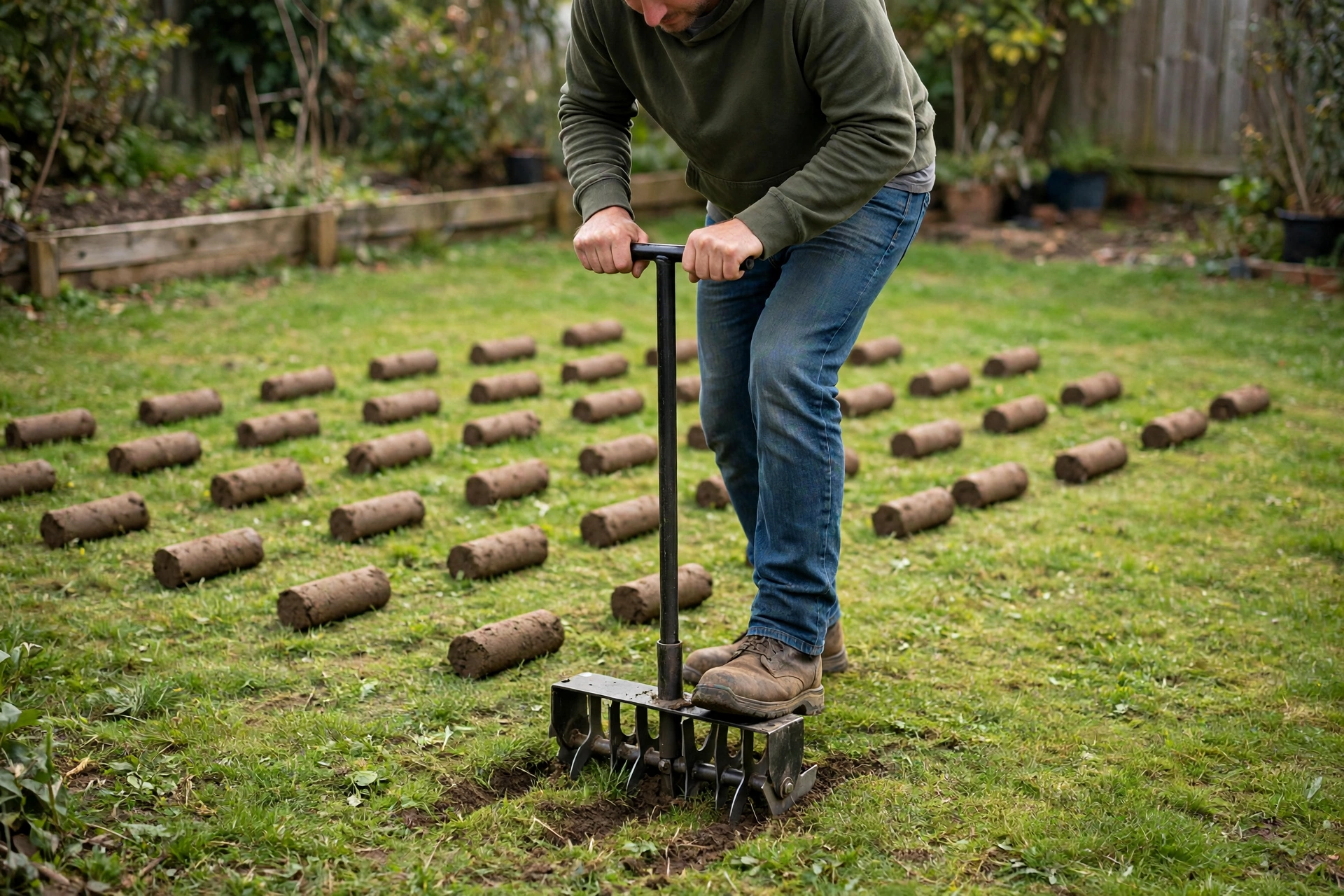
The only hand tool worth owning is a step-on core aerator — a long handle with a foot bar and two hollow tines. You step on the bar, the tubes cut two soil plugs, and the next press pushes the old plugs out the top. It pulls real cores, the same kind a machine pulls, one step at a time.
The common example is the Yard Butler ID-6C: two tapered hollow tines, a 37-inch handle, and plugs about three inches long. Iowa State Extension’s target for a core is about three-quarters of an inch wide and three inches long, at 20 to 40 holes per square foot — and a two-tine corer is the hand tool that actually hits those numbers.
Two tools that do not do the job: a garden fork and aerator shoes. A fork is a spike — it pushes soil aside, and Iowa State specifically warns against spike-type devices because pressing soil aside compacts it further. Aerator shoes are the same idea strapped to your feet, with even shallower spikes. Keep the fork for turning compost.
The math that sets the limit
Twenty holes per square foot is the low end of the target, and that is 20,000 holes for a 1,000-square-foot lawn. With a two-tine tool that is 10,000 presses. At a steady pace that is an hour or more of stepping, and your calves will know about it the next day.
A 200-square-foot patch, on the other hand, is 4,000 holes — about 2,000 presses, or twenty minutes of steady work. That is the hand tool’s home turf: a patch, a path, a worn strip, not a whole lawn. If the area you need to fix is bigger than a couple of parking spaces, rent the machine and read rent vs buy a lawn aerator before you decide which one.
How to do it
Water a day or two ahead. Dry, compacted soil may let the tines in less than an inch; wet soil smears and clogs them. The University of Massachusetts test: squeeze a core of soil in your hand. If it forms a moist ball that crumbles when you let go, the soil is ready.
Mow first, a little short. Cut the grass a notch lower than usual so the tines reach the soil instead of fighting through long blades.
Work in a grid. Step every two to three inches along a row, push to full tine depth, then shift over for the next row. On the worst spots, make a second pass at a right angle. Keep the plugs on the surface — they break down in a week or two and return the nutrients to the lawn.
Clear the tines. If a tube packs solid, poke it clear before you continue. A clogged corer is just a spike, and spikes are the thing you are avoiding.
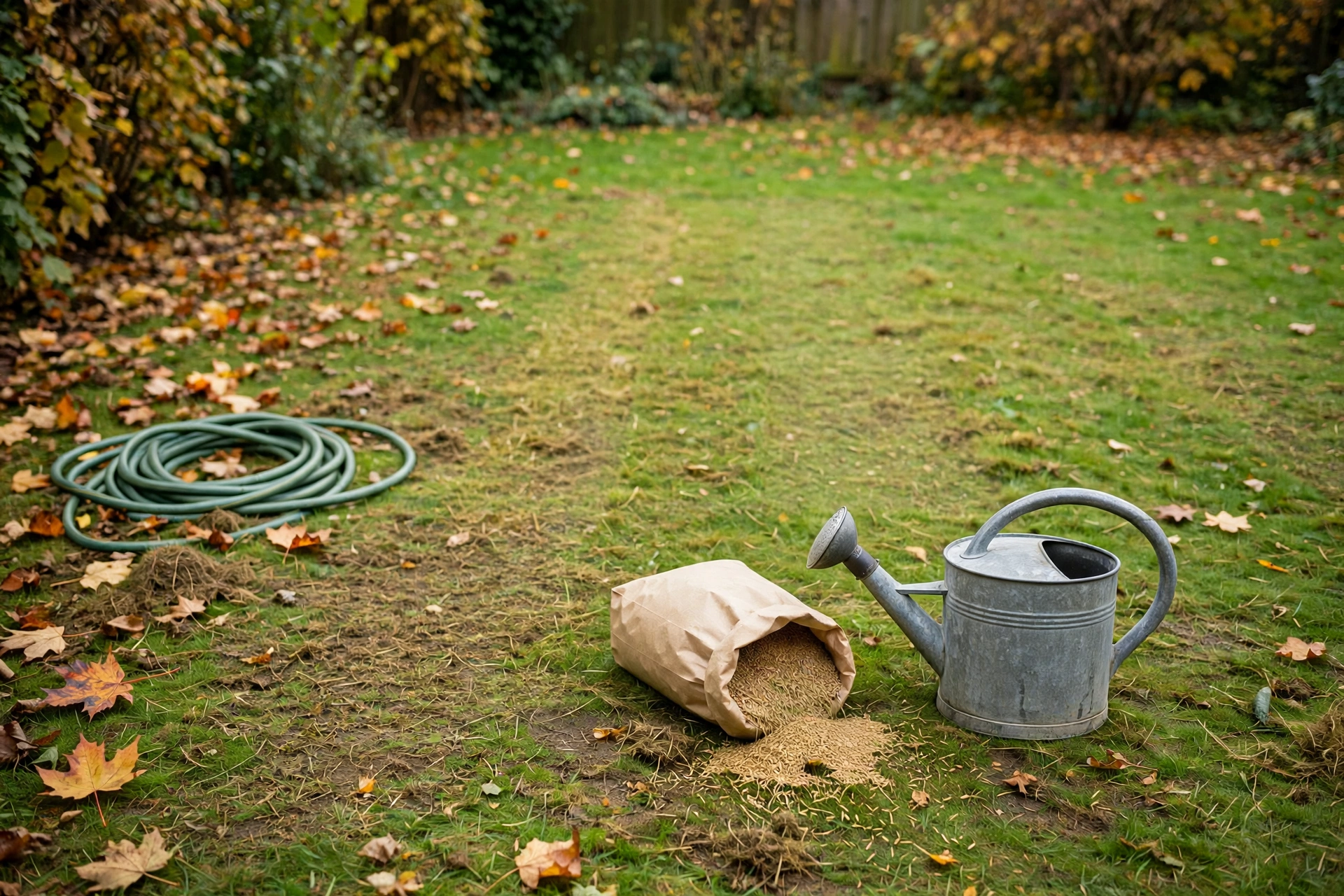
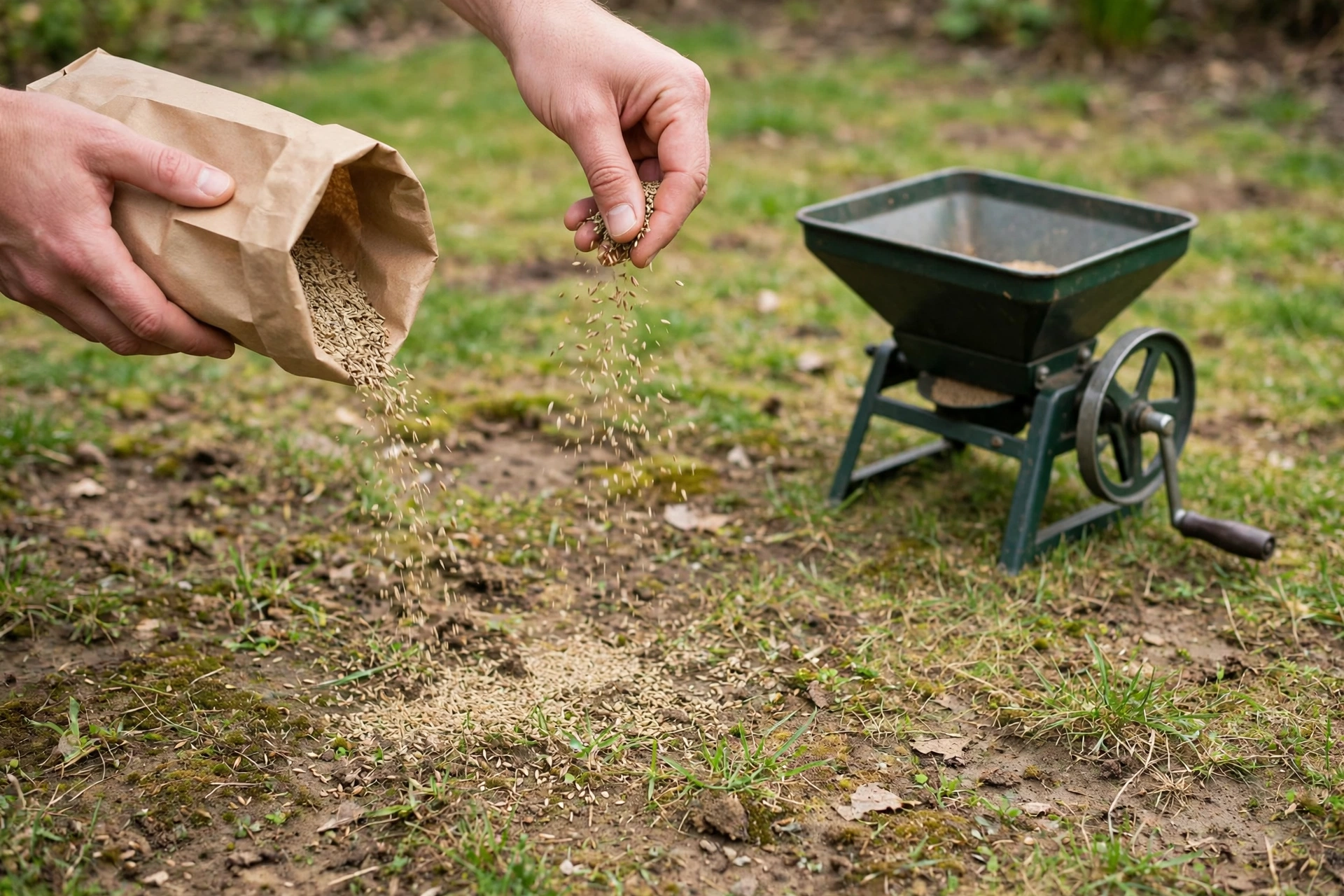
Water and seed after. A deep watering settles the soil into the holes, and the holes are the best seedbed on the property — seed-to-soil contact does not get better than an open core. See how to care for your lawn after aerating for the watering and first-mow timing.
When to do it
Aerate when the grass is growing strongly so the holes fill in: early fall or early spring for cool-season lawns. Never aerate a dormant lawn, and never aerate in the heat of summer — the holes dry out faster than the grass can recover, and you have just opened the lawn up to weeds instead of water.
Bottom line
For a small lawn or a worn patch, a step-on hollow-tine corer is the right tool and the only hand tool worth buying — real cores, real depth, no engine. Past a few hundred square feet, stop stepping and rent the machine. A corer is a precision tool for patches and paths, and the job it does best is the small one.
For the full picture on which aerator type fits your lawn, see lawn aerators explained, and if you want the machine version of this job, the Yard Butler manual coring aerator review covers the tool in detail.