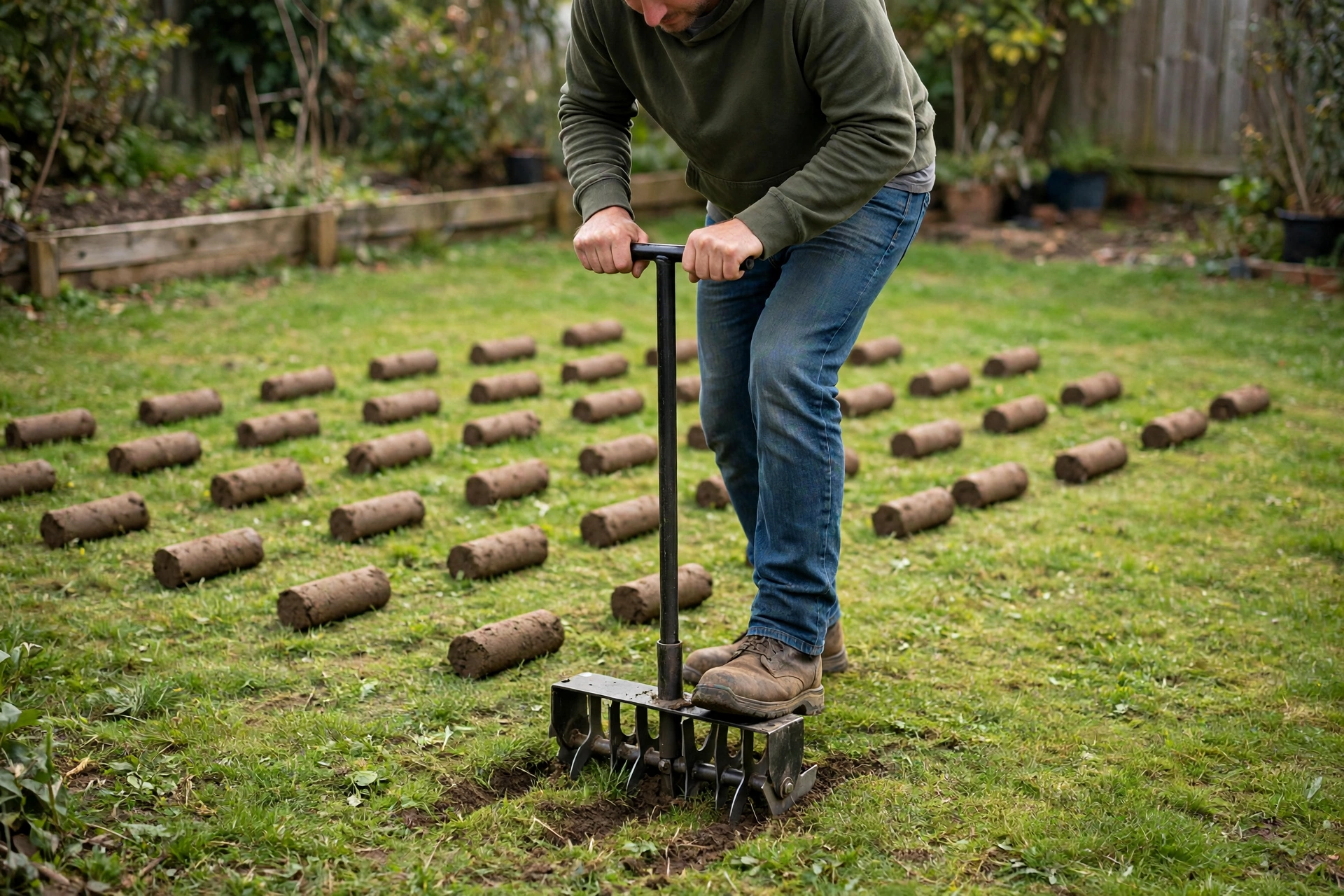
Your lawn looks worse the morning after dethatching. Thin, pale, a little scalped, with bare patches you could swear were not there yesterday. That is normal — dethatching is a rough treatment by design, and the lawn you are looking at is a lawn with its thatch blanket ripped off, not a lawn that is dying.
What happens in the next three weeks decides whether it comes back thicker or stays thin. The work is not hard, but the order matters, and the most common mistake is doing nothing at all for the first week and then wondering why the bare spots filled in with weeds instead of grass.
Why the lawn looks rough
Thatch is the layer of dead stems and roots between the soil and the green blades. When it gets thicker than about half an inch, it blocks water and air from reaching the roots — which is why you dethatched. But that same layer was also shading the soil and holding moisture in. Pull it off and the lawn is suddenly exposed: the soil dries faster, the crowns are bare, and every thin spot is visible at once.
Recovery is the grass using that exposure. Open soil is the best seedbed on the property, and the roots finally have air and water again. Your job for the next few weeks is to protect that opening and fill it with grass before weeds do.
The first 48 hours: clean up, then water deep
Rake up every bit of debris. The thatch you pulled out is a pile of dead material, and leaving it on the lawn smothers the new growth underneath it and harbors pests. Rake it into piles, haul it to the compost, and get the surface clean. This is the one step people skip, and it is the one that costs the most.
Water deeply. Dethatching disturbs the soil, and a deep watering settles it back around the roots. Aim for about an inch of water, enough to moisten the soil to about six inches down. Sandy soil gets there faster; clay takes longer. Water in the morning so the blades dry before evening — wet grass overnight is how fungus gets a foothold in a stressed lawn.
Do not mow yet. The grass needs its blades to photosynthesize its way back. Wait until it reaches about three inches tall, then mow high — and keep mowing high, around three to four inches, while it recovers. Short mowing on a recovering lawn is the fastest way to stall it.
Fill the bare spots now, while the soil is open
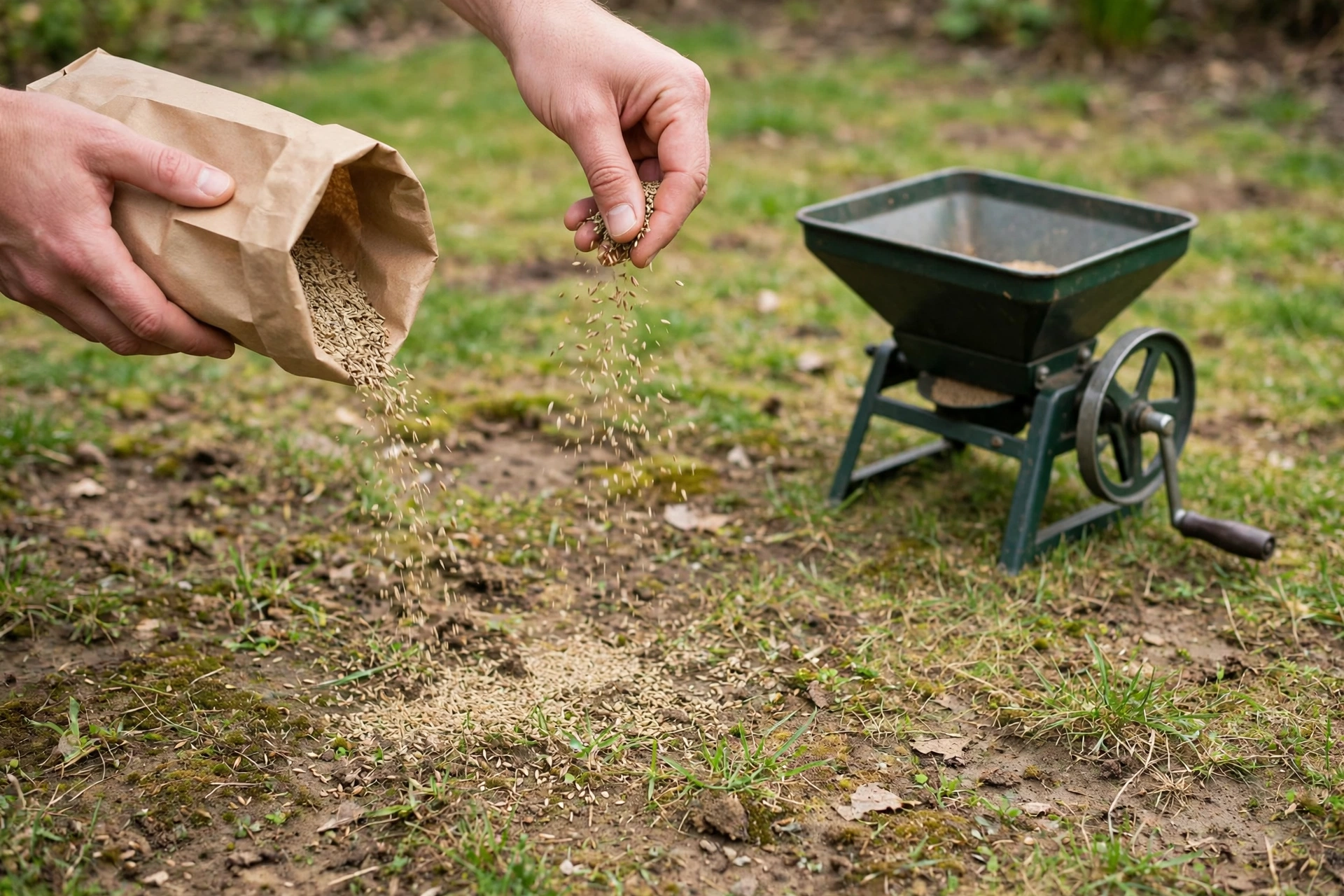
Dethatching creates the best seed-to-soil contact you will get all year, so overseed the thin and bare areas right away — do not wait for the lawn to recover first and then seed into a closed canopy. Spread seed at the rate on the bag, usually three to four pounds per 1,000 square feet for cool-season grasses, and rake it in lightly so it sits in contact with the soil instead of on top of the debris.
Germination sets your patience budget. Perennial ryegrass shows in about five to ten days, tall fescue in seven to fourteen, and Kentucky bluegrass can take fourteen to thirty. A lightly dethatched lawn in active growth can look better in one to two weeks; a heavily dethatched lawn that was overseeded usually needs three to six weeks before it looks full again. If it still looks weak after six to eight weeks, the problem is something else — compaction, shade, or soil — not the dethatching.
Watering after overseeding: light and often
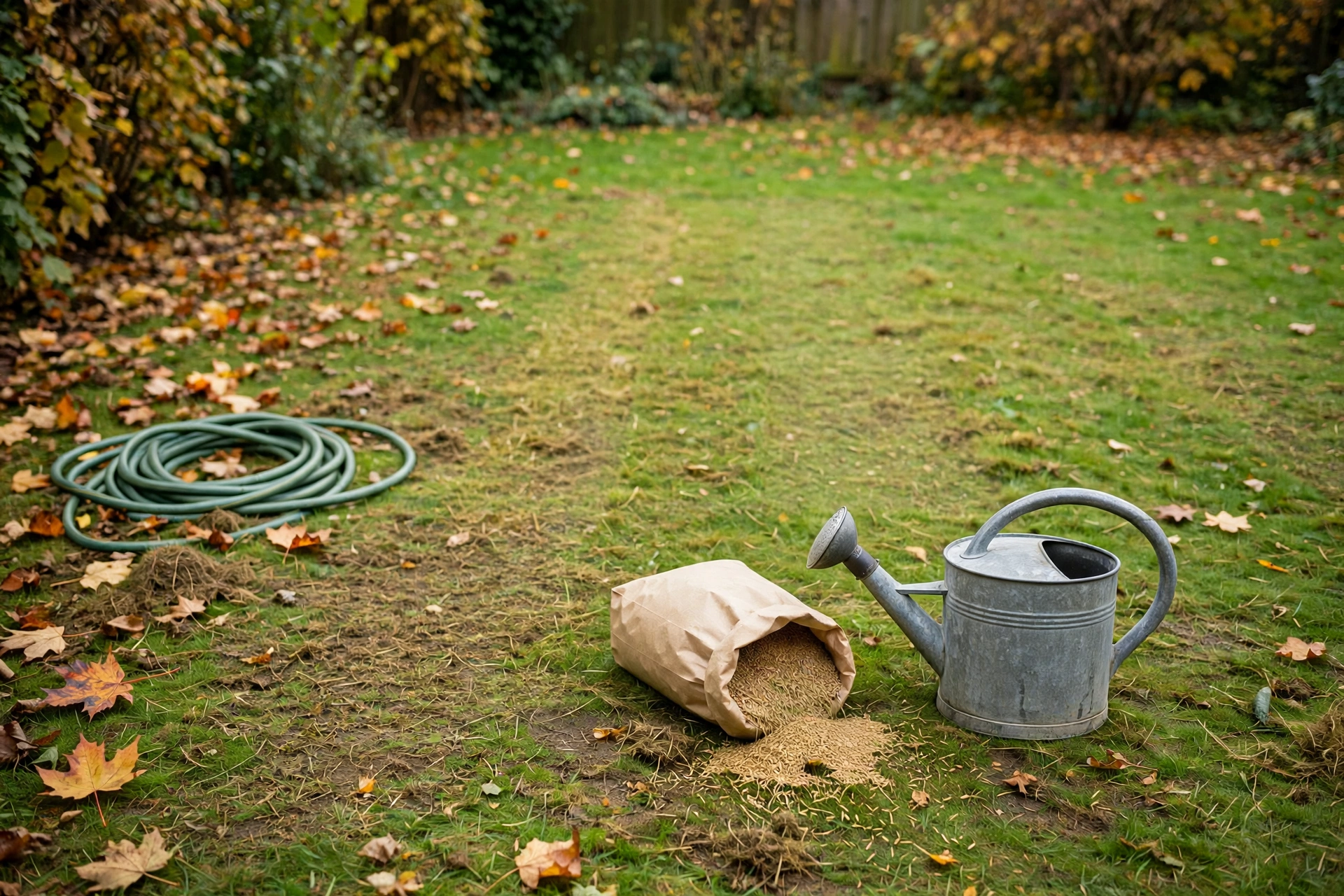
This is where most recoveries fail. Seed that dries out during germination dies, and it only takes a few dry hours on a sunny afternoon. Keep the top half-inch of soil consistently moist — light watering once or twice a day for the first ten to fourteen days, more often in hot, dry, or windy weather. Once the seedlings sprout, shift gradually toward deeper, less frequent watering, and after three to four weeks return to a normal schedule of about one to one and a half inches a week, rain included.
If you did not overseed, the watering is simpler: about an inch a week, deep and infrequent, the same as any established lawn. The dethatched lawn dries faster than it used to, so watch it — but do not keep it soggy. Moist soil, not puddles.
Feed it lightly, and wait on the weed killers
About a week after dethatching, once the lawn has started to recover, a light feeding helps. A slow-release fertilizer feeds gradually over six to eight weeks without pushing soft growth on a stressed lawn, and a starter fertilizer is the right call on the overseeded areas — it usually carries the phosphorus new roots need. Go light: half the normal rate is plenty for the first feeding.
Wait on herbicides. Give it at least two weeks before a pre-emergent and four weeks before a post-emergent weed killer, and delay insecticides until the lawn shows signs of recovery. A freshly dethatched lawn is an open wound — anything harsh goes straight to the roots.
Keep traffic off for two to four weeks
Feet, paws, and mower wheels all compact the soil you just opened up. Keep people and pets off the seeded areas as much as you can for two to four weeks, and do not drag anything heavy across the lawn. If the kids need the yard, give them one path and keep the rest roped off — a few weeks of inconvenience buys a lawn that actually fills in.
Bottom line
Rake the debris, water deep, overseed the bare spots while the soil is open, keep the seed moist for two weeks, feed it lightly, and stay off it. Do that and a lawn that looks rough today is thicker by Thanksgiving than it was before you dethatched. Skip the watering and the seed, and the same lawn fills in with weeds instead — the opening you made does not stay empty, so make sure grass gets there first.
If the dethatching went badly — patches of dead grass, not just thin ones — start with what went wrong when dethatching killed a lawn. For the aeration side of the same recovery, see how to care for your lawn after aerating, and if you are not sure the lawn needed dethatching at all, how to tell whether your lawn needs dethatching, aerating, or both settles it.