If your outdoor music sounds thin, cuts out, or dies after one wet season, the speaker is rarely the only problem. The symptom points to one of three causes: placement, power, or weatherproofing. Work through them in that order, and the right speaker choice gets much clearer.
Diagnosis: which problem do you have?
- Thin or distant sound: the speaker is too far from seating, aimed at the yard instead of ears, or too small for the space. A 4.5-inch woofer like the Polk Atrium 4 suits a small to medium patio; a large open area needs a 6.5-inch model like the Klipsch AW-650.
- Dropouts or distortion: Bluetooth at its range limit, or an amplifier driven past its comfortable power. Check distance first, then power.
- Failure after rain: connections sitting in water, or a speaker with no real all-weather rating. Water kills connections before it kills drivers.
Placement: aim at ears, not at the yard
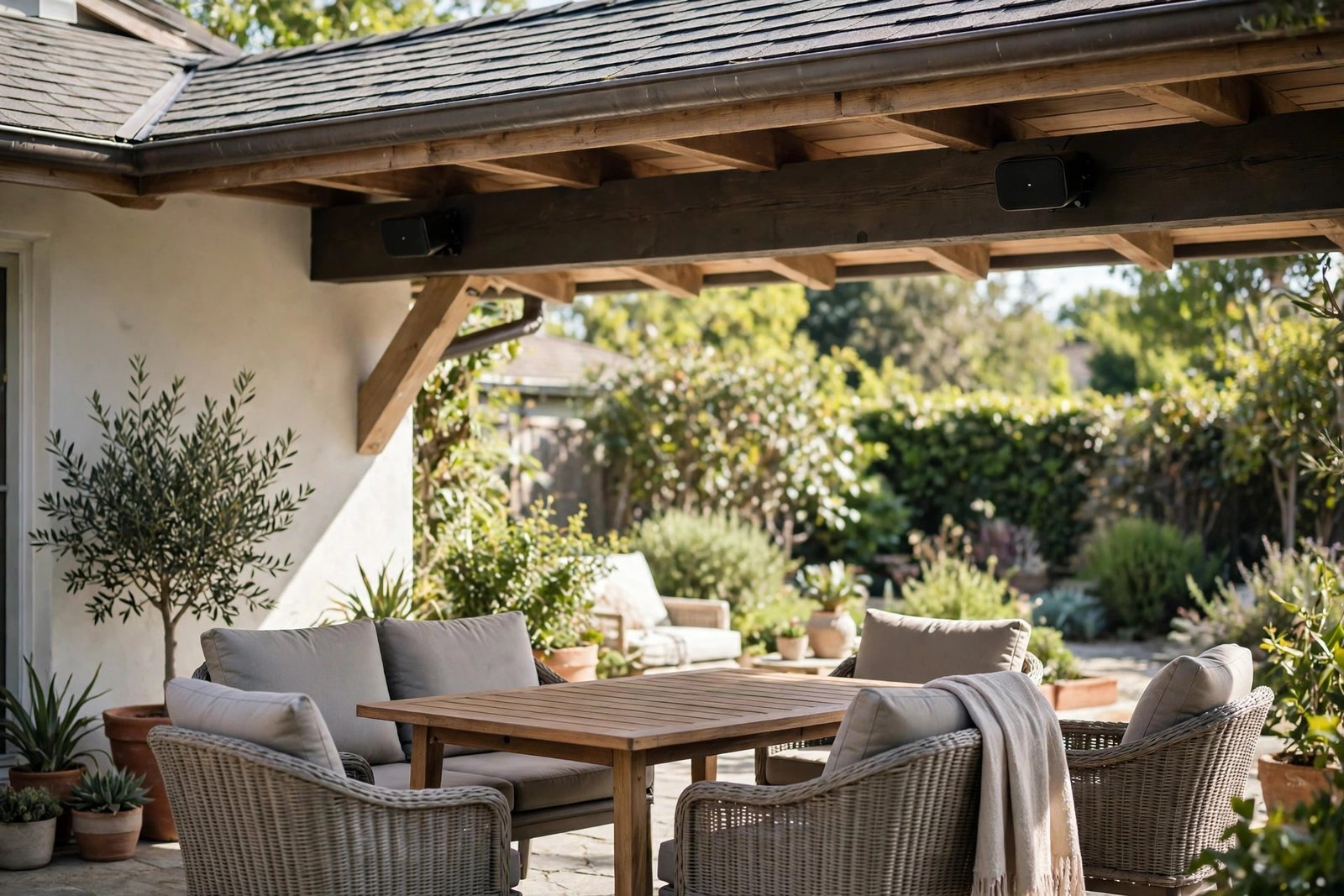
Mount speakers 7 to 9 feet high where possible, angled down toward seating, and place them so sound overlaps in the middle of the seating area rather than blasting one end. Two speakers facing each other across a small patio create dead spots; two speakers on the same side, angled inward, usually cover a rectangular patio more evenly. Keep speakers out of the direct drip line of a roof edge, and leave enough slack in the wire to re-aim them after the first listen.
Power: match the amplifier to the speaker
Check the speaker’s recommended amplifier range before buying either part. The Polk Atrium 4 wants 10 to 80 watts per channel; the Klipsch AW-650 handles 85 watts with 340 watts peak. An amp far below the range, driven hard, clips and distorts — that distortion, not volume, is what hurts tweeters. If the run is long, go heavier on wire: 16-gauge stranded copper is the floor Klipsch specifies for the AW-650, and longer runs deserve 14-gauge.
Weatherproofing: protect the connections
Look for a stated all-weather design with sealed enclosures and corrosion-resistant grilles, not a vague outdoor label. Use direct-burial cable outdoors, keep splices above grade and inside weatherproof junction boxes, and route wire so it cannot sit in a puddle. Bring portable Bluetooth speakers inside during storms, no matter their splash rating. In winter, disconnect and cap any exposed connections if the system will sit unused.
What to buy, in order
- Measure the seating area and note where people actually sit, not where the patio looks best in a photo.
- Choose wired or wireless using Wired vs Wireless Outdoor Speakers — fixed seating means wired.
- Pick the speaker size from our outdoor speaker roundup: Polk Atrium 4 for small to medium patios, Klipsch AW-650 for larger ones.
- Buy the wire and amplifier together so gauge and power match on the first install.
Aftercare: what success looks like
Success is even volume across the seating area at conversation level, with no dropout when someone walks inside with the phone. If one end is loud and the other is quiet, re-aim before you buy anything new. The one mistake that undoes a good install is leaving a splice in a low spot — check it after the first heavy rain, while it is still easy to fix.