The fastest way to turn a smokeless fire pit into a smoky one is to never clean it. Ash builds up in the pan, the vent holes clog, the secondary burn that eats the smoke starves for air — and suddenly the pit you bought to avoid smoke is making plenty of it.
The fix takes about five minutes, and it is the single biggest factor in how long the pit stays rust-free and burning the way it was designed to.
Why a dirty smokeless pit smokes
A smokeless fire pit is not magic. It is a double wall with two sets of air holes: cool air enters low, heats up between the walls, and jets out of the top holes to burn off the smoke before it leaves the pit. That second burn only works when the holes are open.
Leave the ash in the pan and three things happen. The bottom vents get buried, so less air reaches the fire. The ash itself holds moisture against the steel, which is how rust starts. And the next fire burns cooler and dirtier, which makes more ash. Clean the pan and you break the whole cycle.
What you need
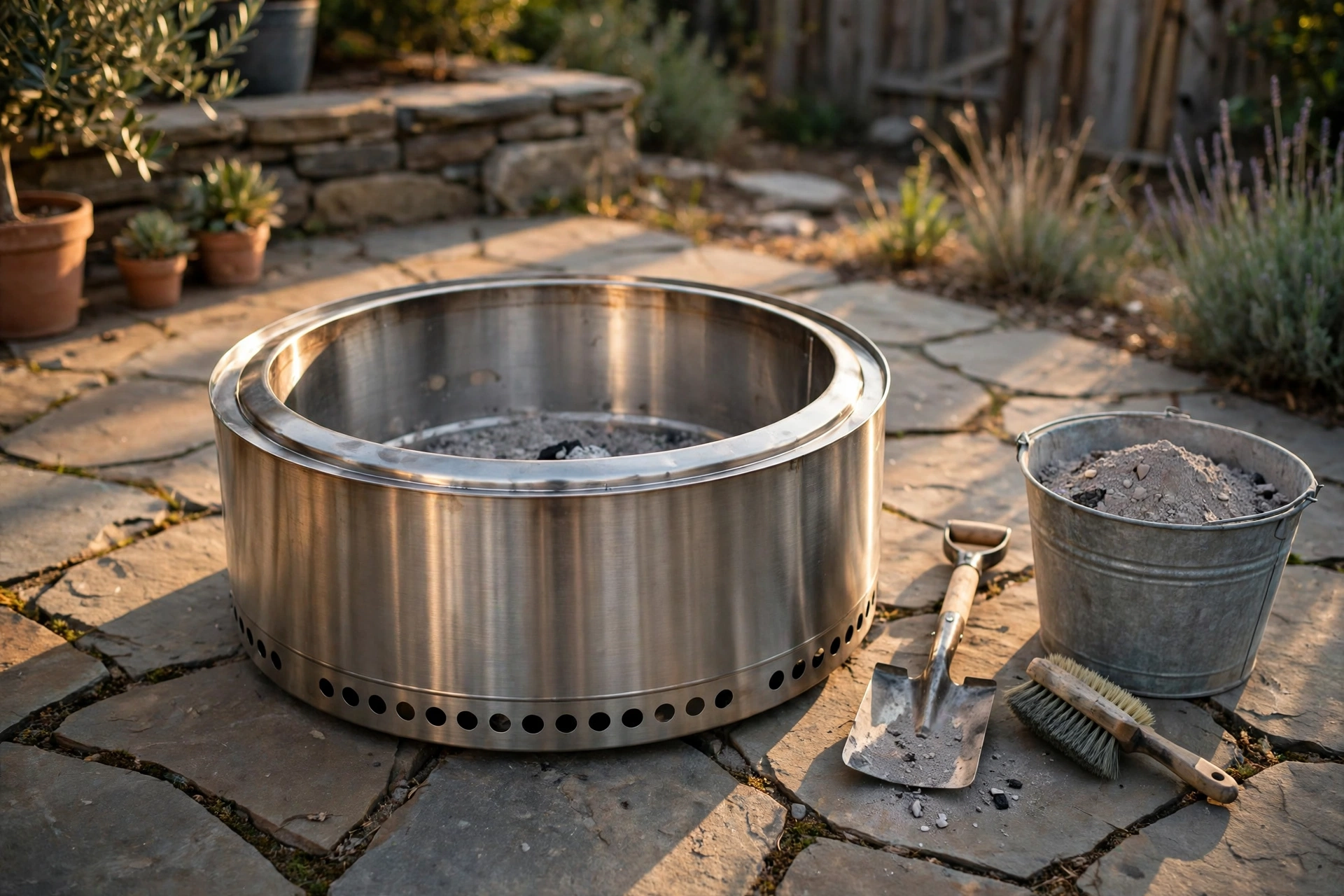
Nothing fancy: a metal bucket or a trash bag, a stiff brush or an old rag, dish soap and warm water, and a stainless steel cleaner for the outside if you want the shine back. A shop vacuum with a hose attachment helps on the bigger models, but it is optional.
How to clean a smokeless fire pit
Let it cool completely. Never handle, tip, or vacuum a fire pit that is still warm to the touch. Solo Stove’s own guidance says to wait at least an hour after the flames die out before touching the pit with bare hands — and ash can hold live embers for hours after the fire looks dead.
Empty the ash pan. On the 2.0 models, lift out the base plate and pull the ash pan from underneath. On older models without a removable pan, tip the whole pit upside down over a metal bucket or a trash bag. Brush the ash sitting on the base plate through the holes first, so it lands in the pan instead of on the patio.
Clear the vent holes. Wipe the inside with a dry cloth and check the holes in the base plate and the inner wall. If you cannot see daylight through the bottom holes, they are clogged, and the pit will smoke on the next burn. A brush handle or a stick clears a stubborn hole; do not reach for a hose.
Wipe the interior. A dry or slightly damp cloth takes the remaining soot and fine ash. That is all the inside needs — no soap, no scrubbing, no water pooling in the bottom.
Clean the outside. Mild dish soap, warm water, and a soft cloth handle everyday grime. For fingerprints, water spots, or the bronze-colored patina that builds up with use, rub a non-abrasive stainless steel cleaner in the direction of the steel’s grain. The patina is cosmetic — the pit works the same with it or without it — so polish only if you like the look.
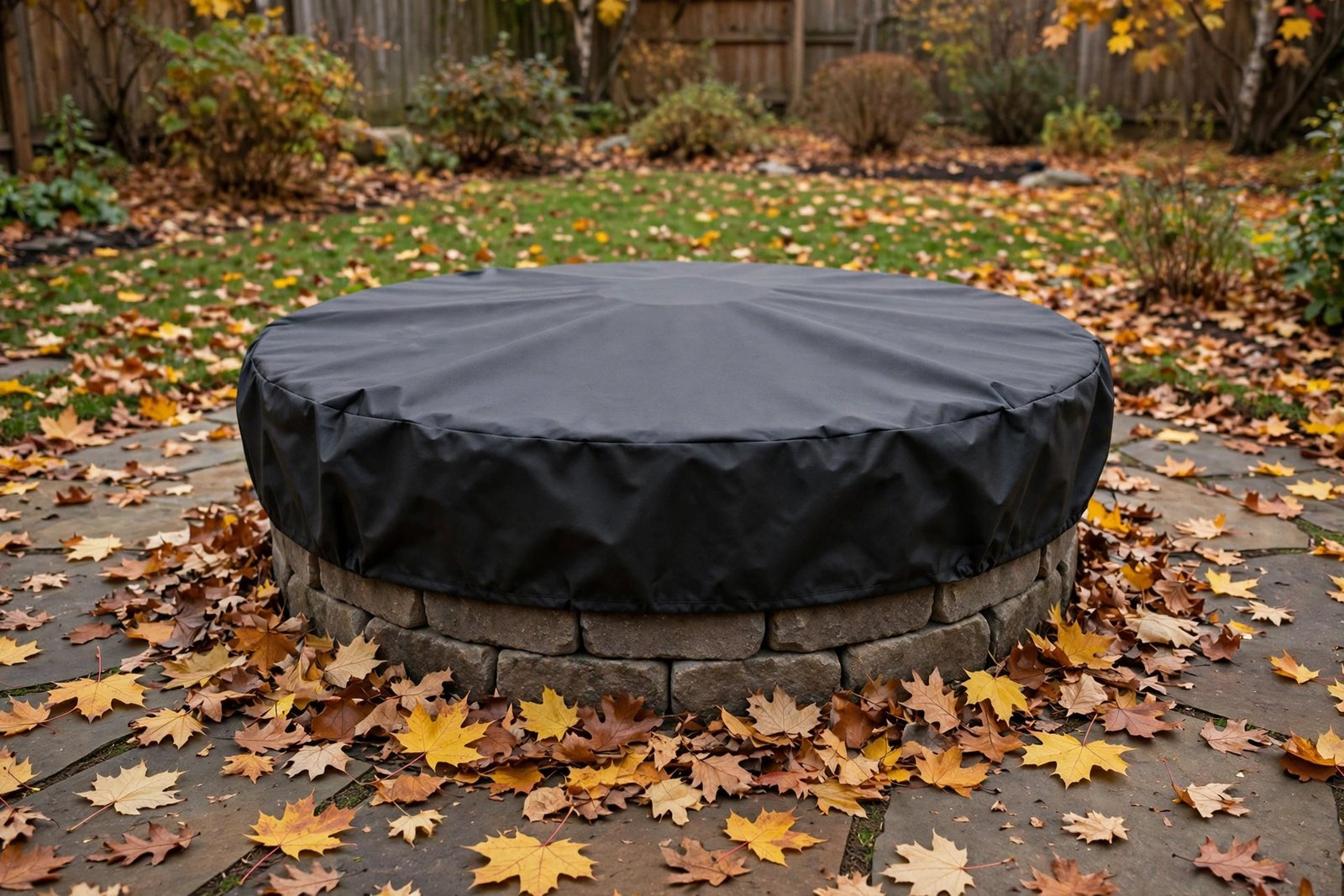
Dry it completely before you cover it. Water left on the steel is what stains and rusts it. If the pit got rained on, wipe it dry and leave it open to the air for a while before the cover goes on.
What not to do
Do not hose it out. Wet ash has nowhere to drain in a double-walled pit, and it packs into the air intake holes like cement. Dry cleaning only, every time.
Do not vacuum warm ash with a regular shop vacuum. A standard vacuum can melt its own hose on a hidden ember, and fine ash blows straight through a normal filter. If you vacuum, the ash must be completely cool — wait overnight, not an hour — or use a vacuum built for ash, with a metal canister and a metal-lined hose.
Do not use water to put the fire out. It shocks the steel, leaves a slurry of ash in the vents, and guarantees a smoky next burn.
Do not dump ash in a plastic bin or a paper bag. Ash goes into a metal container with a sealed metal lid, away from the house, until you are certain it is cold. Embers can reignite hours later.
How often to clean it
Empty the ash pan after every fire — that is Solo Stove’s own instruction, and it is the whole job most of the time. Give the outside a deeper clean every few weeks during heavy-use season, and do the full clean-and-dry before the pit goes into storage for the winter. Five minutes after every burn keeps the pit smokeless for years.
Bottom line
Clean the ash pan after every fire, keep the vent holes open, and never put water in the pit. That is the entire maintenance routine, and it is the difference between a smokeless fire pit and an expensive smoke machine.
For storage, the cover and the dry spot matter as much as the cleaning — see how to store a patio heater and fire pit for winter. If you are still choosing a pit, start with the best smokeless fire pits for backyards, and if you burn pine, read can you burn pine needles in a fire pit before you toss a handful in.