This post contains affiliate links. We may earn a commission if you make a purchase after clicking one — at no extra cost to you.
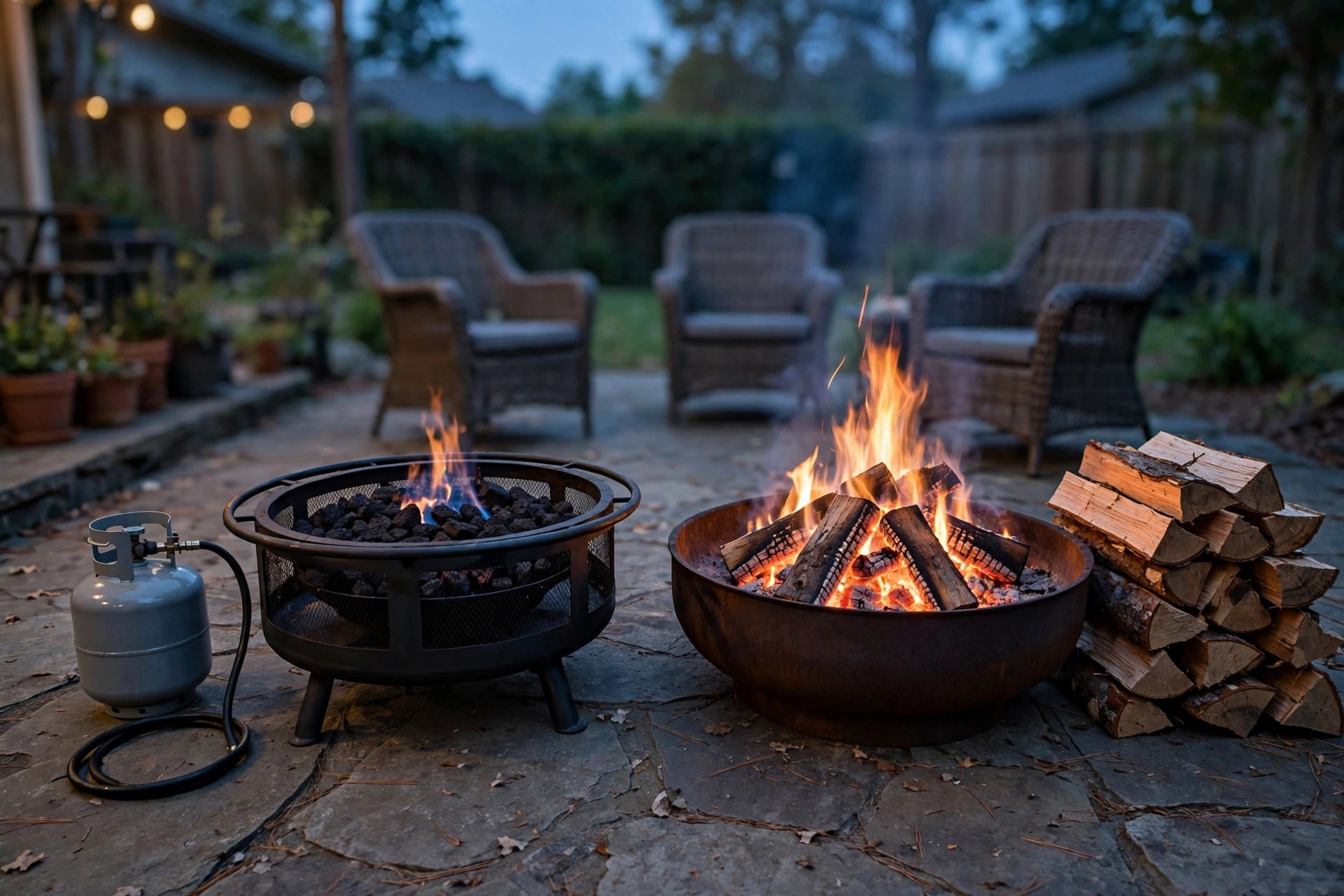
You are standing on the patio at dusk with people coming over in an hour, and the fire pit decision is really two decisions: how much work do you want tonight, and how much heat do you want once everyone is sitting down. Propane and wood answer those two questions in opposite ways.
Propane lights with a dial, burns clean, and runs for hours on one tank. Wood throws more radiant heat, crackles the way a fire is supposed to, and asks you to tend it, feed it, and clean up after it. Neither is the wrong choice. They are built for different evenings.
Heat: wood wins on power, propane wins on consistency
Most backyard propane fire pits are rated between 40,000 and 60,000 BTU per hour, and they hold that output steady from the first minute to the last. A well-built wood fire in a smokeless pit runs hotter — hardwood fires commonly reach 30,000 to 100,000 BTU, and the radiant heat from glowing embers is felt from several feet away, well past where a gas flame’s warmth fades.
What propane gives up in peak heat it makes back in duration. A standard 20-pound propane tank holds about 430,000 BTU, so a 50,000-BTU burner runs roughly eight and a half hours on high. A wood pit, by contrast, gives you 45 to 90 minutes of steady flame per load — then you are feeding it again or watching it die down. Wood warms a circle faster; propane keeps the whole evening warm without anyone getting up.
Cost: cheap per night either way, different chores attached
Exchanging a 20-pound propane tank typically costs $18 to $25, which works out to about $2.50 an hour at 50,000 BTU. Firewood is the wild card: a small bundle from the gas station runs $6 to $10 and lasts an evening or two, while a face cord of seasoned hardwood costs $120 to $200 and lasts a season of regular fires if you have somewhere dry to stack it.
Over a season of two or three fires a week, the fuel bills land in the same neighborhood. The real cost difference is not money — it is the wood pile, the splitting, the stacking, and the ash. Propane’s cost is a tank swap. Wood’s cost is an afternoon.
Smoke, sparks, and the neighbors
This is where the two fuels stop being close. A propane flame produces no smoke, no sparks, and no ash. A wood fire produces all three, and a smokeless design only reduces the smoke — it does not eliminate it. If your patio sits close to the house, under a roof, or downwind of the neighbors’ open windows, propane is the polite choice, and in some places it is the only legal one: many burn bans allow gas fires while wood fires are prohibited.
Wood still has the experience on its side. The crackle, the smell, the embers you can cook over — a gas flame does not do any of that. If the fire is the evening’s entertainment rather than its background heat, wood earns the extra work.
Setup and cleanup
Propane setup is a tank and a dial. There is nothing to clean afterward except wiping the burner cover. Wood setup is kindling, fire starters, and a few minutes of tending before the fire catches properly, and the cleanup is ash — which has to go into a metal container with a sealed lid, because embers can stay hot for hours.
Propane also has one quirk wood does not: it gets weaker in the cold. A tank that runs strong at 60 degrees can struggle at 30, because cold lowers the vapor pressure inside the tank. Wood does not care about the temperature.
Propane vs wood at a glance
| Propane | Wood | |
|---|---|---|
| Heat output | 40,000–60,000 BTU, steady | 30,000–100,000+ BTU, peaks higher |
| Burn time | ~8.5 hours per 20-lb tank at 50,000 BTU | 45–90 minutes per load |
| Running cost | ~$2.50/hour (tank exchange $18–$25) | ~$6–$10 per bundle; face cord $120–$200 |
| Smoke and sparks | None | Yes, even in a smokeless pit |
| Setup | Tank and a dial | Kindling, tending, ash cleanup |
| Burn bans | Usually allowed | Often banned |
| Cooking | Tabletop heat, not a cooking fire | Real embers, real campfire cooking |
The picks
If you want propane, the table format is the most useful shape for a patio: a wide top to set drinks on, a hidden tank, and a burner that actually warms the people sitting around it. The Outland Living Series 403 is 44 inches across with a 50,000-BTU burner, and it is the propane pit our best propane fire pit tables roundup picked as best overall.
BEST FOR CONVENIENCE
Outland Living Series 403 Fire Pit Table
44 inches across, 50,000 BTU, and the tank hides inside the table — fire on a dial, drinks on the rim.
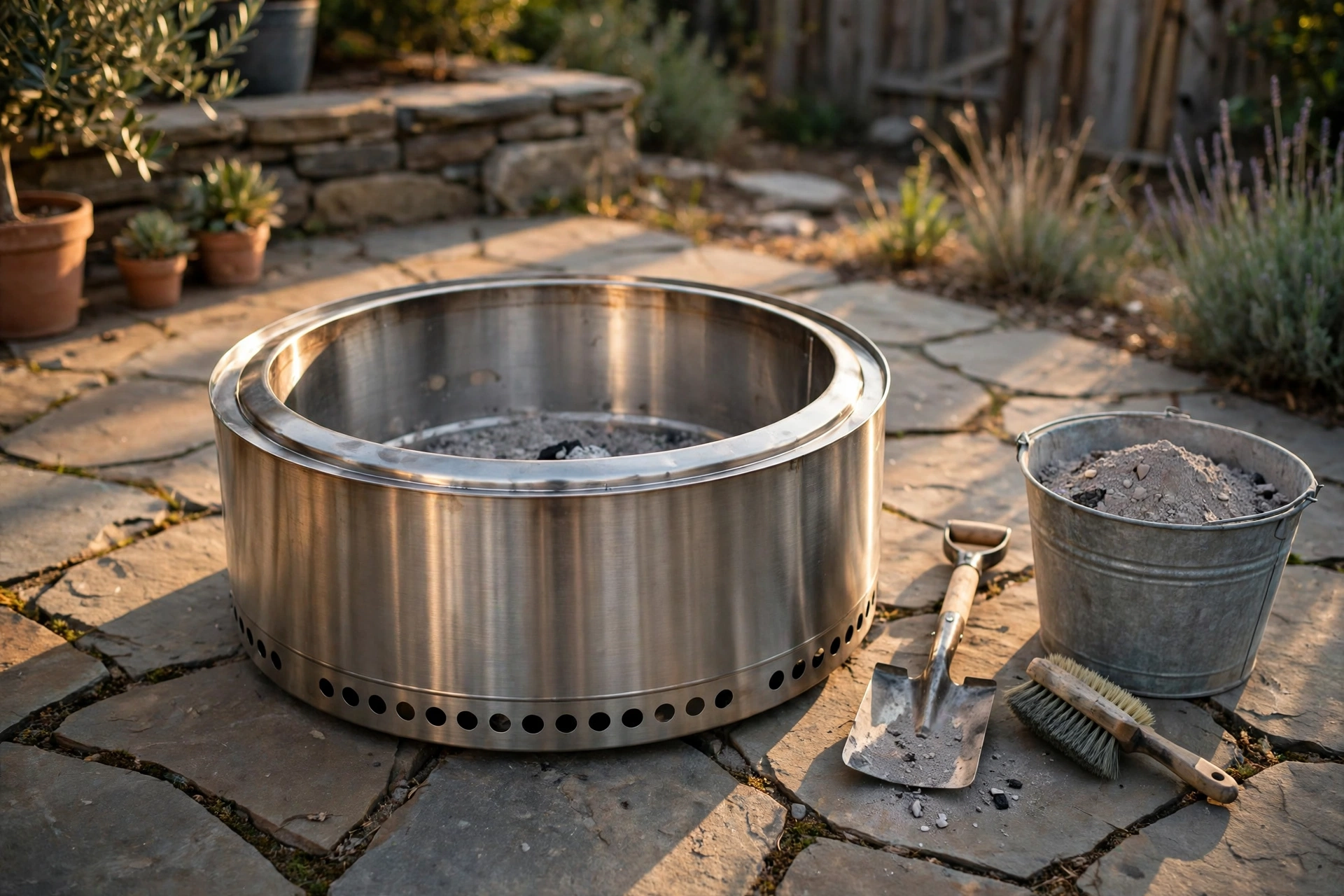
If you want wood, a smokeless pit is the way to keep the smoke down without giving up the fire itself. The Solo Stove Bonfire 2.0 is 19.5 inches across, weighs 21.75 pounds, seats four to six people, and its removable ash pan is the feature you will thank yourself for — see how to clean a smokeless fire pit for why that pan matters.
BEST FOR HEAT & ATMOSPHERE
Solo Stove Bonfire 2.0 with Stand
A 19.5-inch smokeless wood burner with a removable ash pan — real radiant heat, a fraction of the smoke.
Which one fits your patio
Buy propane if your patio is small or close to the house, you want fire on a weeknight with no setup, someone in the house hates smoke, or your area has burn bans. A propane table also doubles as a side table when it is off, which matters on a patio where every square foot counts.
Buy wood if the fire is the point of the evening, you cook over it, you have somewhere dry to store firewood, and your neighbors are far enough away that a little smoke is nobody’s problem. A smokeless pit keeps the smoke manageable, but it does not make wood as clean as gas.
Before either one, check whether your deck or patio can even hold a fire pit — a wood pit on a wooden deck needs a heat shield and a spark screen, and some HOAs ban one fuel and allow the other. Our guide to putting a fire pit on a wooden deck covers the rules, and fire pit vs patio heater settles the other half of the patio-heating question.
Bottom line
If you want fire on a Tuesday night with zero setup, buy propane — the Outland table above is the one to get. If the fire is the evening, buy wood, and get the smokeless pit so the smoke does not run the night.