You lift the lid expecting chewy, nutty grains, and find gray mush instead — a pot of wild rice that was supposed to anchor dinner and turned into porridge while nobody was watching.
It happens to nearly everyone once, because wild rice looks like rice and cooks nothing like it. The fix comes down to three small things: a ratio, a low simmer, and knowing the exact moment to drain.
Start with what the grain actually is: wild rice is the seed of an aquatic grass, Zizania palustris, and Minnesota adopted it as the official state grain in 1977. That matters in the kitchen because a grass seed with a tough hull cooks on its own schedule, and the schedule is longer than any rice you have cooked before.
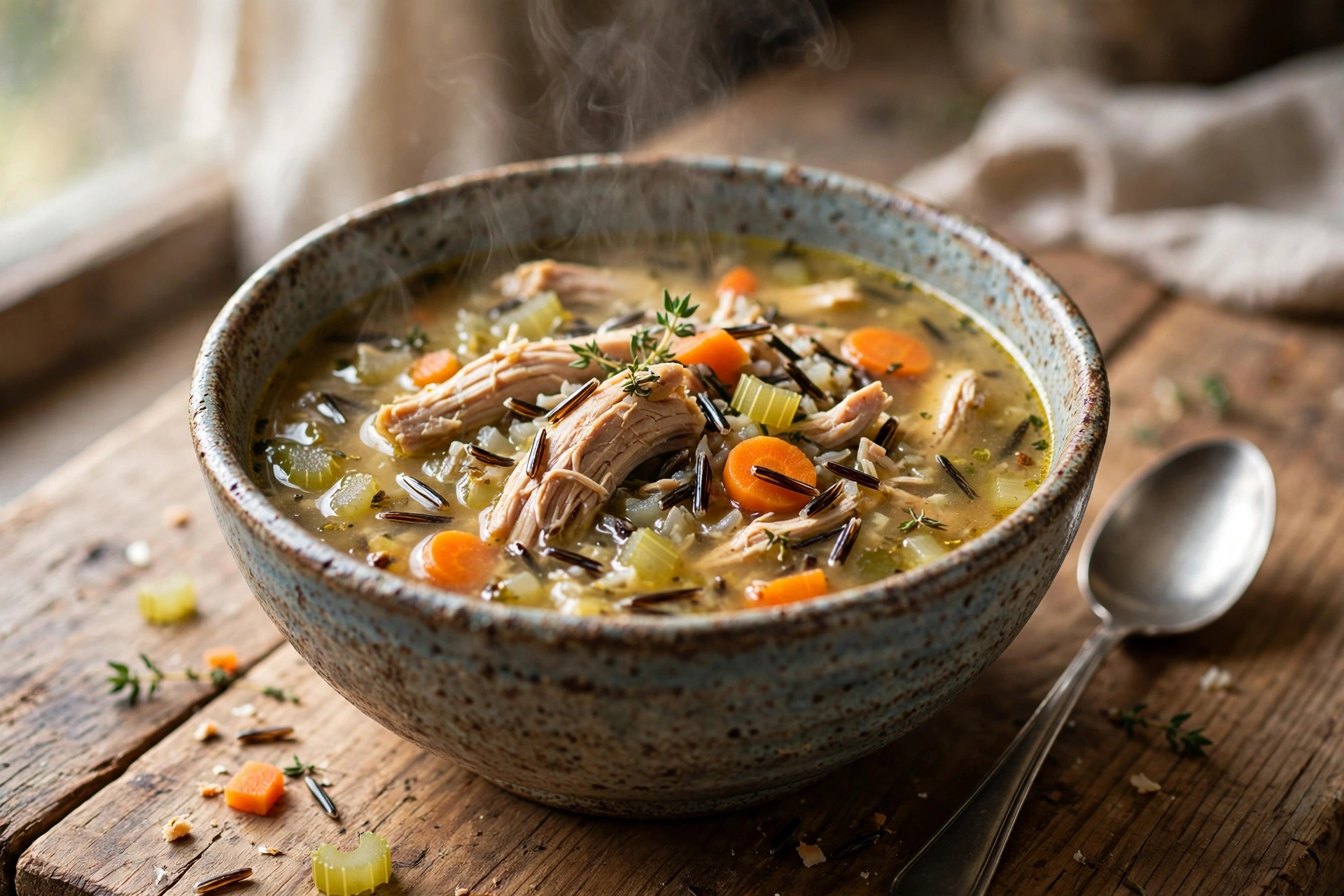
This is the rice that goes into the turkey and wild rice soup, which cooks its rice separately for exactly this reason — use it with that pot, or with any dish that needs the grains to hold their shape.
Rinse it first
Tip the rice into a fine-mesh strainer and rinse it under cold water until the water runs clear, picking out any stray hulls or bits of stem as you go. Lake-harvested rice especially can carry a little debris, and a quick rinse is cheaper than finding it in the finished dish.
An overnight soak in cold water shortens the simmer a little, if you have the time for it. Drain the soaking water and start fresh at the same ratio, since the soaking liquid holds the starch the rinse was meant to clear.
The ratio that keeps it chewy
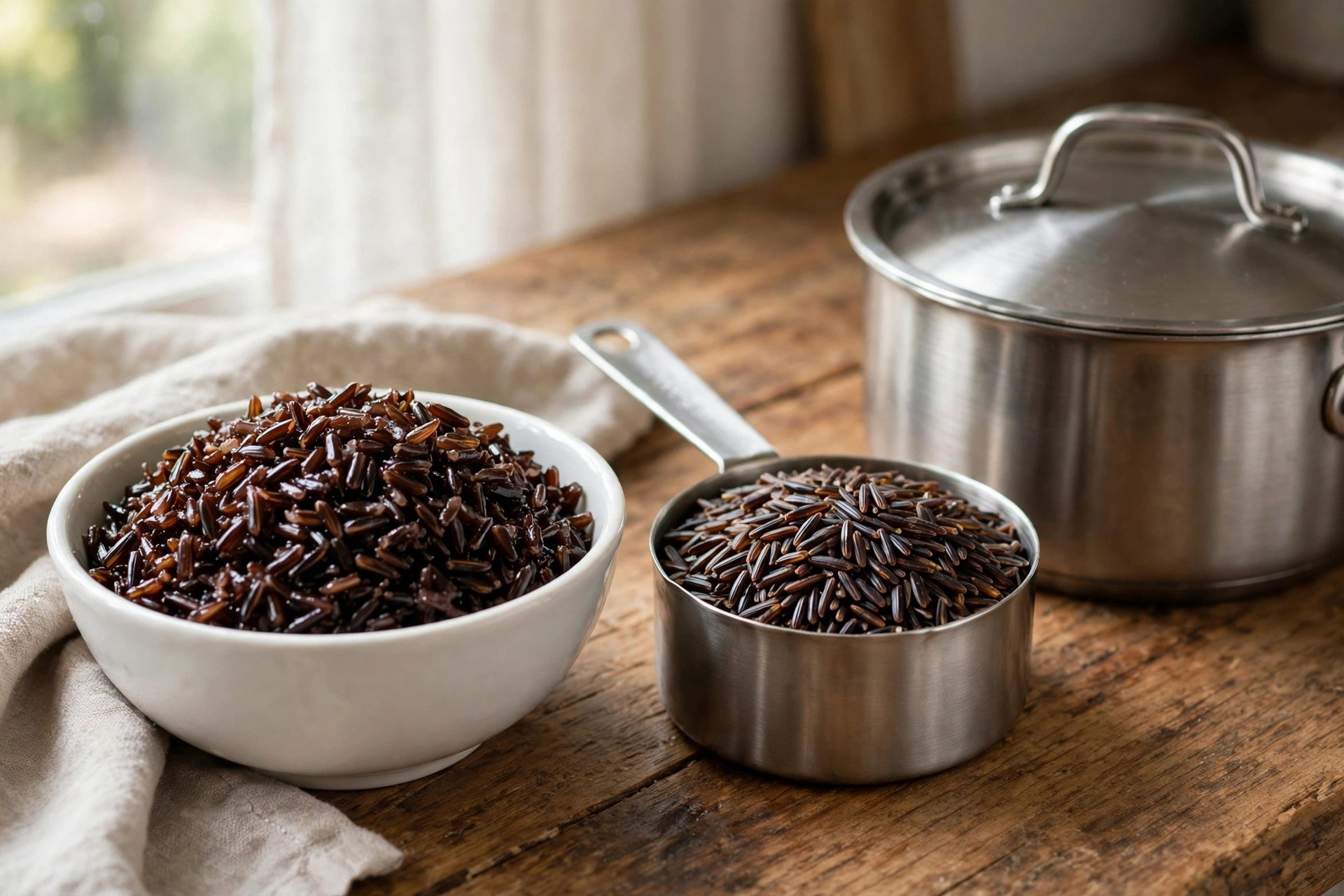
Use 1 cup of wild rice to 3 cups of water, with a good pinch of salt, and bring the pot to a boil before you turn it down. Three cups is enough water for the grains to swell and split without drowning them, and if the pot runs dry before the rice is done, add a splash of hot water rather than starting over.
With too much water, the grains keep absorbing long past done, and the chew disappears with the extra liquid. With too little, the pot can scorch before the hulls split — so measure the water instead of eyeballing it, the same way you would measure the rice.
Simmer, don’t boil
Once the water boils, turn the heat down until the surface barely trembles, put the lid on, and leave it alone for 45 minutes. A rolling boil batters the hulls and breaks the grains apart, while a low simmer lets them swell slowly and split on their own time.
Start checking at 45 minutes, and expect the pot to need the full hour more often than not — most wild rice finishes somewhere between 45 and 60 minutes, and the clock is only a rough guide. If the water is gone and the grains are still firm, add a little more hot water and give them another 10 minutes rather than calling it done early.
The doneness cue
The grains are done when most of them have split open and curled, showing the pale, creamy inside, while the center still has a firm chew. Taste one: it should resist your teeth a little, the way al dente pasta does, and never feel soft all the way through.
Watch for the split rather than the clock — pull the pot off the heat the moment you see it across most of the grains, because the rice keeps cooking in its own steam for several minutes after. A few unsplit grains in the pot are fine; they will soften as the rice rests, and chasing every last one is how a good pot turns to mush.
Why instant and blend rice go mushy
Instant wild rice has already been cooked once before it reaches your pantry, so a second full simmer pushes it straight past chewy and into mush. Blends have the opposite problem: the white or brown rice in the bag finishes long before the wild rice does, which leaves one grain soupy and the other still hard in the same pot.
For soup, or any dish where the grains need to hold their shape, use plain whole wild rice and cook it on its own. The extra hour is the price of the texture, and it is the only way to pay it.
Drain it and hold it
Drain the rice in a colander the moment it is done, and let it sit for a few minutes so the steam finishes escaping — rice left sitting in its cooking water keeps softening. Cooked wild rice holds in the fridge for 1 to 2 days, which is why it suits a soup you plan to build the next evening, and cold cooked wild rice works straight from the fridge in grain salads, where the chew holds up against dressing in a way softer grains don’t.
What to do with it
Fold it into the turkey and wild rice soup, where it meets mushrooms and leftover turkey, or try the one-pan chicken wild rice skillet, which puts the same chewy grain to work on a weeknight.
Cook it like this, and the guesswork goes out of the pot — the grains come out split and curled, with the firm chew a good soup needs underneath it.