Landscape & Leisure is reader-supported. When you buy through links on our site, including Botanical Interests seed links, we may earn a commission at no extra cost to you. Prices change, so click through to confirm current pricing.
Hardening off is the most skipped step in seed starting — and the reason so many healthy indoor seedlings collapse in their first week outside. A seedling raised under lights, at a steady 70°F, with no wind, has thin cuticles, tender leaves, and no tolerance for sun, wind, or cold nights. Moving it straight into the garden is like sending someone from a sauna into a snowstorm. Hardening off is the gradual introduction that builds that tolerance, and it takes 7 to 10 days. There is no shortcut that works as well, and every crop you start indoors — tomatoes, peppers, and everything else — needs it.
What Hardening Off Actually Does
Outdoor exposure triggers real physical changes in a seedling: leaf cuticles thicken to slow water loss, stems stiffen in response to wind, and the plant adjusts its photosynthesis to full sun. These changes take days, not hours. A seedling given a single afternoon outside and then planted out will wilt, sunscald, or stall — and a stalled transplant can sit for weeks without growing, losing the entire head start indoor sowing was supposed to buy. University of Minnesota Extension’s seed-starting guidance is consistent on the sequence: seedlings go outside gradually, and only after they have been conditioned do they go into the ground.
The 7- to 10-Day Hardening-Off Schedule
Start hardening off about 7 to 10 days before your planned transplant date — for zone 4 tomatoes and peppers, that usually means starting in mid- to late May, ahead of a late-May or early-June transplant. The pattern is simple: more time outside each day, more direct sun, more wind, until the plant spends a full day and a mild night outdoors.
| Day | Time Outside | Conditions |
|---|---|---|
| 1–2 | 1–2 hours | Shade, sheltered from wind |
| 3–4 | 3–4 hours | Morning sun, light breeze |
| 5–6 | 5–6 hours | Full morning sun, moderate wind |
| 7–8 | Full day | Full sun; bring in at night |
| 9–10 | Full day and night | Leave out overnight if no frost is forecast |
Step by Step
1. Pick a calm, cloudy first day if you can. The first outing is the shock. Shade and still air let the plant adjust to temperature and humidity change without sun and wind on top of it.
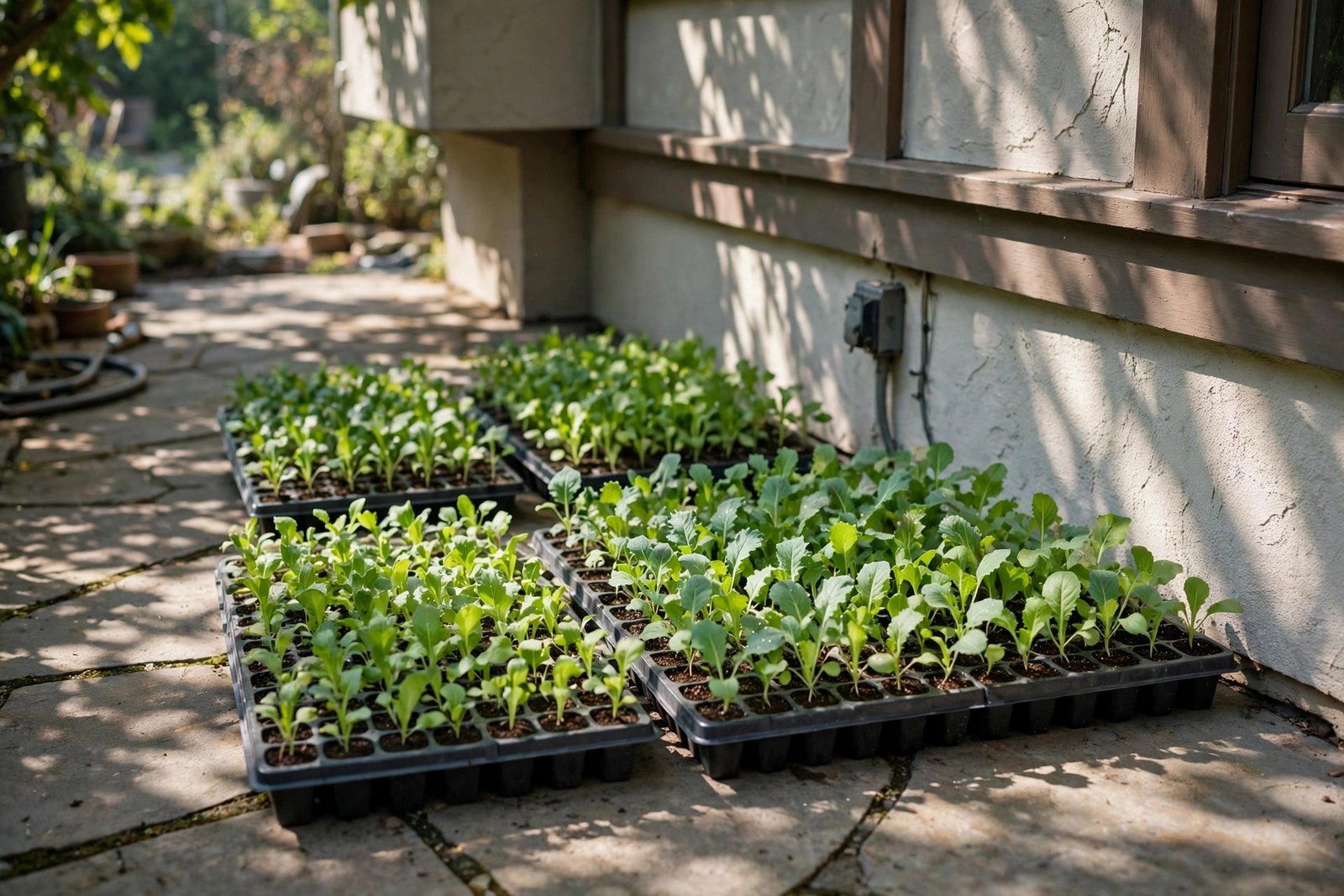
2. Use a tray as a shuttle. Seedlings in individual pots are easy to forget outside or leave in a storm. Carrying the whole flat in a bottom tray means one trip out, one trip in, and nothing left behind. Water the tray before it goes out — moist soil buffers temperature swings better than dry soil.
3. Increase sun before you increase wind. Sunscald shows up as white, papery patches on leaves that were never exposed to direct sun. Wind damage shows up as wilting and broken stems. Introduce sun gradually first, then let wind join in; doing both at full strength on day one is what burns plants.
4. Watch the forecast every evening. Bring seedlings in if frost is forecast, if temperatures will drop below about 45°F for tender crops like peppers and tomatoes, or if a hard storm is coming. A night in the garage is not a setback; a frost is.
5. Skip a day rather than force it. If the weather turns brutal — high wind, hail, a cold snap — keep seedlings inside that day and resume the schedule when it passes. Hardening off is about accumulated exposure, not consecutive days.
6. Transplant on a calm, cloudy day. After the full schedule, plant out in the late afternoon or on an overcast day so the first night in the ground is as gentle as possible. Water deeply at planting.
Epic 1020 Universal Bottom Tray
The shuttle tray for hardening off — one trip carries the whole flat out and back, and nothing gets left in a storm.
Epic 6-Cell Seed Starting Trays
Sturdy reusable cells that survive two weeks of daily carrying without cracking or spilling soil.
Signs You Moved Too Fast
White or bleached patches on leaves — sunscald. Move the plant back to shade and slow the schedule; damaged leaves will not heal, but new growth will be normal.
Wilting that does not recover after watering — wind and sun drove water loss faster than roots could supply it. Shade, water, and a gentler day.
Stems snapping or leaning hard — too much wind too soon. Stake if needed and step back a day in the schedule.
Purple-tinged leaves on tomatoes — cold stress, often from nights that were too cool. Tomatoes show phosphorus-uptake trouble when cold; warm nights fix it.
What Does Not Need Hardening Off
Direct-sown crops — peas, beans, carrots, radishes — never lived indoors, so there is nothing to acclimate. Store-bought transplants are usually already hardened off by the grower, though a day or two of sheltered outdoor time does no harm if they look tender. And cold-hardy transplants like cabbage and broccoli tolerate the process faster than heat-lovers; they still benefit from a few days of it, just on a compressed schedule.
Bottom Line
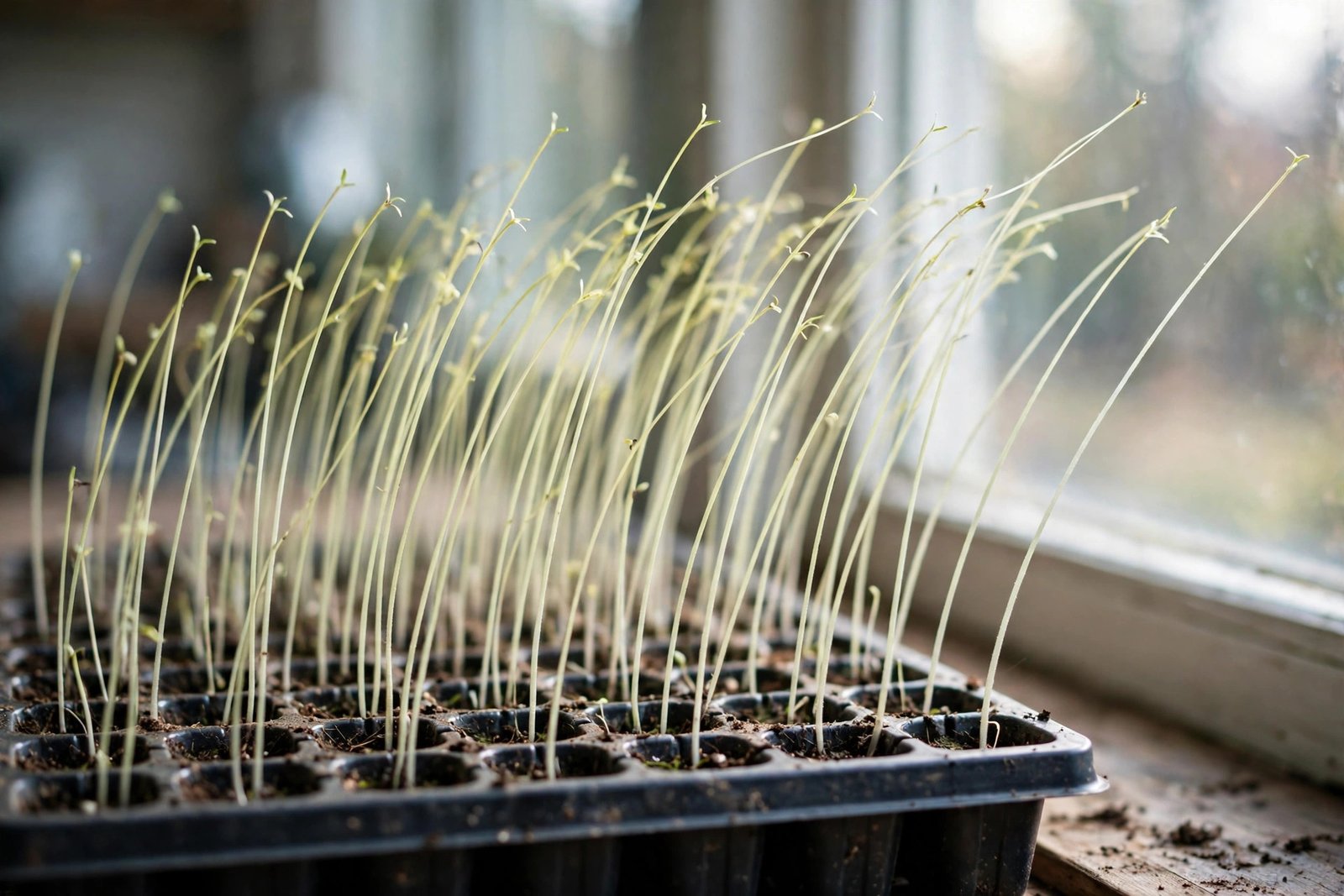
Seven to ten days, gradually more sun and wind, bring them in at night until the last few days, and transplant on a calm day. That is the whole method, and it is the difference between transplants that take off and transplants that stall. For the crops this matters most for, see our tomato indoor-starting guide, our pepper indoor-starting guide (with the zone 4 calendar), and our zone 4 tomato timing guide for the dates to count back from. If your seedlings are already stretched and pale before hardening off even starts, our leggy-seedling guide covers what can still be fixed.