This post contains an affiliate link. If you buy through it, we may earn a small commission at no extra cost to you.
The mistake is baking ziti uncovered for the whole bake. The top dries, the edges go leathery, and the pasta underneath drinks whatever sauce is left until the pan that looked generous going into the oven comes out tight and dry.
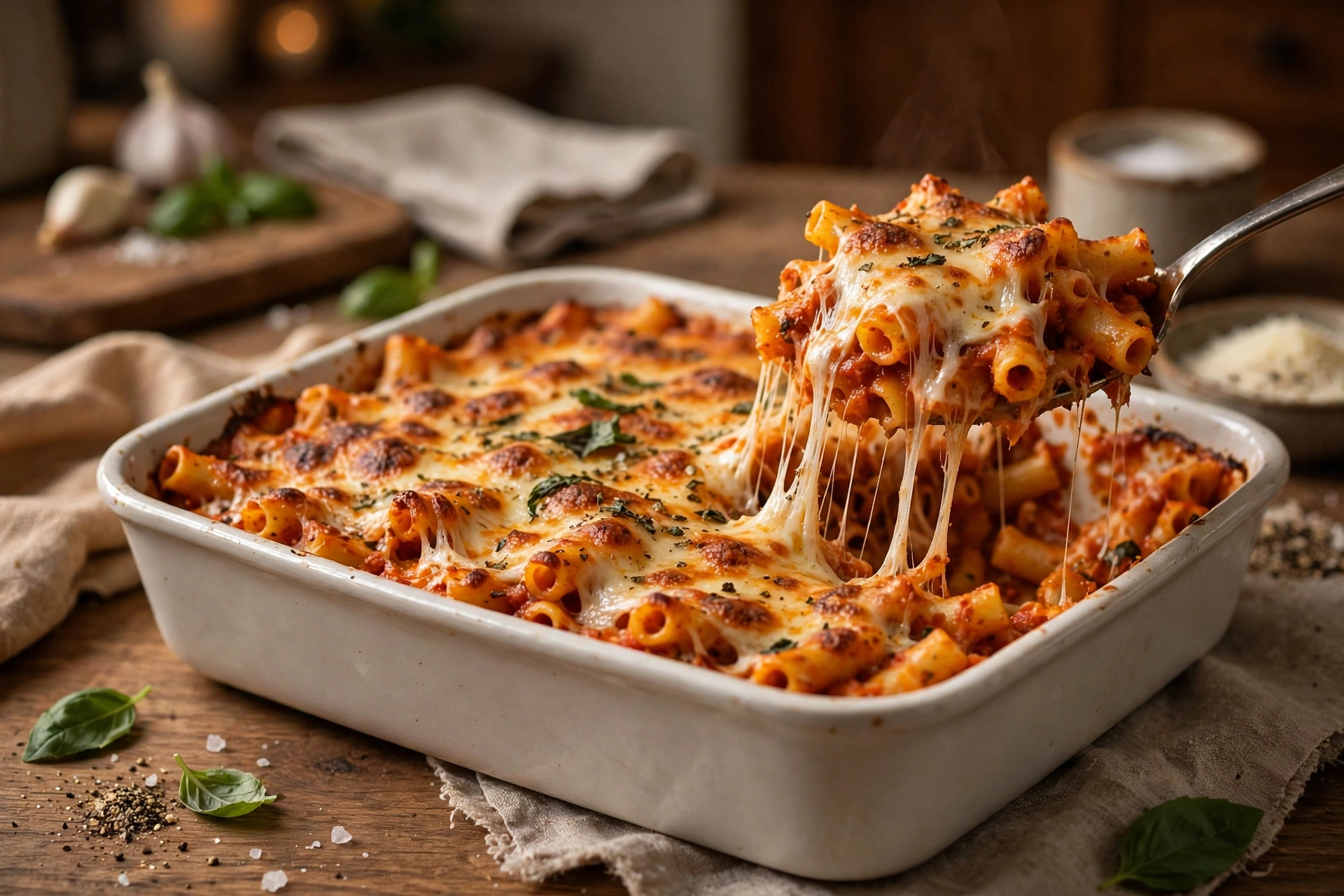
Dry baked ziti is almost never a recipe problem. It is a moisture problem with four or five small causes, and every one of them is fixable before the pan goes in — starting with the baked ziti with Italian sausage on this site, which is built around the fixes below.
Start Saucier Than Looks Right
Pasta keeps absorbing liquid in the oven. A pound of ziti baked in sauce will take up roughly 1 to 1 1/2 cups of that sauce as it finishes cooking, which is why a pan that looks correctly sauced before baking can slice dry afterward.
Assemble the ziti so it looks a little too saucy — sauce pooling slightly when you tilt the dish, every tube coated with none sitting bare on top. That extra sauce is not extra. It is the pasta’s cooking liquid, already spoken for.
Undercook the Pasta by 2 Minutes
Boil the ziti 2 minutes shy of the package directions and drain it while it still has a firm, chalky bite at the center. Pasta that is fully cooked before baking has nowhere left to go, and it gives up its structure while absorbing sauce unevenly.
Undercooked pasta finishes in the sauce at an even pace. It comes out tender, distinct, and holding sauce instead of collapsing into it.
Loosen the Ricotta
Ricotta straight from the tub is dense, and dense ricotta bakes into dry pockets. Stir it with an egg and a splash of milk — about 2 tablespoons for 15 ounces of ricotta — until it drops off the spoon in soft ribbons.
Loosened ricotta spreads through the pasta instead of sitting in lumps, and it adds moisture to every bite rather than only the bites that happen to hit a cheese pocket.
Cover the Pan for Most of the Bake
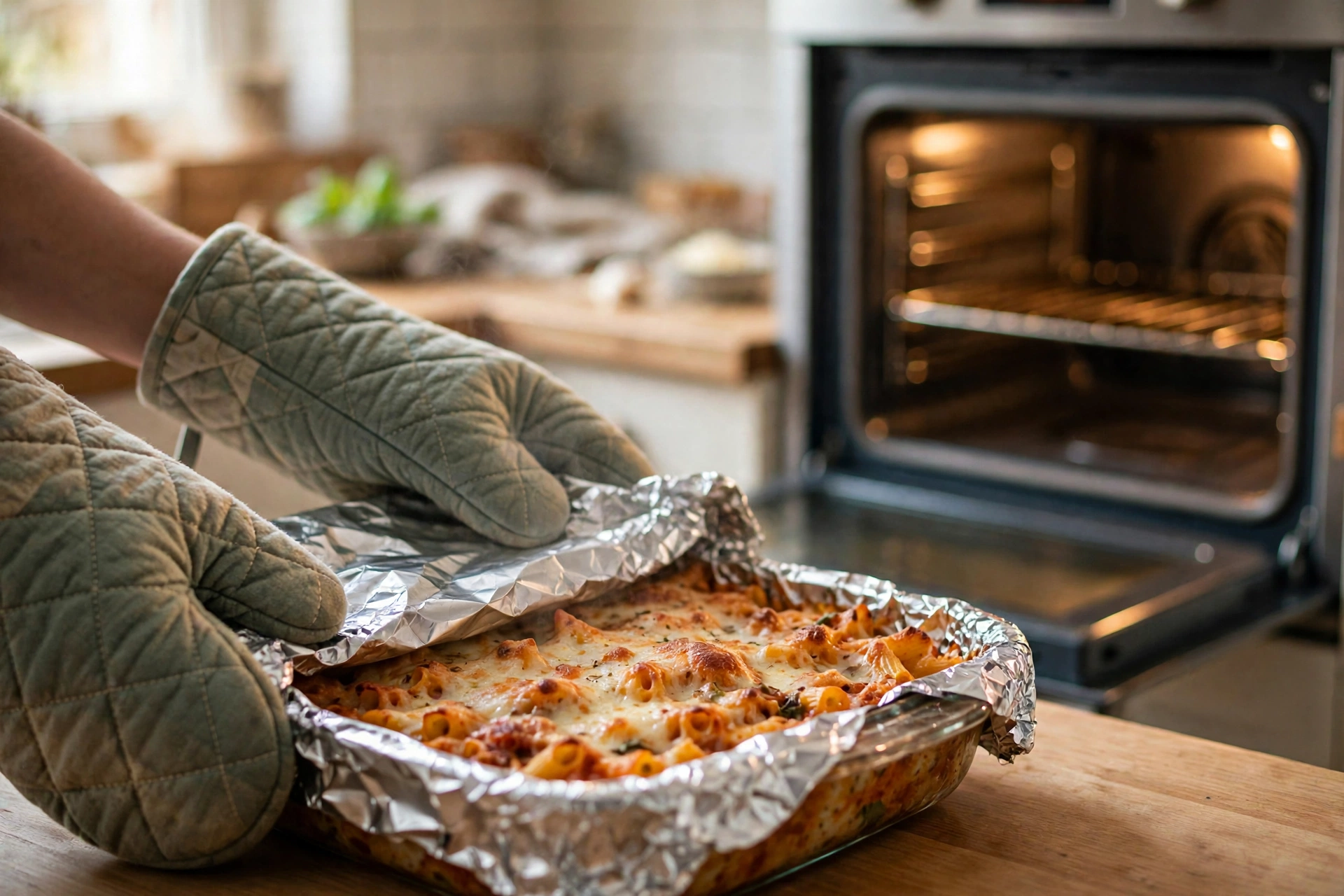
Foil is doing real work here, not just keeping the cheese pale. Covered, the pan holds its steam, the sauce stays liquid long enough for the pasta to finish in it, and the top layer stays moist.
For a 375°F bake, keep the foil on for the first 25 minutes, then uncover for the last 10 to 15 minutes so the mozzarella browns. A pan uncovered from the start loses moisture for the full 35 to 40 minutes, and no amount of sauce at assembly fully makes that up.
A deep 9×13 dish helps too, because it holds the full pound of pasta plus sauce without a shallow layer spread thin. This covered ceramic baker is the right shape for the job:
Lareina Large Ceramic Casserole Dish with Lid, 9×13 Inch, 4.0 Quart
Deep stoneware walls hold a full ziti bake without overflow, and the lid keeps leftovers covered in the same dish.
Keep a Cup of Pasta Water Back
Before you drain the ziti, save about 1 cup of the hot pasta water. If the assembled pan looks tight — sauce thick, pasta packed — stir in 1/4 to 1/2 cup of that starchy water until the sauce loosens and coats again.
Pasta water fixes a dry pan better than plain water because the starch helps the sauce cling instead of pooling. It is a rescue, not a routine step: use it when the pan needs it, and skip it when the sauce already pools on its own.
Rest the Pan 10 to 15 Minutes
Cutting into ziti straight from the oven spills the sauce out as liquid, and the servings that follow get drier as the pan sits open. Resting 10 to 15 minutes lets the sauce thicken and settle back into the pasta.
The ziti stays properly hot through that rest — a full 9×13 pan holds heat a long time. What changes is the texture: slices that hold together, sauce in the pasta instead of under it.
Reheat Leftovers Covered, With a Splash
Leftovers dry out for the same reason the original pan can: the pasta keeps absorbing sauce in the refrigerator overnight. Undo it directly — spoon 1 to 2 tablespoons of water or milk over each portion before reheating.
Cover the dish with foil and reheat at 350°F for about 20 minutes, until the center is hot and the edges bubble. Uncovered reheating drives off the little moisture you just added, so the foil matters as much on day two as it did on day one.
Use these fixes with the baked ziti with Italian sausage and the pan will slice the way it should: saucy at the center, tender pasta, cheese that pulls instead of cracking. For the sweet side of the same gathering, the apple cider donut muffins need no reheating at all.