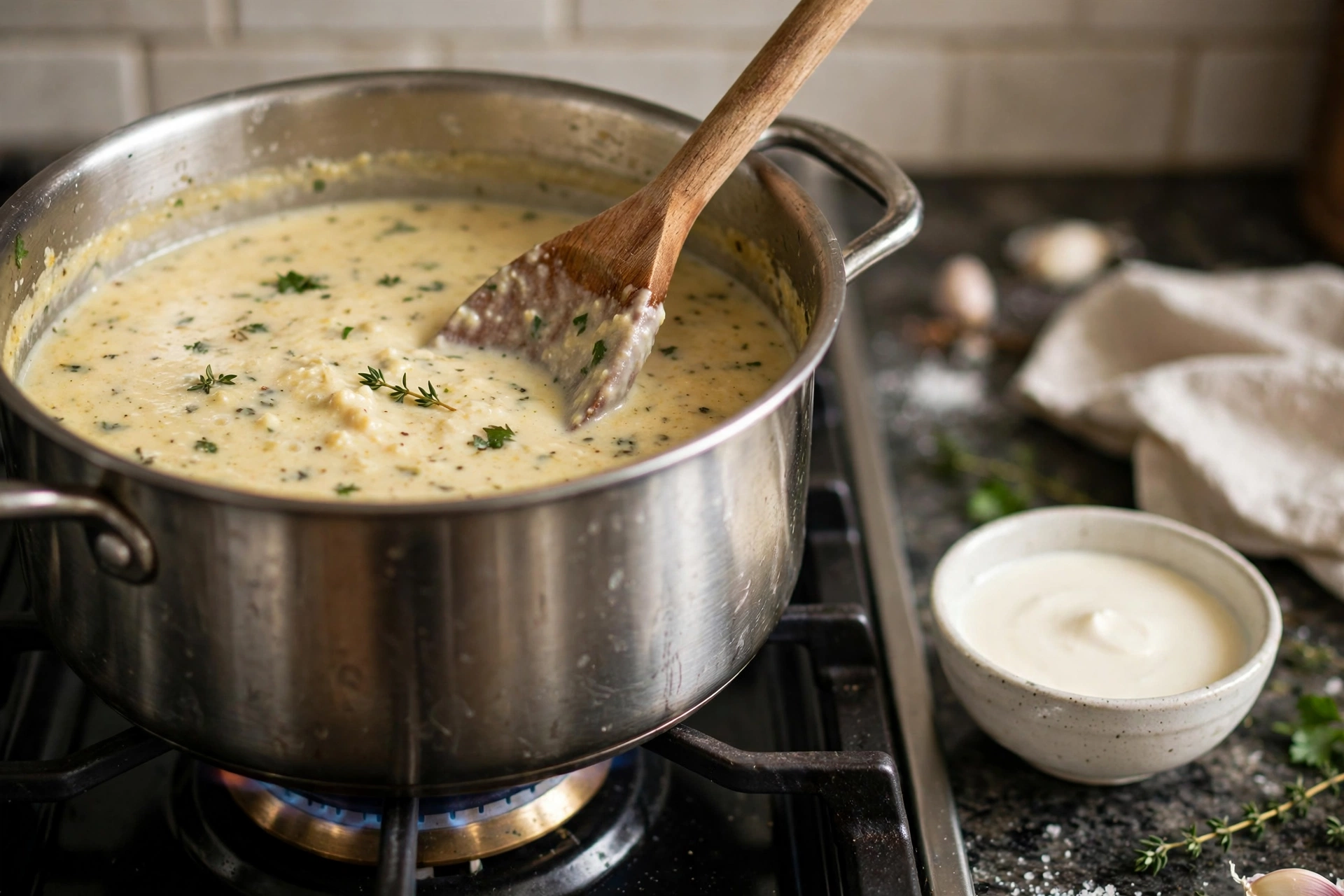
The common mistake happens in the last two minutes: cold cream poured straight into a pot of boiling soup. The soup that looked perfect a moment before turns grainy, with little flecks floating in a broth that was supposed to be smooth, and supper suddenly needs saving.
Curdling is not bad luck. It is a temperature and acid problem with specific causes, which means it has specific fixes — and one rescue for the pot that has already split.
Why Soup Curdles
Heat plus acid splits dairy. The proteins in milk and cream tighten and separate when they get very hot, and acid — tomato, wine, lemon, vinegar — makes them split faster and at lower temperatures. A creamy tomato soup lives right at that dangerous corner, which is why it curdles more than any other kind.
Low-fat dairy splits first. Fat protects the proteins, so heavy cream holds up far better than milk, and skim milk is the most fragile of all. Full-fat yogurt and sour cream sit in between, and both split readily if they boil.
The Three Habits That Prevent It
Take the pot off the boil first. Add dairy when the soup is hot but no longer bubbling — below a simmer, roughly under 180°F. Stir it in, then warm the soup gently without bringing it back to a boil.
Temper the dairy. Whisk a ladle of hot soup into the cold cream in a separate bowl, then stir that warmed mixture back into the pot. The cream arrives already warm instead of shocked, and it blends in smoothly.
Add acid last, or buffer it. A pinch of baking soda stirred into a tomato base before the cream goes in neutralizes some of the acid. Lemon juice and vinegar belong at the very end, after the dairy is in and the heat is off.
If It Has Already Split
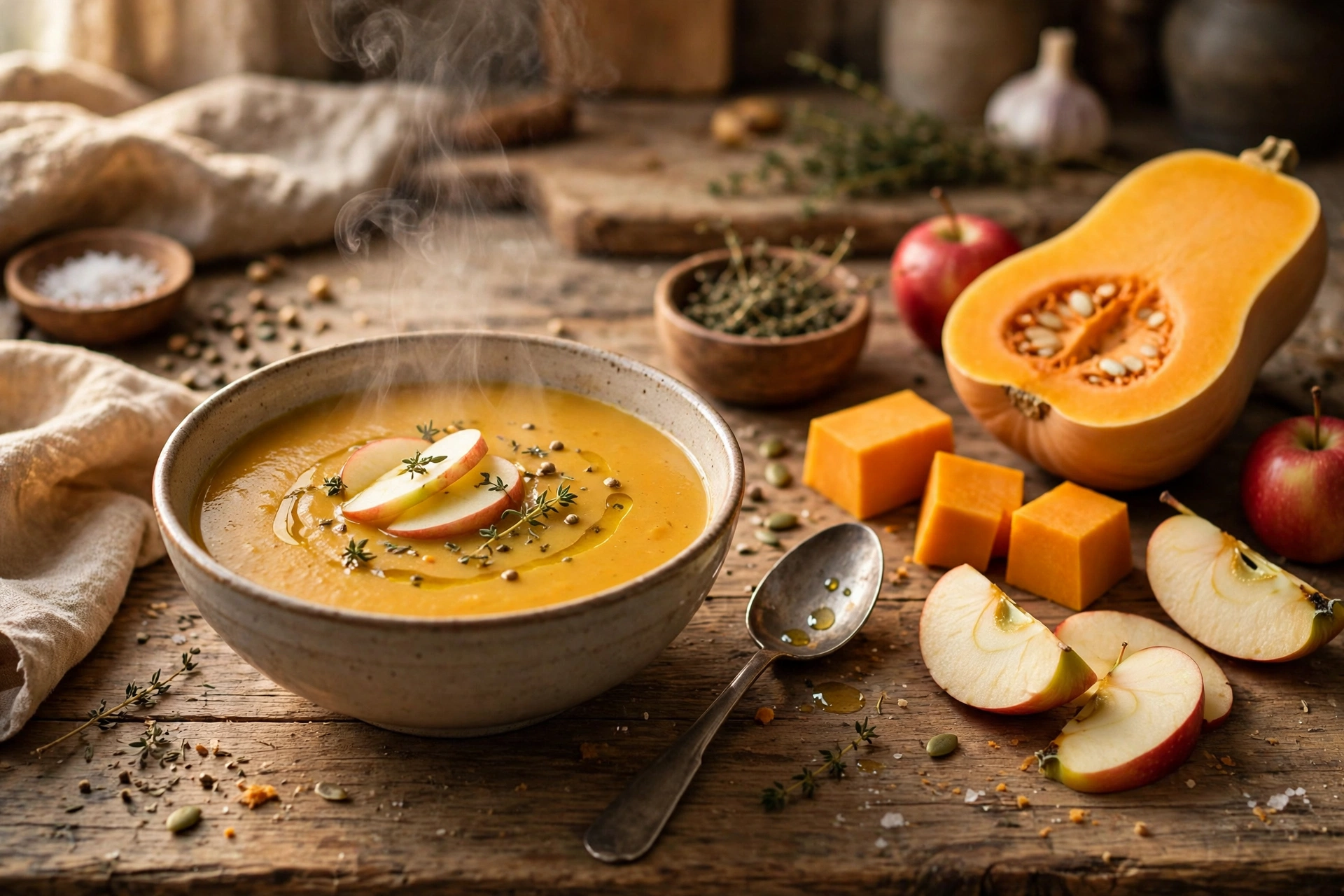
A curdled soup is safe to eat; it is the texture that suffers. Blend it briefly with an immersion blender and many soups come back together well enough to serve, especially blended soups like the butternut squash soup with apple this technique was written alongside. A spoonful of cornstarch slurry — one teaspoon of cornstarch in a tablespoon of cold water, simmered for a minute — can also pull a thin, split broth back toward smooth.
What does not work is boiling it harder and hoping. More heat only tightens the proteins further, so the rescue always starts with taking the pot off the burner.
Keep the dairy below a boil, temper it before it goes in, and put the acid in last. Follow that order and a creamy soup stays creamy, from the first bowl to the reheated leftovers.