Pine needles on a lawn are a solved problem — sweep, rake, or mow. Pine needles in decorative rock, gravel beds, and flower beds are a different kind of misery. They weave into the stone, hide under plants, and laugh at a rake, which mostly just rearranges the gravel. If you’ve ever spent an hour picking needles out of river rock one at a time, this guide is for you. Here are the methods that actually work, ranked by the surface you’re dealing with.
Why Needles Get Stuck in Rock and Gravel
A pine needle is long, thin, and slightly springy — close to a worst-case shape for stone beds. Needles slide between rocks, wedge at angles, and stack into layers that knit together. Left alone, they decompose in place, turning your clean gravel into soil that grows weeds. (That slow decay is a feature in a compost pile — see how long pine needles take to decompose — but a problem in a rock bed you’re trying to keep clean.)
Method 1: A Leaf Blower, Used Correctly
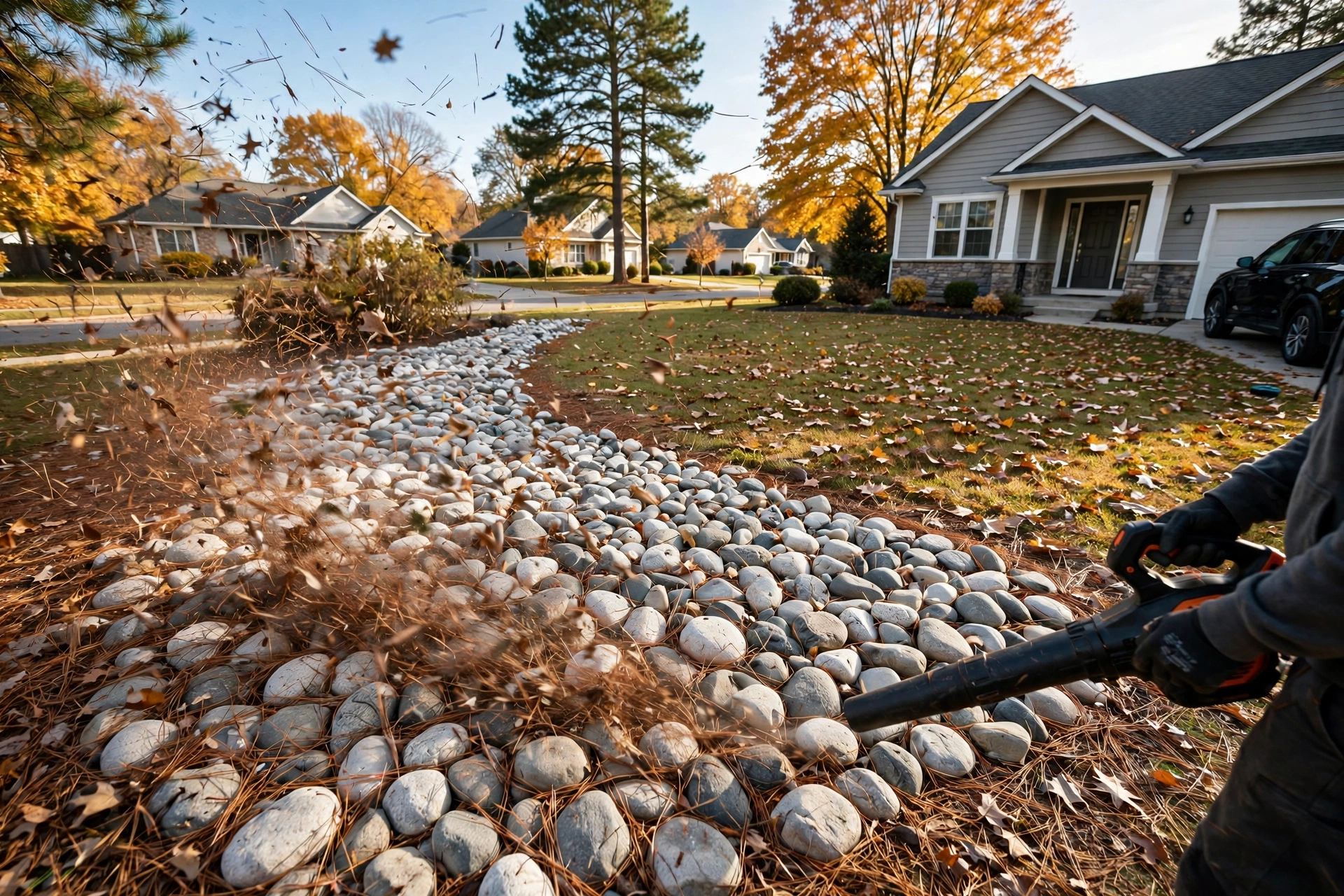
The blower is the right first tool for rock and gravel — with technique. The goal is to float needles out, not excavate the bed.
- Work at a low throttle and a shallow angle. Aim across the surface, nearly parallel to it. A steep angle at full power just blasts gravel into the lawn.
- Use short bursts from several directions. Needles wedged one way often release when air hits them from the opposite side.
- Start dry. Wet needles cling; a sunny afternoon makes every method on this list twice as effective.
- Herd, then collect. Blow needles to the bed’s edge or onto the lawn, then pick them up from there — this is where a lawn sweeper or a simple tarp-and-rake finish shines.
Method 2: A Shop Vac or Blower-Vac for Stubborn Beds
For small, high-value areas — a Zen gravel garden, rock around a patio — vacuuming is slower but surgical. A shop vac with a wide nozzle pulls needles out from between stones without moving the stone. Two tips: work when everything is bone dry, and empty often, because needles bridge and clog the hose. A blower-vac on vacuum mode does the same job with a bag that’s easier to empty into a compost or yard-waste bin.
Method 3: Hand Tools for Flower Beds
In planted beds, wind and suction are blunt instruments — you’ll shred mulch and disturb shallow roots. Better options:
- A small hand rake or cultivator to gently lift needle mats from around plant crowns.
- Gloves and patience for the last 10%. Around delicate plants, hand-picking is genuinely the fastest method.
- Reframe the problem. In many beds, the best move is to stop removing the needles at all — raked smooth, that needle layer becomes free mulch. Our guide to using pine needles as mulch explains where that works and where it doesn’t.
Method 4: Screen It — For Gravel That’s Beyond Saving
If needles have been building up in gravel for years, spot methods stop working. The nuclear option does: shovel the top layer of gravel onto a hardware-cloth screen over a wheelbarrow, shake, and the needle debris falls through while the cleaned stone stays on top. It’s an afternoon of work, but it resets a bed completely, and you only have to do it once if you keep up with seasonal blowing afterward.
Keeping Needles Out After You’ve Cleaned
- Blow beds out monthly during needle drop, not once a year. Ten minutes with a blower in October and November prevents the knitted mat that requires the screen.
- Prune lower pine branches where you can — fewer needles land in the bed directly below, and the tree’s health usually improves with better airflow.
- Choose chunkier stone for new beds. Large river rock releases needles far more easily than pea gravel, which traps them like Velcro.
- Accept a needle-mulch border. A defined pine-straw edge bed under the pines themselves catches most of the drop before it reaches your rock.
What Not to Do
- Don’t pressure wash gravel beds. You’ll scatter stone, drive needle debris deeper, and soak everything into a heavier mess.
- Don’t use a string trimmer in the bed. It shreds needles into confetti that’s even harder to remove and flings gravel at windows and ankles.
- Don’t burn needles out. Smoldering needle mats in rock beds are a fire risk near structures and mulch — and illegal in many municipalities.
Bottom Line
Blower first, vacuum for the stubborn spots, hand tools around plants, and a screen for the once-a-decade reset. Then stay ahead of it during needle drop so you never need the heavy methods again. For the lawn side of the same battle, start with our complete pine needle cleanup guide and the five easiest removal methods.