The tray comes out of the oven pale and soggy again, the vegetables steamed instead of roasted, and the dinner you pictured — browned edges, crisp bits, something worth eating on its own — never quite shows up. Most home cooks have pulled that tray out and wondered what went wrong, because the recipe sounded simple enough: toss with oil, spread on a pan, roast until tender.
The good news is that roasting vegetables is a technique with a short list of fixes, and once you know them the tray starts coming out the way you wanted it to. The vegetables were never the problem. The pan was too cool, too wet, or too crowded — usually all three at once.
If you want a dinner that puts the method to work right away, sheet pan sausage and roasted vegetables uses every move below: the vegetables go in first, with room to brown, and the sausage joins them once the pan is already hot.
Why vegetables steam instead of roast
Roasting is browning, and browning only happens when the surface of the vegetable gets hot and dry enough for its sugars to caramelize. Water is the enemy of that process, because as long as moisture is evaporating off the surface, the temperature there cannot climb past the boiling point — and no browning happens at the boiling point.
That is why a tray of wet, crowded vegetables turns soft and pale no matter how long you leave it in the oven. The pieces are sitting in their own steam, each one giving off moisture that the ones beside it then have to cook through, and the oven is fighting a losing battle against a little cloud forming right above the pan.
Every fix below is aimed at the same thing: getting moisture away from the surface so heat can do its work. None of them is fussy, and none of them needs special equipment — just a hot oven, a dry vegetable, and a pan with room to spare.
The five moves that fix it
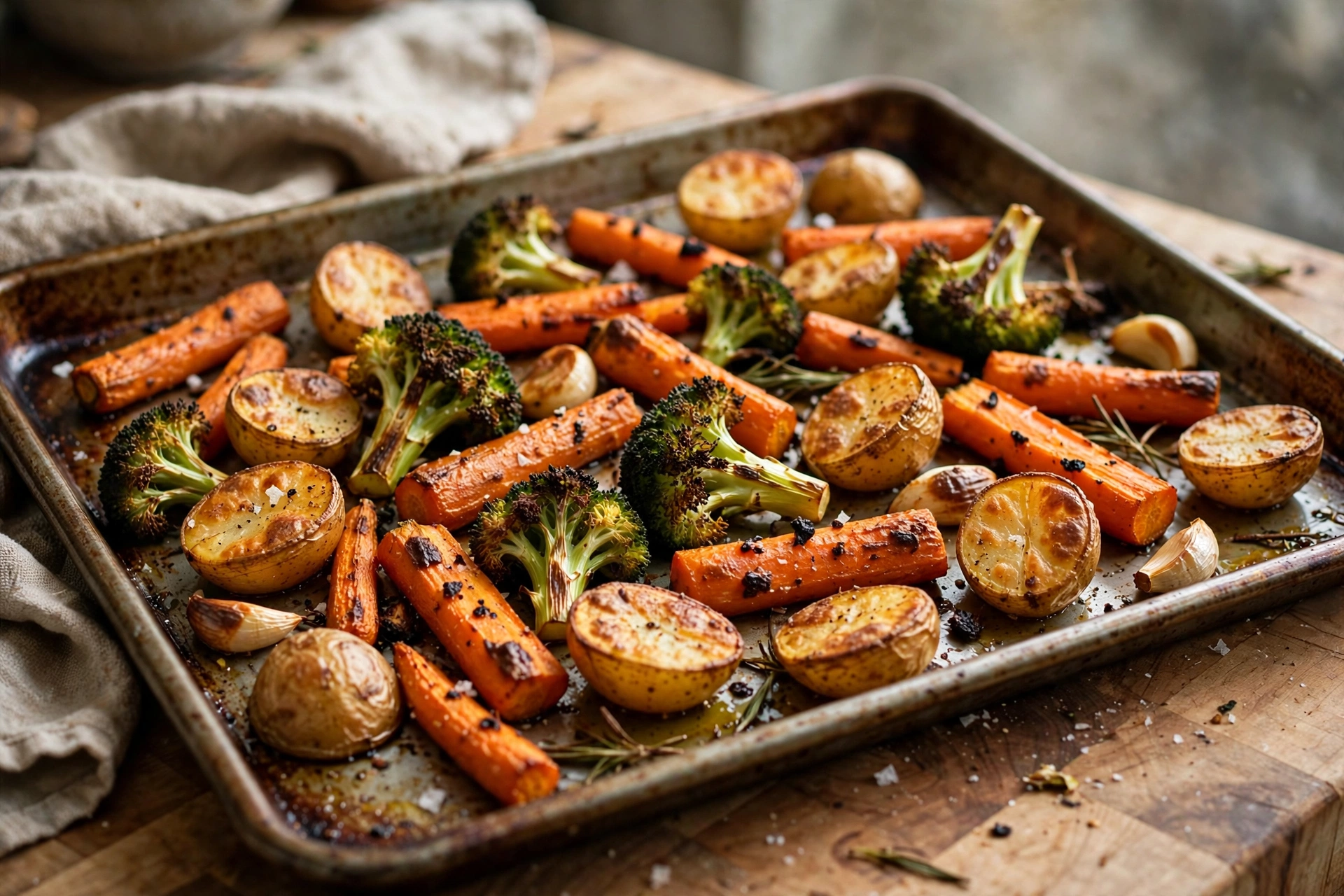
Heat: use 425°F, and preheat the pan. Most cooks land on 425°F as the sweet spot, hot enough for strong browning while the insides still soften, and 400–450°F is the working range around it. Below that range, vegetables turn pale and soft before they ever brown, because the oven cannot drive moisture off the surface fast enough. Slide the empty sheet pan into the oven while it preheats, so the vegetables sizzle the moment they hit the metal — that first contact is where browning starts.
Dry: pat the vegetables very dry. Dry surfaces matter more than anything else on this list, because moisture steams instead of browning. After washing, spread the pieces on a clean towel and pat them dry before the oil goes on, and do not skip this step when the vegetables came out of a colander still dripping. A few extra seconds with the towel is worth more than five extra minutes in the oven.
Oil: about 1–2 tablespoons per pound, just enough to coat. Oil does two jobs at once: it carries heat onto the surface of the vegetable, and it keeps the pieces from sticking to the pan. Too little and the vegetables dry out and scorch at the thin spots; too much and they fry in a puddle, which is a different dish entirely. Toss them in a bowl with the oil and seasonings, not on the pan, so the coating is even before the pieces are spread out.
Space: give every piece a pinky-finger of room. Do not crowd the pan — pieces need that finger-width of space between them, which is the chef’s rule of thumb for a reason. Crowded vegetables trap steam between them, and steam is exactly what you spent the last three moves getting rid of. When the pan looks full, it is time for a second pan, because one crowded tray roasts worse than two roomy ones, and the oven can hold both.
Cut: keep pieces a uniform 1–2 inches. Vegetables cut to the same size finish together, which sounds obvious until you are staring at a tray where the small pieces are burnt and the large ones are still raw in the middle. Aim for pieces roughly one to two inches across, and cut the thicker ends of a carrot or a wedge of cabbage a little smaller than the thin ones so the whole tray moves at the same pace.
Timing by vegetable
Not everything roasts on the same clock, so group the pan by how long each vegetable needs at 425°F. Roots take the longest: beets, potatoes, and carrots need 30–45 minutes, and they are the ones that benefit most from the head start and the preheated pan.
The middle group — broccoli, cauliflower, bell peppers, and halved Brussels sprouts — needs 20–30 minutes, long enough to brown at the edges while the centers turn tender. These are the workhorses of the roasting tray, and they are done when a fork slides in easily and the cut faces have gone golden.
The quick group — asparagus, green beans, and thin zucchini — needs only 10–15 minutes, so add them late or roast them on their own tray when dinner is nearly ready. They go from crisp-tender to limp in a hurry, and they are the vegetables most often ruined by being treated like potatoes.
Whatever the vegetable, the doneness test is the same: a fork slides in easily, and the edges are browned. And when there are leftovers, reheat them on a sheet pan at 425°F for 6–10 minutes, not in the microwave — the microwave steams them all over again, which undoes everything the oven just did. A tray of roasted roots beside a bowl of creamy parsnip and apple soup is a good use for the second night, too.
Start with one change and the rest follows, and the change to make first is giving the pan room. Spread the vegetables out, let the heat reach every piece, and the tray that used to come out pale starts coming out browned — which is the whole point of roasting in the first place.