Yellow leaves with green veins on a blueberry bush mean the soil is too sweet for the plant to feed itself — and the mulch on top won’t fix that. Cypress mulch will not make the soil acidic, however much of it you spread, but that does not make it a bad mulch. It makes it the wrong tool for the job most people buy it for.
The short answer is that cypress mulch works fine as a mulch for blueberries, and it fails as a soil fix. If your soil pH is already where blueberries want it, cypress mulch will do the ordinary mulch jobs — hold moisture, keep weeds down — as well as anything else. If the pH is wrong, no mulch on the market will correct it, and cypress is the one mulch you have a second reason not to buy.
What the yellow leaves are telling you
Blueberries are fussy about soil in a way most garden plants are not. They need acidic soil, pH 4.5 to 5.5, and when the pH climbs above that range the plant cannot take up iron from the soil, even when the soil holds plenty of it. The leaves turn yellow while the veins stay green — the classic sign of iron chlorosis — and the bush stalls, then stops fruiting.
That is a soil chemistry problem, and it has a soil chemistry fix. A soil test tells you the actual pH, and elemental sulfur, applied in the fall, is the standard way to bring it down. What the test will also tell you is that mulch never appears in the recommendation, because mulch does not change soil pH in any way that matters. A layer of anything spread on the surface sits on top of the soil, and soil is stubborn about quick pH changes — the needles, bark, and chips break down slowly, and the soil’s own buffering swallows the small acidity they release.
So the first step is not a mulch decision at all. Test the soil, fix the pH with sulfur if the test says so, and then choose a mulch for what mulch actually does. Our soil pH amendment calculator works out how much sulfur or lime your soil needs once you have the test numbers.
Will cypress mulch make the soil acidic?
No — and neither will pine needles, pine bark, or any other mulch spread on the surface. Extension services across the country have spent years busting this particular myth, because it sounds so reasonable: acidic material on top, acidic soil underneath. In practice the effect is so small that researchers describe it as no more than any other mulch, and generally too slight to measure in a home bed.
Used year after year, the same mulch can slowly nudge the pH — which is one more reason to test the soil every year and switch mulch types now and then. But a single season of cypress mulch, or five seasons of it, will not pull a pH of 6.5 down to the 4.5 to 5.5 range blueberries need. If you are buying cypress mulch because someone told you it acidifies the soil, save the money.
What cypress mulch does well — and where it falls short
As a mulch, cypress does the standard jobs. It holds moisture in the soil, keeps the soil temperature steadier through hot afternoons, and suppresses weeds as well as any shredded bark. It earned its reputation as a long-lasting wood mulch, back when it came from old-growth heartwood.
The problems start with how it behaves once it is down. Cypress mulch is usually sold finely shredded, and fine-textured mulch can knit together into a mat that sheds water once it dries out — a heavy rain runs off the top instead of soaking through to the roots. Buy shredded, not nuggets, for the opposite reason: the big pieces float off in a hard rain and end up in the lawn. And if the chips are fresh rather than aged, they pull nitrogen out of the soil while they break down, which is the last thing a struggling blueberry bush needs — let fresh chips sit and age for a few months before they go near a plant.
Then there is the reason that has nothing to do with how it performs. Cypress trees grow in freshwater swamps, they are slow-growing, and they are not replanted as a crop the way pines are. Much of the cypress mulch on the market today comes from young trees cut specifically for mulch, and those young trees do not have the rot and pest resistance the old-growth wood was famous for. The University of Florida’s Extension service does not recommend buying cypress mulch at all, and Florida’s own landscaping program says the same — the trees are needed in the swamps, where they filter water and shelter wildlife.
The mulches that suit blueberries better
Pine bark is the straightforward pick. It is a byproduct of the timber industry rather than a tree cut for mulch, it is acidic as a material without pretending to fix your soil pH, and it breaks down into the kind of loose, airy layer blueberry roots like. Rotted sawdust works the same way, and pine needles do too — see our pine needle mulch guide for blueberries and acid-loving plants for how the three compare.
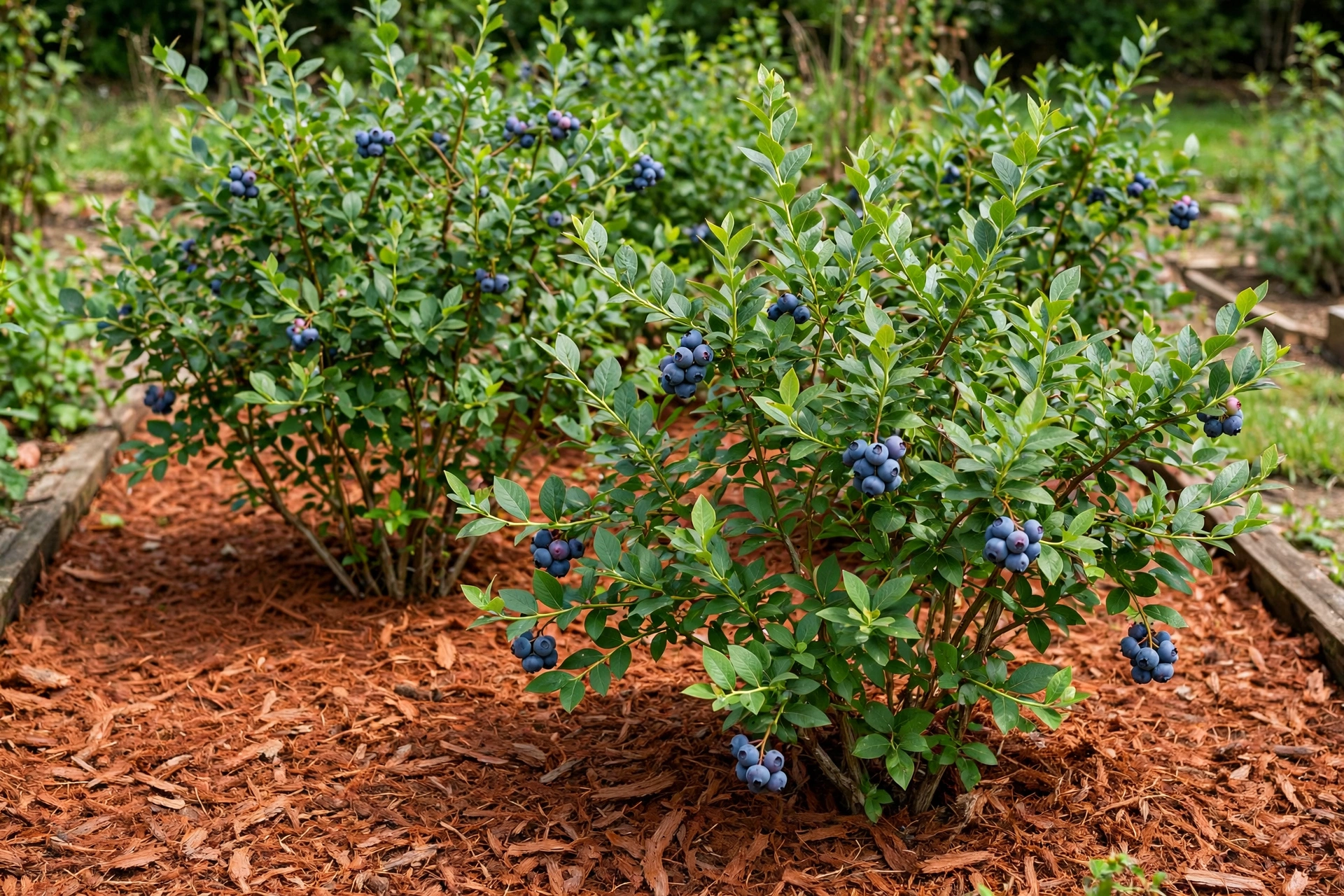
Blueberries get a deeper layer than most shrubs — 4 inches, spread out to the drip line and replenished as it breaks down. Their roots run shallow, so the mulch is doing more of the moisture work than it does under a deep-rooted shrub. Keep it pulled back from the stems, the same as any mulch, so the bark stays dry.
None of this makes cypress mulch harmful to blueberries. If a bed already has cypress mulch on it, there is no reason to strip it off — check the pH, fix that if it needs fixing, and let the mulch finish its season. But when you are standing in the aisle choosing what to buy next, pine bark does the same job without the sustainability question.
Bottom line
Do not buy cypress mulch for your blueberries. It will not acidify the soil, it can mat and shed water when it dries, and the trees it comes from are worth more standing in a swamp than shredded in a bag. Test the soil, bring the pH down with sulfur if the test calls for it, and mulch with pine bark or pine needles at 4 inches deep. That is the combination that actually grows blueberries.