Blueberries are fussy about their root zone in a way most garden plants are not. They want soil that stays moist, stays loose, and stays acidic — roughly pH 4.5 to 5.5 — and a mulch that helps on all three counts without smothering shallow roots. Pine needles fit that job well, but not for the reason most gardeners repeat.
Pine needles will not turn alkaline soil acidic on their own. What they do, reliably, is protect acidity you have already built, keep moisture in, and keep weeds out. That distinction matters, because a gardener who mulches and waits for the pH to drop will wait a long time.
Why blueberries want what pine needles offer
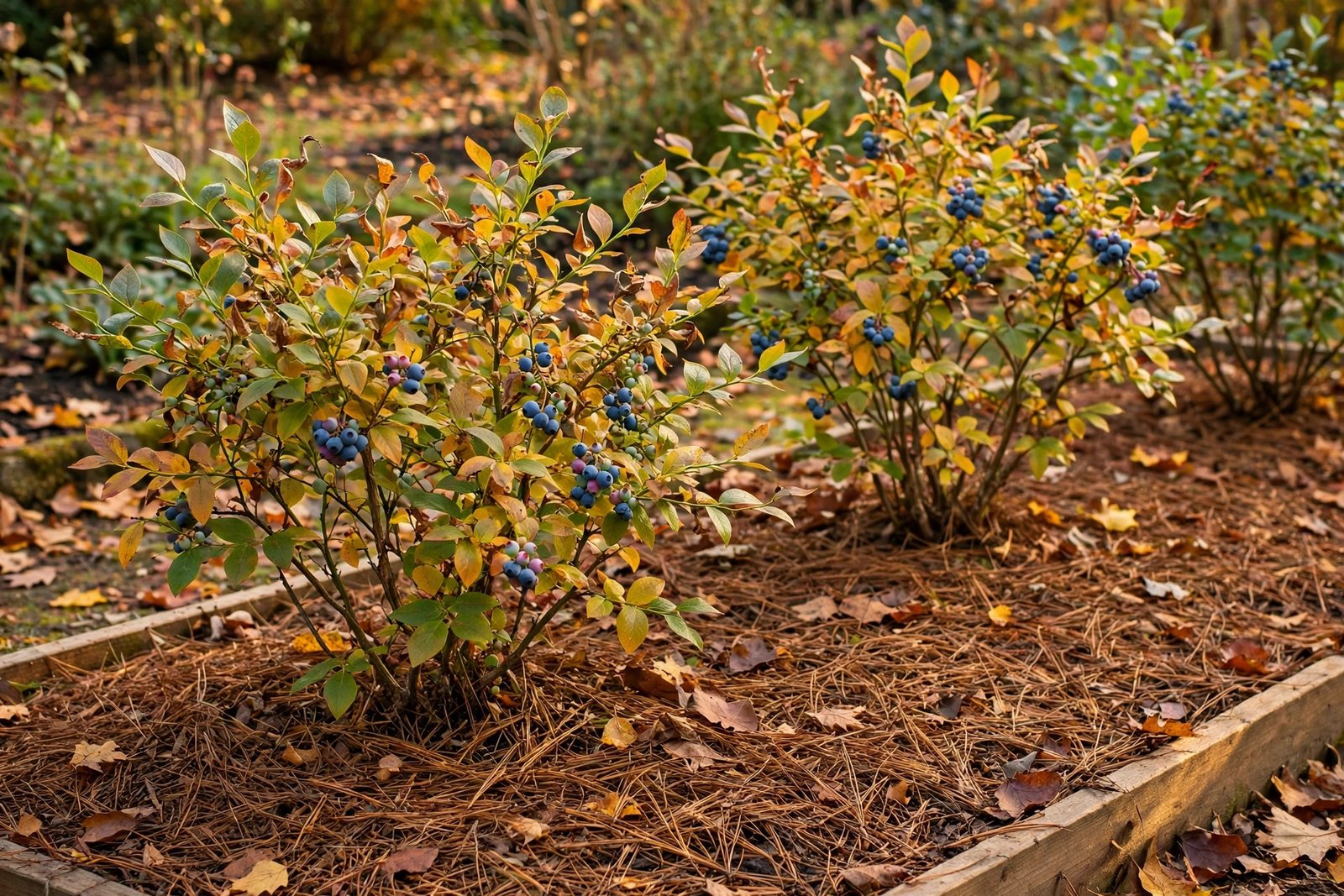
Blueberry roots run shallow and fine, close to the surface where drying out happens first. A bare bed swings between wet and dry, and every swing costs the plant. Pine needles lie loosely, so water passes through instead of sheeting off, and the layer underneath stays evenly damp.
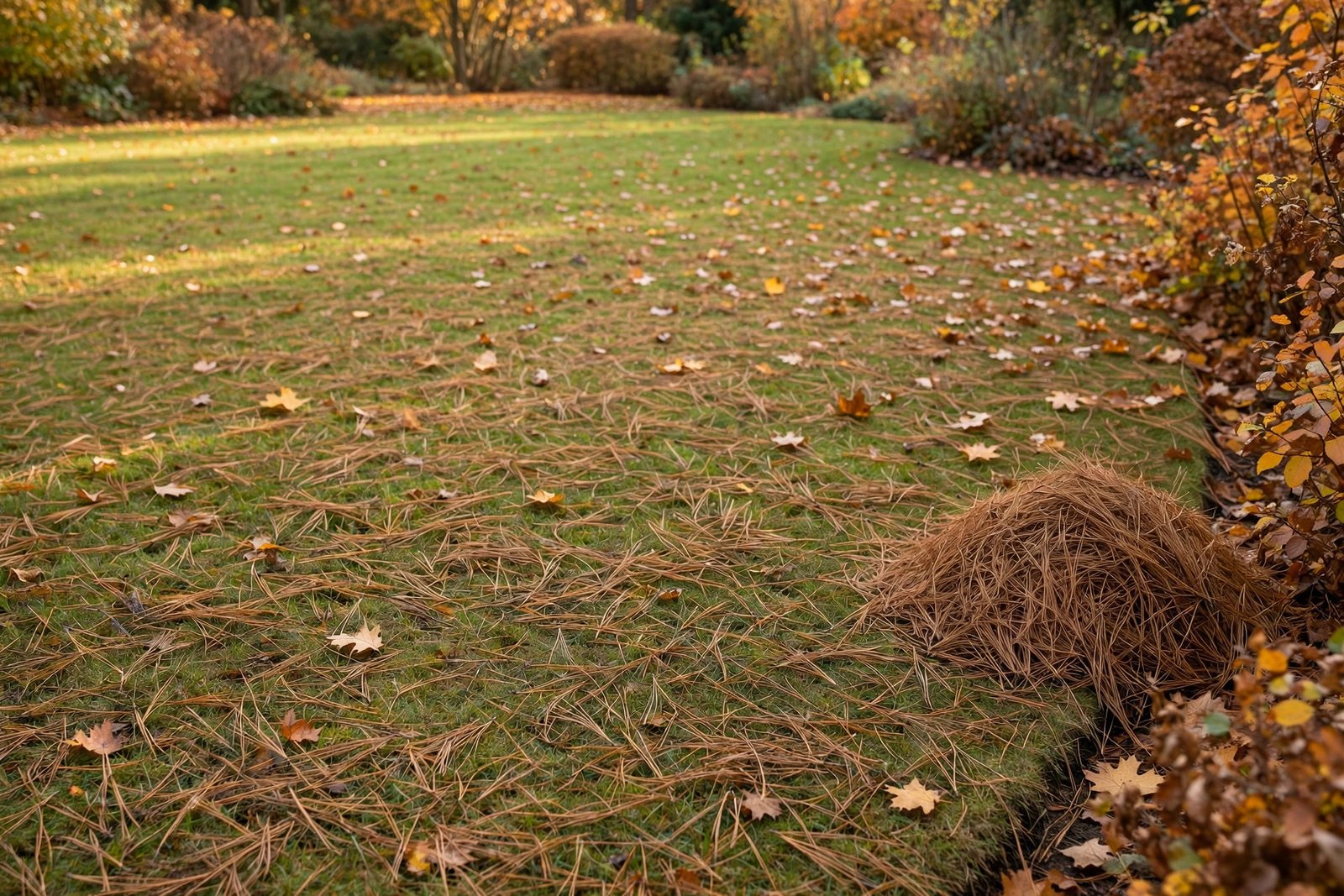
The same loose structure lets air reach the roots. Heavy, matted mulches can seal a bed shut; long pine needles interlock without packing down into a mat. That is one reason long-needle straw is preferred over short, chopped needles for blueberries.
Then there is the acidity question. Fresh needles test acidic, but as they break down at the surface, university extension research finds little lasting effect on established soil pH. The mulch layer does not raise pH the way hardwood bark or limed compost can, so it holds the window you worked to create rather than eroding it.
Test first, mulch second
Before you spread anything, test the soil. A lab soil test through your local extension service is the reliable route, and it tells you more than pH alone. If your reading sits above 5.5, pine needles alone will not fix it.
To actually lower pH, use elemental sulfur at label rates, applied well ahead of planting, and retest after several months. Sulfur works slowly. Once the soil is in range, pine needle mulch helps keep it there. Think of the mulch as the lid on the jar, not the ingredient inside it.
If your soil already sits between 4.5 and 5.5, you can skip the sulfur conversation entirely. Mulch, water, and retest once a season, and you have done the main work.
How to mulch blueberries with pine needles
Clear the base. Pull weeds and old, matted mulch away from the crown first. Leave a gap of 2 to 3 inches between the mulch and the stems so moisture does not sit against the bark.
Spread 3 to 4 inches deep. Extend the layer out to the drip line, the circle under the outermost branches, where the shallow roots actually feed. A thin scattering does almost nothing; depth is what holds moisture and blocks weeds.
Water before you mulch, not after. Wet soil under a dry mulch layer stays wet longer. If you mulch a dry bed and then sprinkle the top, the needles can shed light rain before it soaks in.
Top up once a year. Pine needles break down slowly, so one annual top-up, usually in spring before new growth, keeps the depth right. Do not pile fresh needles on top of a thick, undecomposed layer year after year without checking what is underneath.
What about other acid-loving plants?
The same logic holds for rhododendrons, azaleas, camellias, and mountain laurel, all of which prefer acidic, moist, well-drained soil. Pine needle mulch suits them for the same reasons: moisture, air, and a mulch that does not push pH upward.
It is less useful as a cure-all elsewhere. Plants that prefer neutral soil gain nothing special from pine needles, and the needles will not harm them either — the effect on pH is small either way. Use pine needles where the plant wants what they offer, not as a general acidifier.
The mistakes that undo the good
Mulching against the stems. The volcano pile that traps moisture against bark invites rot. Keep the gap.
Counting on mulch instead of a soil test. If leaves yellow between the veins, that points to iron becoming unavailable as pH climbs — a soil problem, not a mulch problem. Test, amend, then mulch.
Using short, dusty needles. Short needles pack down and shed water. Long-needle straw stays loose and breathable, which is the whole point.
What to watch next
After mulching, the signs of success are ordinary and reassuring: soil that stays damp a knuckle down on a dry week, few weeds poking through, and steady green growth through summer. If the bed dries out fast anyway, check depth first — most thin-mulch problems are depth problems.
For more on using pine straw in garden beds generally, see how to use pine straw in garden beds, and if you are weighing it against bark, pine needle mulch vs bark mulch lays out the trade-offs. When the old layer finally breaks down, composting pine needles puts it to work instead of the bin.