September does more for a cool-season lawn than April and May combined, and that single fact rearranges the whole calendar. Most lawn effort still lands in spring, because spring is when the yard looks worst and the garden centers are full. The grass itself disagrees.
A lawn care timeline built around the grass, rather than around the shopping season, puts the heavy work in early fall, treats spring as setup, and asks very little of summer beyond water and a high mower. It is written for tall fescue, Kentucky bluegrass, and perennial ryegrass lawns.
Get the two or three jobs in each window right and the rest of the season mostly takes care of itself. Miss the fall window, and no amount of spring effort quite buys it back.
The year at a glance
| Month | Season job | What matters most |
|---|---|---|
| March | Early spring setup | Soil test; pre-emergent when soil reaches 50–55°F |
| April | Early spring | Light cleanup, first mow, hold fertilizer light |
| May | Late spring | Mow high, spot-treat weeds, watch watering |
| June | Early summer | Deep, infrequent watering; grub watch begins |
| July | Summer hold | Mow at 3–4 inches; let stressed grass rest |
| August | Late summer prep | Order seed; plan aeration and overseeding |
| September | Early fall — the big window | Aerate, overseed, starter fertilizer |
| October | Fall growth | Keep new seed moist; keep mowing as grass grows |
| November | Late fall | Winterizer fertilizer, leaf removal, final mow |
| December | Winter | Mower winterized; stay off frozen grass |
| January | Winter planning | Review the soil test; order what fall will need |
| February | Late winter | Sharpen blades; watch soil temperature, not dates |
Early spring: test first, then hold back
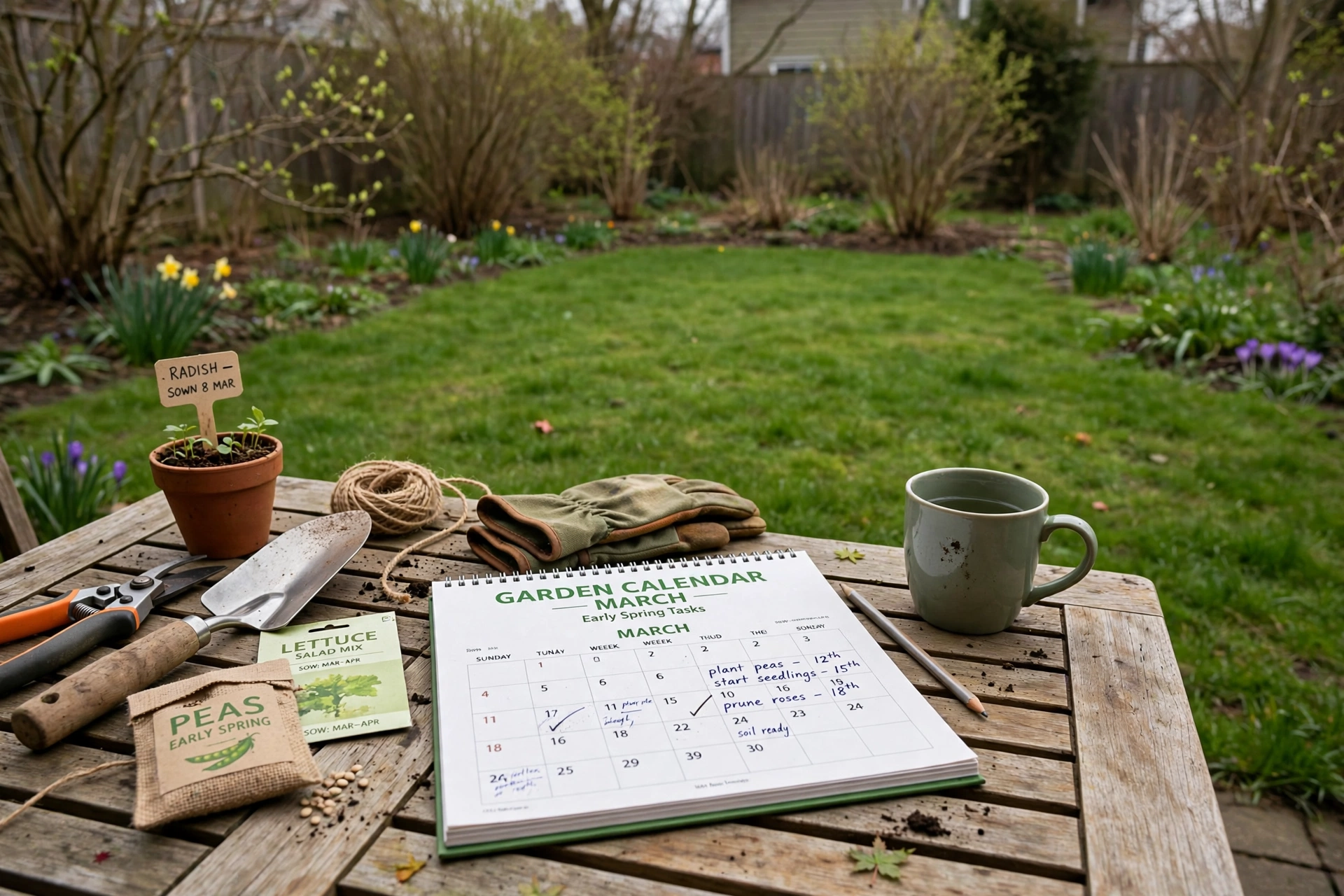
Early spring opens with information, not product. A soil test taken as soon as the ground can be sampled tells you the pH and the phosphorus and potassium levels you will be managing all year, and it costs less than one bag of fertilizer bought on a guess.
The one timed job is crabgrass pre-emergent, and the trigger is soil temperature, not a date on the wall. Applied when soil at a 2-inch depth holds between 50 and 55°F for several days, it forms its barrier just before crabgrass germinates. Our crabgrass pre-emergent timing checker turns that temperature rule into a go or wait answer for your own yard.
Cleanup stays light. Rake out matted patches where snow mold flattened the grass, clear sticks and gravel the plow left behind, and leave heavy dethatching alone, because tearing at tender spring roots opens more ground for weeds than it closes.
Late spring: feed lightly, mow high
By May the lawn is growing faster than at any other point in the year, and the temptation is to push it harder with a heavy feeding. Resist the size of that bag. A light application is plenty in spring, because the serious nitrogen belongs to fall, when it builds roots instead of forcing blade growth you then have to mow twice a week.
Set the mower at 3 to 4 inches and keep it there. Taller grass shades the soil surface, which keeps crabgrass seed in the dark it needs to stay dormant, and it drives roots deeper before summer heat arrives.
Weeds get spot treatment now, not a blanket spray. A dandelion here and a patch of clover there are individual problems, and pulling or spot-spraying them uses a fraction of the product a whole-lawn application would.
Summer: water deep, then leave it alone
Summer care reduces to one number: about 1 inch of water per week, delivered in one or two deep soakings rather than a daily sprinkle. Deep watering trains roots downward, toward the moisture that survives a hot week. Daily light watering does the opposite, keeping roots at the surface where the heat hits first.
Keep the mower at the top of its range, 3 to 4 inches, and mow in the evening when the grass is not already fighting midday heat. A brown patch in July is not automatically a dead patch. Cool-season grass going dormant in a dry spell is protecting itself, and it greens back up when rain and cooler nights return, provided the crowns stayed alive on that inch a week.
Grubs are the summer watch item. If a section of turf lifts like a loose rug in late summer and the roots underneath are chewed short, that is grub feeding, and it is worth confirming with a square-foot dig before treating anything.
Early fall: the window the year turns on
September into early October is the best growing weather a cool-season lawn gets: warm soil, cool air, reliable rain, and almost no weed pressure. Seed sown now germinates fast and has two full seasons of root growth, fall and spring, before it faces its first summer.
Core aeration comes first where soil is compacted, pulling small plugs so air, water, and seed reach the root zone. Overseeding follows right behind it, with seed worked into the opened soil. The grass seed calculator works out how much seed a yard actually needs by its square footage and grass type, which keeps the rate honest.
A starter fertilizer at seeding gives the new grass phosphorus where the roots are forming. Keep the seeded ground consistently moist until germination, which usually means short, light waterings rather than the deep soakings of summer. Fall does more than spring for a simple reason: spring seed competes with crabgrass and runs straight into heat, while fall seed competes with almost nothing and runs into winter dormancy with established roots.
Late fall: close the year properly
The last fertilizer application of the year, the winterizer, goes down while the grass is still green but has slowed its top growth, usually around the final mow. That timing sends nitrogen to root growth and carbohydrate storage, which is what carries the lawn through winter and greens it up early the next spring. Our guide to the best winterizer fertilizer for cool-season lawns covers rates and timing in detail.
Leaves are a deadline, not a chore to postpone. A mat of wet leaves left on the grass through winter smothers the turf underneath and invites snow mold, so mulch-mow them into small pieces while the layer is thin, and rake or remove whatever piles up deeper than the mower can shred.
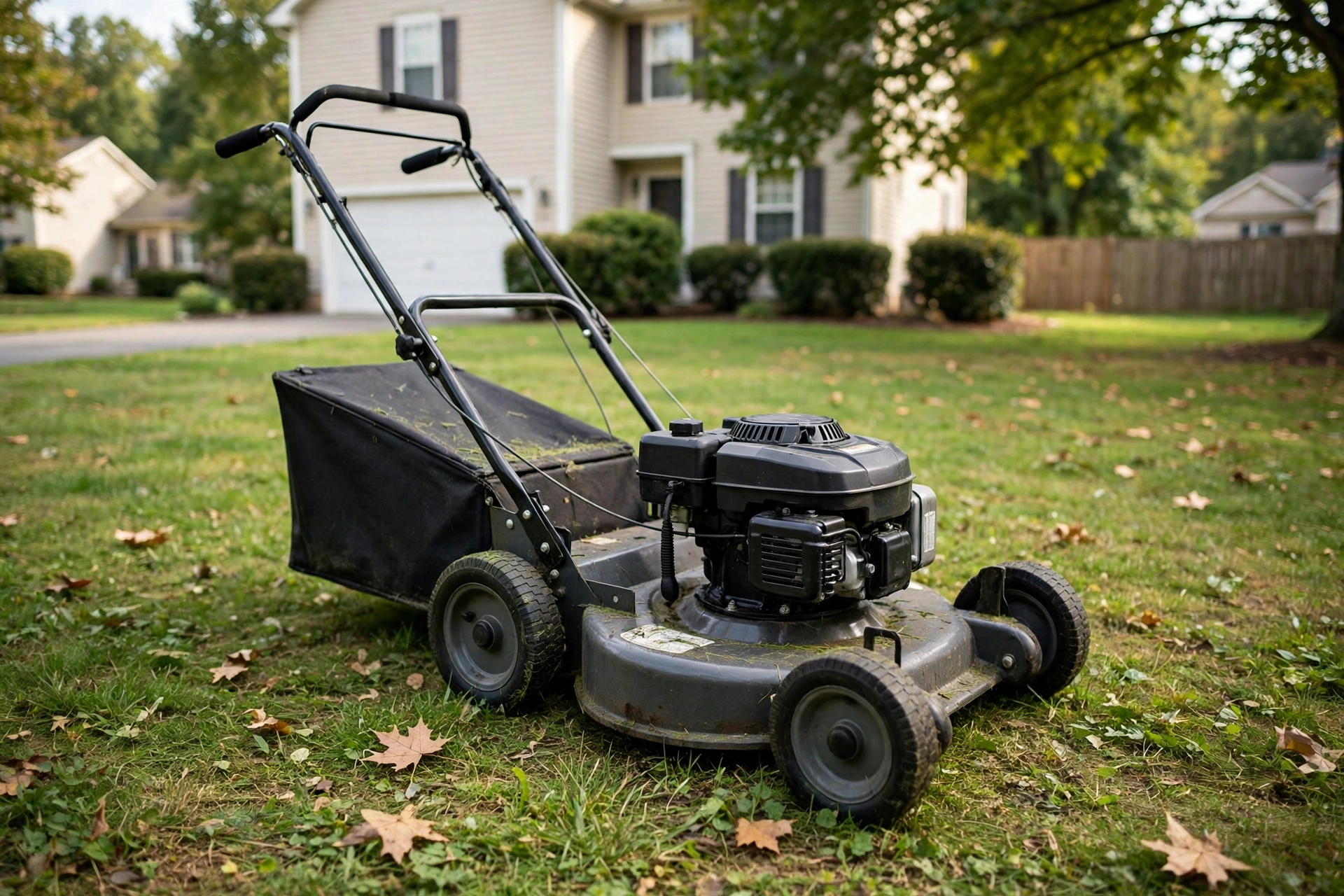
Drop the mower slightly for the final cut, to around 2.5 to 3 inches, then winterize the machine itself: run or drain the fuel as the manufacturer directs, clean the deck, and sharpen the blade now so April does not start with a repair queue.
Winter: stay off, plan ahead
Frozen grass breaks. Foot traffic on a frosted or frozen lawn snaps the brittle blades and can kill the crowns beneath them, which is why the brown footprints across a winter lawn in March so often trace the shortcut to the mailbox. Keep to paths and pavement until the thaw.
The quiet months are when the next year gets decided on paper. Read the soil test again, note which sections stayed thin despite correct watering, and order seed and pre-emergent before the spring rush empties the shelves.
If your lawn is warm-season instead
Bermuda, zoysia, and St. Augustine lawns run the same year shifted and partly reversed. Their big growth season is summer, so their main fertilizer applications land in late spring and summer rather than fall, and overseeding is rarely part of the program at all.
Pre-emergent timing follows the same 50 to 55°F soil rule in spring, with a second fall application aimed at winter annual weeds. Dormancy is a winter event for these grasses, turning them straw-brown at the first frosts, and the winterizer feeding that anchors a cool-season year does not apply. Read the month table above as a cool-season schedule, and move the feeding weight from fall to summer if your lawn goes brown in winter and thrives in July.
The short version worth keeping
Test the soil in spring and time pre-emergent by temperature. Feed lightly in spring, water deeply in summer, and save the real work for September, when aeration, seed, and starter fertilizer do a full season of repair in about six weeks.
Then close the year with a winterizer, a clean leaf removal, and a mower put away ready. Do the fall work well and the lawn asks very little of you until the soil warms again.