Your lawn is hard underfoot, water pools instead of soaking in, and the grass thins no matter how much you feed it. A bottle promises to fix all of that without renting a machine. A core aerator promises the same thing with a lot more sweat. Only one of them has the evidence behind it.
Here is the honest version: liquid aeration can help some lawns a little. It cannot do what core aeration does. Knowing which problem your lawn actually has tells you which one is worth your money.
What each one actually is
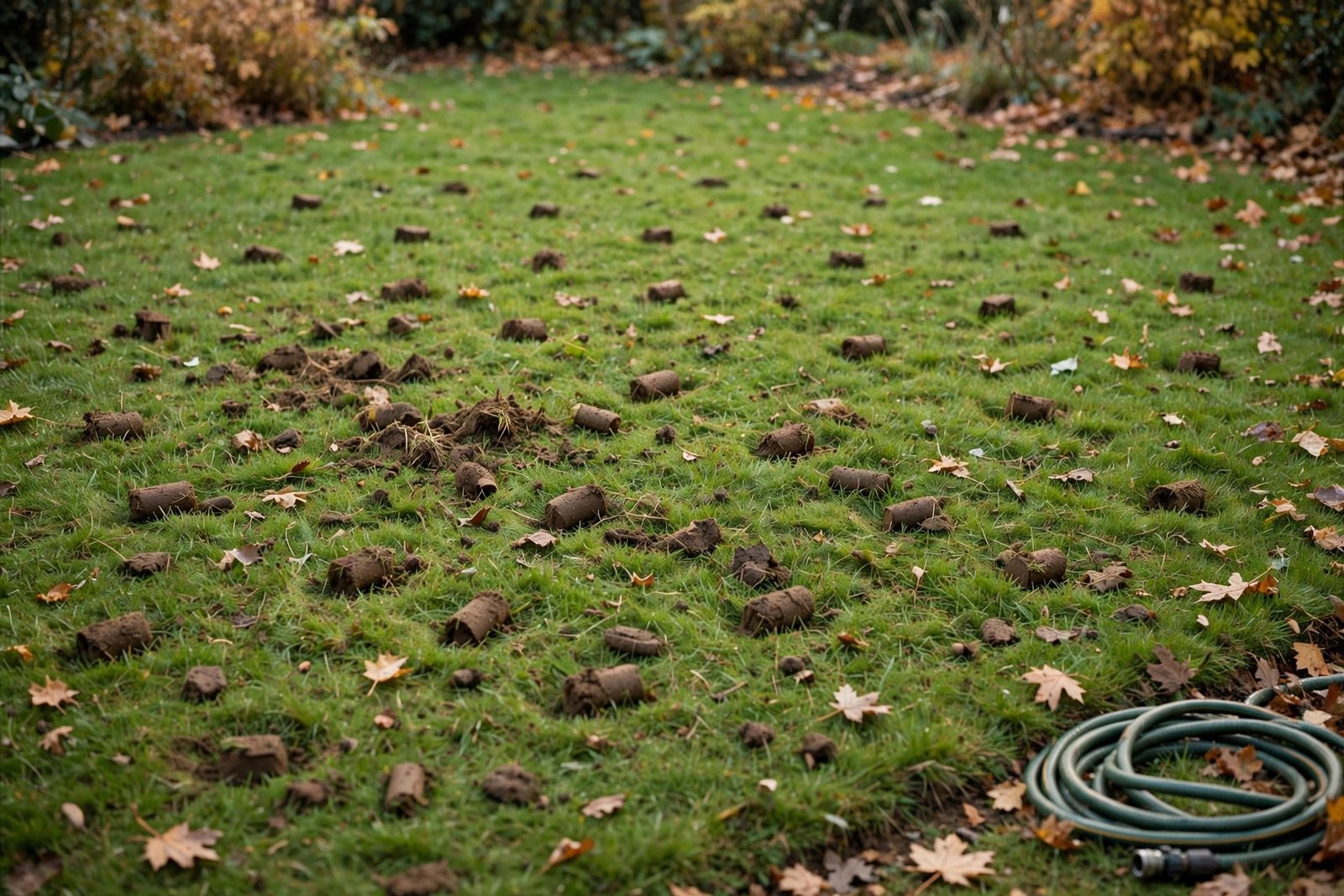
Core aeration is mechanical. A machine drives hollow tines into the soil and pulls out small plugs, leaving open channels for air, water, and nutrients to reach the root zone. The plugs break down on the surface over the following weeks and act as a light topdressing. Nothing about it is mysterious, which is exactly why university turf programs recommend it.
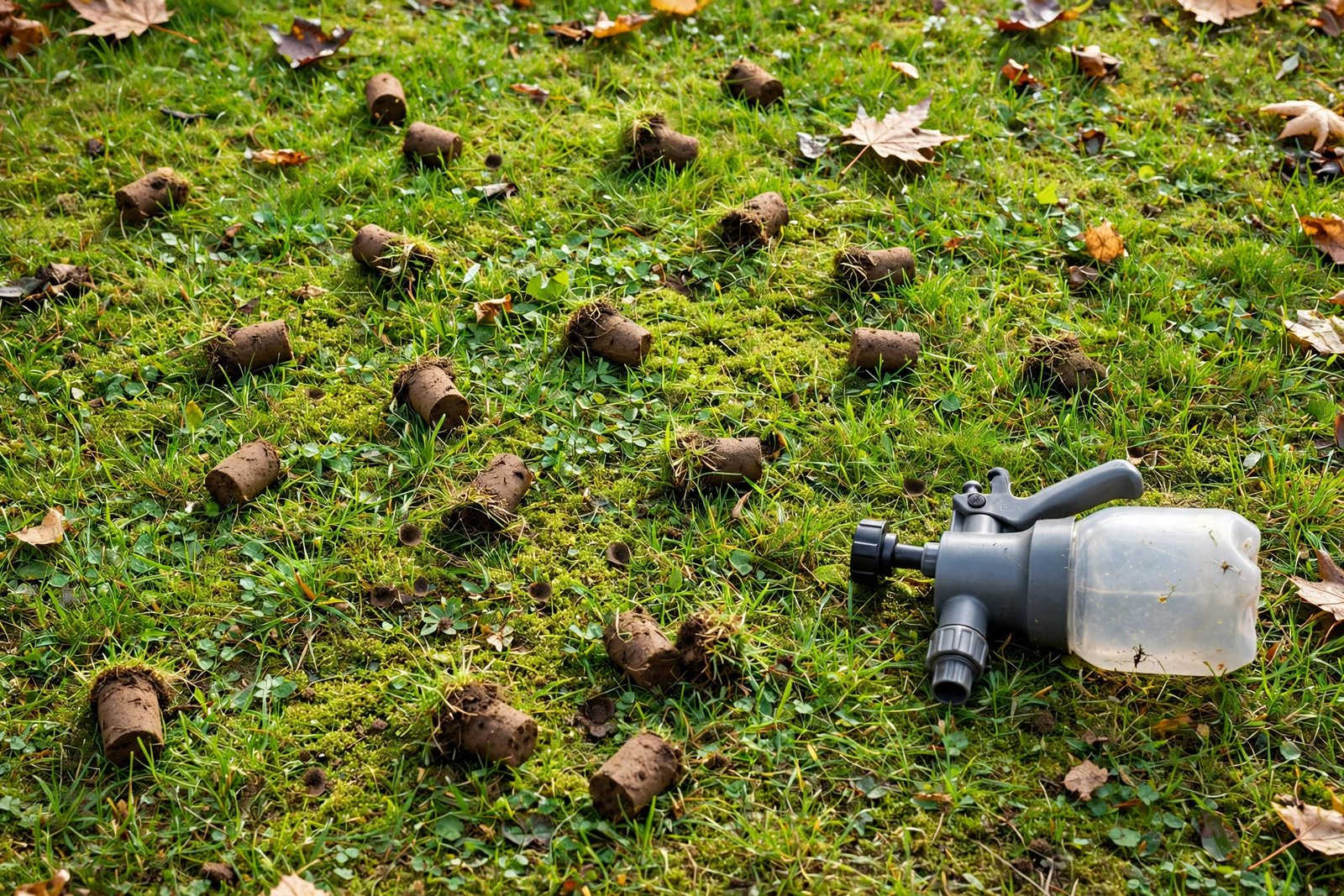
Liquid aeration is a spray. The products vary by brand, but most contain soap-like surfactants, liquid humates (essentially liquid organic matter, sometimes seaweed-based), and “biostimulants” such as molasses. You spray the mixture on the lawn and water it in. The surfactant lowers water’s surface tension, which helps water spread and penetrate instead of beading on the surface. That is a real effect — and it is a much smaller effect than removing soil.
What the research says
University extension programs have looked at this question directly, and their answers are unusually blunt. Nebraska Extension, answering a homeowner who asked whether liquid products relieve compaction, concluded there is no evidence any of these products have been scientifically evaluated for effectiveness, calling it wishful thinking to believe a diluted spray solution will change compacted soil. Colorado State University’s extension answer is the same in different words: there is no chemical substitute for physical remediation of soil compaction, and at best these products provide a minor wetting-agent effect.
The reasoning is physical, not ideological. Compaction means soil particles have been pressed together until the pore space between them is gone. A surfactant does not move soil particles. It cannot create the macropore space that roots and water need, no matter how concentrated the bottle claims to be. Core aeration creates that space by removing soil. That is the whole difference, and no ingredient list gets around it.
Diagnose your lawn before you choose
Not every hard, thin lawn is compacted, and the distinction decides whether a liquid product has any role at all. Run two quick checks before you buy anything.
The screwdriver test. Push a long screwdriver into moist soil in the problem area. If it slides in easily in some spots and stops dead in others, you are likely looking at compaction or a shallow layer of thatch. If it stops everywhere at the same shallow depth, the problem may be a thin soil layer over construction fill or rock, which neither aeration method fixes.
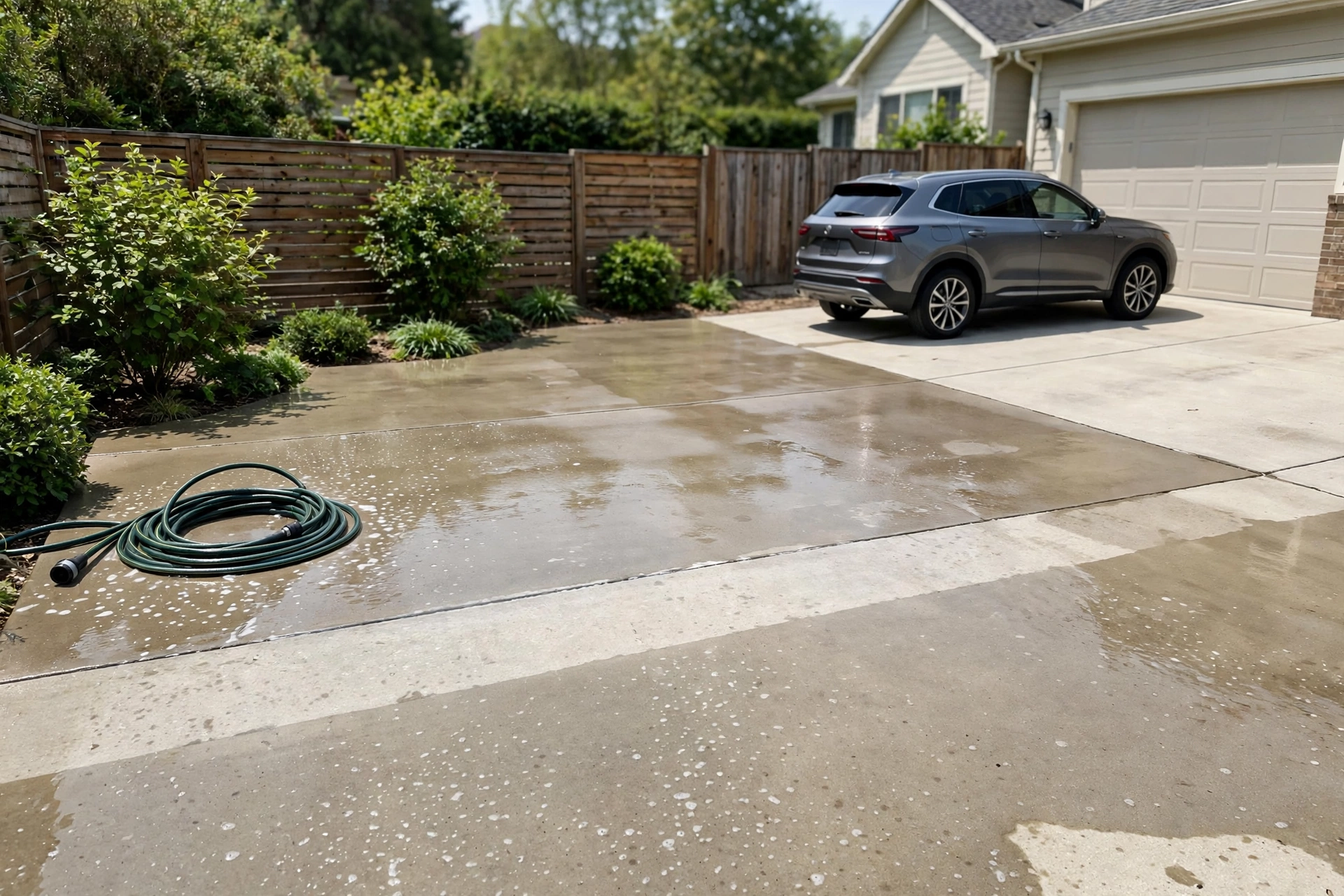
The puddle test. After a rain or a watering, watch where water sits. Water that pools on the surface and then drains within an hour or two points to slow infiltration — the one situation where a wetting agent can genuinely help. Water that stands for a day points to grade or drainage trouble, which is a different repair entirely. And a lawn that feels spongy underfoot with a thick mat of undecomposed stems at the surface has a thatch problem; liquid sprays do not remove thatch either.
Head to head
| Question | Core aeration | Liquid aeration |
|---|---|---|
| What it does | Physically removes soil plugs, opening channels for air, water, and roots | Sprays surfactants and humates that help water penetrate the surface |
| Compaction relief | Direct and immediate, proven across soil types | No peer-reviewed evidence of compaction relief |
| Sandy or water-repellent soil | Works well here too | The one case where it can genuinely help, as a wetting agent |
| Seedbed preparation | Creates seed-to-soil contact; overseeding after aeration is standard practice | Does not prepare a seedbed or improve seed contact |
| Effort and mess | Machine rental or hire, plugs on the lawn for a few weeks | Spray and water in, no mess, repeated applications |
| How often | Nebraska Extension suggests compacted areas at least once a year, twice if compaction is severe | Typically multiple applications per season, with effects that fade |
When liquid aeration earns its money
Liquid products are not useless. They are mis-sold. A liquid aerator earns its modest cost in exactly one situation: a sandy or water-repellent lawn where water beads and runs off instead of soaking in, and where genuine compaction is not the main problem. In that case the wetting-agent effect is real, and a spray between core aeration cycles can help water reach the roots more evenly.
It also earns a place as a maintenance treatment, not a replacement. If you core aerate in the fall and want to support water penetration through the following summer, a liquid product is a reasonable, low-effort supplement. What it is not is a substitute for the machine when your soil is clay, your yard carries heavy foot traffic, or your screwdriver stops at two inches.
The verdict
If your lawn is genuinely compacted — clay soil, heavy traffic, water pooling, thin grass that does not respond to feeding — rent the core aerator or hire the job out. It is the only method with proven compaction relief, and Nebraska Extension’s guidance of at least once a year for compacted areas is a realistic maintenance rhythm, not a sales pitch.
If your soil is sandy, water beads on the surface, and compaction is mild or absent, a liquid product is a fair experiment at a modest price. Judge it by one measure only: does water soak in better a few weeks after application? If it does not, stop buying it.
And if a product claims to replace mechanical aeration entirely, that claim is the tell. No bottle removes soil. If you are planning the rest of the job, our guides to aerating before or after overseeding and caring for your lawn after aerating cover the sequencing and the aftercare, and our topdressing after aerating guide covers the follow-up step that pairs best with open holes.