This site contains product affiliate links. We may receive a commission if you make a purchase after clicking on one of these links.
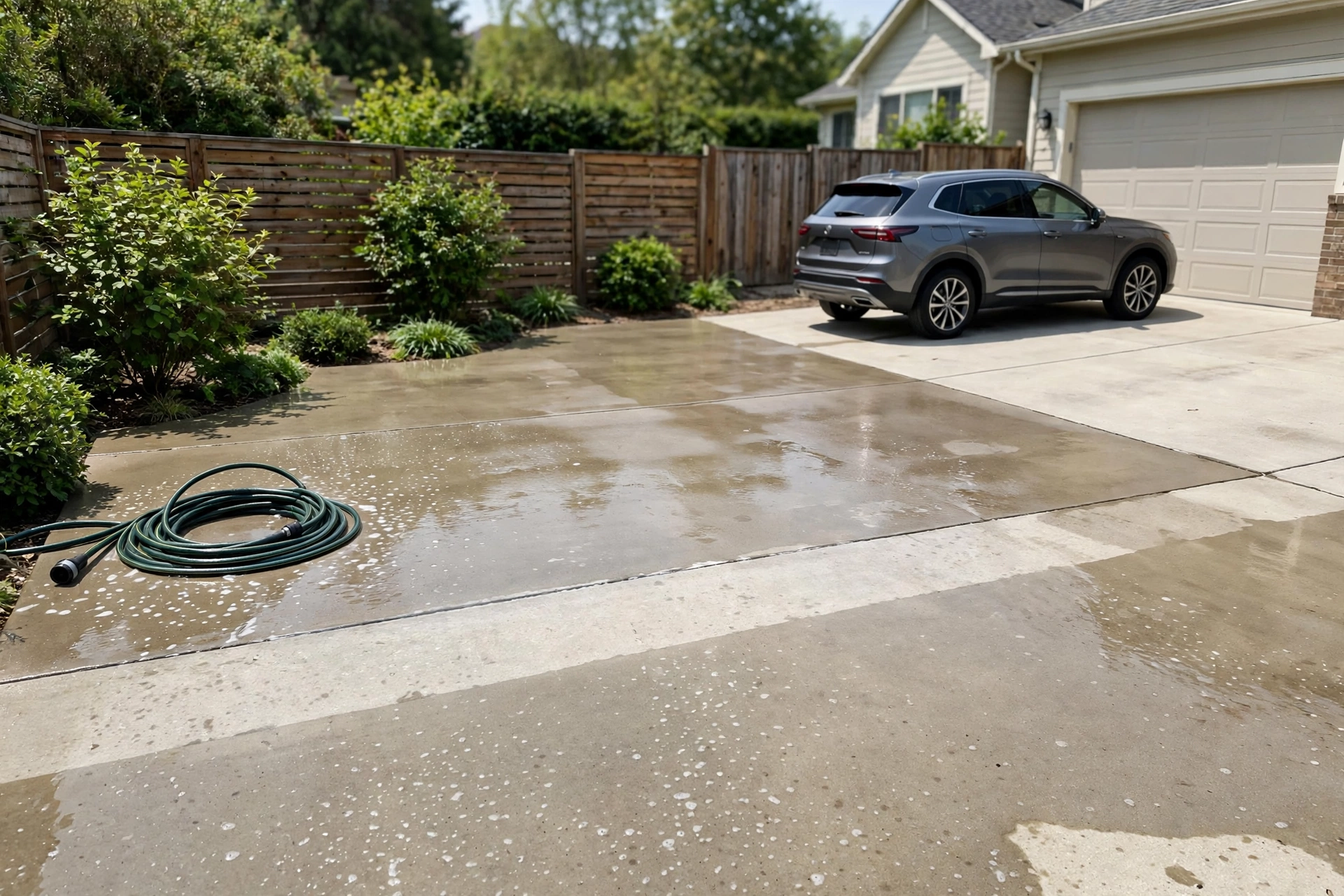
Every driveway tells on its owner eventually. The winter salt stays. The algae creeps in along the shady edge. The car looks fine from the street and slightly embarrassed up close. You can live with it, or you can spend a Saturday morning and a garden hose’s worth of patience fixing it.
Vevor’s electric pressure washer is a $128.90 plug-in answer to that Saturday, and it is a good answer with one number you need to understand before you buy. The headline says 4500 PSI. The working number is lower. Once you read the headline the right way, this is a capable, quiet, easy-to-live-with machine for driveways, patios, fences, and cars. If you buy it expecting 4500 PSI all day long, you will be disappointed, and that disappointment is the manufacturer’s headline doing, not yours.
Here is the verdict up front: a strong electric washer for suburban cleaning jobs, priced like a tool you actually use, with a kit that covers cars to concrete. Just do not let the big number write checks the motor cannot cash.
The number you need to understand first
Pressure washers live and die by two numbers: PSI, the pressure of the water, and GPM, the flow. Vevor lists this machine at a maximum of 4500 PSI and 3.2 GPM. Those are laboratory maxima, the highest figures recorded under test conditions, not the figures the machine sustains while you work.
The rated working figures are 1550 PSI and 1.2 GPM. That is the honest working number, and it is still plenty for the jobs this machine is made for: cars, patios, driveways, fences, and house siding. It is not a commercial machine, and it is not pretending to be one once you know the difference.
Why does this matter? Because a buyer who expects 4500 PSI of sustained pressure will feel cheated on the first stubborn stain, while a buyer who expects a solid 1550 PSI electric washer will feel like they got a bargain. Same machine, same Saturday, completely different review. This review is written for the second buyer, because the second buyer is the one reading the numbers correctly.
One more honest note on the numbers. This listing carries 935 reviews at 4.17 out of 5 across the 4500 PSI electric washer family listing, including a configuration sold without pressure regulation. The count below is a family count, not a count for the pressure-adjustment version alone. That does not make the reviews useless, but it does mean the pool cannot prove the adjustment dial specifically. The dial itself is a real feature of this listing, and it is the reason this version is the one to buy.
What you get in the box, and what a Saturday looks like
The motor is 1900 watts, electric, which means no gas, no oil, no pull cord, and a machine you can store in the garage without winterizing a fuel system. Setup is quick: connect the water, connect the power, pick a nozzle, and go. Owners call it quiet, strong, and easy to set up, and one owner ran it for several hours with extra hose attached without complaint.
The kit is where the value shows. Four quick-connect metal nozzles, 0 degrees, 15, 25, and 40, plus a 500-milliliter foam cannon for cars and patios. The pressure adjustment dial lets you turn the force down for a car and up for concrete, which is exactly the control a homeowner needs and exactly what the cheaper no-dial version lacks.
Reach is generous: a 26-foot high-pressure hose and a 35-foot power cord. That combination covers most driveways without moving the machine every five minutes, and owners credit the reach directly. Do the simple math before you buy: the cord gets you 35 feet from the outlet, and the hose adds 26 feet beyond the machine, so plan where the outlet is, not just where the dirt is. The compact PP body rides on swivel wheels with an ergonomic handle, and a nozzle holder and hose hook keep the accessories from ending up in a tangled pile in the corner.
Maintenance is where electric wins quietly. There is no oil to change, no fuel to stabilize over winter, no spark plug to foul, and no pull cord to wear out. Your maintenance list is short: keep the inlet filter clean, coil the hose without kinking it, and store the machine where the cord and nozzles stay together. That is the whole ownership story, and for a homeowner who already has a full maintenance list, a short one is a selling point in itself.
Owners like the auto shut-off when the trigger is released, the four tips, and the foam cannon, and they describe the machine as lightweight and sturdy and easy to move around. One owner put it simply on Vevor.com: “Great product for the price. We used it wash vehicles, the walkway and house.”
The foam cannon is worth a paragraph of its own, because it changes how car washing feels. Fill the 500-milliliter bottle, coat the car, let the soap sit for a few minutes while it loosens road film, and then rinse with a wider nozzle. It is slower than a drive-through wash and far more satisfying, and it is the feature owners mention when they say the kit feels complete rather than bare. For patios, the same routine works: soap, dwell, rinse, and let the sun do the drying. The cannon is not a reason to buy the machine on its own, but it is a reason the machine gets used more often once it is home.
The complaints are mostly small and logistical, which is a good sign. One owner wished for a hose reel like an older sprayer had, and for a second hook for the power cord. One visible review reports a broken handle on arrival, a delivery problem rather than a design verdict. A few owners report delivery delays. None of that adds up to a machine to avoid, but the missing hose reel is a fair gripe: you will be coiling a 26-foot hose by hand, and you will notice it.
The electric or the gas question
This site already covers a Vevor gas pressure washer, a 4,400 PSI machine with a copper pump and five nozzles. That is a different animal: louder, heavier, more powerful, and happier on big, dirty jobs far from an outlet. This electric machine is its suburban counterpart, and the choice between them is really a choice about your property.
| Machine | Power | Price | Best for |
|---|---|---|---|
| Vevor electric washer (this review) | 1900W electric, 1550 PSI rated | $128.90 | Driveways, patios, cars, fences near an outlet |
| Vevor gas washer | Gas, 4,400 PSI headline | Higher, gas-machine upkeep | Big jobs far from power, heavy grime |
| A garden hose | Household pressure only | Already owned | Rinsing, not cleaning |
If you have an outlet within reach and a normal suburban list of jobs, the electric wins on noise, weight, and maintenance. If you are cleaning a long farm driveway or stripping paint off a barn, the gas machine is the honest pick. Most readers of this site are the first buyer, not the second.
Safety belongs in any pressure washer review, and this one is no exception. The 0-degree nozzle is a cutting tool, not a cleaning toy: never point any nozzle at people or pets, wear eye protection, and start with the wide 40-degree nozzle on wood, paint, and soft surfaces, testing a hidden spot first. Plug into a grounded outlet, skip the extension cord, and keep the machine’s electrical parts dry. Those rules are not fine print. They are the difference between a satisfying Saturday and a bad one.
Who should buy it, and who should not
Buy this washer if you want a quiet, plug-in machine for the regular jobs: the driveway twice a year, the patio before guests arrive, the car on a Saturday morning, the fence when the algae moves in. At $128.90, with four nozzles and a foam cannon, it earns its garage space.
Skip it if you need sustained commercial pressure, if your jobs are far from any outlet, or if you will resent a machine whose headline number is a laboratory maximum. In that case, the gas washer is the better tool, and the higher price and louder Saturdays are the honest cost of it.
For everyone else, the deal is simple. Read the headline as a maximum, judge the machine on its rated working pressure, and you get a capable electric washer that does exactly what a suburban homeowner asks of it, without gas, without drama, and without a second mortgage.
BEST VALUE
VEVOR Electric Pressure Washer, 4500 PSI Max
A $128.90 electric washer with a real pressure dial, four nozzles, and a foam cannon — judged on its working pressure, a bargain.
For the full electric-versus-gas argument, see the great pressure washer debate and gas or electric for home use. For the gas machine itself, see the Vevor gas pressure washer review.