Landscape & Leisure is reader-supported. When you buy through links on our site, including Botanical Interests seed links, we may earn a commission at no extra cost to you. Prices change, so click through to confirm current pricing.
Most people pick between mustard greens and kale the way they pick between two bags of the same thing, and then they spend the season annoyed at the plant they chose. The mistake is treating them as interchangeable, because they are not: mustard is the green you sow when you want salad in three weeks, and kale is the green you plant when you want something still standing after the first frost. Plant kale in April expecting a quick salad and you will wait two months for a leaf worth picking; sow mustard in July expecting a fall crop and it will bolt before you get a second harvest.
This comparison settles the choice on the numbers that matter — speed, flavor, harvest window, and how each one handles cold and heat — so you can give the bed to the right green the first time. Our mustard greens roundup compares the three mustard varieties worth growing, and our growing guide covers sowing, thinning, and the cut-and-come-again harvest. If you want the wider leafy-green picture, our spinach-versus-kale-versus-chard comparison and our cut-and-come-again greens roundup cover the rest of the salad bed.

The Short Version
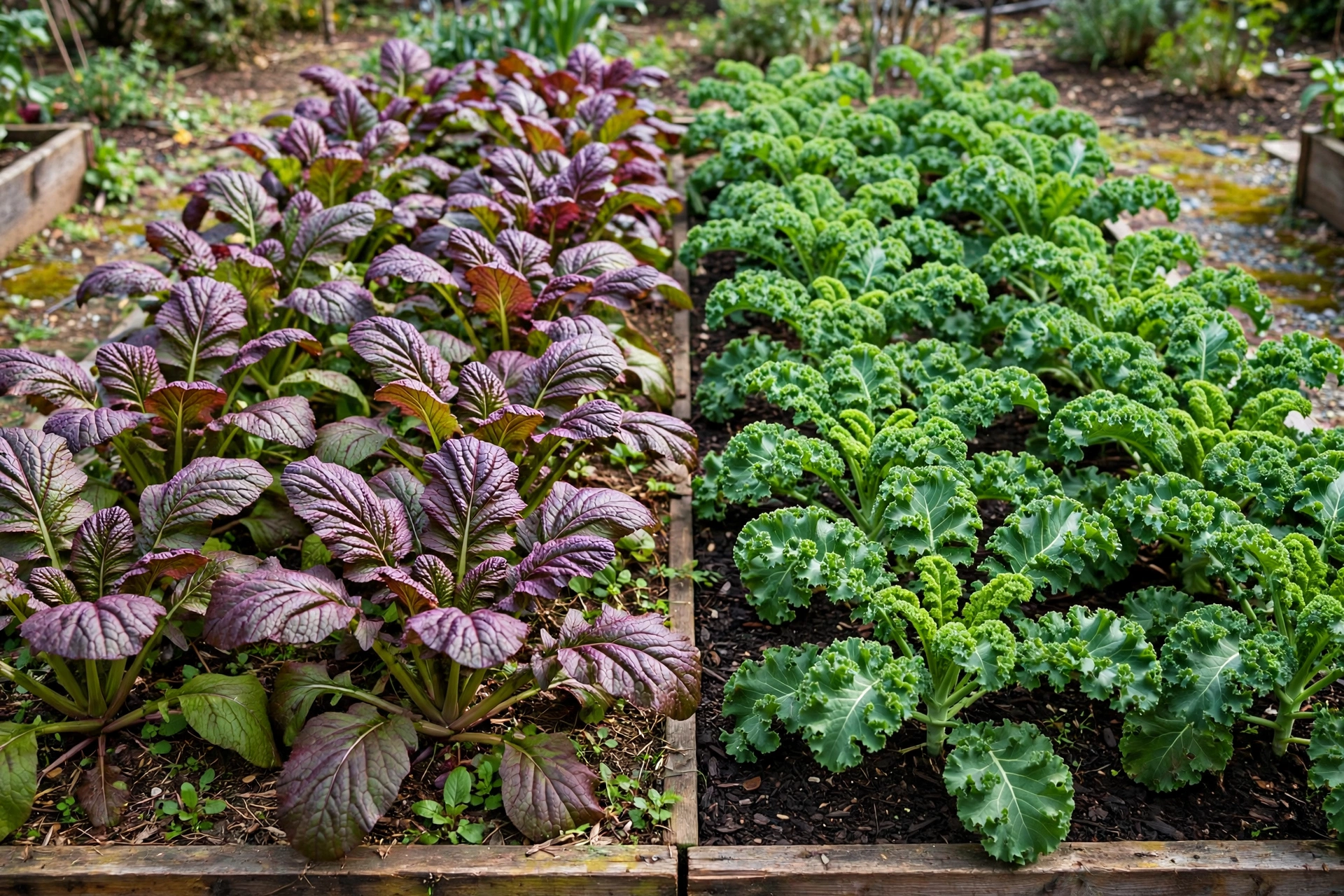
Mustard greens win on speed and flavor range. Mizuna gives you baby greens in as little as three weeks, Red Giant gives you the boldest peppery leaf of any green in the bed, and Tendergreen gives you the mildest flavor with the most forgiving habits. Kale wins on staying power: Lacinato takes two months to reach full size, but it keeps producing for months after mustard has bolted, and it stands through frost that would finish a mustard bed. If you want salads now, grow mustard. If you want a green that is still feeding you in November, grow kale. If you have room for both — and most gardens do, since mustard takes a fraction of kale’s space — grow both, and let each one do the job it is built for.
| Mustard Greens | Kale (Lacinato) | |
|---|---|---|
| First harvest | Baby greens in about 3 weeks (Mizuna); full-size leaves in 35–60 days | Baby greens in 21 days; full-size plants in 2 months |
| Flavor | Mild to bold and peppery, with horseradish notes in Red Giant | Mild, earthy, improves as weather cools |
| Heat | Bolts when weather warms; Red Giant and Tendergreen hold longest | Cool-season crop; best in spring and fall |
| Cold | Cold tolerant; late-summer crop lasts to first hard freeze | Frost tolerant; keeps producing past first frost |
| Spacing | Thin to 1 every 4–6 inches (Tendergreen) | Thin to 1 every 18 inches |
| Start indoors? | No — direct sow; transplant stress can cause bolting | Yes — start 4–6 weeks before last frost |
| Price | $2.69 a packet | $2.69–$5.99 a packet |
Speed: Mustard Wins, and It Is Not Close
Mustard greens are the fastest leafy green you can grow from seed. Mizuna is ready as baby greens in as little as three weeks, and full-size mustard leaves are ready in 35 to 60 days. Kale is not slow — Lacinato gives you baby greens at 2 to 4 inches tall in 21 days, too — but full-size kale plants take two months, and the plant wants 18 inches of space to get there, against mustard’s 4 to 6 inches. In the same square foot of bed, mustard gives you a salad in three weeks; kale gives you a plant that is still filling out.
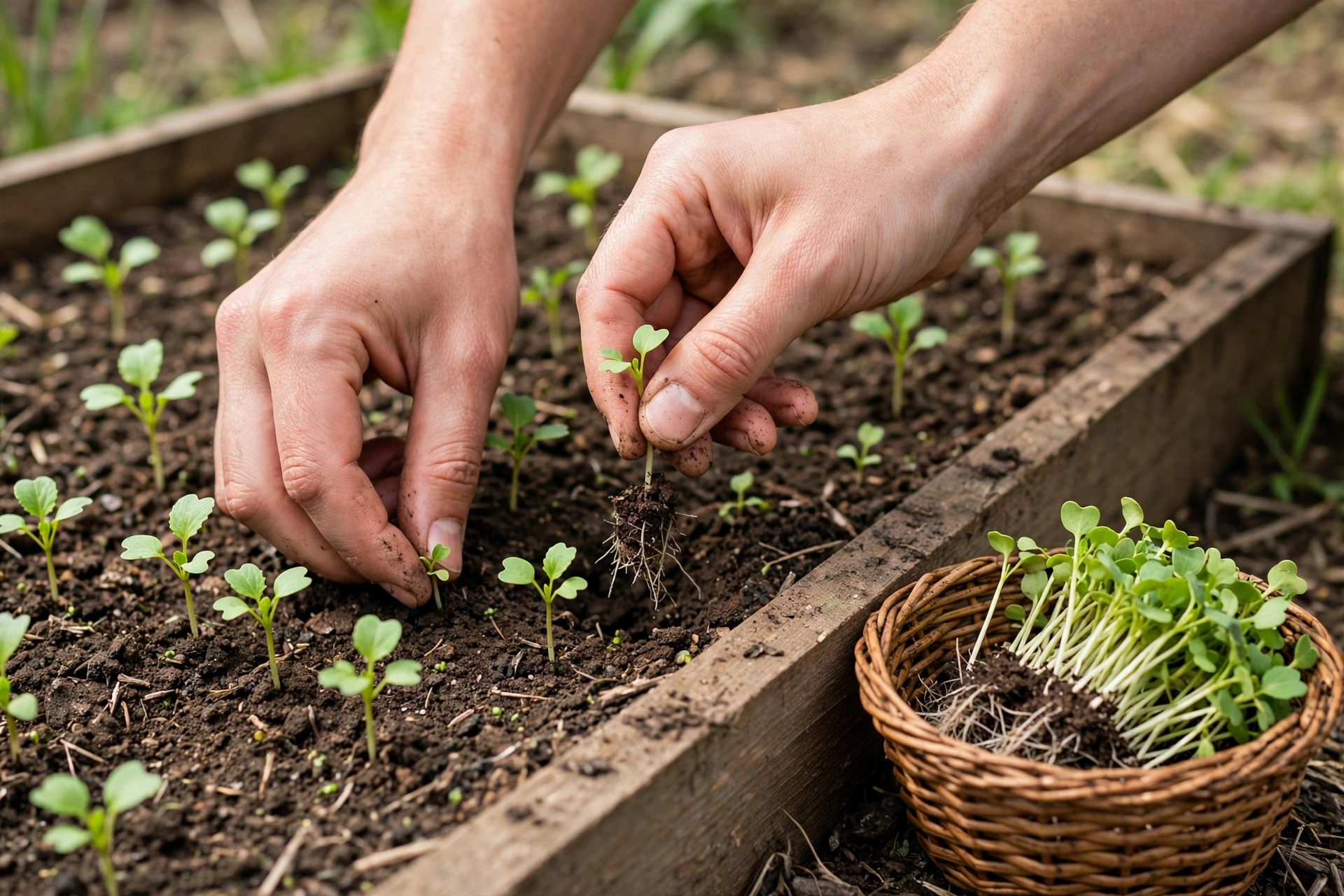
The practical difference is the sowing. Mustard is direct-sown into cold soil 4 to 6 weeks before your last frost, and it germinates in 5 to 10 days. Kale can be started indoors 4 to 6 weeks before your last frost and transplanted out, which is a head start mustard does not need — and should not get, since transplant stress can make mustard bolt. If your goal is the first salad of spring, mustard is the answer. If your goal is a plant that earns its space over a whole season, kale is.
Flavor: Mustard Has Range, Kale Has Patience
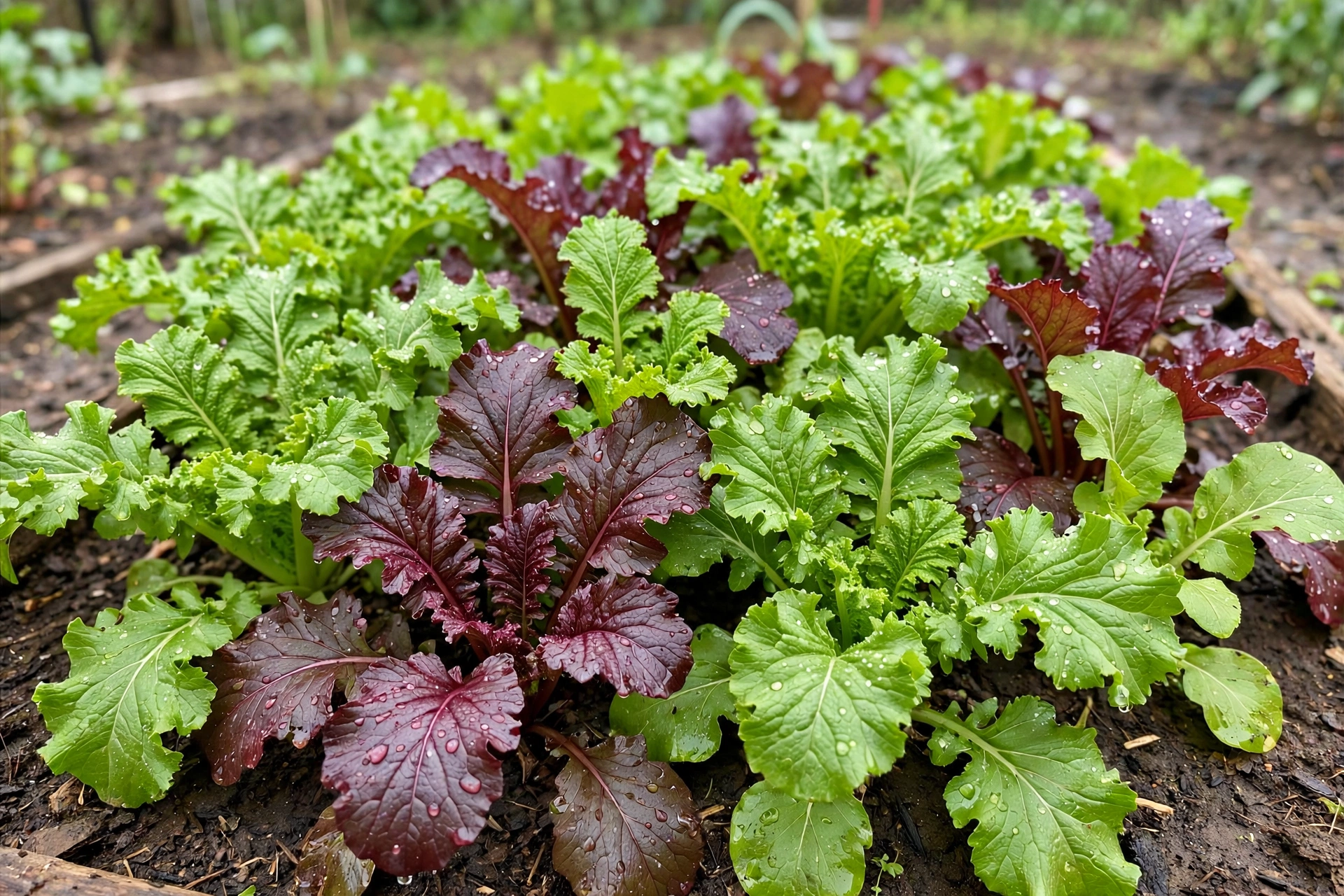
Mustard greens cover more flavor ground than kale does. Mizuna is mild and slightly spicy, the salad green of the three. Tendergreen is the mildest of all — it is komatsuna, not a true mustard, and its smooth, dark leaves taste gentle enough for anyone at the table. Red Giant is the other end of the scale: bold and peppery, with hints of horseradish, stronger in older leaves and hot weather. Three packets, three distinct flavors, and you can grow all three in the space one kale plant needs.
Kale’s flavor is narrower but it improves with time. Lacinato is a tender, dark green, heavily savoyed leaf with a mild, earthy taste, and its flavor improves as the weather cools — cold nights nudge the plant to turn stored starch into sugar, which is why the kale you pick in November tastes better than the kale you picked in September. Mustard never gets that second act: once it bolts, the leaves turn bitter and the plant is done. Kale’s flavor gets better the longer you leave it; mustard’s flavor gets worse.
Heat and Cold: Where Each One Quits
Heat is where mustard loses. Mustard does not tolerate hot weather, and it bolts when the weather warms in late spring — the flower stalk goes up, the leaves turn bitter, and the plant is finished. Red Giant is bolt resistant and holds its flavor into warm weather, and Tendergreen is slow to bolt, but neither one wants a hot June. Kale is built for the same cool seasons, but it does not quit when the cold arrives: it is frost tolerant, so it keeps producing through the weather that ends mustard.
Cold is where kale wins outright. Lacinato is frost tolerant and keeps producing past the first frost, which is why it is the green for the late-season bed. Mustard is cold tolerant too — a late-summer crop lasts until the first hard freeze — but the first hard freeze is the end of it, where kale just keeps going. Sow mustard for spring and fall; plant kale for the long haul.
The Mustard Picks
All three mustard varieties are $2.69 a packet, all three are in stock, and all three carry ratings above 4.9. Red Giant is the best overall, with a perfect 5.0 from 13 reviews and the boldest flavor. Mizuna is the fastest, with baby greens in three weeks and a mild flavor that suits salads raw. Tendergreen is the mildest and the most forgiving, slow to bolt and tolerant of cold, heat, and dry weather. Full details, pros and cons, and the honest gaps are in our mustard greens roundup.
Mizuna: Mustard, Fastest
Mizuna is the mustard to sow when you want salad in three weeks and do not want to argue about heat at the table. It is a Japanese mustard, milder than other mustards, with small feathery leaves that are tender enough to eat raw, and it germinates under cold, wet spring conditions. It withstands heat longer than lettuce without bolting, and gardeners rate it 4.9 from 15 reviews. The trade-off is size: the leaves are small, so it takes more snipping to fill a bowl, and it can draw aphids toward itself.
Pros: baby greens in as little as 3 weeks; mildest true mustard here; germinates in cold, wet spring soil.
Cons: small leaves mean more snipping per salad; can draw aphids.
Mizuna Mustard Seeds
The fastest salad here — mild, feathery baby greens in as little as three weeks from sowing.
Red Giant: Mustard, Boldest
Red Giant is the mustard for the gardener who wants the leaves to taste like something. Big maroon leaves with lime veins, a peppery bite with horseradish notes that gets stronger in older leaves and hot weather, and a perfect 5.0 from 13 reviews — the only perfect score in the roundup. It is cold tolerant and bolt resistant, so it holds longer into warm weather than most mustards, and it is ornamental enough for a flower bed. Cook it fast, sautéed or raw, because it does not suit a long stew.
Pros: perfect 5.0 from 13 reviews; boldest flavor here; ornamental maroon leaves; bolt resistant.
Cons: not suited to long stewing; older leaves can be too hot for timid eaters.
Red Giant Mustard Seeds
The boldest mustard here, with a perfect rating and maroon leaves pretty enough for the flower bed.
Tendergreen: Mustard, Mildest
Tendergreen is the mustard to grow when you want mustard’s ease without mustard’s bite. It is komatsuna, not a true mustard, and its smooth, dark, glossy leaves are the mildest green in this comparison, with a 30- to 60-day harvest window and leaves you can start picking at 2 inches tall. It is slow to bolt and tolerant of cold, heat, and dry weather, and gardeners rate it 4.9 from 12 reviews. Direct sow only — transplant stress can make it bolt — and one packet sows up to 200 feet of row.
Pros: mildest flavor here; slow to bolt; harvestable from 2 inches tall; one packet sows up to 200 feet.
Cons: no peppery bite; direct sow only, since transplants can bolt.
Tendergreen Mustard Spinach Seeds
Komatsuna, not a true mustard — the mildest green here, slow to bolt, with a long harvest window.
Lacinato Kale: The Long Season
Lacinato is the kale to grow when you want a green that outlasts the season. It is an 18th-century heirloom, also called Tuscan kale or black cabbage, with very dark green, heavily savoyed leaves on a plant that grows taller than 24 inches. It takes two months to reach full size, which is the honest cost of growing it, but it pays that back: baby greens are ready at 2 to 4 inches tall in 21 days, the full-size leaves keep coming for months, and the flavor improves as the weather cools instead of turning bitter. Gardeners rate it 4.8 from 41 reviews, the largest review base in this comparison, and it costs $2.69 for the conventional packet or $5.99 for the large organic packet.
The space is the real price. Lacinato wants a group of three seeds every 18 inches, thinned to one plant every 18 inches, in rows 24 inches apart — roughly four times the room a mustard plant needs. Start it indoors 4 to 6 weeks before your last frost, or direct sow 1 to 2 weeks before your last frost when the soil is above 45 degrees, and harvest no more than a third of the plant at a time so it keeps regrowing. If you have one bed and one choice, this is the plant that feeds you longest.
Pros: keeps producing past first frost; flavor sweetens after frost; largest review base here at 41 reviews; baby greens in 21 days.
Cons: two months to full size; needs 18-inch spacing, four times mustard’s room; priciest large packet here at $5.99.
Lacinato Dinosaur Kale Seeds
The green that outlasts the season — flavor improves as the weather cools, still producing when mustard has bolted.
Bottom Line
Grow mustard if you want salad fast: Mizuna in three weeks, Red Giant for the boldest leaf, Tendergreen for the mildest green with the longest harvest window, all at $2.69 a packet. Grow Lacinato kale if you want a green that is still feeding you after the first frost, with a flavor that gets better the colder it gets. And if you have the room, grow both — mustard for the spring salads, kale for the fall table — because the real mistake is not choosing the wrong green, it is planting only one of them. For the full variety comparison, read our mustard greens roundup, and for the sowing routine, our growing guide covers the timing.