Landscape & Leisure is reader-supported. When you buy through links on our site, including Botanical Interests seed links, we may earn a commission at no extra cost to you. Prices change, so click through to confirm current pricing.
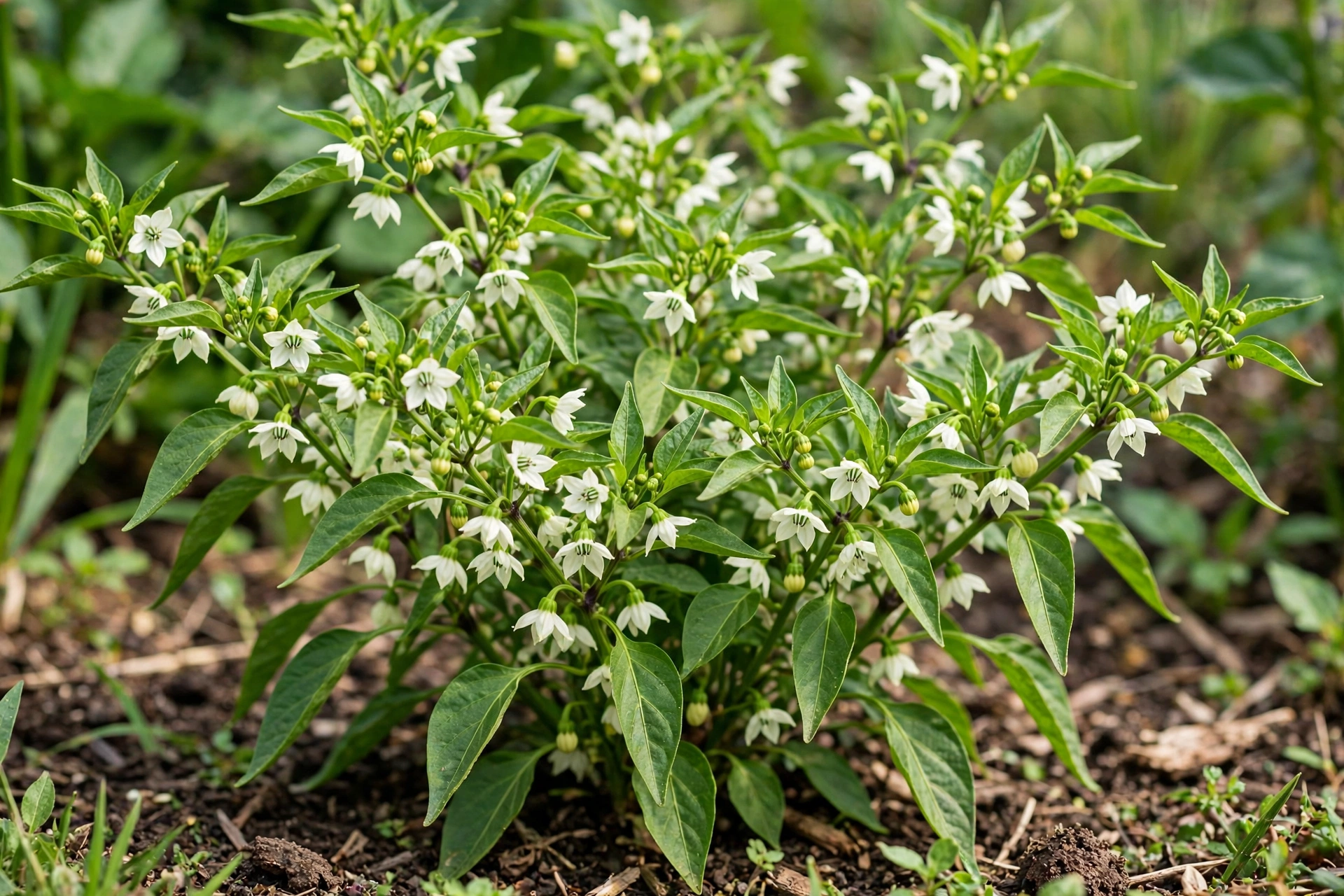
Your pepper plants look terrific — tall, leafy, covered in white flowers — and not one flower has turned into a pepper. The blossoms open, hang for a day or two, and drop to the ground, and the plant just keeps making more leaves. It is the most discouraging sight in a summer garden, because everything looks right except the one thing that matters.
The good news is that blossom drop has a short list of causes, and they can be checked in order, starting with the night temperatures. The varieties in our hot pepper roundup all set fruit the same way, so the diagnosis below works for Megatron, Serrano, Scotch Bonnet, Santaka, and NuMex Lemon Spice alike — and for the sweet peppers in our sweet-and-hot roundup, too. Eggplants fail the same way for the same reasons, and our eggplant fruit-set guide covers the shared causes if you grow both.
The Diagnosis, in Order of Likelihood
1. The nights are outside the fruit-set window. This is the most common cause, and the one to check first. University extension guidance puts the trouble zone at nights below about 60 degrees or above about 75, with days over 90 doing the same damage — heat makes the pollen lose its effectiveness, so the flower looks normal but never sets fruit. A plant can survive a 55-degree night in the ground, which is the transplant threshold, but it will not set fruit well until nights stay above 60. Check your overnight lows for the past week before you change anything else, because a plant that dropped its flowers during a hot spell will usually start setting again once the nights cool down.
2. Too much nitrogen, too many leaves. A pepper plant fed heavily with a high-nitrogen fertilizer grows lush and leafy at the expense of fruit, and the flowers it does make are the first thing it drops. If your plant is dark green and bushy with few flowers setting, the feeding is the suspect, not the weather. Hold off on fertilizer until fruit is actually forming, and feed for fruit, not for foliage.
3. Uneven watering. Peppers want soil that stays evenly moist, not a cycle of soaked and bone-dry. A plant stressed by drought will drop its flowers to protect itself, and the same happens when the roots sit waterlogged. Water deeply and consistently, and mulch to hold the moisture steady — a plant that never dries out between waterings is a plant that can afford to keep its flowers.
4. Poor pollination — but not the way you think. Pepper flowers are self-pollinating, so a shortage of bees is rarely the problem. In still, hot air the pollen can fail to shed properly, and a gentle shake of the plant in the morning helps it along. But if heat has already damaged the pollen, no amount of hand-pollinating will fix it — the temperature has to come back into range first.
5. The variety simply needs more time. Not every pepper sets on the same clock. The fast varieties, Megatron and NuMex Lemon Spice, reach harvest in 65 days from transplanting, while Scotch Bonnet needs 75 to 100 days, and a habanero needs 100. The first flush of flowers often drops while the plant is still settling in, especially on the slow, hot varieties, so a plant that dropped its first flowers is not necessarily a plant in trouble.
| What you see | Likely cause | The check |
|---|---|---|
| Flowers drop during a hot spell | Nights above 75°F or days above 90°F | Overnight lows for the past week; wait for cooler nights |
| Flowers drop on cool nights | Nights below 60°F | Overnight lows; cover plants or wait for warmer nights |
| Bushy, dark-green plant, few fruit | Too much nitrogen | Stop feeding until fruit forms; feed for fruit, not foliage |
| Flowers drop after dry spells | Uneven watering | Soil moisture a few inches down; water deeply and mulch |
| First flowers drop, plant still young | Variety settling in, or a slow type | Days from transplanting against the variety’s 65 to 100 days |
The Fix, Step by Step
1. Read the thermometer first. Check the overnight lows and the daytime highs for the past week. If nights have been below 60 or above 75, or days above 90, the weather is the answer — and the fix is patience, not fertilizer.
2. Stop feeding until fruit sets. If the plant is lush and leafy, hold off on any fertilizer, especially anything high in nitrogen, until you see small fruit forming. A pepper plant that is growing leaves instead of fruit is telling you it has enough nitrogen already.
3. Steady the water. Water deeply so the soil is moist a few inches down, then mulch to hold it there. Avoid the soak-and-dry cycle, and avoid watering so much that the soil stays soggy.
4. Shake the plants gently in the morning. On calm days, a light shake helps the pollen shed onto the flower’s own stigma. Do it early, while the flowers are fresh, and do not bother if the heat has already been extreme — damaged pollen cannot be rescued by shaking.
5. Give the slow varieties time. If you are growing Scotch Bonnet or another long-season type, the first flush of flowers may drop while the plant is still establishing. Keep watering steadily and wait for the next flush, which usually sets once the plant is settled and the nights are in range.
Megatron Jalapeño Chile Pepper Seeds
The earliest harvest here at 65 days — it sets fruit before the worst heat arrives, which is the simplest way to dodge blossom drop.
Serrano Chile Pepper Seeds
The highest-rated pepper here at 4.6 from 19 reviews, described as prolific — a plant that makes plenty of flowers gives you more chances to set fruit.
NuMex Lemon Spice Jalapeño Chile Pepper Seeds
A compact 12- to 24-inch plant that reaches harvest in 65 days — easy to shift into afternoon shade when a heat wave hits.
What Success Looks Like
A pepper plant that has sorted itself out shows small green fruit behind the flowers within a week or two of the nights coming back into range, and the plant keeps flowering while the first fruits swell. If a whole flush drops during a heat wave, do not pull the plant: peppers resume setting once conditions moderate, and a healthy plant that lost one flush will usually set the next. The one mistake that sets it back is feeding a heat-stressed plant to force it — the fertilizer makes more leaves, not more fruit. For the full growing routine, read our starting guide, and for the varieties themselves, our hot pepper roundup picks the five worth growing.