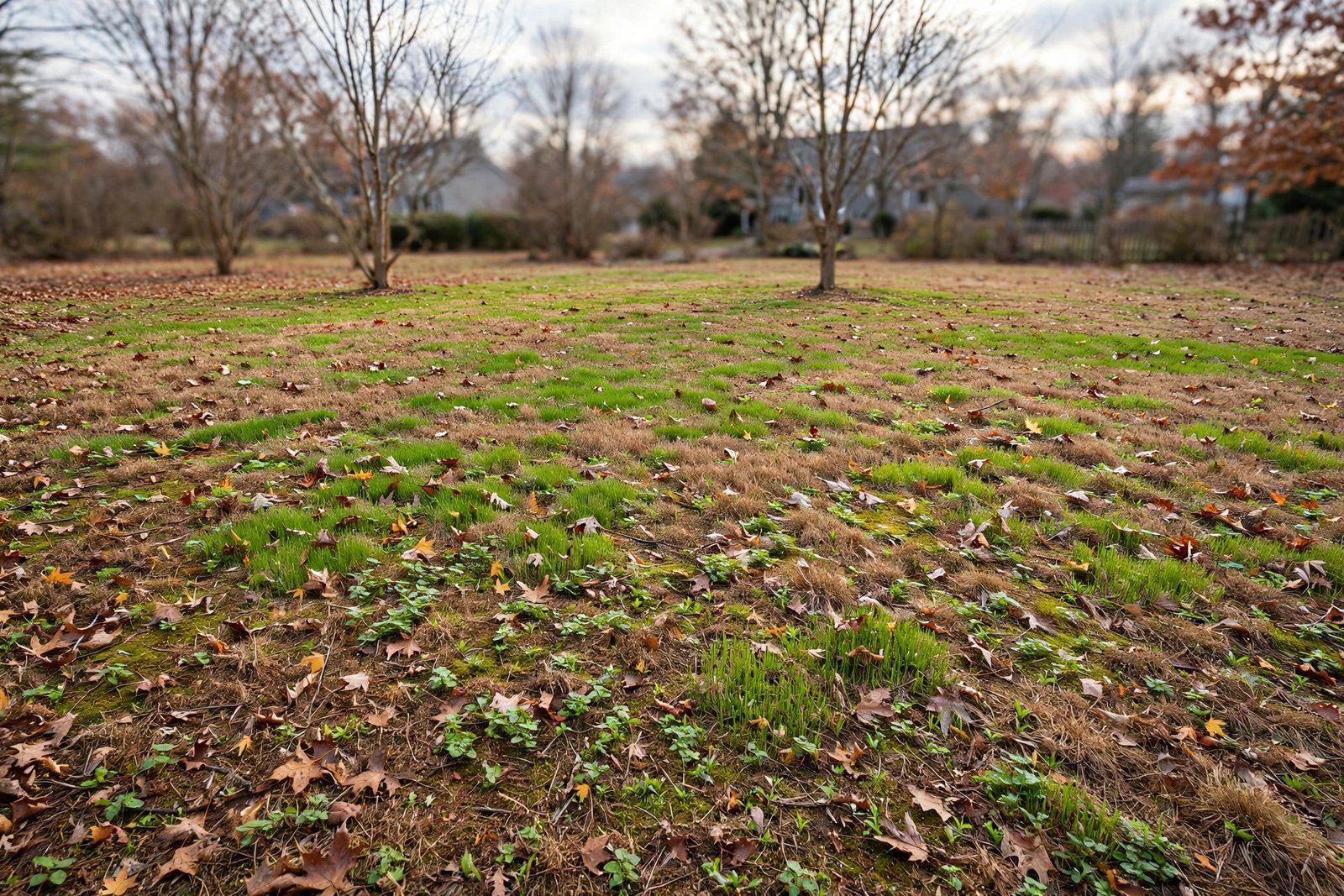
You drop the mower deck to the lowest notch hoping for a tight, carpet-smooth lawn, and two weeks later the grass is thin, weedy, and thirsty all the time. That is what cutting too short buys you: shallow roots and an open canopy weeds love.
The fix is boring in the best way. Find your grass in the table below, set the deck inside its range, and mow before the grass grows a third taller than that setting. Everything else on this page is just the numbers behind that sentence, from two university Extension services.
Recommended mowing heights for home lawns
These figures cover established home lawns only, not parks, athletic fields, or newly seeded turf. Heights are in inches. Where the two sources differ, both figures are shown — neither one is quietly picked over the other.
| Grass | Season | New Mexico State (home lawn) | Kansas State (home lawn) |
|---|---|---|---|
| Fine fescues | Cool | 0.5–1.5 | 2–3 |
| Kentucky bluegrass | Cool | 1–3 | 2–3 |
| Perennial ryegrass | Cool | 1–3 | 2–3 |
| Tall fescue | Cool | 2–3.5 | 2–3 |
| Bermudagrass | Warm | 0.5–1.5 | Not listed |
| Buffalograss | Warm | 1.5–4 | Not listed |
| Seashore paspalum | Warm | 0.5–1.5 | Not listed |
| St. Augustinegrass | Warm | 1–3 | Not listed |
| Zoysiagrass | Warm | 0.5–2 | 1–1.5 |
Where the two sources disagree
Kansas State’s ranges sit higher for most of the five species both tables cover — fine fescues jump to 2–3 inches, and bluegrass, ryegrass, and zoysiagrass all start higher — while tall fescue simply tightens to 2–3.
That gap is regional framing, not an error on either side. New Mexico State’s table is framed for New Mexico conditions, while Kansas State’s reflects Kansas home-lawn practice. If your own state Extension service publishes a mowing-height table, follow it first — it is written for your climate, not theirs.
On one point both sources agree completely: when heat, drought, shade, or other stress hits, mow at the high end of your grass’s range. A taller blade shades its own roots and rides out a dry spell far better than a scalped one.
When to mow: the one-third rule
Pick your target height, then mow when the grass reaches one-and-a-half times that height — in other words, never take off more than about a third of the blade in a single mowing. Both sources teach the same rule, and New Mexico State’s table works it out for every common setting:
| Target height (inches) | Mow when it reaches (inches) | Amount removed (inches) |
|---|---|---|
| 1.0 | 1.50 | 0.50 |
| 1.5 | 2.25 | 0.75 |
| 2.0 | 3.00 | 1.00 |
| 2.5 | 3.75 | 1.25 |
| 3.0 | 4.50 | 1.50 |
| 3.5 | 5.25 | 1.75 |
| 4.0 | 6.00 | 2.00 |
Cutting off more than a third at once is how a lawn gets scalped: brown patches where the crowns show through, and an open canopy weeds move into while the grass recovers. If the grass got away from you, step the height down over several mowings instead of taking it all off in one pass.
Three habits that make the heights work
Keep the blade sharp. A dull blade tears instead of cutting, leaving frayed tips that turn whitish and lose water faster. Both sources call this out, and New Mexico State suggests a professional sharpening at least once a year when the season starts.
Mow when the grass is dry. Wet grass clumps, clogs the deck, and mats on the surface instead of filtering back into the lawn. A dry afternoon cut leaves clippings small enough to break down where they fall.
If you aerated recently, height is only half the question — timing is the other half. Our guide to how soon you can mow after aerating covers the wait, and how to care for your lawn after aerating covers the watering and seeding that go with that first mow.
Bottom line
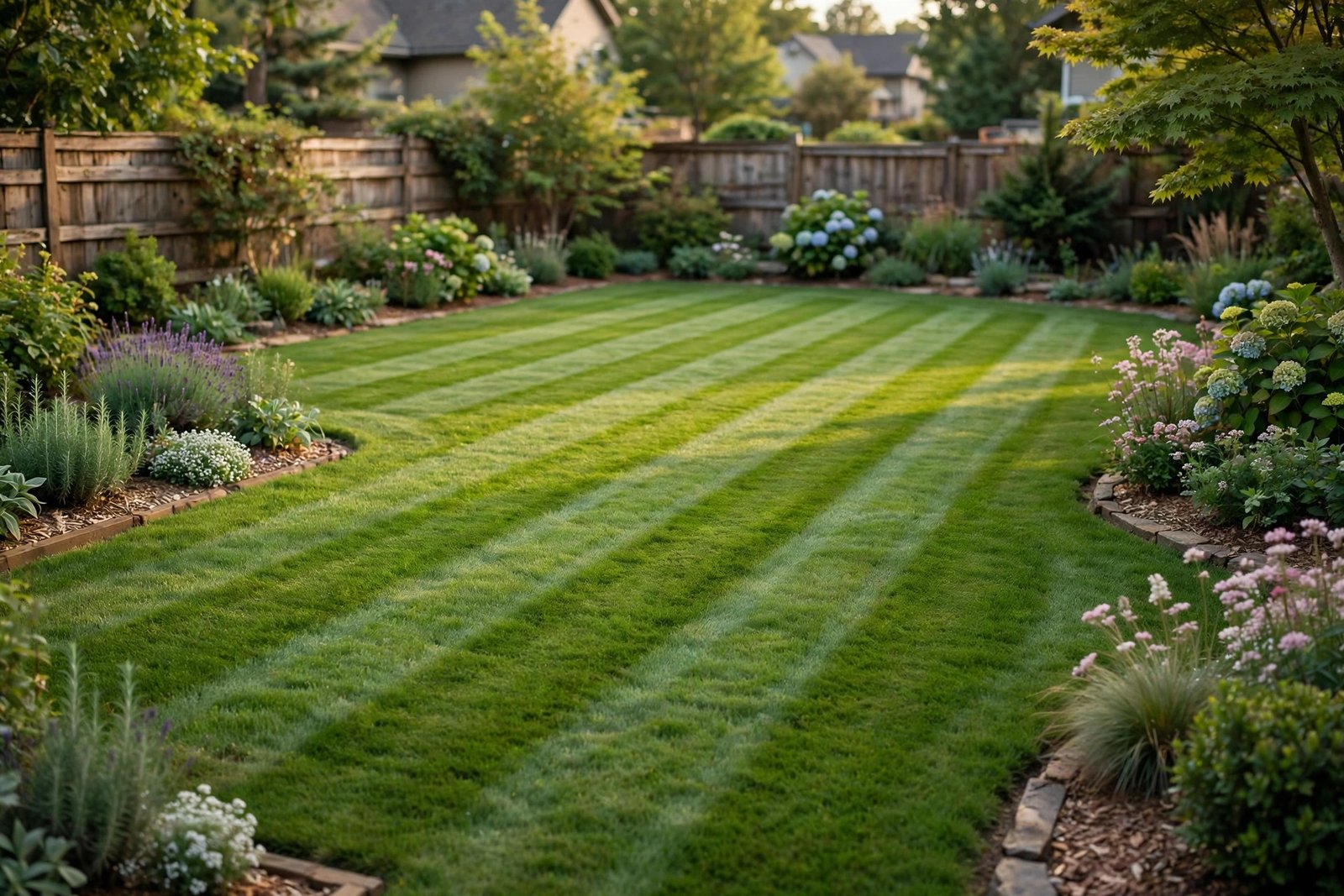
Set the deck to your grass’s range, stay inside it, and mow before the grass grows a third taller than your setting. That one habit — the right height, cut on time — does more for a lawn than any mower upgrade will.
Sources
New Mexico State University Extension, Guide H-505, “Mowing Your Lawn” (Bernd Leinauer), Table 1 (residential lawns column) and Table 2 — https://pubs.nmsu.edu/_h/H505/index.html — fetched November 3, 2026.
Kansas State University Turfgrass Extension, “Mowing,” suggested mowing heights table and one-third rule — https://www.k-state.edu/turf/resources/lawn-problem-solver/maintenance/mowing/ — fetched November 3, 2026.