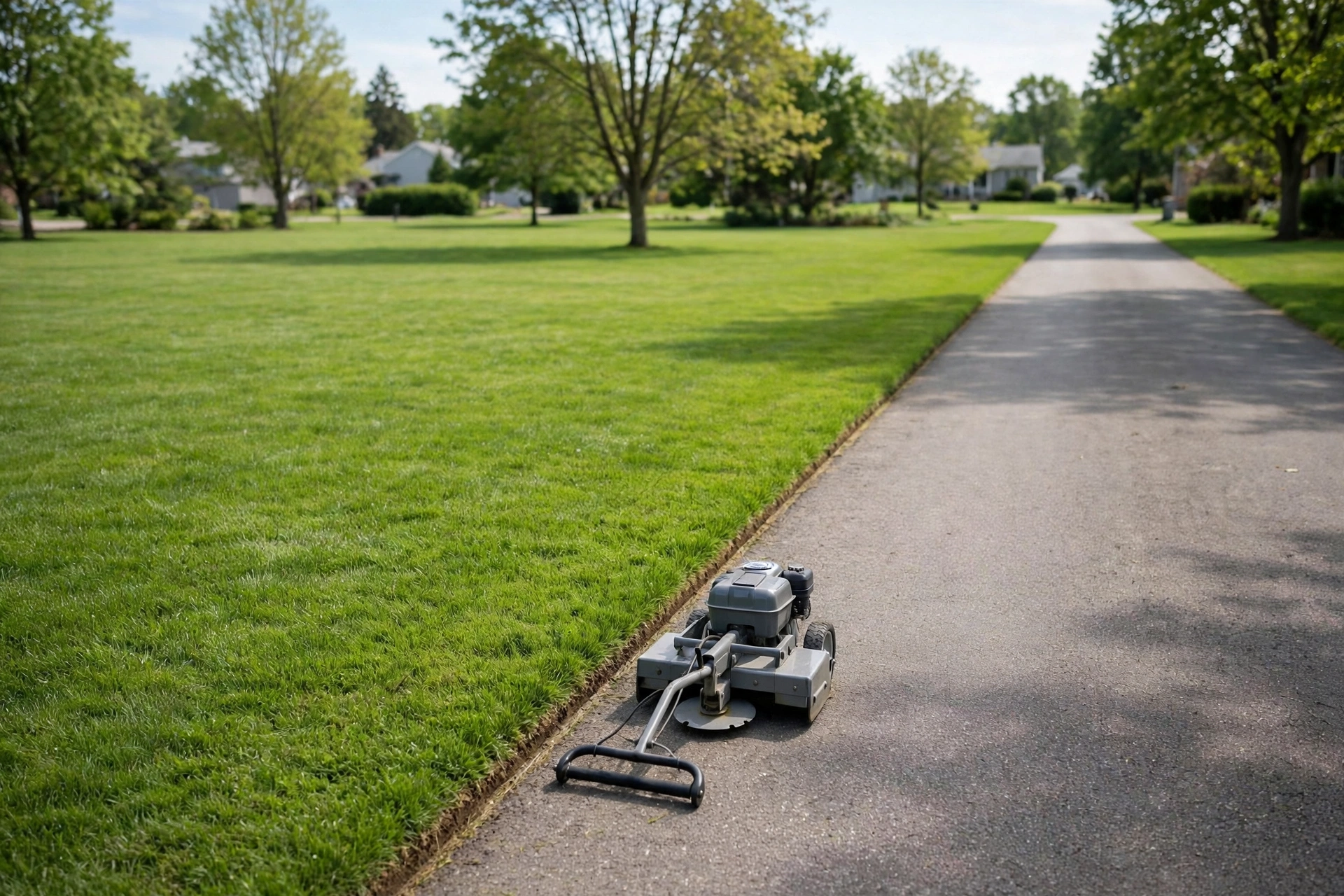
Most people buy the form factor a neighbor owns, then discover the mismatch a month later: a stick edger that leaves their arm tired after a long street frontage, or a walk-behind that is more machine than a short driveway will ever need. The two types do the same cut in very different ways, and yard size decides between them more honestly than price does.
The difference in one pass
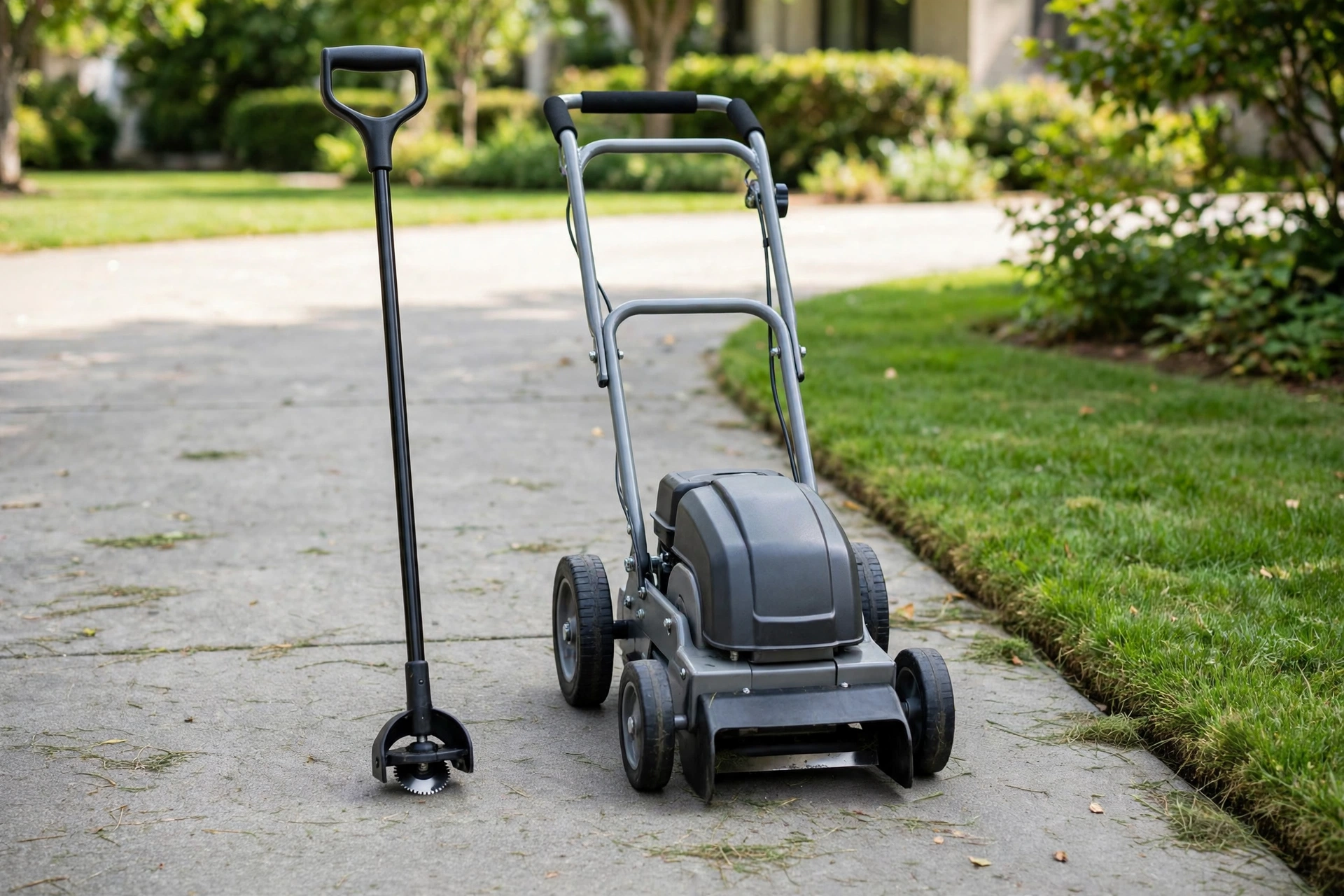
A stick edger is a shaft tool: an 8-inch blade at the end of a pole, guided by a small wheel, carried by you. A walk-behind edger is a small wheeled machine with a 9- to 9.5-inch blade that you push, with the wheels carrying the weight and holding the line.
That weight difference is the whole story. The stick edger goes anywhere your feet go, including tight curves and steps between levels, while the walk-behind holds a straighter line with less effort over distance.
| Factor | Stick edger | Walk-behind edger |
|---|---|---|
| Best yard size | Small to medium lots | Large lots, long straight runs |
| Blade | About 8 inches | About 9 to 9.5 inches |
| Curves and beds | Excellent — follows your hand | Awkward on tight curves |
| Fatigue | Arm and shoulder over distance | Wheels carry the weight |
| Storage | Hangs on a wall hook | Needs floor space |
When the stick edger wins
Choose a stick edger when your edging is mostly beds, curves, and a modest driveway, and when storage space is tight. It is also the natural choice if you already own a battery platform, because stick edgers are where cordless power works best. For the dedicated large-lawn picks, see best lawn edgers for large lawns, and for the manual end of the scale, manual vs powered lawn edgers.
When the walk-behind wins
Choose a walk-behind when the job is long and straight: street frontage, a long driveway, or a sidewalk that runs the width of a corner lot. The wheeled frame holds the blade at a steady depth without your arm doing the work, and the larger blade reclaims overgrown edges faster. The trade-off is real: it is heavier to store, slower to turn, and poor value if your total edge is short.
Bottom line
Measure your edge before you shop. Under roughly 300 linear feet with curves and beds, buy the stick edger. Over that, with long straight runs, buy the walk-behind — and whichever you choose, keep the blade sharp with the blade sharpening and replacement guide, because a dull blade makes either type feel underpowered.