Disclosure: This post contains affiliate links. If you buy through them, Landscape & Leisure may earn a commission at no extra cost to you.
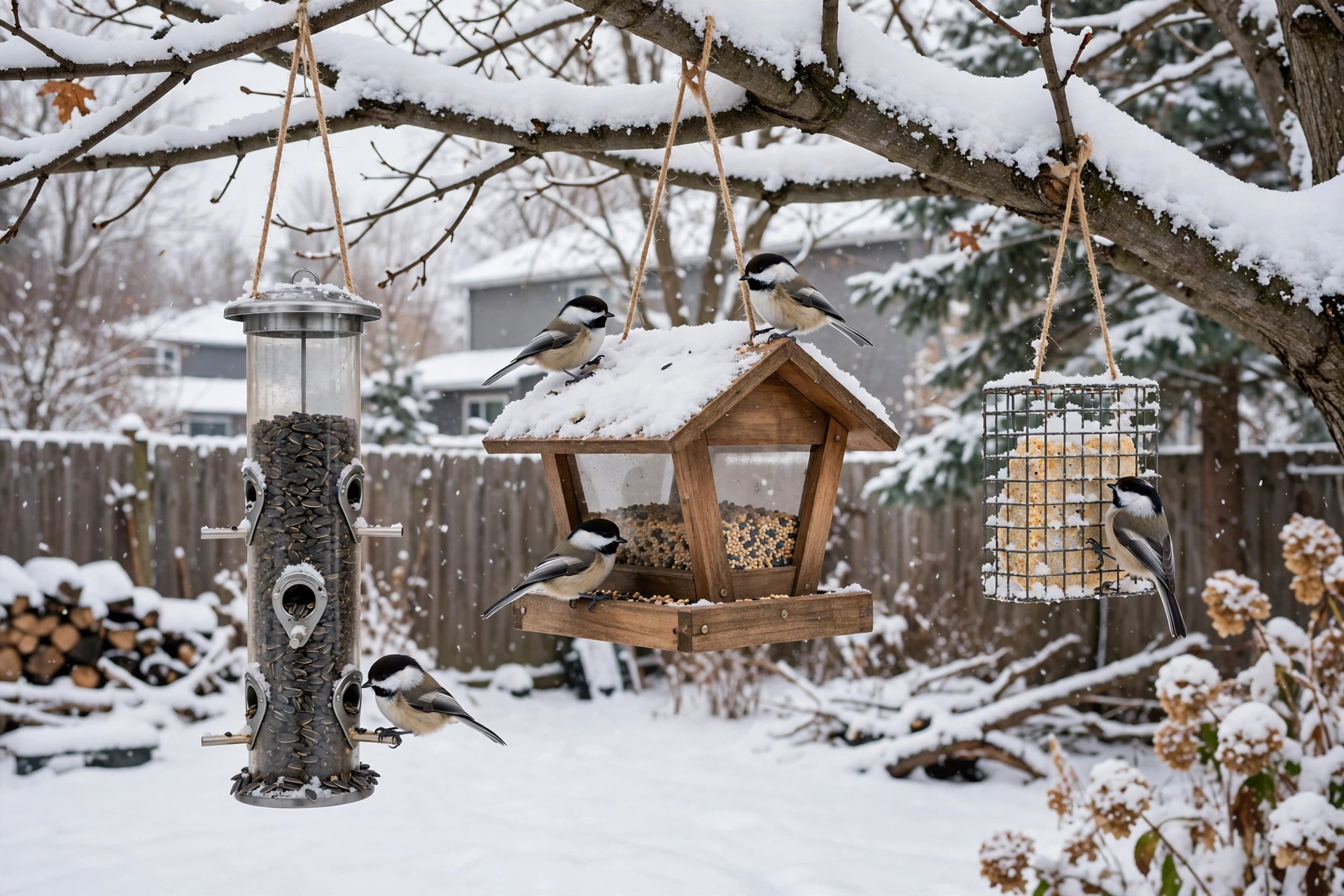
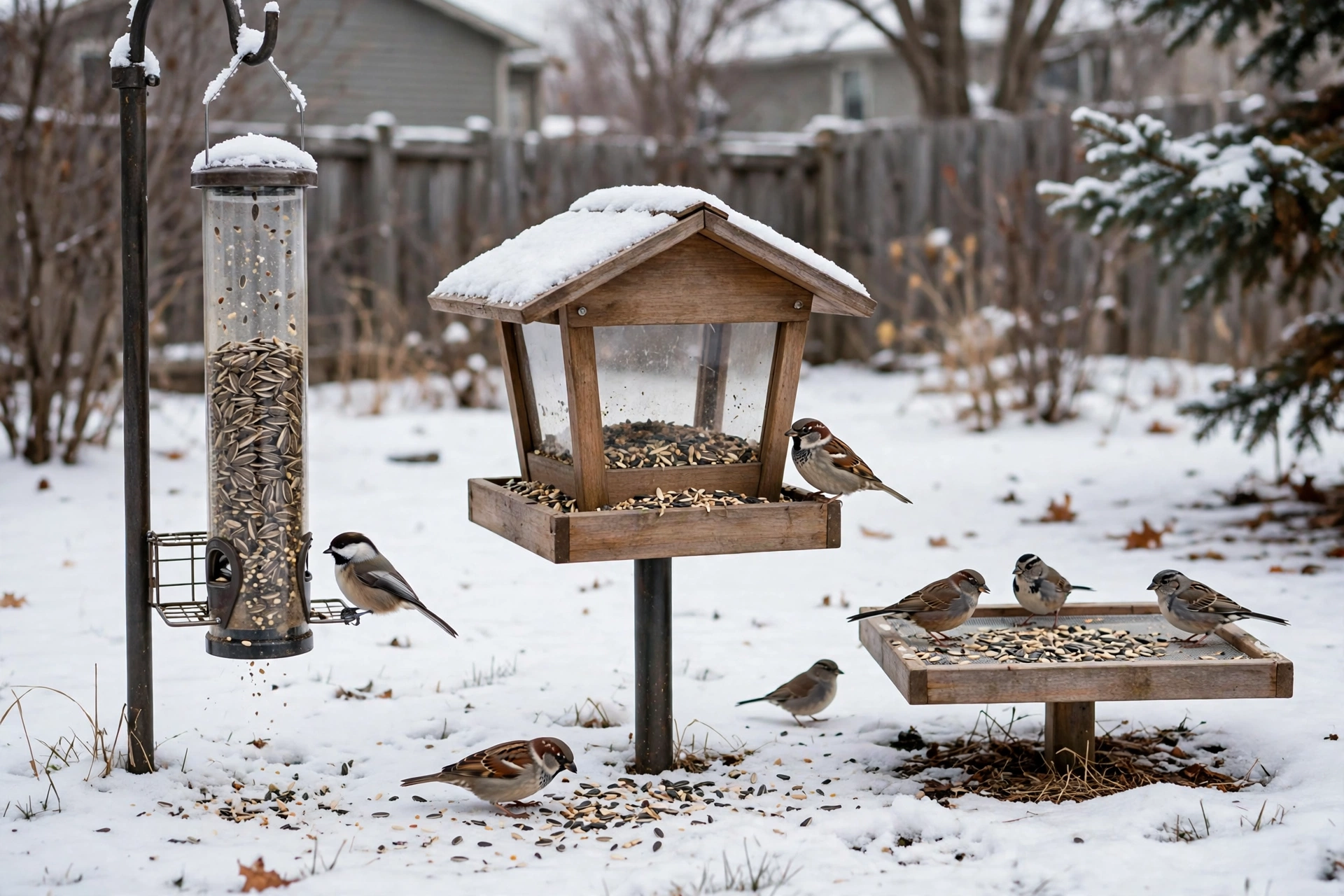
A tube feeder meters seed out slowly to small birds. A hopper holds more and feeds a crowd. A platform serves any bird that lands on it, and wastes the most seed doing it.
That contrast decides most of the choice. The rest is cleaning effort, squirrel exposure, and which birds in your yard will not use one style at all.
All three styles earn a place in the right yard. The mistake is buying one style to do another style’s job, then blaming the birds for not showing up. For specific winter models, see best winter bird feeders.
The three types side by side
| Type | Capacity | Birds served | Seed waste | Cleaning |
|---|---|---|---|---|
| Tube | Medium to large | Small clinging and perching birds | Low | Moderate; must come apart |
| Hopper | Large | Wide range, including cardinals | Moderate | Moderate; check corners for damp seed |
| Platform | Small per fill | Widest, including ground feeders | High | Easiest; open tray, scrub and dry |
Squirrel exposure runs in the opposite order to waste. A platform has no barrier at all, a hopper gives squirrels a flat landing and a roof to work from, and a tube with a weight-closing mechanism is the hardest of the three for a squirrel to empty.
Tube feeders: lowest waste, narrowest guest list
A tube holds seed in a vertical cylinder and releases it at small ports near the base. Birds feed one or two at a port, hulls fall, and very little good seed reaches the ground.
That control is why tubes waste the least. It is also why they exclude birds. Cardinals need a ring or tray to land comfortably, and ground feeders such as juncos will not use a tube at all.
Cleaning decides whether a tube is a good buy. Pick one that disassembles fully, wash it about every two weeks, and let it dry before refilling so damp seed does not clump in the cylinder.
Brome Squirrel Buster Plus
5.1 lb tube feeder with 6 ports, a cardinal ring, and weight-adjustable closing ports for squirrel resistance.
The Brome is the tube to measure others against because it fixes the style’s two weak points. The cardinal ring admits a bird most tubes shut out, and the adjustable closing ports handle squirrels without a separate cage.
Hopper feeders: capacity and a broader perch
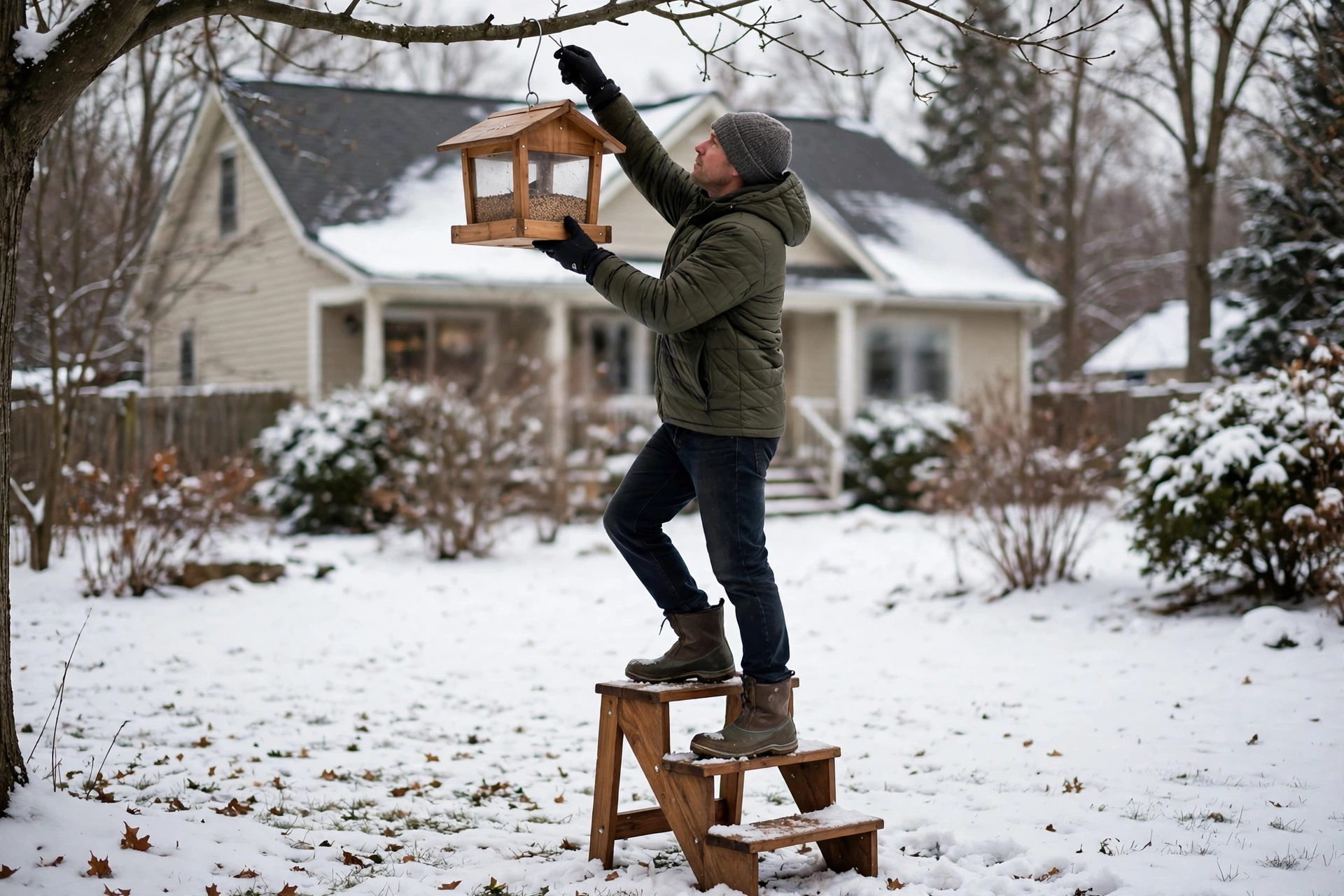
A hopper stores seed in a central bin with a roof, and seed flows onto a tray at the base as birds eat. The tray and roof make it look like a small house, and larger birds land on it more readily than on a tube port.
Capacity is the hopper’s strength. You fill the bin, the tray refills itself, and the feeder runs for days. That self-feeding tray is also where damp seed collects, so check the corners where the bin meets the tray at every refill.
Squirrels like hoppers. The roof and tray give them footing, and a wooden hopper can be chewed. Metal construction and a pole baffle are not extras on a hopper in squirrel country. They are the setup.
Perky-Pet Farmhouse Feeder
2.8 lb hopper feeder with metal construction, a practical size for a yard that wants capacity without a huge bin.
At 2.8 pounds, the Farmhouse sits in the middle: more reserve than a small tube, less than the largest hoppers. Metal construction answers the chewing problem that shortens the life of wooden hoppers.
Platform feeders: every bird welcome, no protection
A platform is an open tray. Any bird that can land can eat, including the ground feeders the other two styles miss, and that openness is the entire point.
The costs are plain. Seed sits exposed to rain and snow, squirrels and larger birds take as much as they want, and waste runs high because birds sort through seed on an open surface and push the rest off.
Cleaning is the one easy part. There are no ports or bins to take apart. Dump the tray, scrub it, let it dry, and refill with a small amount.
Woodlink 3-in-1 Platform Feeder
Open platform that can hang, mount on a pole, or sit on the ground, so you can move it as conditions change.
Do not use a platform with no drainage in a wet climate. Seed sitting in standing water on a flat tray molds fast, and moldy seed is a health risk to the birds you are feeding. If your winters are wet, choose a platform with drainage, empty it after rain, or skip the style and scatter small amounts of seed on cleared ground instead.
Verdict by yard
Small yard, heavy squirrels, limited time: buy the tube. It wastes the least seed, resists squirrels best, and asks for a wash every two weeks rather than daily attention.
Mixed flock with cardinals and a pole you can baffle: buy the hopper. You get capacity and a tray larger birds will use, and the baffle handles the squirrel exposure the style cannot handle on its own.
Ground feeders are the birds you care about, and you are home to tend it: add the platform as a second feeder, filled little and often. Do not make it your only feeder unless you accept the waste and the daily cleanup.
Placement changes how each style performs, especially wind exposure for hoppers and platforms, so set the spot with where to hang a bird feeder in winter before the first fill. Start with the tube if you buy one feeder this winter. It is the style with the fewest ways to go wrong.