This site contains product affiliate links. We may receive a commission if you make a purchase after clicking on one of these links.
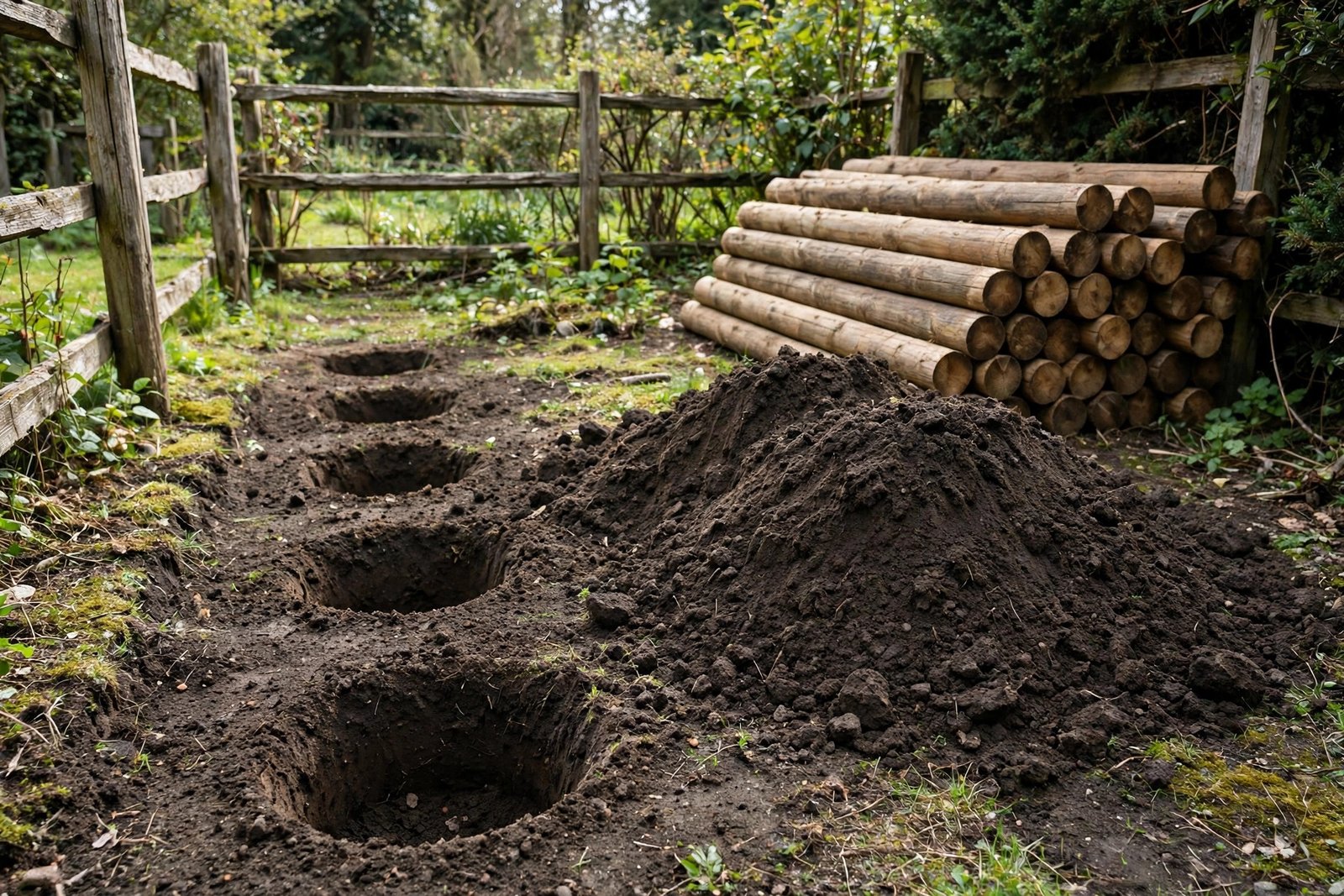
Picture the fence line you have been putting off. Thirty posts, a Saturday that is already spoken for, and a manual digger leaning in the garage like a dare. You could spend the weekend wrestling one hole at a time, or you could let a gas auger do the digging while you do the thinking.
Vevor’s 52cc gas post hole digger is the second option, priced at $150.90, and it comes with both bits most homeowners actually need: a 6-inch bit for planting and smaller posts, and a 10-inch bit for fence and deck posts. Here is the verdict up front: it digs fast through ordinary soil, it starts easily for most owners, and it demands respect the moment the bit meets a rock or a root. Buy it for a project, not for a toy box, and it earns its keep.
Before anything else, the one rule that outranks every other paragraph in this review: check for buried lines before you dig a single hole. Call your local utility locator, mark everything, and keep the auger away from those marks. A gas auger does not forgive a surprise, and neither does a gas line.
What you are actually getting
This is a one-person gas powerhead with a 52cc two-stroke engine, rated at 1,450 watts, spinning up to 9,350 RPM. The gearbox uses ball-bearing shafts and alloy gears, built to push through sandy soil, wooded ground, and farmland. The kit is complete in the box: the powerhead, a 6-inch bit and a 10-inch bit, three extension rods, a spark plug, a mixing bottle, and a tool kit.
The bits are 31.5 inches long, alloy steel with a powder-coated surface meant to slow rust and wear. Each extension rod adds 7.8 inches, so the rods mostly save your back — they let you drill deeper without bending double over every hole. The fuel tank holds 0.32 gallons, which is enough for a run of holes without constant refueling stops. The starter cord is a thickened 3.94 feet, about half again as long as a standard cord, which gives your pull more leverage.
Fuel is mixed at 1:40 oil to gasoline, measured with the mixing bottle in the kit. Use fresh fuel, mix it carefully, and never refuel a hot engine. The handle carries a foam grip and a quick-shutoff switch, so you can kill the engine fast with your hand still where it belongs. That switch is not a decoration. When the bit binds, your first move is to release the throttle and hit it.
Living with it: fast, loud, and honest about torque
Power is the story owners tell first. Dry dirt, hard clay, small roots — the auger chews through them, and it keeps going once it breaks through a hard crust into moist soil below. One owner on Vevor.com, writing about deer-blind posts, put it simply: “Started right up on the first couple of pulls.” Another, after nineteen 10-inch holes in dry, hard clay, advised two people running the machine even though he managed alone.
Starting earns praise across the board. First-pull, second-pull, third-pull starts after priming — the pattern repeats, and it matters, because a gas tool that fights you at the pull cord never gets used twice. Setup is just attaching the handles, and then you are drilling.
Now the other side, stated as plainly as owners state it. Torque is real, and it is the whole safety story of this machine. Hit a potato-sized stone and the auger will try to twist out of your hands. One owner on Vevor.com warned exactly that way: “hold on, beware it’ll rip your arms off.” That is not a defect. That is physics, and it is why two people are the smart call on rocky or rooty ground: one to hold, one to help control, both with a firm grip and both ready to release the throttle the instant the bit binds.
The technique owners describe is simple and worth learning before your first hole. Drill down a little, lift the bit to clear the dirt, drill again. Do not force a bound bit deeper. If it lugs down in clay, lift, clear, and go back in. Wet clay binds worse than dry soil, and a little water in a hard, dry hole can soften the going — but water does not make rocks disappear, so keep your grip honest either way.
The complaints, kept in proportion, are familiar gas-tool complaints. A few owners mention fuel leakage and minor component issues, and the manual’s own troubleshooting covers oil around the engine or gearbox as a stop-and-check signal, not a keep-going signal. A small share of owners — 9 percent give it one star — are unhappy, and the most common thread underneath that number is the torque and control story, not a single broken part. Wear safety glasses, gloves, and sturdy footwear every time. Long pants, no loose clothing near a spinning bit, and hearing protection for a gas engine’s noise.
The 6-inch bit, the 10-inch bit, or the bigger sibling?
The kit’s two bits are the decision, so make it by the job, not by the bigger number. The 6-inch bit suits planting holes and smaller posts. The 10-inch bit is the fence-post and deck-post bit, with room for concrete around the post. A hole that is too tight leaves you fighting the post; a hole that is too wide wastes concrete and time.
| Choice | What it handles | Best for |
|---|---|---|
| 6-inch bit | Planting holes and smaller posts | Trees, shrubs, and light posts |
| 10-inch bit | Fence posts and deck or pergola posts | A fence line or a deck project |
| 63cc sibling | The same jobs with a larger engine | Buyers who want more power for tougher ground |
This listing carries 1,078 reviews at 4.3 out of 5 across the auger family, with 71 percent at five stars. Read that number for what it is: a family pool, shared across the auger range, not a count of owners of this exact bit combination alone. The visible top reviews are pinned to the 52cc 6-inch and 10-inch style, and they are the ones quoted here.
Do not buy this auger expecting a promised depth. How deep you get depends on the bit, the extensions, the soil, and what is buried in it. Owners report holes in the low thirty inches and deeper, but your soil writes its own answer. Plan the project around the posts, not around a depth number.
Buy it, or rent one?
This is the honest question, and the answer depends on how many holes you are actually digging. One short fence run, once, with a rental yard nearby, and renting may be the cheaper, simpler day. A full fence line, a deck, a pergola, and then tree planting next spring — at $150.90, owning this auger starts to look like the better math, because it is still in the garage when the next project shows up.
Renting also spares you storage, fuel mixing, and maintenance. Owning spares you the rental clock: no rushing a fence line to beat a return time, no second trip when the ground turns out harder than you guessed. If you know you will use it twice, buy it. If you know you will use it once and never again, rent it and spend the difference on better posts.
One more honest note: this is a homeowner-tier auger, not a fencing crew’s two-man powerhead. It is built for a homeowner’s fence, deck, or planting project, at a homeowner’s pace, with a homeowner’s grip strength. That is not a knock. It is the reason the price works.
Who should buy it, and who should not
Buy this auger if you have a fence line, a deck, or a planting project in front of you, if your soil is ordinary dirt, clay, or light roots rather than solid rock, and if you will check for buried lines and grip it like you mean it. Buy it if a second pair of hands is available for the rocky stretches, and if you like the idea of owning the tool for the next project too.
Skip it if your ground is mostly rock, if you cannot get a utility check done first, or if you want a machine you can run one-handed while thinking about something else. This is not that machine, and no honest review would pretend otherwise. Skip it too if the job is a single hole — a manual digger and an afternoon will do, and your wallet will thank you.
For the fence-line buyer, though, the case is strong. Two bits, three extensions, easy starts, and real power for $150.90, from a machine that owners keep describing as good value for the price. Respect the torque, mark the lines, bring a friend for the hard ground, and the fence goes up on your schedule.
BEST VALUE
VEVOR 52cc Gas Post Hole Digger
Two bits, easy starts, and real digging power for $150.90 — with torque that demands a firm grip and a utility check first.
If the fence line ends at a garden arbor, our arbor installation guide walks through setting posts level and true. For the shed the tools will live in afterward, see the 6×4 metal storage shed review. And for the broader question of whether Vevor tools are worth it at all, see Vevor vs. big-box brands.