The lawn drinks a long watering and still looks thirsty by noon, with water pooling on top instead of sinking toward the roots below.
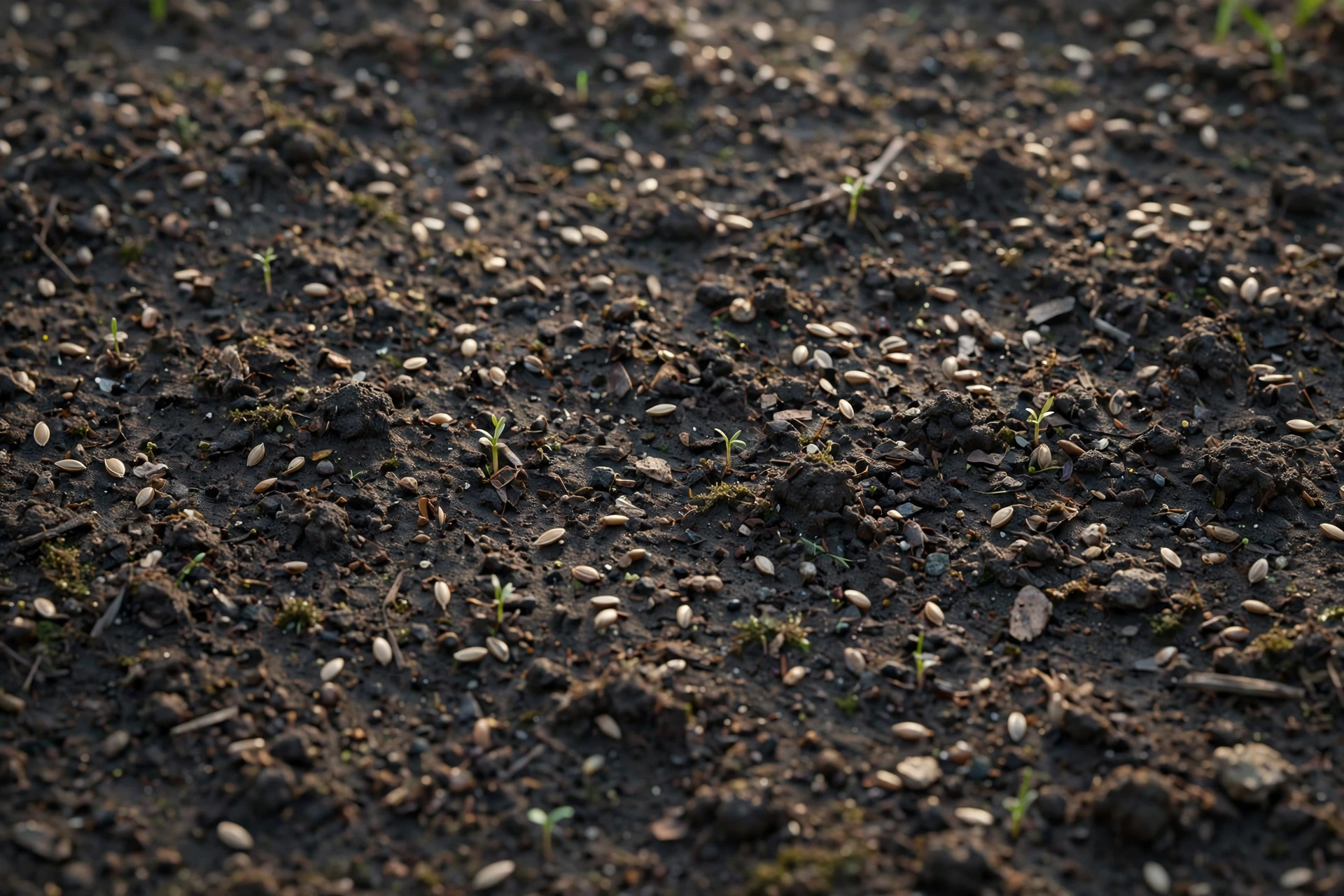
You can feel the second clue underfoot, because a lawn with heavy thatch walks spongy, like a thin mattress over hard ground. Seed spread on a lawn like that also tends to vanish without a trace, since it settles into the mat and never reaches soil.
Those three signs point to the same layer, and this page sorts out whether that layer is thick enough to need a scarifier. You will learn how to measure it in about five minutes, what a scarifier actually does, and when a gentler dethatching pass is the right call instead.
What you are seeing: the symptom checklist
Thatch is the tightly bound layer of living and dead stems, roots, and crowns that sits between the green blades and the soil surface. A thin layer is normal and even useful, since it cushions the crowns and slows moisture loss on hot afternoons.
The layer becomes a problem when it keeps growing faster than it breaks down. Watch for these signs together rather than any one of them alone, because each one also has other possible causes.
- Water pools or runs off during watering instead of soaking in where it lands
- The turf feels spongy or springy underfoot, especially in the thickest-looking areas
- Overseeding disappoints, with little new grass despite good seed and steady watering
- The lawn thins and pales even though fertilizer and mowing are on schedule
How to tell: measure the layer
Guessing from the surface is how lawns get torn up for no reason, so measure before you rent or buy anything. The check takes a small cut, and it gives you a number you can act on.
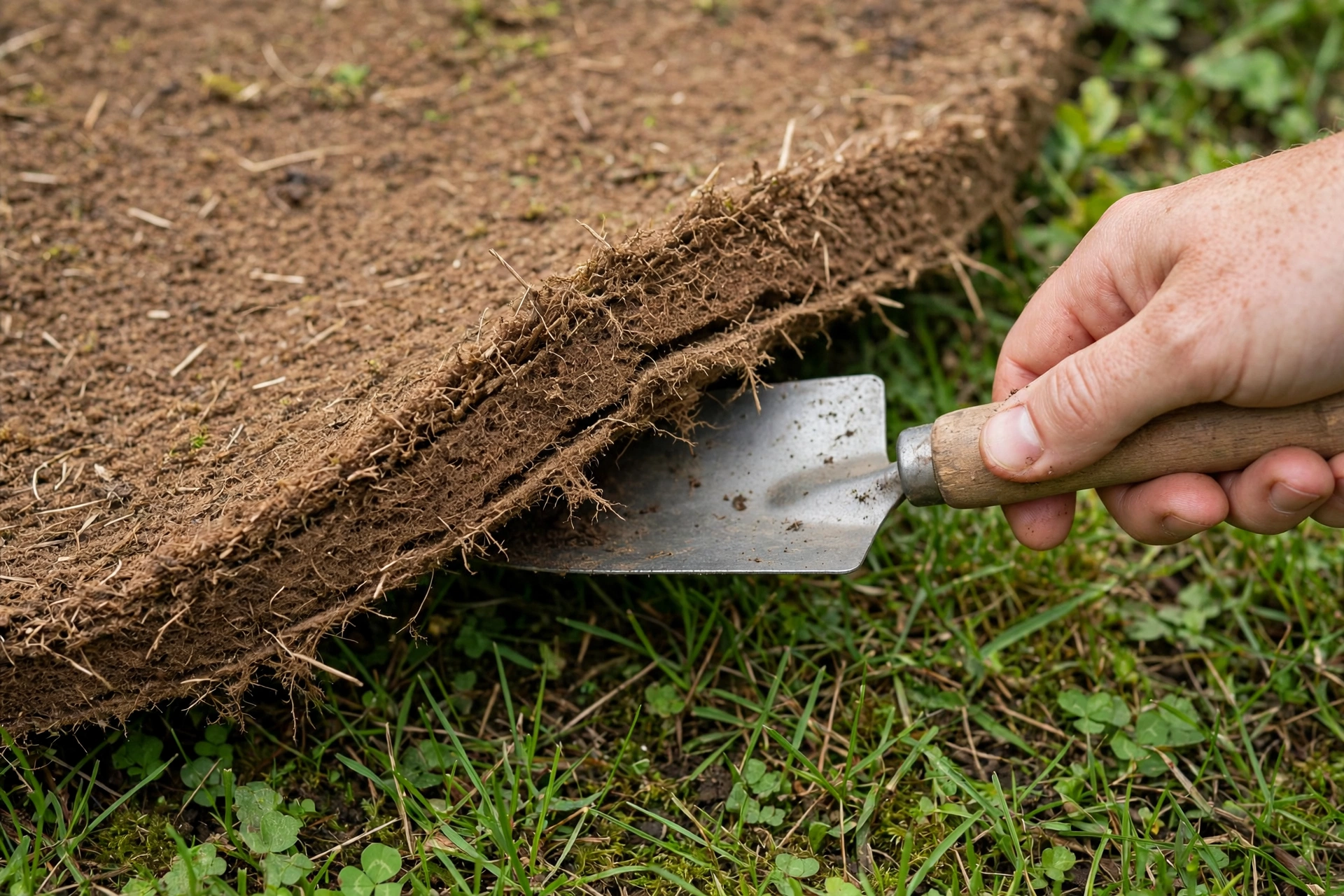
Cut a small plug. Push a knife or trowel through the turf in two or three spots and lift a wedge about 2 inches deep, choosing one thick area and one ordinary area so a single corner does not speak for the whole yard.
Find the brown layer. Look at the side of the wedge and separate the green growth on top from the soil at the bottom, because the compressed brown mat packed between them is the thatch.
Measure that mat. A layer up to about 1/2 inch is a working layer that most lawns carry without trouble, while a layer over 1/2 inch is the threshold where scarifying or dethatching starts to matter.
| What you find | What it points to | First move |
|---|---|---|
| Thatch under 1/2 inch, water soaking in | A normal, working thatch layer | Leave it alone and look elsewhere for the cause |
| Thatch over 1/2 inch, spongy feel | A mat thick enough to block water and seed | Plan a dethatching or scarifying pass |
| Thin thatch, but hard ground a trowel barely enters | Compacted soil rather than a thatch problem | Look at core aeration instead of scarifying |
What a lawn scarifier does
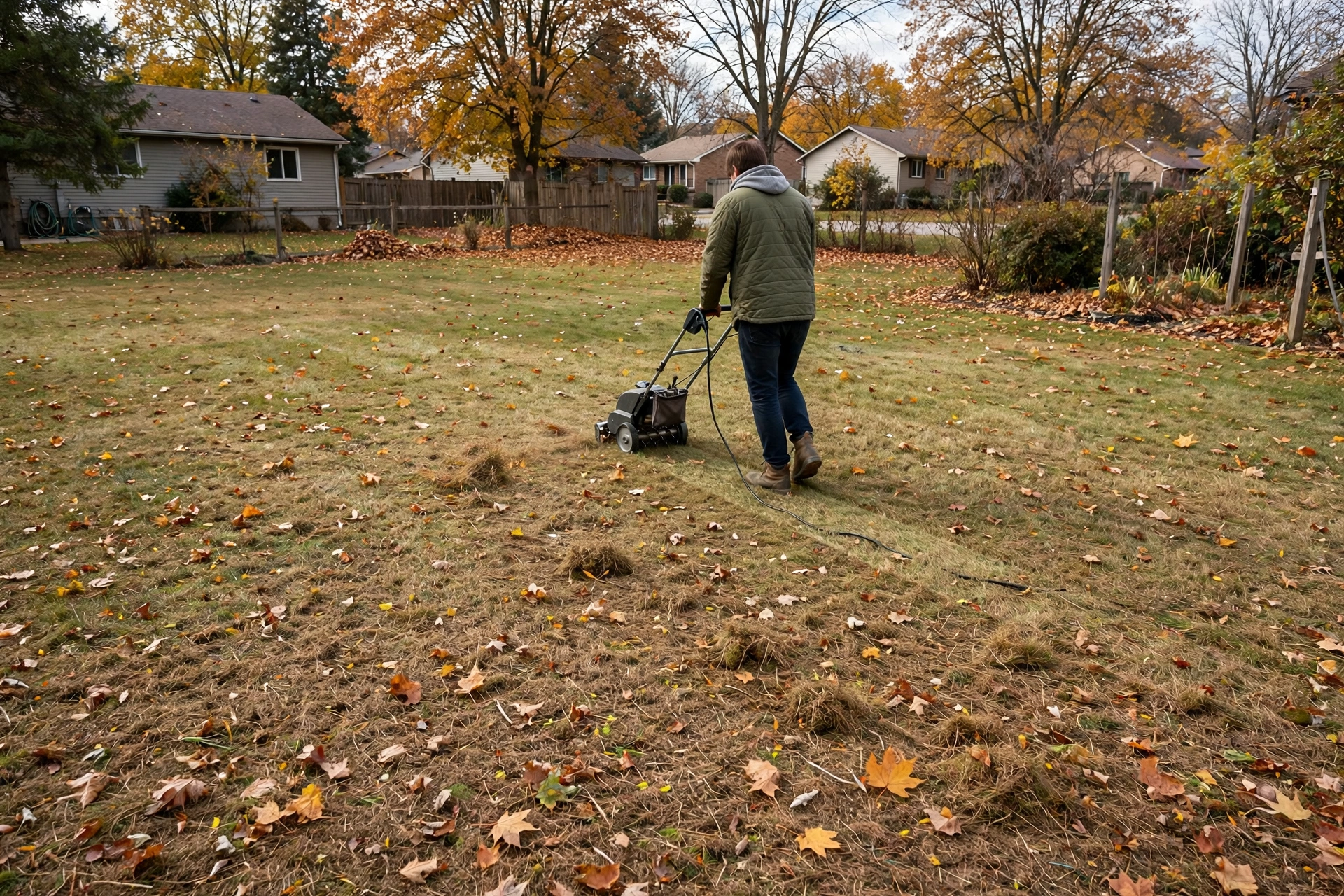
A scarifier works that measured layer with fixed blades. As the machine moves, the blades slice vertically through the mat and into the very top of the soil, cutting the layer apart and pulling loosened material up to the surface for raking.
Those slices do a second job when you are overseeding, because seed that drops into a fresh cut lands against soil instead of drying out on top of the mat. Scarifying is the more aggressive of the two treatments, and on a lawn with a thick layer and a seeding plan, that aggression is exactly what the job calls for.
Timing protects the lawn while it recovers, since grass needs active growth on both sides of the work to knit back together. Early fall and spring, when the lawn is growing steadily rather than sitting dormant or stressed by heat, are the practical windows for most home lawns.
What a dethatcher does instead
A dethatcher takes the gentler route through the same layer. Its spring tines comb through the turf and flick loose dead material up out of the mat, without cutting into the soil beneath it.
Combing suits a layer that is just past the 1/2 inch line, or a lawn that needs cleanup before a light overseeding rather than a full renovation. Our direct comparison of scarifier vs dethatcher works through which lawn gets which treatment, and the machines in our roundup of the best electric dethatchers for home lawns cover the combing-only end of the job.
Kneel down after a combing pass on a test strip and part the grass with your fingers, because the strip tells you plainly whether the mat is lifting out. If the brown layer is coming up in loose handfuls and the turf underneath still stands, the gentler tool is doing enough.
Do you need a scarifier?
You need one when the measurement and the plan line up together. Thatch over 1/2 inch, plus overseeding that keeps failing or water that keeps sitting on top, is the combination that earns the blades.
You do not need one for a layer under 1/2 inch, however tired the lawn looks, because the cause sits somewhere else — compaction, shade, mowing height, or simple drought stress. Scarifying a lawn like that removes living turf, opens bare ground for weeds, and leaves the original problem untouched.
Renting, borrowing, or buying a 2-in-1 machine also changes the answer for borderline lawns, since a machine that carries both heads lets you start with the tines and reach for the blades only where the test strip proves you need them. Our roundup of the best lawn scarifiers and 2-in-1 dethatcher-scarifiers covers the machines that work that way.
What to do next
Measure first. Cut your plugs and get the number, because every decision after this one depends on whether that brown layer is over or under 1/2 inch.
Match the tool to the layer. Choose combing for a layer just over the line and slicing for a thick layer, a failed overseeding history, or a renovation where opening the surface is the point.
Work into growth, then seed. Schedule the pass when the lawn is actively growing, rake up what the machine lifts, and overseed straight into the opened surface so the cuts do their second job.
Bottom line
Measure the thatch before you do anything else, and let the 1/2 inch line make the call. Over that line, scarify or dethatch and seed into the opened ground; under it, put the scarifier back on the list and go find the real cause.