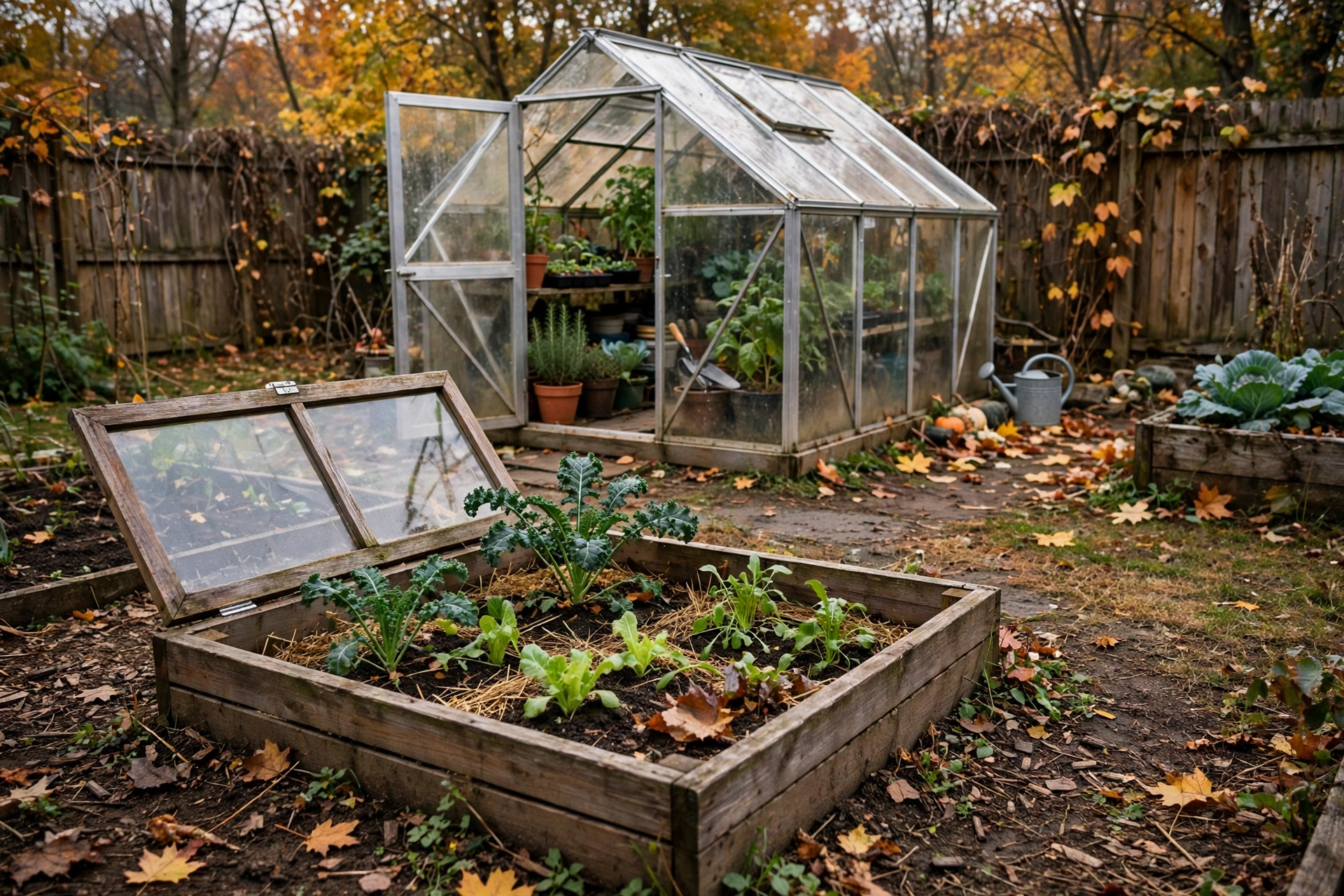
The lettuce looks fine in November and collapses after the first hard freeze — the difference is usually what was planted, not how cold it got. A cold frame buys you a few degrees and a wind break, not a greenhouse in January. Plant what that margin can protect, and the frame pays off all winter.
The rule is simple: leaves and roots that tolerate light frost do well; fruiting plants and tender herbs do not. A cold frame extends the season for hardy crops. It does not create a summer for tender ones.
What holds up best
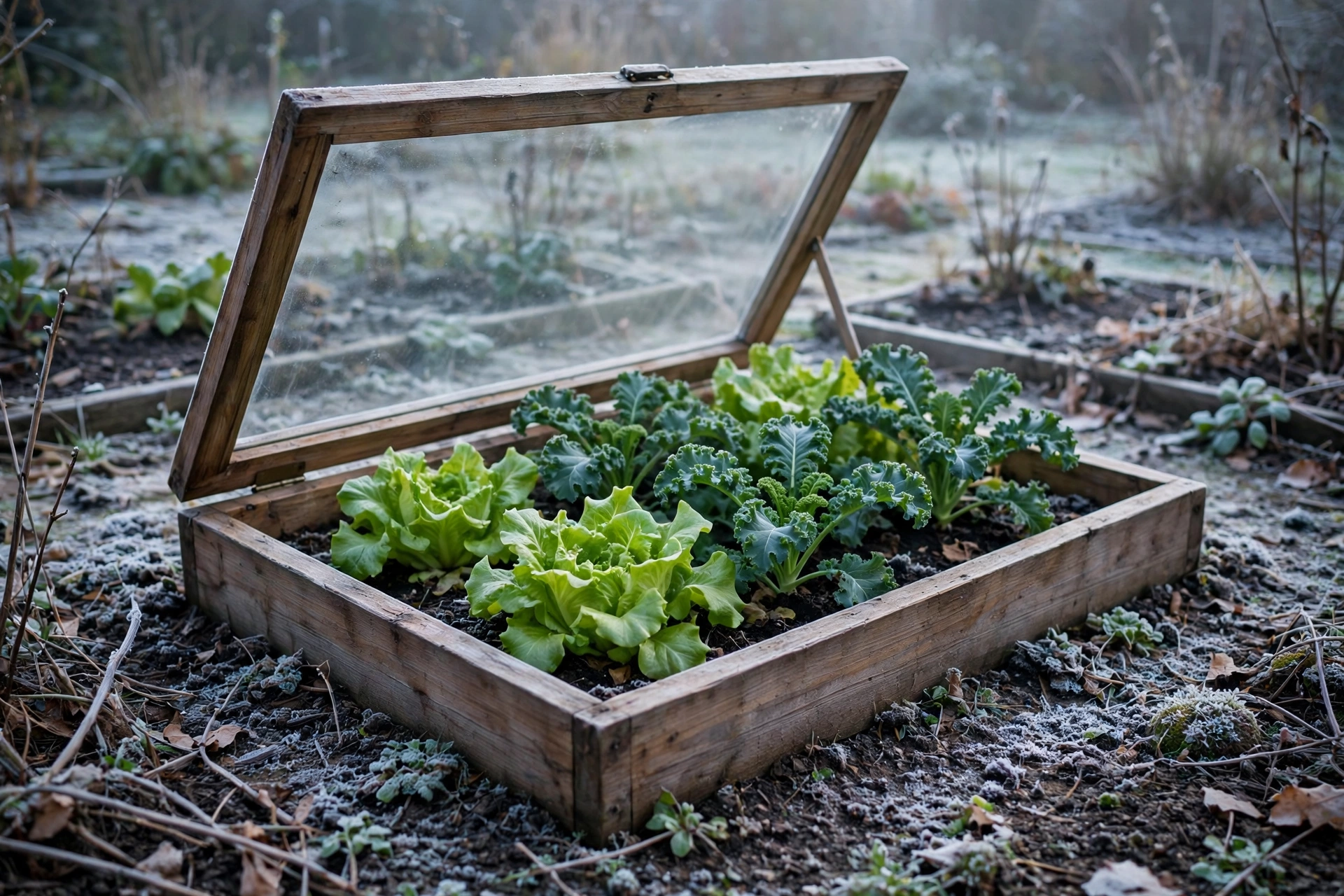
Leafy greens first. Spinach, lettuce, mâche, and Asian greens like tatsoi are the cold frame’s home turf. Sow them in late summer or early fall so they are well rooted before the cold arrives, then harvest leaves through winter as they grow slowly. Spinach in particular sweetens after frost, and a frame keeps it pickable when open beds are frozen solid.
Roots and alliums next. Carrots, beets, radishes, and green onions sown in fall hold in the ground under a frame and can be pulled through winter in mild spells. They grow slowly, so sow them early enough to size up before growth stalls.
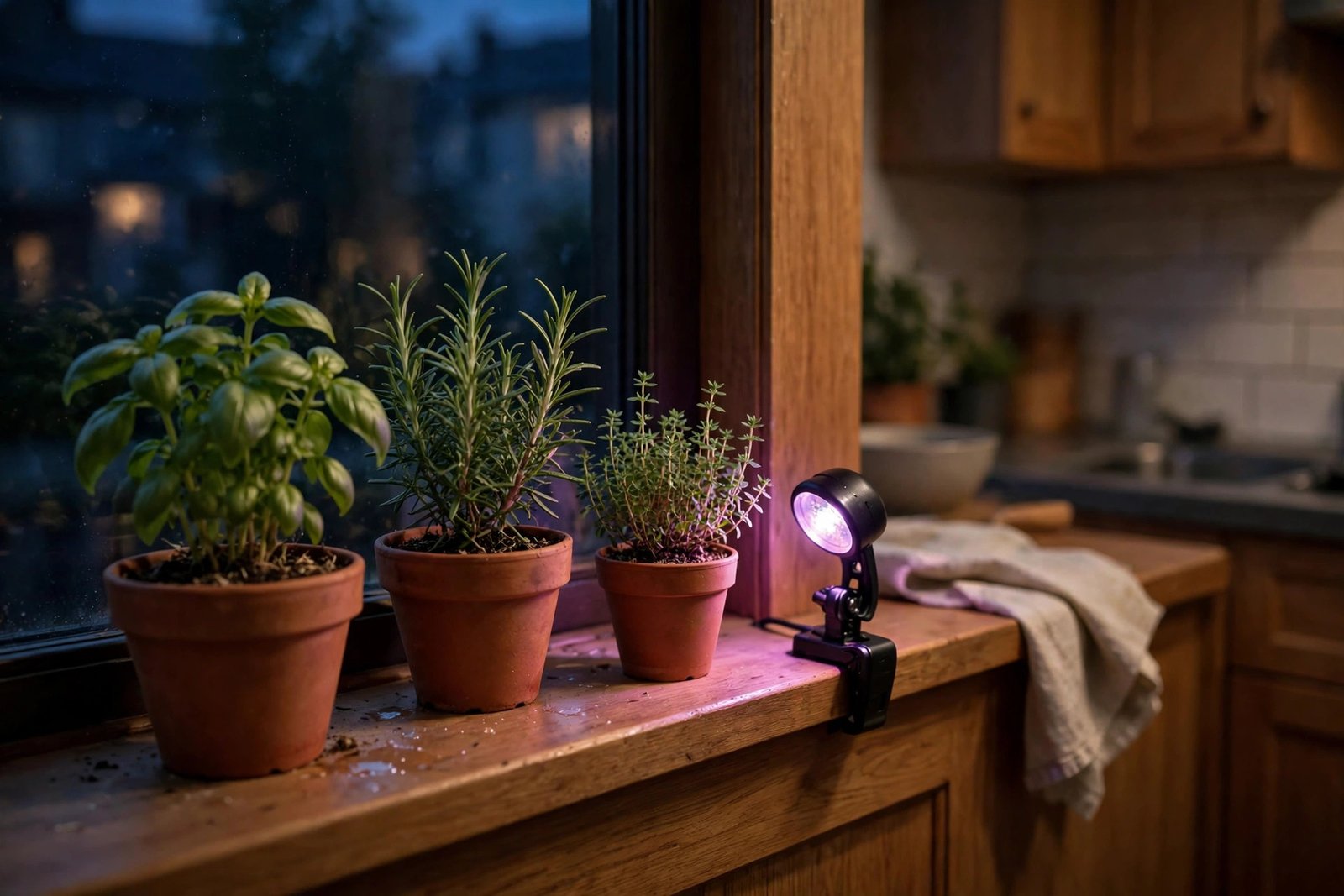
Hardy herbs, with limits. Parsley and chives hold up well under a frame. Basil, cilantro in a hard freeze, and other tender herbs do not — they belong indoors, not under a lid in January.
When to plant
Timing is the whole game. Sow fall crops 6 to 8 weeks before your first expected frost, so plants are established before cold slows them. A seedling planted in November in a cold frame is a seedling that never gets going; a plant that went in during September is a plant that keeps giving leaves in December.
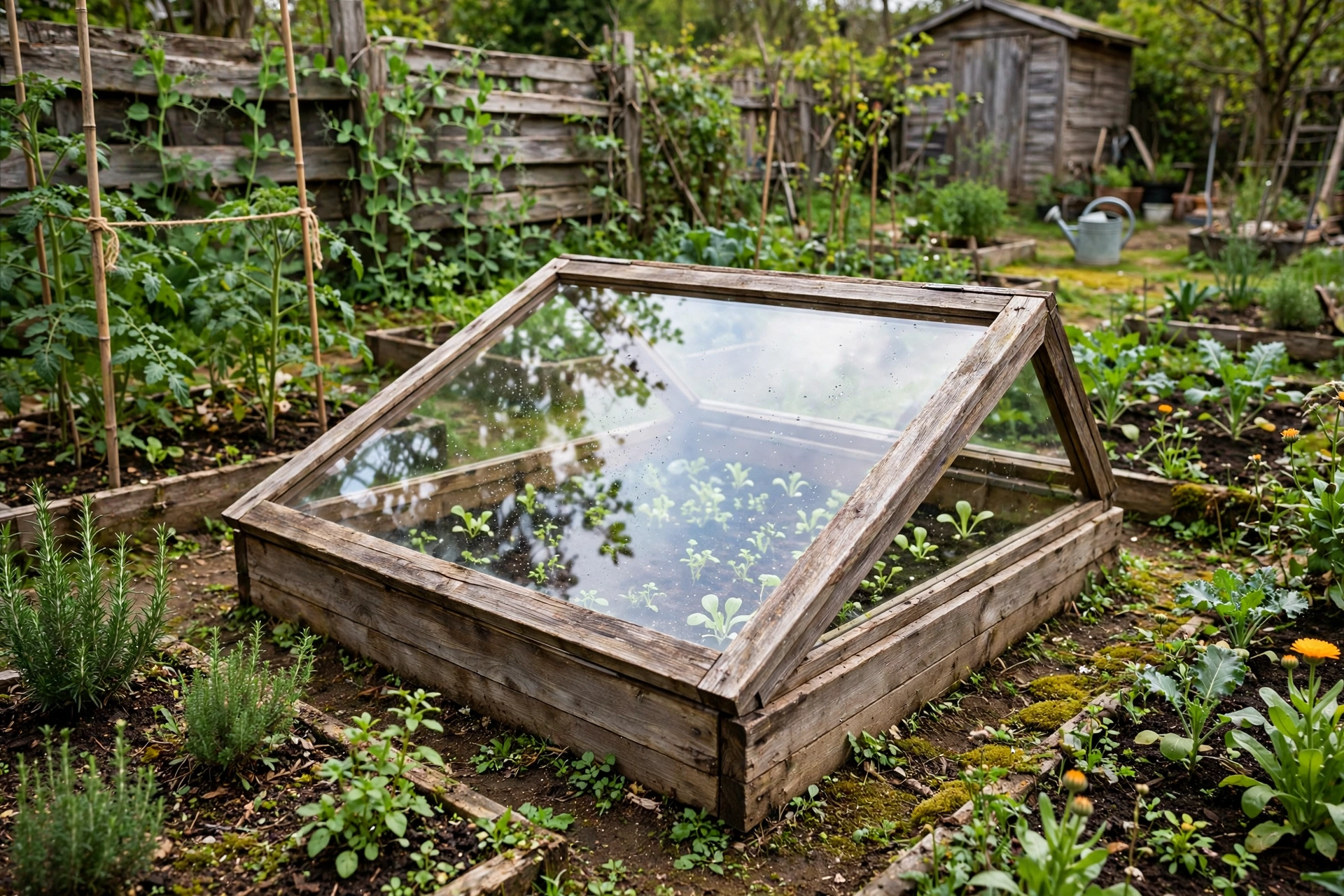
For spring, use the frame the other way: sow lettuce, peas, and radishes in the frame weeks before the open garden is workable, and harden off seedlings there before they go out. The frame’s best months are often March and April, not just December.
What to leave out
Tomatoes, peppers, eggplant, cucumbers, and squash need summer heat a cold frame cannot supply in winter. Putting them in a frame in November wastes the space and teaches the wrong lesson about the tool. Save the frame for greens, roots, and the spring head start.
Also leave out anything tall. A cold frame is low — most are under 3 feet tall, and many are under 2 feet. Tall kale, Brussels sprouts on a stalk, and climbing plants outgrow the lid and lose the protection the moment the lid has to stay open.
Daily care in winter
Vent on sunny days, even in winter. A closed frame on a bright January afternoon can hit summer temperatures inside and wilt greens that survived the night’s frost. Prop the lid a crack when the sun is out, and close it before dusk.
Water sparingly. Plants under a frame use far less water in winter, and wet soil in a cold frame stays cold. Water in the morning on a mild day, only when the soil is dry an inch down, and let the frame’s cover keep rain off so you control the moisture.
What to watch next
The sign the planting worked is leaves that keep coming, slowly, through the cold months — a few outer leaves picked each week, with the plant still standing. If everything collapses after the first hard freeze, the problem was the crop list, not the frame. Next fall, sow earlier, stick to greens and roots, and let the frame do the job it was built for. The right frame for that job is in Best Cold Frames for Gardens, and the frame-vs-greenhouse choice is in Cold Frame vs Mini Greenhouse.