Landscape & Leisure is reader-supported. When you buy through links on our site, including Botanical Interests seed links, we may earn a commission at no extra cost to you. Prices change, so click through to confirm current pricing.
Here is the mistake: you buy a grow light setup before you ever try the window. A light, a timer, a shelf rig — real money spent, and then you discover your south-facing kitchen window would have grown the same parsley for free. The reverse mistake is just as common: herbs stretching pale and leggy in a dark north window all winter while you wonder what you did wrong. Both mistakes come from deciding before looking.
So look first. The answer depends on two things you already own: which way your windows face, and which herbs you actually cook with. Seed packets here cost a few dollars each. A light setup costs real money before you grow a single leaf. Spend the light money only where the window genuinely fails.
| Setup | Light you get | Cost | Best for | Watch out |
|---|---|---|---|---|
| Sunny windowsill | Direct sun through glass, shorter in winter | Free, beyond pots and seed | Parsley, chives, mint in a south window | Cold drafts; basil hates cold glass |
| Grow light | Steady hours on a timer, regardless of weather | Light, timer, and electricity on top of seed | Basil, north windows, short winter days | Lights hung too far away do almost nothing |
The Windowsill Wins When the Window Is Bright
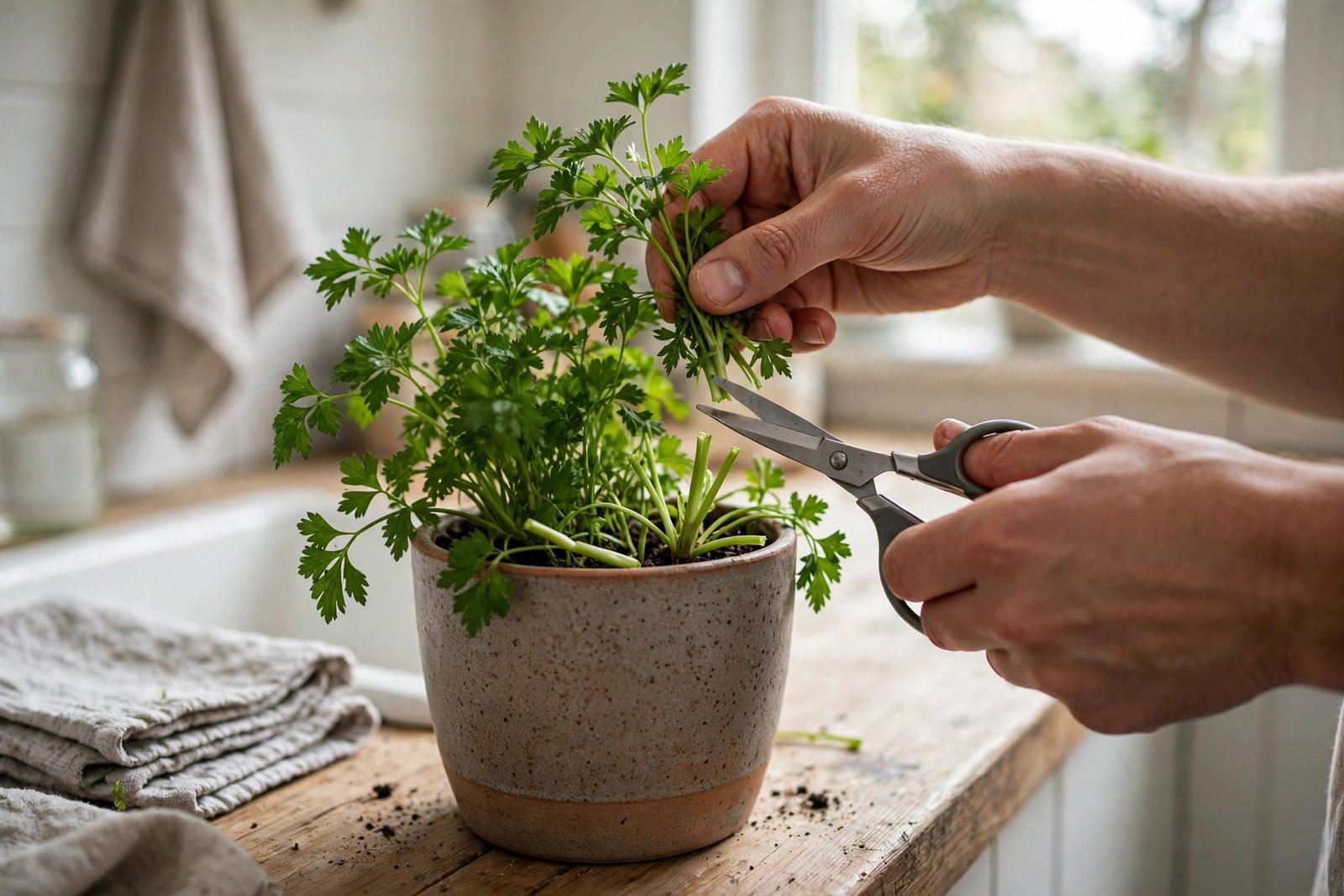
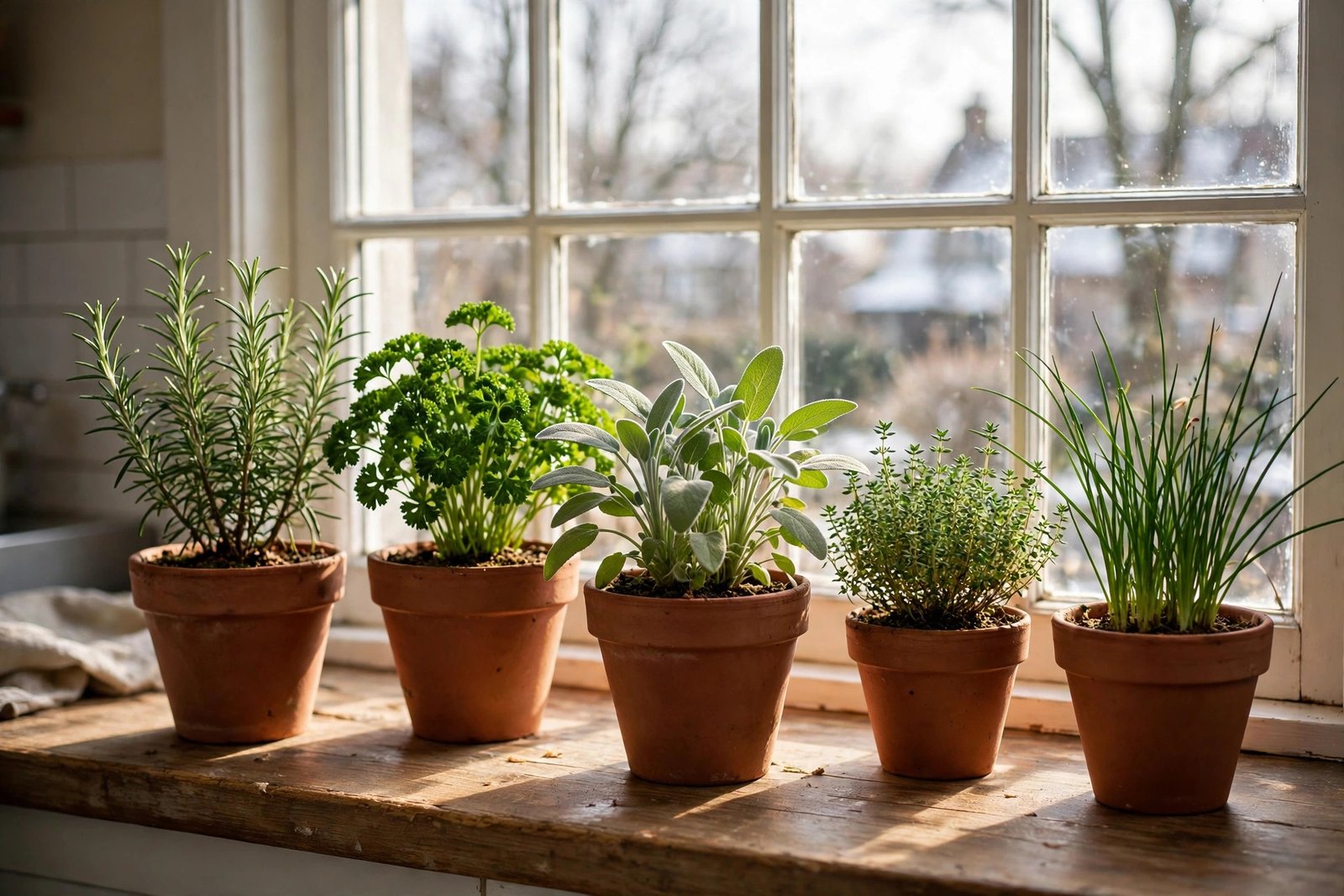
A south-facing window in winter still delivers real light, and parsley and both chives are built to use it. Moss curled parsley is cold-tolerant and listed for indoor winter growing; garlic chives and common chives are both listed for indoor growing too, and chives shrug off conditions that make basil sulk. If your sill gets direct sun for a good part of the day, start there and spend nothing.
The windowsill’s trade-off is the season itself. Winter days are short, cloudy stretches happen, and a window that was glorious in September can be marginal by January. That is a reason to watch your plants, not a reason to pre-buy equipment: stretched, pale growth tells you the light has run out, and only then does a light earn its money.
Moss Curled Parsley Seeds
Cold-tolerant and rated 5.0 out of 5 — the herb most likely to thrive on window light alone.
Garlic Chives Seeds
Perennial and unfussy — happy on a bright sill, and the first plant to justify a light if your window is dim.
The Grow Light Wins When the Window Is Dim or the Herb Is Basil
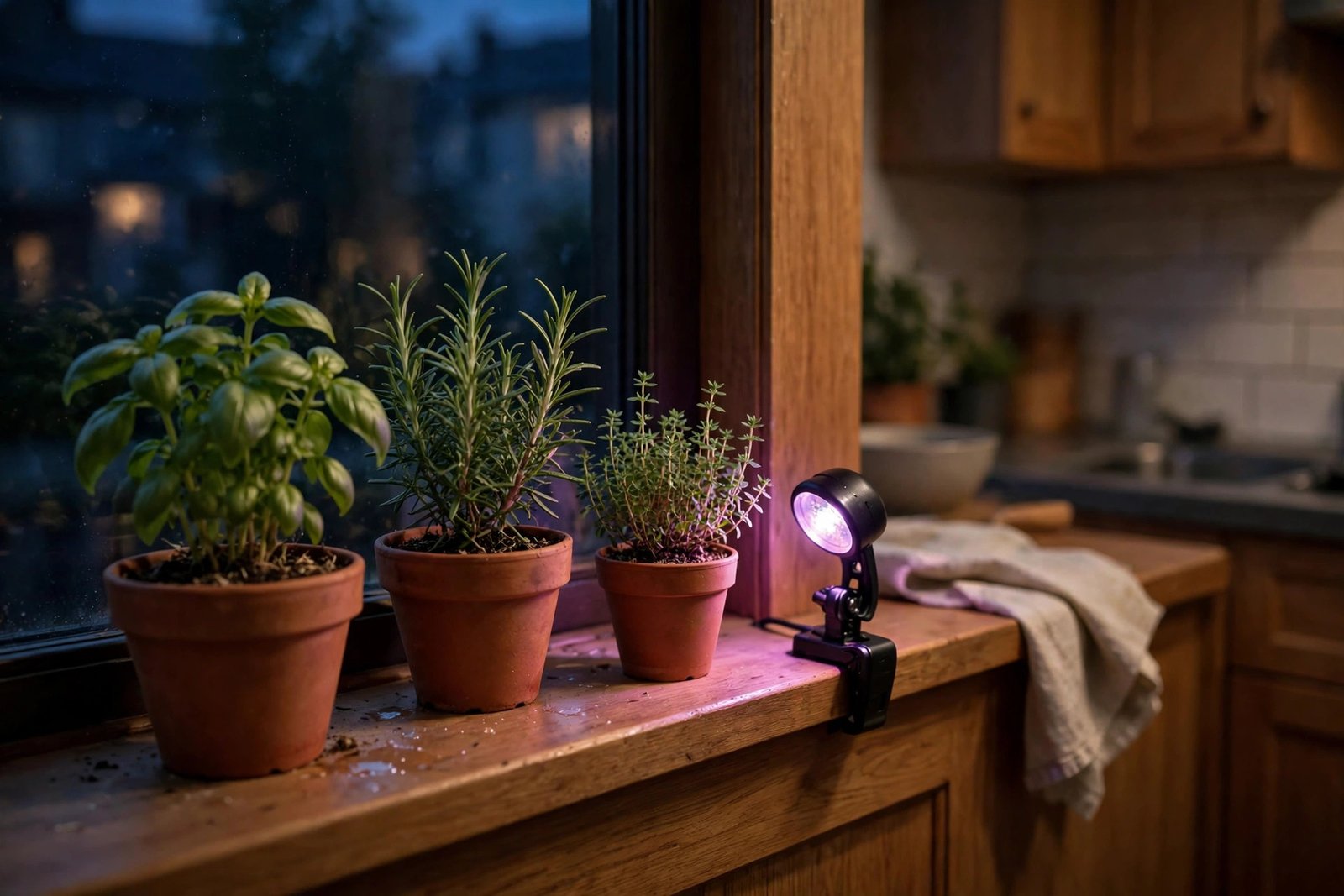
Grow lights earn their keep in three situations: a north-facing or shaded window, a house where the only sill space is away from direct sun, and basil. Genovese basil wants a warm, sunny window and is very frost sensitive — it is the one herb here that regularly outgrows what a winter window can offer, especially in a northern climate. If basil is the whole point, budget for a light instead of gambling on the sill.
If you do buy a light, hang it close. A light dangling three feet above the plants is decoration, not horticulture: keep it just above the foliage and raise it as the plants grow, and run it on a timer so the plants get a consistent day length even when the weather does not cooperate. A simple setup beats an elaborate one that never gets switched on.
Italian Genovese Basil Seeds
The true pesto basil — but the herb most likely to need a light when the window falls short.
What Not to Buy Twice
The classic double purchase is a light for herbs that never needed one, followed by a second light when the first turns out to be hung too high or too weak. Avoid both by sequencing the decision: sow parsley and chives on the sill first, watch them for three weeks, and buy a light only if growth is pale and stretched — or if basil is on the list. The full how-to for sill growing is in Growing Herbs on a Windowsill: Light, Water, and Harvest, and the varieties worth starting are in Best Herbs to Grow Indoors in Winter.
One more honest note: a grow light will not rescue a plant that is drowning. Overwatering kills more winter herbs than dim light does, so fix the watering before you blame the window, and fix the window before you buy the light.
Bottom Line
Try the window first. Parsley and chives on a bright sill need nothing else, and you will have spent a few dollars on seed instead of a light rig. Buy the light when the window proves dim, or when basil is the herb you actually want — and then hang it close, put it on a timer, and let it do the job the winter sun cannot.