Landscape & Leisure is reader-supported. When you buy through links on our site, including Botanical Interests seed links, we may earn a commission at no extra cost to you. Prices change, so click through to confirm current pricing.
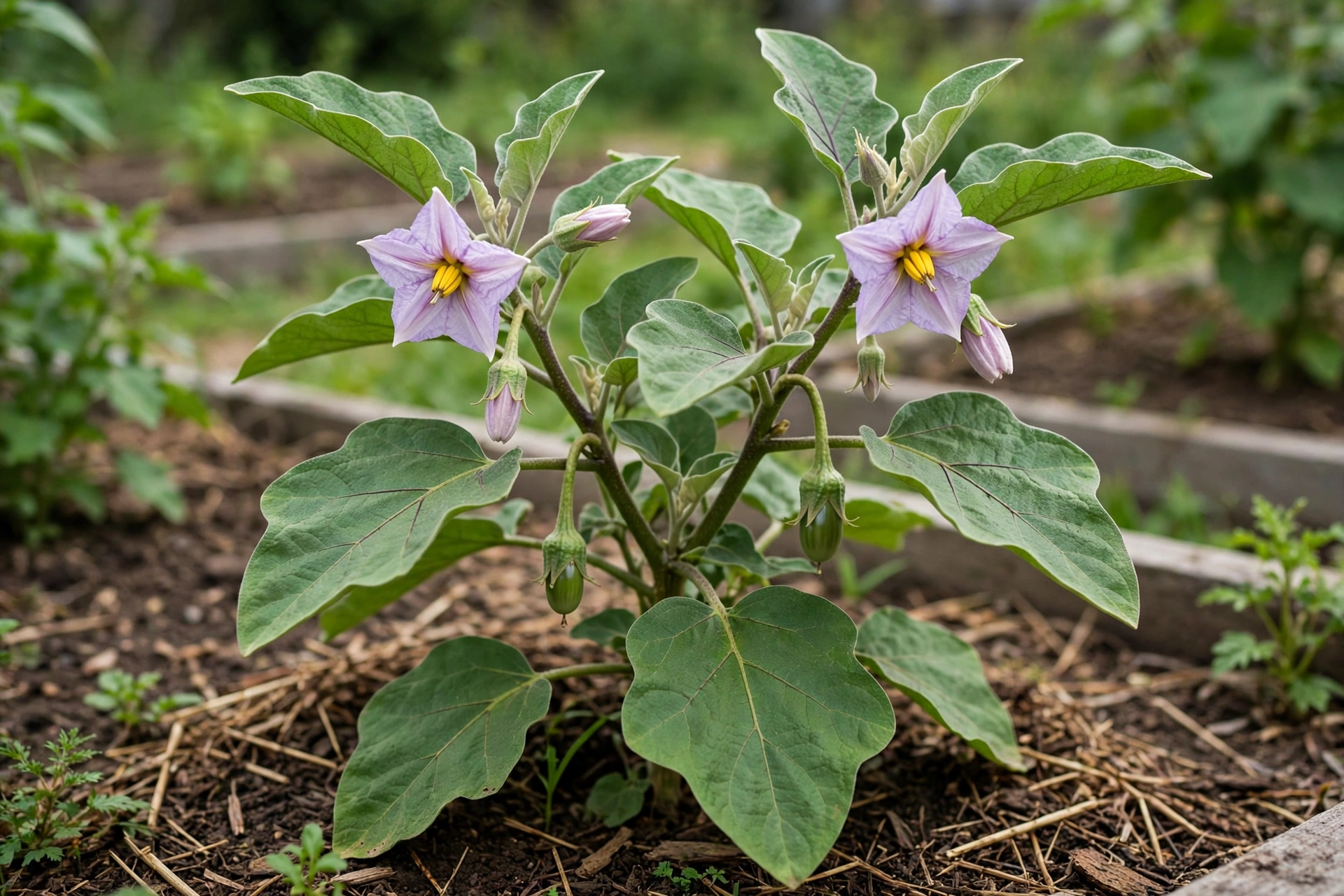
The plant looks fine. That is the maddening part — tall, green, covered in pale purple flowers, and not a single fruit swelling underneath one. The flowers open, they look healthy, and a few days later they are on the ground. Nothing is visibly wrong, which means the problem is in the conditions, not the plant, and conditions can be fixed.
Eggplant drops its flowers for a short list of reasons, and they sort themselves out if you watch what the weather and the plant are doing together. Cold nights are the usual suspect, then missing pollinators, then heat, then food and water. Work through them in order and the plant will usually tell you which one it is. If you are still choosing a variety, our eggplant roundup covers the three worth growing, and our starting guide covers the timing that prevents half of this.
The Diagnosis: What You See, and What It Means
| What you see | Most likely cause | The fix |
|---|---|---|
| Flowers drop after a cool night | Nights below 55°F | Row cover overnight; wait for nights reliably above 60°F |
| Flowers open, look fine, then drop | No buzz pollinators | Shake the plant at midday or hand-pollinate; plant flowers nearby |
| Flowers drop in a heat wave | Days above 95°F | Shade cloth in the afternoon; deep water in the morning |
| Big leafy plant, few or no flowers | Too much nitrogen | Stop nitrogen feeding; let the plant shift to fruiting |
| Flowers drop and leaves wilt | Inconsistent water | Water deeply and evenly; mulch to hold moisture |
| Plant stalls right after transplanting | Planted into cold soil | Wait — soil must be at least 60°F; cover with row cover on cold nights |
Cause 1: The Nights Are Too Cold
This is the most common cause, and the one gardeners miss because the days feel warm. Eggplant does not set fruit until night temperatures stay above 55 degrees, according to University of Maryland Extension — and the plant sets most reliably once nights hold above 60, the same threshold Botanical Interests gives for transplanting. A plant that goes out in May and gets two nights in the low 50s can lose its whole first flush of flowers, even though the plant itself looks untouched.
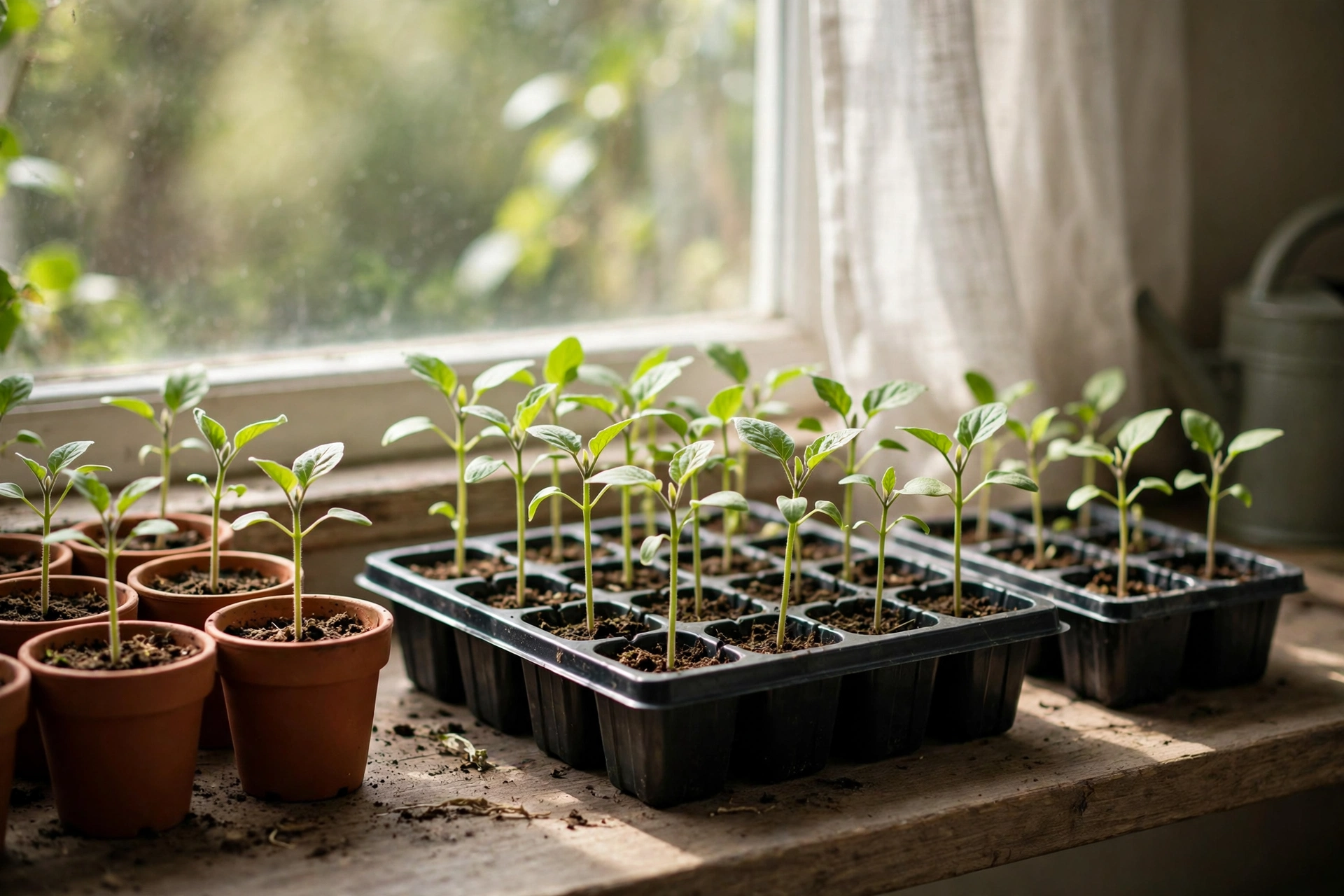
The fix is patience plus a row cover. Drape a frost blanket over the plant after sunset on cold nights and pull it off by mid-morning, and do not rush the transplant in the first place: wait until 1 to 2 weeks after your last frost, when the soil is at least 60 degrees. Dark containers and black plastic mulch warm the soil faster, which is one reason the container varieties set fruit sooner in a cold spring.
Cause 2: The Pollen Never Moves
Eggplant flowers are self-fertile, so one plant is enough — but the pollen sits locked inside the flower until something shakes it loose. In the wild that something is a bumblebee or a sweat bee, which grips the flower and vibrates it in a behavior called buzz pollination; University of Maryland Extension notes that these bees improve pollination in eggplant, tomato, and pepper crops. Honeybees visit the flowers but do not buzz them, so a garden full of honeybees and no bumblebees can flower all summer and set almost nothing.
If your flowers open, look fine, and then drop with no sign of cold or heat, this is the likely cause. The fix takes a minute a day: give each open flower a gentle shake at midday, when the pollen is dry, or touch the back of the flower with an electric toothbrush for a second — the vibration does what a bumblebee does. Planting flowers nearby brings the bumblebees back for next season, which is the longer answer.
Cause 3: A Heat Wave Sterilizes the Pollen
Eggplant loves heat, but it has a ceiling. When days stay above 95 degrees, the pollen stops working and the flowers abort, even though the plant looks healthy. The damage happens before the flower opens, so the weather on the day the flower drops is usually misleading — the hot days a week earlier are the ones that did it. Shade cloth over the hottest stretch of the afternoon and a deep soak in the morning carry the plant through, and it picks up again when the weather backs off.
Cause 4: Too Much Nitrogen, or Water That Comes and Goes
A big, dark-green, leafy plant with no fruit is usually a plant that has been fed the wrong thing. Nitrogen builds foliage, and once flowering starts the plant wants steady, even moisture and a balanced feed instead. If the plant is all leaves, stop the nitrogen and let it shift. If the leaves wilt by afternoon and the soil swings between dry and soaked, the plant sheds flowers as a stress response every time the pattern repeats — water deeply at the base, mulch to hold the moisture, and keep the schedule steady.
The Fix, Step by Step
1. Check the nights first. Look at the overnight lows for the past week. If any night dipped below 55 degrees, cold is the likely cause — cover the plant at night and wait for warmer weather before changing anything else.
2. Shake the flowers. At midday, give each open flower a gentle shake or a second with an electric toothbrush. Do it daily for a week and watch whether small fruit starts to swell behind the flowers.
3. Shade the heat. If days are running above 95, rig shade cloth over the afternoon sun and water deeply in the morning, before the heat arrives.
4. Steady the water and the feed. Water at the base, keep the soil evenly moist, and stop nitrogen-heavy feeding once flowers appear.
5. Wait a week and watch. A few dropped flowers early on are normal. Worry only if the plant stops making new flowers, or if a full week of warm nights and daily shaking still sets nothing — then the problem is usually a pest or disease, not the weather.
What Success Looks Like
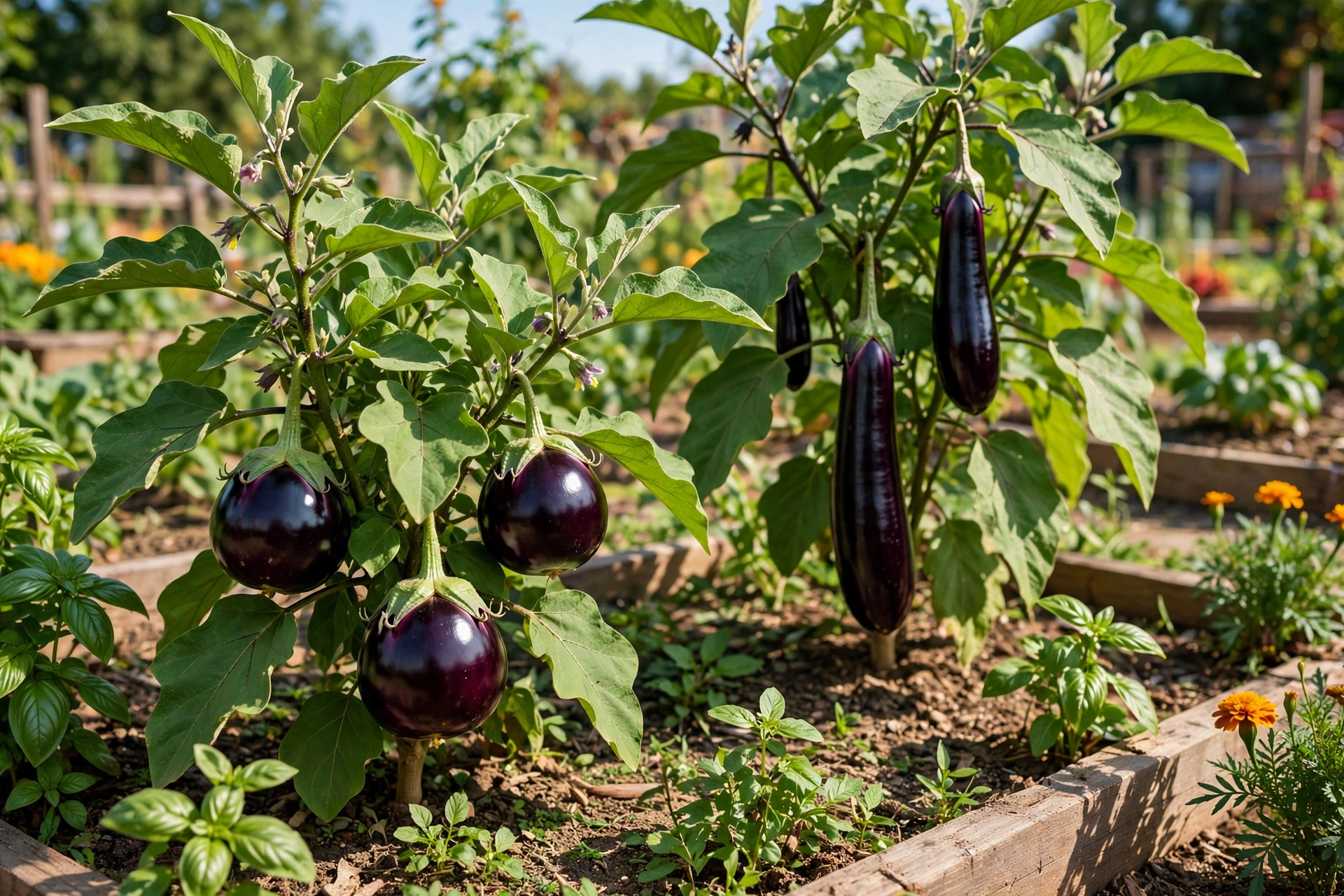
Once a flower is pollinated, a small fruit starts to swell behind it within a week or two. Harvest while the skin is still shiny — Black Beauty at 5 to 6 1/2 inches, Jewel Amethyst at 3 to 4 1/2 inches — and cut the stem with pruners rather than pulling. Pick a little young rather than a little late, because an overmature eggplant turns dull and then golden, with a lot of seeds and a bitter bite, and frequent harvesting encourages the plant to make more. A plant that sets fruit in July will keep producing into fall, as long as the nights stay warm.
Black Beauty Eggplant Seeds
The classic 1–3 pound eggplant — the reliable setter once the nights stay above 60°F.
Long Purple Eggplant Seeds
A prolific heirloom that keeps setting fruit all season once the weather warms up.
Jewel Amethyst Eggplant Seeds
A tidy container plant — dark pots warm the soil faster, which helps fruit set in a cold spring.
Frequently Asked Questions
Do I need two eggplant plants for fruit to set?
No. Eggplant flowers are self-fertile, so one plant is enough — but the pollen still needs movement to reach the stigma, which is why a still, sheltered spot sets less fruit than a breezy one with bumblebees around.
Why did my eggplant flower early and set nothing?
The first flowers often open before the nights are reliably warm. If nights are still dipping below 55 degrees, those flowers will drop no matter what you do — cover the plant at night and wait for the warm stretch, and the next flush usually sets.
Can I grow eggplant in a container?
Yes, and it helps with the cold problem. A dark pot warms the soil faster than open ground, and a container on a sunny patio stays warmer at night. Jewel Amethyst is the variety built for it, at 12 to 24 inches tall, but any of the three will grow in a large pot with steady water.
How long after flowering should I see fruit?
A pollinated flower usually shows a small swelling fruit within a week or two. If two weeks pass with warm nights and daily shaking and nothing swells, look for flea beetles or other pests stressing the plant — the starting guide covers the timing, and the variety roundup covers which plants cope best.