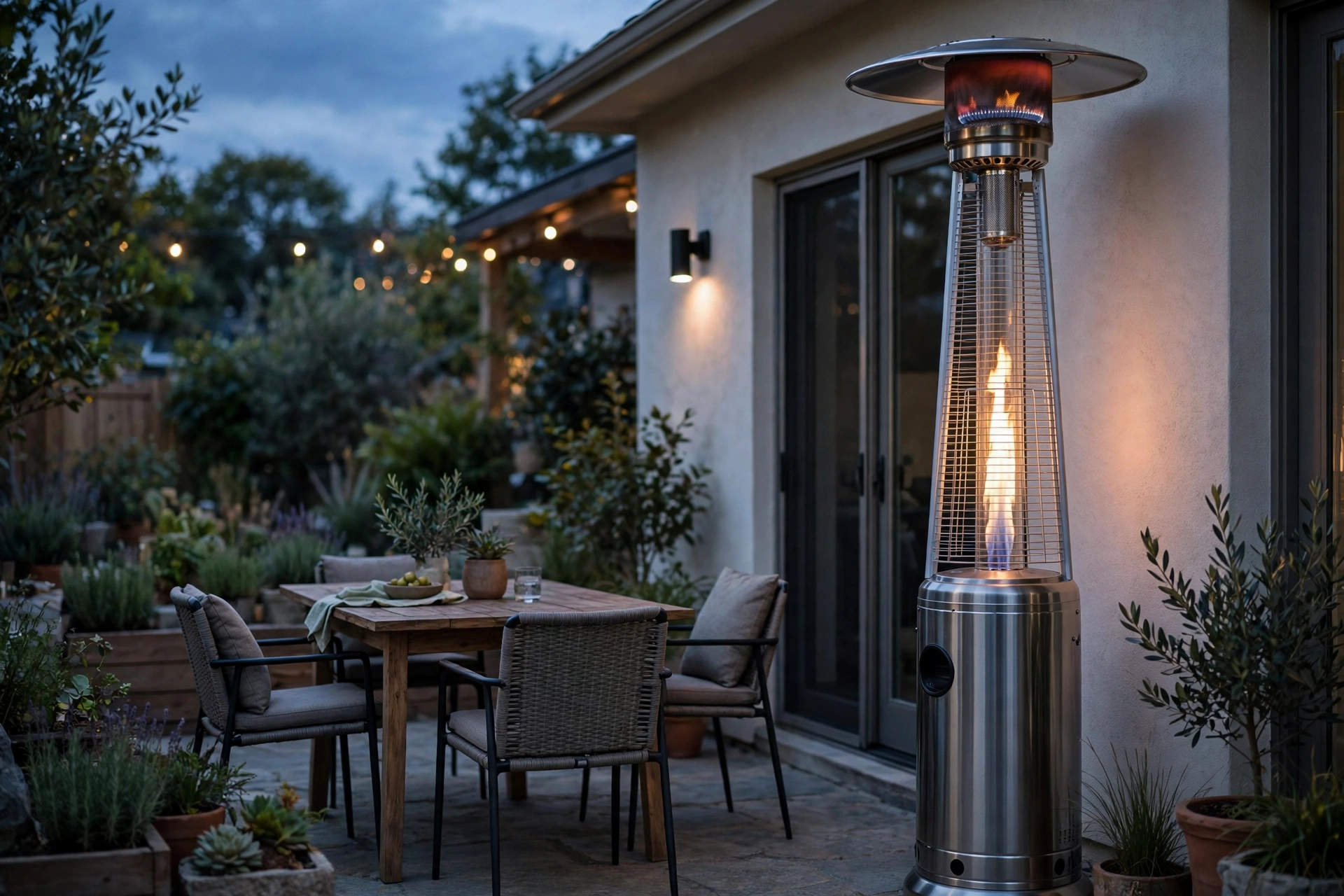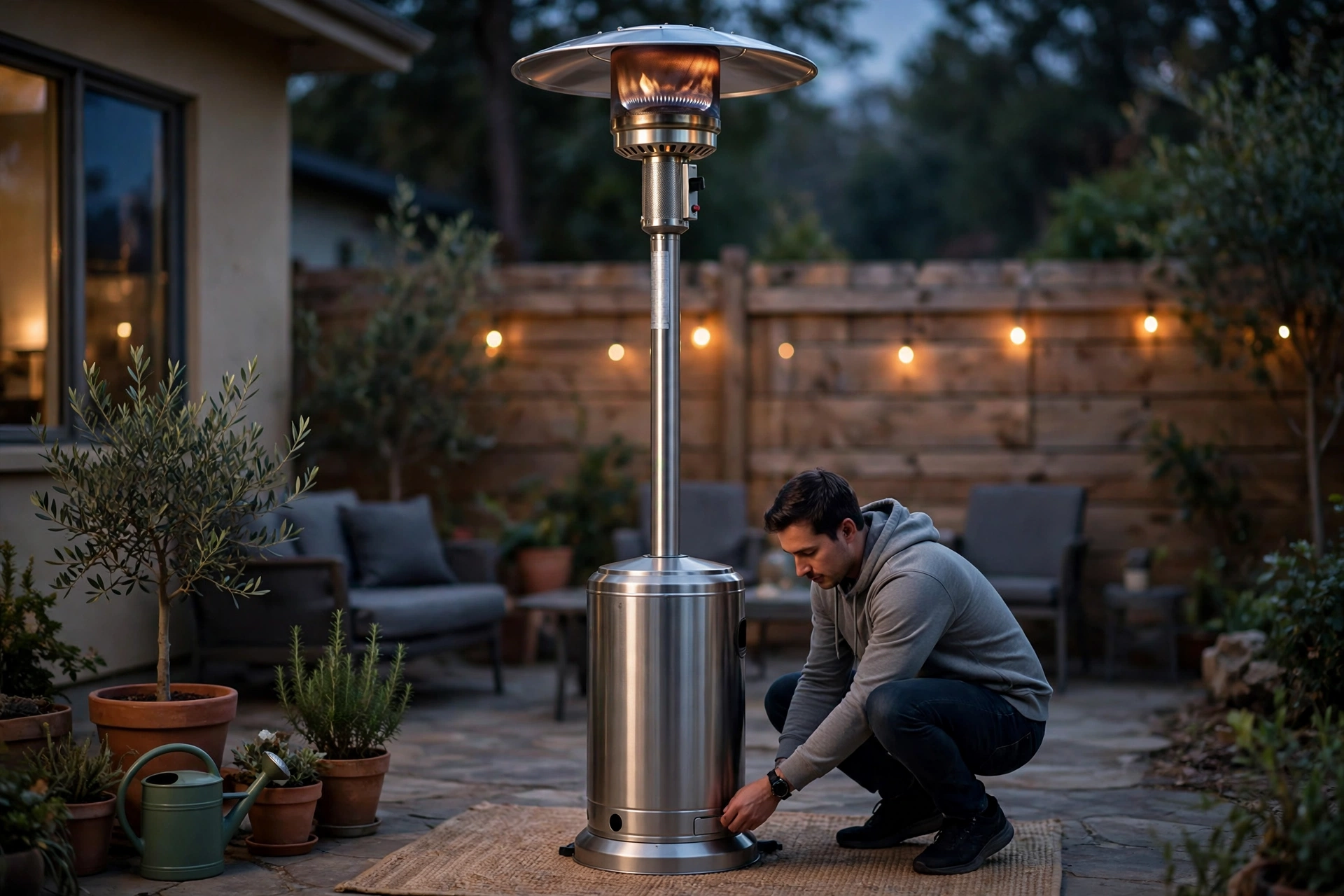
The common mistake is ordering a new thermocouple before checking the free causes. A patio heater that lights, runs for a minute, and dies is reporting something specific, and in most cases the report is about gas flow or a safety sensor, not a dead part.
Each check below takes minutes, costs nothing, and rules out one whole branch of the problem before you spend anything. Start with the tank, because it is the fastest check and the most common answer.
First, Read the Symptom
Dies the second you release the knob: the thermocouple is not holding the valve open. Lights, runs a few minutes, then dies: gas supply or a blocked burner is more likely. Dies when the breeze picks up: wind is blowing the pilot out or cooling the thermocouple. The timing of the shutdown is the diagnosis, so note it before you touch anything.
Cause 1: The Tank and the Valve
A nearly empty 20-pound tank can light a pilot and still fail to feed the burner. Swap in a tank you know is full before diagnosing anything else. Then check how the valve was opened: opening the tank valve too fast can trip the excess-flow safety device inside the regulator hose, which restricts gas to a trickle. Close the valve, wait a minute, and reopen it slowly, a quarter turn at a time.
Cause 2: The Thermocouple Is Out of Position
The thermocouple is the small copper probe sitting in the pilot flame. It has one job: get hot enough to tell the valve that a flame exists. If it has been bumped out of the flame’s path, or its tip is coated in soot, it cools, the valve reads that as a dead flame, and the heater shuts down.
With the heater cold and the gas off, check that the tip sits in the pilot flame’s position and wipe the tip clean with a dry cloth. A thermocouple that is clean, correctly placed, and still drops the flame is the one case where replacing the part is the right move; it is an inexpensive part and a common wear item.
Cause 3: A Blocked Burner or Pilot Tube
Spiders build webs inside burner and pilot tubes over the summer, and a heater that sat in storage is the classic candidate. The symptom is a weak, yellow, or lazy pilot flame instead of a short blue one. With the gas off and the heater cold, clear the pilot tube with a pipe cleaner or compressed air. Never widen the opening with a drill bit or wire; the orifice size sets the gas flow, and enlarging it creates a worse problem than the blockage.
The smell of a dusty heater burning off on its first cold evening of the season is normal. A pilot that will not hold a steady blue flame is not.
Cause 4: The Tilt Switch
Freestanding heaters carry a tilt switch that cuts the gas if the unit tips or sits far off level. A heater parked on uneven pavers, or one that was moved and set down hard, can sit with the switch tripped or the unit leaning enough to keep it unhappy. Set the heater on a hard, level surface, confirm it stands plumb, and try again before suspecting anything electronic.
Cause 5: Wind
A reflector heater in an exposed spot can lose its pilot to gusts that would not bother it in a sheltered corner. If the heater only dies when the wind rises, the fix is placement, not parts: move it out of the wind path, keeping the clearances in our patio heater safety and placement guide.
When to Stop and Call It Done
If a full tank, a clean and correctly placed thermocouple, a clear pilot tube, and a level stance do not keep it lit, the fault is in the valve or regulator assembly. Those are sealed gas components: replace the assembly as a unit or retire the heater, and do not open it up. Gas work past the user-serviceable parts is where a repair stops being a homeowner job.
Once it runs, keep it that way: our guide to storing a patio heater for winter covers the covered, upright storage that keeps the burner tubes empty and the pilot clear for next fall. And if the diagnosis ends in replacement, the best patio heaters roundup is the honest place to start.