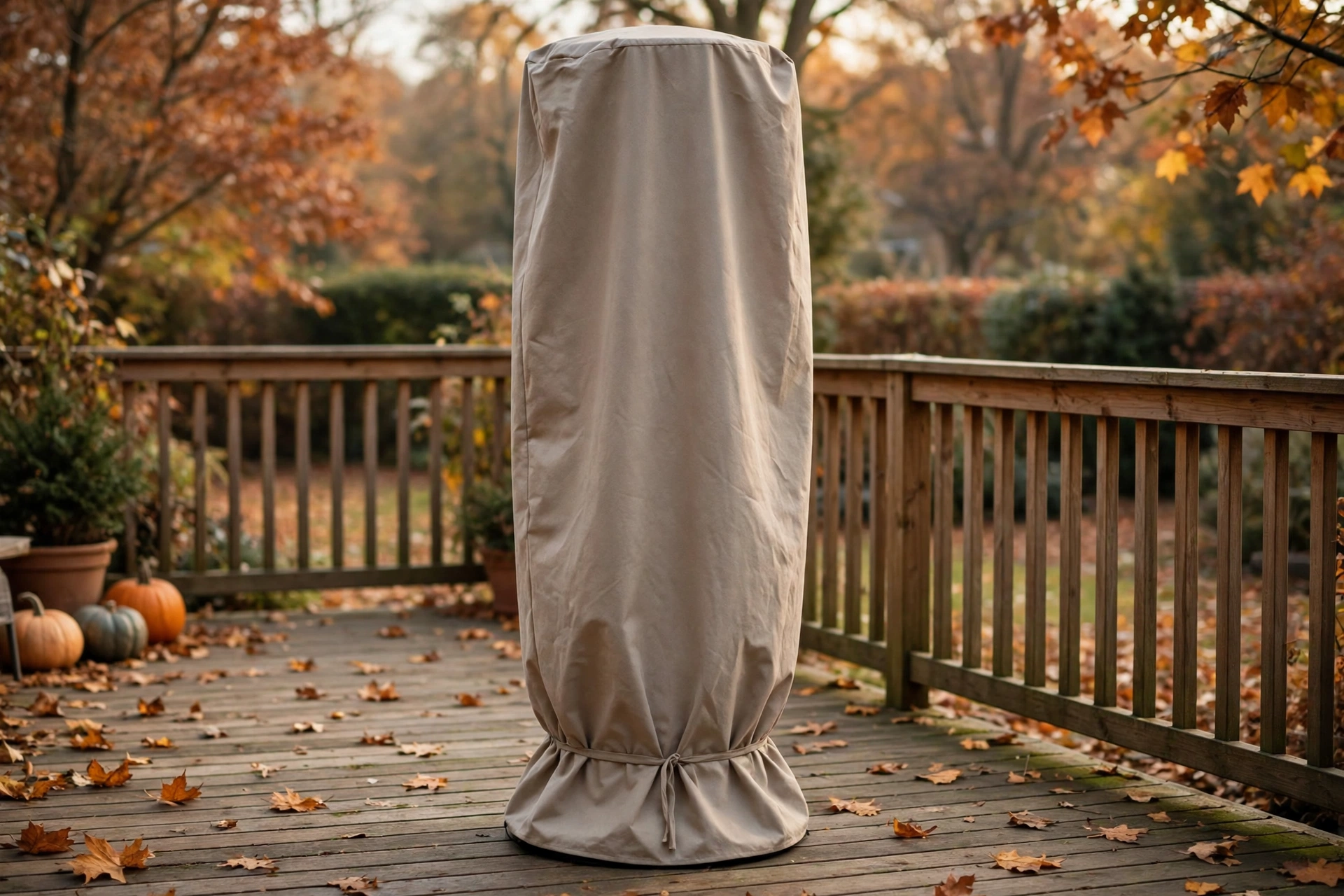
The last warm evening ends, the chairs get stacked, and the tall heater in the corner deserves better than a winter spent rusting in place.
Storing a patio heater is a short job with one rule that outranks all the others: the heater and its propane cylinder part company for the winter, and they store in different places. Get that right, plus an hour of cleaning and covering while the weather is still mild, and spring’s first lighting takes minutes instead of a repair bill.
When to put it away
Store the heater when you are done using it for the season, not after the first hard freeze has already found the water sitting in its base and the spiders have settled into the burner. A dry, above-freezing afternoon is the right window — metal is easier to clean, covers go on without trapping moisture, and you are not rushing through the propane steps with cold hands.
Step by step: putting a patio heater away
1. Let it cool completely. Run your normal shutdown, close the cylinder valve, and walk away. The reflector and emitter screen hold heat long after the flame is out, and a cover draped over a warm head melts, sticks, and traps exactly the moisture you are trying to keep out.
2. Disconnect the propane cylinder. With the valve closed, unscrew the regulator connection and cap the cylinder outlet if a cap came with it. This is the step that decides where everything sleeps: the cylinder stores outdoors, upright, on a firm level surface, with its valve closed — never in a garage, shed, or basement, even when it reads empty, because a cylinder that has held propane can still hold vapor. That guidance comes straight from the Propane Education and Research Council, and it does not bend for winter. Cold does not harm a cylinder stored outside; an enclosed space is the hazard.
3. Clean the head and the post. Wipe the reflector and emitter screen with a damp cloth once they are cool, brush dust and cobwebs out of the burner area with a soft brush, and empty any water that has collected in a weighted base. On a still afternoon you can hear how quiet the yard has gone while you work — leaves down, beds mulched, the heater’s dome ticking faintly as the last of its heat leaves. That ticking is your timer: when it stops, the metal is ready to cover.
4. Check the hose and connections. Look the regulator hose over for cracks, stiff sections, or chew marks, and make a note to replace anything suspect in spring rather than discovering it at the first cookout. Coil the hose loosely inside the heater’s housing or tank enclosure if yours has one — the heater body itself, with no cylinder inside, can store in a garage or shed without any propane concern.
5. Cover it or bring the heater under cover. A fitted cover over a heater stored outdoors keeps rain out of the burner and the finish out of the weather; a heater stored indoors needs only a dust cover or an old sheet. Either way, stand it upright and secure it so a winter storm cannot tip a tall, top-heavy unit onto a fence or a window.
Electric heaters are simpler
An electric patio heater skips the propane steps entirely: unplug it, wipe it down, check the cord for damage, and store it dry. Our comparison of electric vs propane patio heaters covers the running-cost side of that choice if a swap is on your mind, and the patio heater safety and placement guide is the one to reread before spring placement, whatever type you own.
The spring check that finishes the job
Storage done right ends with a five-minute recommission. Before the first lighting, clear the burner of any webs — spiders favor gas orifices over winter — reconnect the cylinder outdoors, and leak-test every connection with soapy water: bubbles mean gas escaping, and the connection gets tightened and retested before any flame. Then light it and let it run for a few minutes while you are standing there watching.
If your heater shares the patio with a fire pit, our combined guide to storing a patio heater and fire pit for winter covers the fire pit’s ash and cover steps alongside these, and the best patio heaters for extending fall evenings is where to look if this winter’s storage inspection is the one that retires your old unit.
The short version
Cool it, disconnect the cylinder, store the cylinder outdoors and upright, clean and cover the heater, and leak-test in spring. Do those five things and a patio heater shrugs off winter. Skip the cylinder rule — the one step people are tempted to fudge because the garage is right there — and you have traded a tidy patio for a genuine hazard. Put the heater body in the garage if you like; the cylinder belongs outdoors, upright on a firm surface, where any leaking vapor dissipates instead of pooling in an enclosed space.