Landscape & Leisure is reader-supported. When you buy through links on our site, including Botanical Interests seed links, we may earn a commission at no extra cost to you. Prices change, so click through to confirm current pricing.
Most people plant all three in the same bed and expect the same job from them — then wonder why the marigolds never fill a vase and the cosmos flop over the path. That is the mistake. Zinnias, cosmos, and marigolds are all easy annuals from seed, but they are not interchangeable. Plant the wrong one for the job and you spend the summer compensating.
Here is the honest split, with the variety to buy for each job. For the zinnia details, see our best zinnia varieties roundup and our guide to sowing, spacing, and deadheading. For a bigger cutting garden, see our best cut flowers roundup.
The Three Flowers, Side by Side
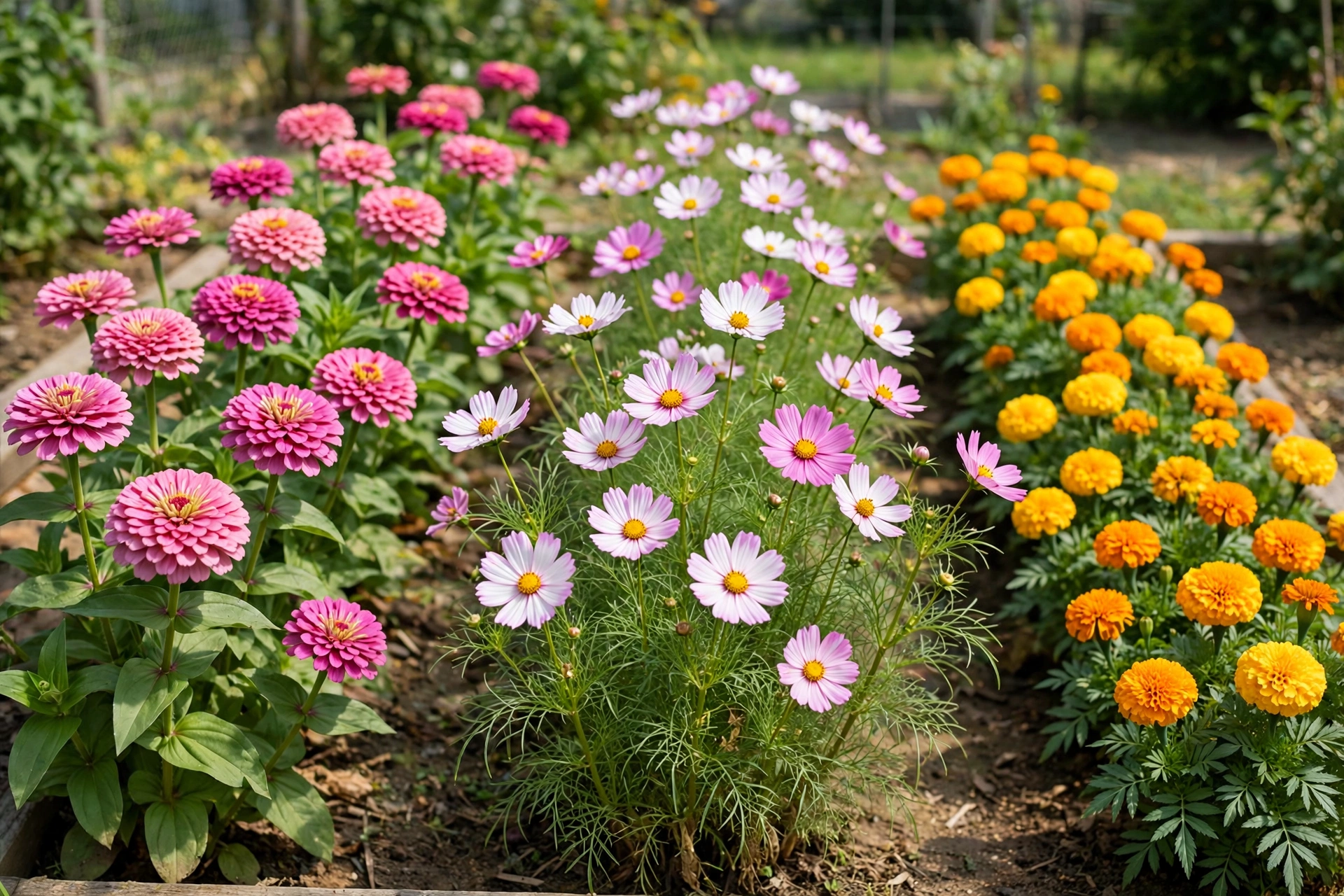
The photo below tells most of the story in one frame: a fat double zinnia, a single white cosmos, and a pom-pom marigold, all cut the same morning. The zinnia is the heavyweight, the cosmos is the airy one, and the marigold is the dense little ball. What the photo cannot show is how each plant behaves in the ground — and that is where the decision lives.

| Flower | Height | Bloom size | Vase life | Effort |
|---|---|---|---|---|
| Zinnia | Tall, over 2 ft (dwarfs 1–2 ft) | 1–6 in by variety | Long — each flower lasts a week or more | Moderate — needs warm soil, spacing, deadheading |
| Cosmos | Tall, bushy | 3–4 in | Good — an excellent cut flower | Low — drought tolerant, needs very little attention |
| Marigold (African) | Tall, over 2 ft | 4 in | Good when cut half-open | Low — drought tolerant, deer and rabbit resistant |
Zinnias: The Cutting Garden’s Workhorse
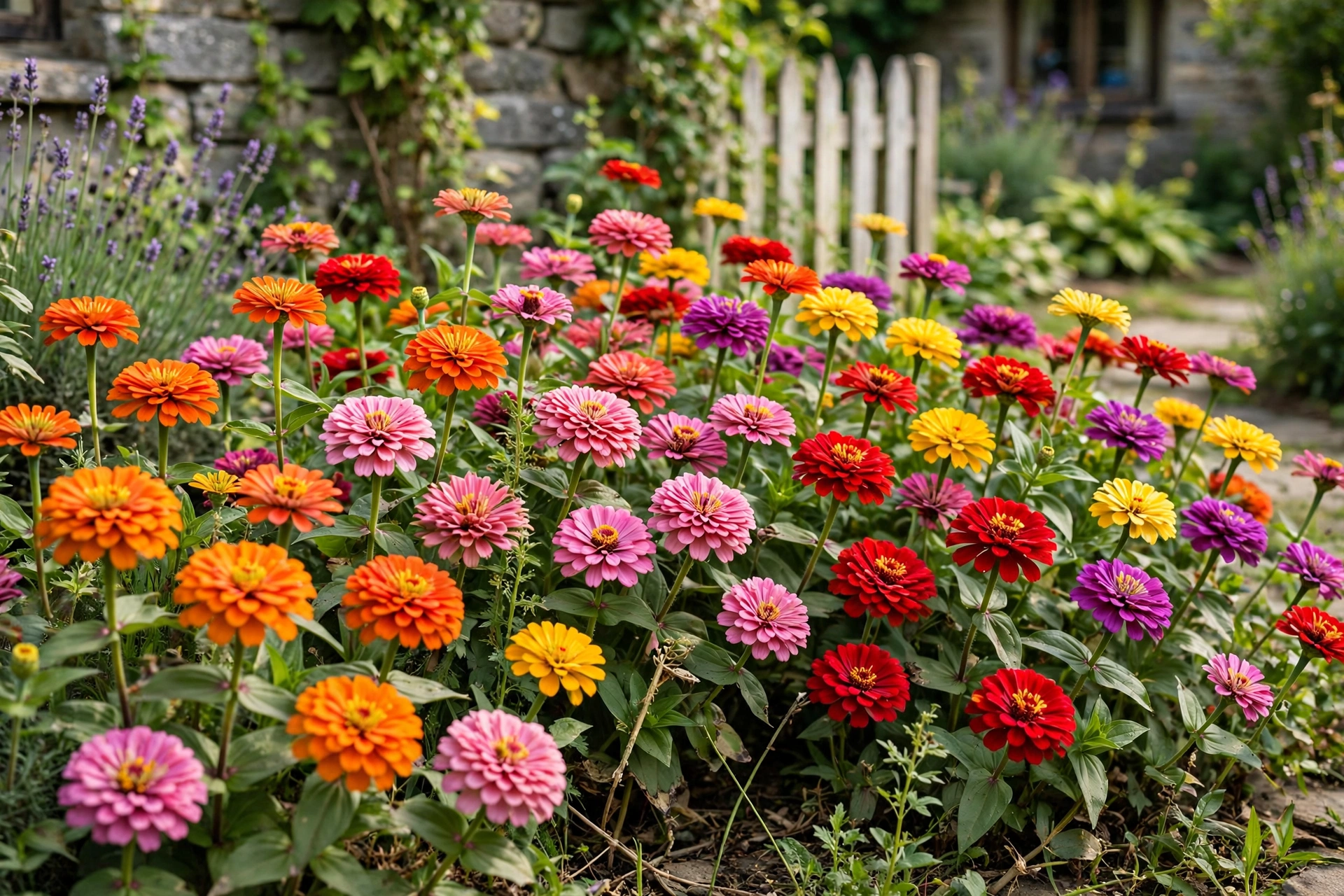
Zinnias win the cutting job outright, and it is not close. The blooms run from 1 inch to 6 inches depending on variety, the stems are long and sturdy, and each flower lasts a week or more on the plant and in the vase. Cut a stem and the plant makes another — California Giants says so right on the packet, and Cut and Come Again is named for it. No other easy annual gives you this much vase per square foot.
The cost is attention. Zinnias want warm soil before you sow, real spacing for airflow, and regular deadheading. Crowd them and powdery mildew moves in. Skip the deadheading and the blooming slows. They are not hard, but they are not a plant you forget about either.
Buy California Giants if you want the biggest range of color on the longest stems. It is the best overall zinnia in our roundup, with the highest gardener rating in the collection at 4.8 from 76 reviews.
California Giants Blend Zinnia Seeds
Big 4- to 6-inch blooms in four colors, sold since 1926, and the highest gardener rating of any zinnia here.
Cosmos: The One That Takes Care of Itself
Cosmos is the flower for the gardener who wants color without a chore list. Sensation Blend grows tall and showy with large 3- to 4-inch flowers in white, pink, rose, and crimson, and it needs very little attention once it is going. It is drought tolerant, it pulls in butterflies, and it won the All-America Selections award in 1936. Gardeners rate it 4.6 from 24 reviews.
The trade-off is structure. Cosmos stems are thinner than zinnia stems, the plants are bushier and looser, and a hard rain can flatten a row. It still cuts well — Botanical Interests calls it an excellent cut flower — but the stems need a smaller vase and a little support. If you want double, ruffled blooms instead of the classic daisy shape, Double Click Blend gives you mostly double pink, white, and carmine-red flowers, drought tolerant, at the same $3.49 — gardeners rate it 4.2 from 26 reviews.
Sensation Blend Cosmos Seeds
Tall, showy 3- to 4-inch blooms that need very little attention — drought tolerant and a butterfly magnet.
Marigolds: The Bed’s Edge, Not the Vase
Marigolds do a different job, and judging them as cut flowers misses the point. Crackerjack African marigold grows tall, past two feet, with a mounding form and sturdy stalks carrying 4-inch blooms in tangerine orange, rich gold, and lemony yellow. The flowers are long-lasting when cut — harvest them half-open in the morning and change the vase water often — and the petals are edible, with a slightly bitter, citrusy flavor.
But marigolds earn their keep at the edge of the bed, along paths, and in big containers, not as the main cutting row. The color range is narrow — orange and gold, full stop — and the scent is strong enough that a big bouquet of them perfumes the whole room. They are also the toughest of the three: drought tolerant, deer resistant, and rabbit resistant — the only one here that claims both.
Buy Crackerjack if you want the biggest marigold blooms on the sturdiest stalks. Gardeners rate it 4.3 from 47 reviews.
Crackerjack African Marigold Seeds
Four-inch blooms on tall, sturdy stalks — the marigold for bed edges, paths, and big containers.
The Mistake to Avoid
Do not make marigolds your only cut flower. They cut fine, but a cutting garden built on marigolds gives you one color family, one bloom shape, and a scent that takes over the room. And do not plant zinnias like cosmos — scattered and forgotten. Zinnias repay spacing and deadheading. Cosmos keeps blooming on neglect.
The other mistake is buying for the flower instead of the job. A packet is cheap, so the real cost is the bed space and the season. Spend the tall, sunny row on the flower that fills your vase, and let the other two do what they are good at around the edges.
The Verdict
If you plant one, plant zinnias. California Giants fills a vase every week from midsummer to frost, and nothing else in this trio matches it for cutting. If you want color with the least work, plant cosmos — Sensation Blend will give you a tall, butterfly-covered row for almost no effort. And if you want the edges of the bed to look finished all summer, plant Crackerjack marigolds along the path and let them do the job they were built for.