Landscape & Leisure is reader-supported. When you buy through links on our site, including Botanical Interests seed links, we may earn a commission at no extra cost to you. Prices change, so click through to confirm current pricing.
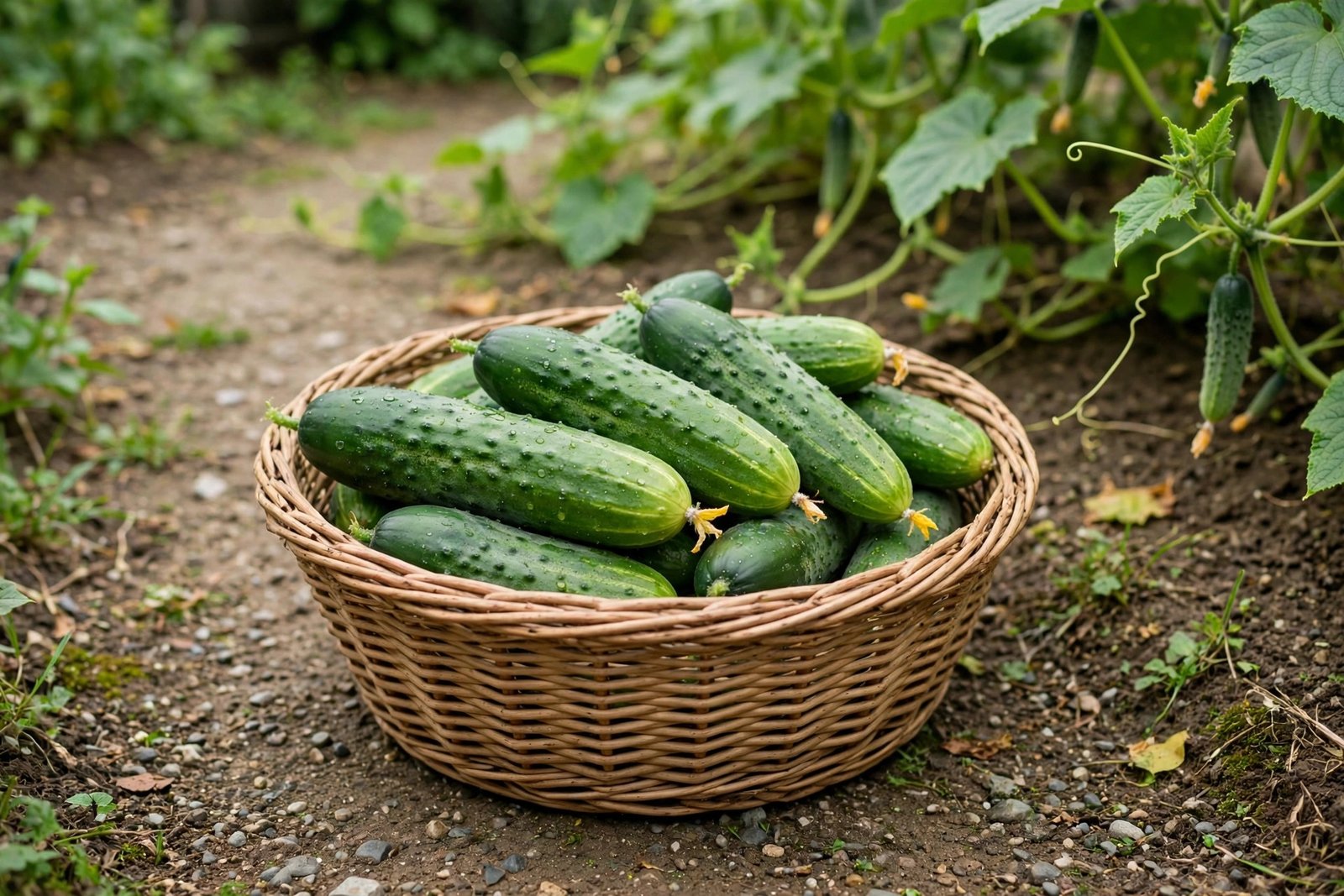
A cucumber that looks perfect and tastes bitter is a specific disappointment: crisp, green, well-formed, and inedible. The cause is almost never a single mistake. Bitterness in cucumbers comes from cucurbitacins, bitter compounds the plant makes in larger amounts when it is stressed — and the stress that matters most is uneven water in hot weather, followed by fruit left too long on the vine. Before blaming the variety, check the water, the heat, and the picking date. Most bitter cucumbers are a watering and timing problem, and both are fixable in the same season the problem appears.
For the varieties discussed here, see our cucumber varieties roundup. For growing cucumbers upright so fruit is picked on time, see our trellising guide.
Why Cucumbers Turn Bitter
Cucurbitacins concentrate in the stem end of the fruit and in the skin, and their production rises when the plant is stressed. Heat and drought are the classic triggers: a vine that dries out between waterings, then gets soaked, then dries again, makes more bitter compounds than a vine kept evenly moist. Extreme heat alone can do it too — gardeners report even small, young fruit turning bitter when temperatures stay in the high 90s. That is why bitterness often appears in the same week as a heat wave and a missed watering, not all season long. The plant is telling you about the week it just had.
Two common explanations do not hold up. Planting cucumbers near squash does not make cucumbers bitter — cucumbers and squash do not cross-pollinate, and a bitter cucumber is not a squash hybrid. And a bitter cucumber is not necessarily a bad variety: even varieties described as bitter-free can turn bitter under enough stress, because the compounds are a stress response, not a fixed trait. Variety matters — some are bred to stay mild — but variety alone does not override a dry, hot week.
Diagnosis: Which Cause Is Yours?
Work through the causes in order, most likely first. The distinguishing check for each is in the fruit itself and in the week behind it.
1. Uneven water and heat stress — most likely
How to tell: bitterness is strongest at the stem end and in the skin, and it appears during or just after hot, dry weather or irregular watering. The rest of the plant may look fine — this is a fruit-chemistry problem, not a dying plant.
Fix: water deeply and evenly, so the root zone stays moist without swinging between dry and soaked. Mulch around the plants to hold soil moisture and keep roots cool, and water at the base in the morning rather than wetting the leaves. In a heat wave, a deep watering the evening before the hottest day helps more than a light sprinkle on the day itself.
2. Fruit left too long on the vine
How to tell: the bitter fruit is oversized, yellowing, or seedy, and younger fruit on the same plant tastes fine. Over-mature cucumbers concentrate bitter compounds as they age, and they also slow new production.
Fix: pick at the size the variety is meant for — Marketmore at 6 to 8 inches, Homemade Pickles at 1½ to 6 inches, Tasty Green before or at 9 inches, Hokus gherkins at 1½ to 4 inches. Pick every day or two in peak season. A trellis makes this easy, because fruit is visible; fruit hidden under leaves is fruit picked late.
3. Variety and genetics — real, but secondary
How to tell: bitterness appears even with steady water and young fruit, across the whole planting, while a different variety in the same bed stays mild. Some older or open-pollinated types simply carry more cucurbitacins than modern mild varieties.
Fix: next season, choose a variety bred for mild flavor. The three picks below are described by Botanical Interests as non-bitter or bitter-free. Keep the water and picking fixes too — a mild variety under severe stress can still turn bitter, just less readily.
4. Damaged or stressed plants — check the vine
How to tell: bitterness comes with wilting, yellowing, or pest damage on the vine, or after a cold snap, a transplant shock, or root disturbance. A plant fighting something else puts energy into defense compounds.
Fix: fix the underlying stress — steady water, no root disturbance after planting, and protection from cold soil early in the season. Cucumbers are sown when soil is at least 60°F, ideally 70° to 90°F, because cold soil checks growth from the start. A vine that starts well and stays evenly watered is a vine that stays mild.
Can a Bitter Cucumber Be Saved?
Sometimes, partly. Bitterness concentrates at the stem end and in the skin, so cut off a generous piece of the stem end and peel the fruit — the flesh further from the stem is usually milder. Taste a slice from the middle before deciding: if the middle is mild, peel and use the rest fresh or in a salad. If the whole fruit is bitter through, peeling will not save it, and cooking does not reliably remove cucurbitacins either. Pickling can mask mild bitterness, but a strongly bitter cucumber is better composted than pickled — brine does not fix a fruit that is bitter to the core. The useful response to a bitter cucumber is not a kitchen rescue. It is a note for next week: water evenly, pick younger, and check the variety.
Three Mild Varieties to Grow Next
These three are the mild-flavor picks from the cucumber roundup, chosen because Botanical Interests describes each as non-bitter or bitter-free — and because each also suits a different garden job. They do not make the watering fixes unnecessary, but they start from a milder baseline.
Lemon is the non-bitter, burpless variety eaten skin and all, with round fruit and a flavor that holds up fresh. Its vigor is the trade-off: give it trellis room of its own, or it crowds its neighbors.
Lemon Cucumber Seeds
Non-bitter and burpless, eaten skin and all — the mild variety with the most personality.
Tasty Green is the non-bitter Japanese type with thin, sweet skin and few seeds, picked at 9 inches. Its mildew resistance and trellis habit make it the mild variety for a gardener who wants fresh eating and is willing to pick on schedule.
Tasty Green Cucumber Seeds
Thin-skinned, non-bitter Japanese cucumber — pick at 9 inches, on a trellis.
Hokus Gherkin is described as bitter-free, with uniform, seedless gherkins for pickling. The caveat from its own reviews is real: at least one gardener found fruit turning bitter in high-90s heat, and the fruit is spiky, so harvest with gloves. It earns its place as the pickling pick that starts mild — with the same heat-and-water care every cucumber needs.
Hokus Gherkin Cucumber Seeds
Bitter-free gherkins for pickling — steady water and daily picking keep them mild.
Bitter Cucumber Causes at a Glance
| Cause | Sign | Fix |
|---|---|---|
| Uneven water + heat | Bitter at stem end, after hot/dry week | Deep, even watering; mulch; morning watering |
| Over-mature fruit | Oversized, yellowing, seedy; young fruit fine | Pick at variety size, every day or two |
| Variety genetics | Bitter across planting despite good care | Choose a mild variety next season |
| Other plant stress | Wilting, pests, or cold-soil check | Fix the stress; warm soil at sowing |
Frequently Asked Questions
Is a bitter cucumber safe to eat?
Mildly bitter cucumbers from a home garden are generally eaten without harm, and many gardeners eat them peeled. A strongly bitter cucumber — bitter through the whole fruit, not just the stem end — should not be eaten in quantity: very high cucurbitacin levels are what make wild cucurbits inedible, and a cultivated cucumber that bitter is a sign of severe stress. When in doubt, compost it and fix the cause.
Does peeling remove the bitterness?
Partly. Bitterness concentrates in the skin and at the stem end, so peeling and cutting off a generous stem-end piece helps when the middle of the fruit is mild. If the middle slice is still bitter, peeling will not fix it.
Will next year’s cucumbers be bitter too?
Not necessarily. Bitterness is mostly a response to the season’s stress, not a permanent trait of the soil or the bed. The same variety, watered evenly and picked young in a milder summer, often tastes fine. If bitterness recurs across varieties and seasons despite steady water, switch to a mild variety and check for a persistent stress — poor drainage, root damage, or a planting site that runs hot and dry.
What to Do Next
Taste the next cucumber from the middle, after cutting off the stem end and peeling. If it is mild, the fix is already in hand: water deeply and evenly, mulch, and pick at the variety’s size, every day or two. If it is bitter through, the plant had a hard week — note the heat and the watering gap, and give the next fruit a steadier week. And next season, plant a mild variety on a trellis, in warm soil, with room to climb. That combination — mild variety, even water, young fruit — is what keeps cucumbers sweet, and it is the whole answer to the bitter cucumber problem. For the varieties, see our cucumber roundup, and for the trellis that makes on-time picking easy, see our trellising guide.