Here is the mistake: paying for a lab test when a ten-minute kit would have answered the question, or trusting a ten-minute kit with a decision that needed lab numbers. Both errors cost the same thing in the end, which is a season of fertilizer aimed at the wrong problem.
Lab tests cost more and make you wait. At-home kits answer faster but coarser. The right one depends on what you are about to spend money on next, and that is the only question that matters.
What Each One Actually Gives You
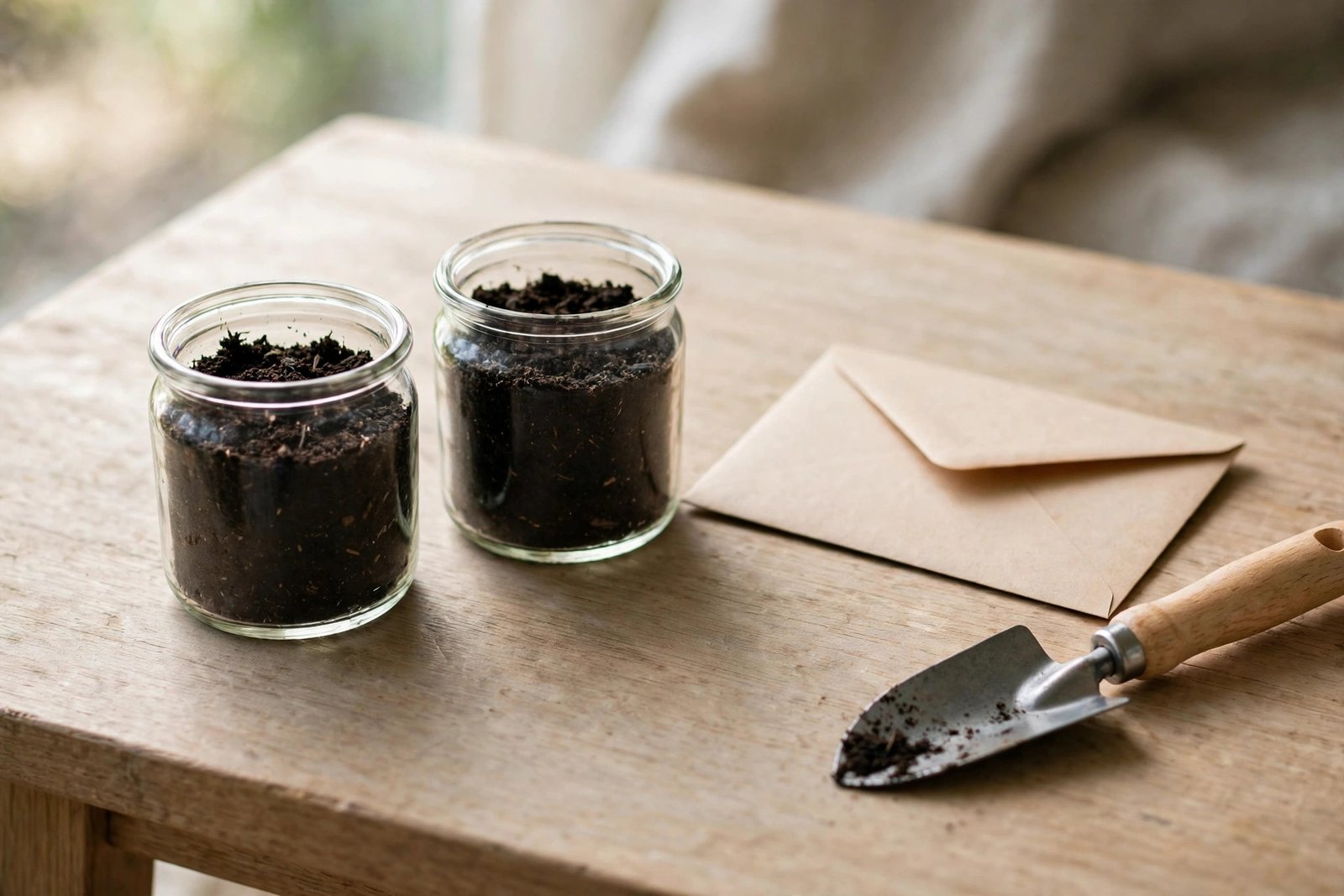
A lab test gives you numbers and a recommendation. MySoil reports 13 plant-available nutrients plus pH, with recommendations tailored to your soil, in 6 to 8 days. SoilKit reports pH, buffer pH, organic matter, cation exchange capacity, and a mineral list by Mehlich III extraction, 1 to 2 business days after the lab receives the sample. Those numbers can be turned directly into pounds of lime and fertilizer.
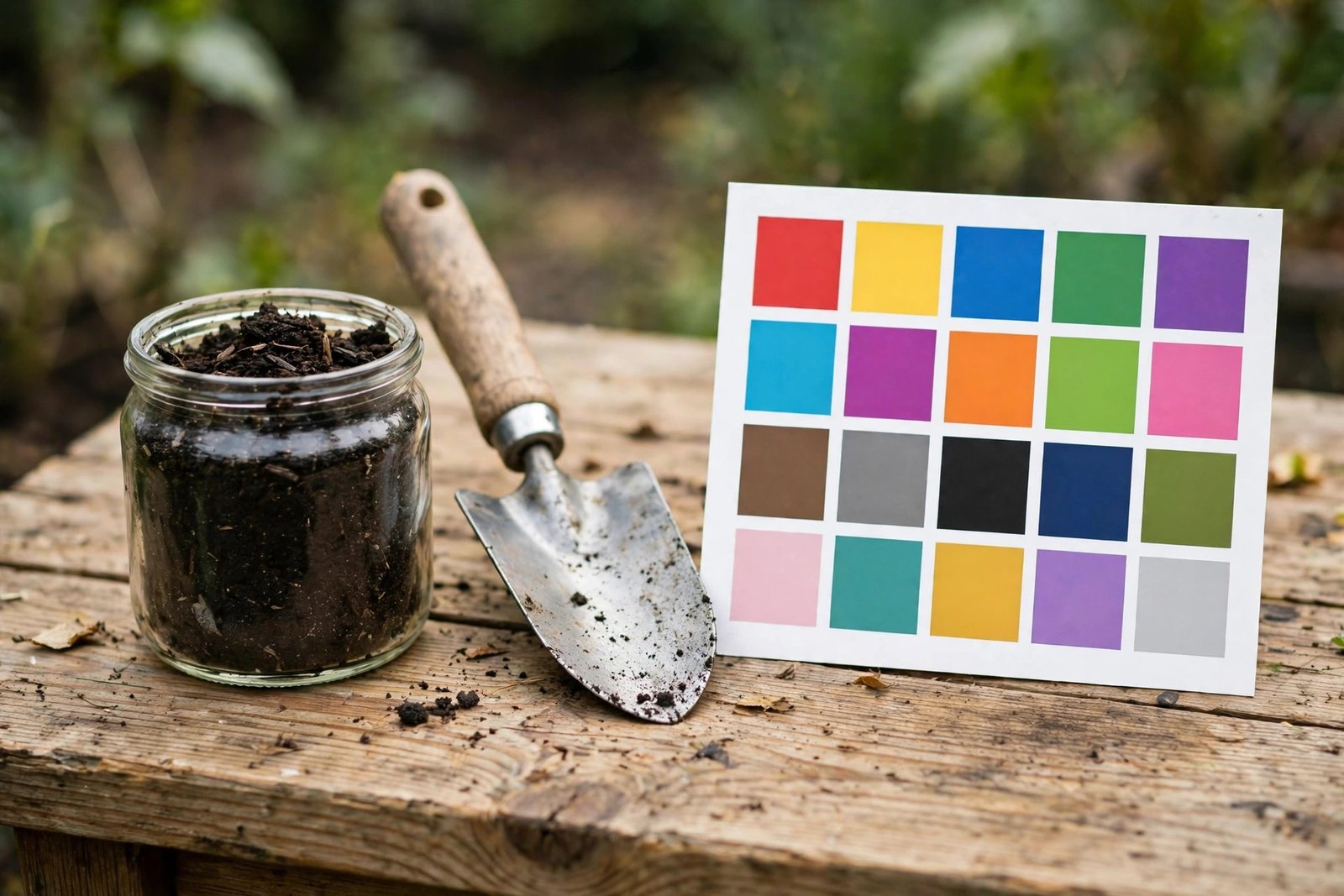
An at-home kit gives you ranges. The Luster Leaf 1601 Rapitest tests pH, nitrogen, phosphorus, and potash, ten tests of each, and answers in minutes by color matching. The answer is low, medium, or high. That is enough to catch a big imbalance, and not enough to fine-tune a program.
Neither one is a scam and neither one is a substitute for the other. They answer different questions at different prices, and the cost of the wrong one is not the kit. It is the fertilizer you buy next.
The Cost Math, Honestly Done
Do not compare kit prices. Compare total cost per decision. A lab kit runs roughly the price of one bag of fertilizer, plus a week of waiting, and it can save you several bags of the wrong fertilizer over a season. An at-home kit runs less, answers today, and can be reused across several spots in the yard, which makes the cost per test very low.
Now run the other side of the ledger. A lawn that needs lime and gets fertilizer instead will stay yellow, and you will buy more fertilizer trying to fix it. A lawn with surplus phosphorus that gets another balanced 10-10-10 bag is adding nutrient the soil cannot use, which in several states is restricted on established lawns unless a soil test shows a need. The expensive mistake is never the test. It is the season of guessing after skipping it.
If you are about to spend real money, on lime, on a renovation, or on a full-season fertilizer program, the lab test is the cheaper purchase. If you are checking whether anything is badly off before you spend anything at all, the at-home kit is the cheaper purchase. Our soil test kit roundup lists both, with the trade-offs spelled out.
At a Glance
| Factor | Lab test by mail | At-home kit |
|---|---|---|
| Answer | Numbers plus recommendations | Low, medium, or high ranges |
| Speed | Days to a week, plus mailing | Minutes |
| Best for | Lime and fertilizer programs, renovations | Quick checks, comparing spots, big imbalances |
| Weakness | One sample per kit; a bad sample wastes it | Color matching is subjective; no fine tuning |
The Verdict
Buy the lab test if the next purchase is lime, a renovation, or a season of fertilizer. The numbers pay for themselves the first time they stop you buying the wrong bag. Buy the at-home kit if you want to know, today, whether something is badly off, or you want to compare the front lawn to the back lawn before committing to anything.
Buy both, in sequence, if you want the belt and the braces: the at-home kit now, to catch the obvious, and the lab test before the big spend. That is not overkill. That is the cheapest insurance in lawn care, and it is how you stop paying for fertilizer twice.
Whichever route you take, the sample decides the value. Follow our soil sampling guide: 10 to 15 cores, 6 inches deep, mixed well, one area at a time. A lab cannot fix a bad sample, and a kit cannot fix a careless one. And once the results are in, our 28-0-3 vs 10-10-10 guide turns the numbers into the bag you actually buy.
What to Avoid
Do not build a fertilizer program on a probe stick. A single-probe moisture and pH gadget can miss pH by a full point, and it reports nothing useful about nitrogen, phosphorus, or potassium. Do not test one scoop from the worst patch and treat it as the lawn. And do not retest every month. Soil changes slowly. Test, act on the result, and retest in three to five years, or after a major renovation, when there is actually something new to learn.