Landscape & Leisure is reader-supported. When you buy through links on our site, including Botanical Interests seed links, we may earn a commission at no extra cost to you. Prices change, so click through to confirm current pricing.
Every seed packet wants you to count backward, and every Minnesota gardener has counted wrong at least once. You start the tomatoes in February because the packet said eight weeks, and by May you have a jungle in the kitchen and a garden still under frost. The fix is simpler than the packet makes it sound: start from your last frost date, and let Extension’s schedule do the counting.
The dates below follow University of Minnesota Extension’s statewide schedule, reviewed in 2026. The indoor-start dates are the same statewide; what changes by zone is when transplants go outside. For the month-by-month version of spring, see what to plant in March, April, and May in Minnesota. For the frost dates themselves, see Minnesota frost dates by zone. The full crop-by-crop calendar is our Minnesota planting calendar.
| Crop | Start indoors | Transplant outdoors |
|---|---|---|
| Onion (transplants) | Early February | Mid-April (sets and transplants) |
| Broccoli, cabbage (early), cauliflower, head lettuce | Early March | Early to mid-April |
| Pepper, eggplant, okra | Mid-March | Early June (south); early to mid-June (central and north) |
| Tomato | Early April | Mid-to-late May, after last frost (south); late May to mid-June farther north |
| Cabbage (late), sweet potato roots | Mid-April | Early June |
| Cucumber, squash, melon | Direct-sow outdoors; transplants also work for squash | Early May to early June, after last frost |
Start from the frost date, not the packet
Minnesota’s last spring freeze, at the 50% probability level for 32°F in the 1991–2020 NOAA normals, falls on April 23 around Minneapolis–St. Paul, May 7 around St. Cloud, and May 13 around Duluth. That two- to three-week spread is the whole story of seed starting in this state. The indoor-start dates do not move much — a pepper started in mid-March is a pepper started in mid-March wherever you live — but the transplant date moves with the frost, and a plant that waits two extra weeks indoors needs light, room, and patience to stay healthy.
That is why the earliest indoor start on Extension’s schedule is not a tomato at all. Onion transplants start in early February, a full two months before they go out in mid-April. If February feels too early to be thinking about the garden, buy onion sets or transplants instead. There is no prize for starting everything yourself, and onions started late rarely catch up.
February and March: slow crops first
Early March belongs to the brassicas: broccoli, Brussels sprouts, early cabbage, cauliflower, and head lettuce. These are cool-season crops, and they go out as transplants in mid-April, while the soil is still cool and the warm-season garden is still a plan. Waltham 29 broccoli takes 75 days, and starting it in early March puts heads on the table in June and July.
Mid-March belongs to heat. Peppers and eggplant start then, and both demand warmth from the first day — a heat mat under the tray is the difference between steady germination and a flat that sits and thinks about it. Peppers take 75 to 90 days from transplanting, and eggplant takes 80, so the indoor head start is not optional in the north. It is the season.
Seed Starting Heat Mat
Warm soil under peppers and eggplant started in mid-March.
California Wonder, started in mid-March, still waits until early June to go outside in the south and mid-June in the north. That long indoor stay is normal. What is not normal is a pepper in a tiny cell for three months — pot up as it grows, give it light, and harden it off before it goes out. Our guide to hardening off seedlings covers the week of outdoor time that makes the difference.
California Wonder Sweet Pepper Seeds
75 days from transplanting — the indoor head start is the whole season in the north.
April: tomatoes, and only tomatoes
Tomatoes start in early April. Not February, not March — early April. A tomato started in February will be tall, pale, and root-bound by the time the garden is ready, and no amount of hardening off fixes a plant that has outgrown its pot twice over. Early April gives a sturdy transplant for a mid-to-late-May planting in the south, and for late May to mid-June farther north.
For the full tomato version of this timing, including the Zone 4 window, see when to start tomato seeds indoors in Zone 4. The short version: sow in early April, transplant after the last frost, and pick the earliest varieties in the north. Glacier, at 55 days from transplanting, earns its place first; 80-day types are a gamble around Duluth.
Glacier Bush Tomato Seeds
55 days from transplanting — plant it first in central and northern Minnesota.
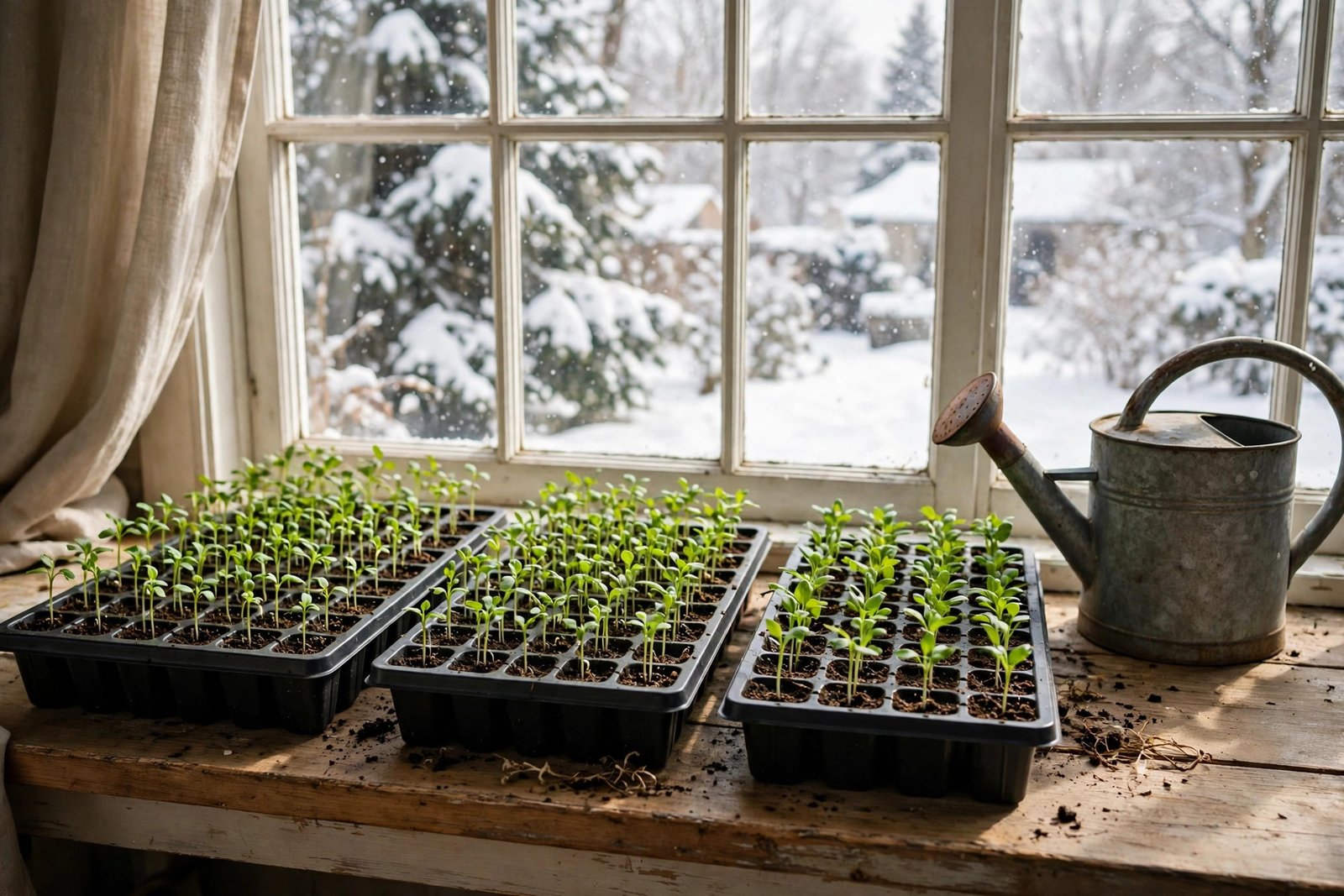
Cell trays and a bottom tray to catch the water make the April routine easier: water from below, keep the soil evenly moist, and move seedlings to stronger light the moment they are up. Leggy seedlings are almost always a light problem, not a seed problem — see why seedlings go leggy before you blame the packet.
Epic 6-Cell Seed Starting Trays
Six-cell trays for tomatoes, peppers, and brassicas started indoors.
What not to start indoors
Some crops resent the whole indoor exercise, and Extension’s schedule says so by leaving them off the indoor list. Peas, spinach, lettuce, radish, carrots, and beets are direct-sown outdoors. Carrots, radishes, and beets do not tolerate transplanting at all — sow them where they will grow, once the soil is 40–50°F for peas, spinach, lettuce, and radish. Beans, corn, and turnips are direct-sown too, in their May and August windows.
Cucumbers and squash sit in between: direct sowing works, transplants also work, and hot caps can move them a week earlier. The deciding factor is soil warmth, not the calendar. Warm-season crops want soil at 50–60°F, and heat-lovers like tomatoes and peppers do best with still warmer soil. Measure the soil, then decide.
How the zones shift the plan
In the south, Zones 4b–5, the plan runs as Extension publishes it: tomatoes out in mid-to-late May, peppers in early June, a first fall freeze on October 18. In the central band, Zone 4, warm-season transplants shift about two weeks later, and the first fall freeze arrives September 30. In the north, Zones 3–4, warm-season crops go out about three weeks later than in the Twin Cities, and the first fall freeze arrives October 1.
Cool-season sowing windows stay the same statewide — Extension publishes one schedule for those crops — but use the late end of each window in the north. And check your exact zone on the USDA Plant Hardiness Zone Map: a zone measures winter cold, which matters for perennials, while your frost dates decide when annual vegetables go in. For the full frost-date picture, see Minnesota frost dates by zone.
Bottom line
Count backward from your last frost date, start only what needs starting, and let the cool-season crops go straight into the ground. Onions in February, brassicas in early March, peppers in mid-March, tomatoes in early April — and everything warm-season outside only after the frost date has passed. That is the whole schedule, and it is enough.
Our beginner’s guide to starting seeds indoors covers lights, moisture, and hardening off in more detail if this is your first spring with a tray in the window.