The machine is back at the rental shop and your lawn looks like it lost a fight with a giant fork. That mess is the point — those open holes are the best thing that happened to your soil all year. What you do in the next few weeks decides how much of that benefit your grass actually keeps.
The whole routine comes down to three jobs: leave the plugs alone, keep the soil moist at the right level, and let height, not the calendar, tell you when to mow.
Leave the plugs where they fall
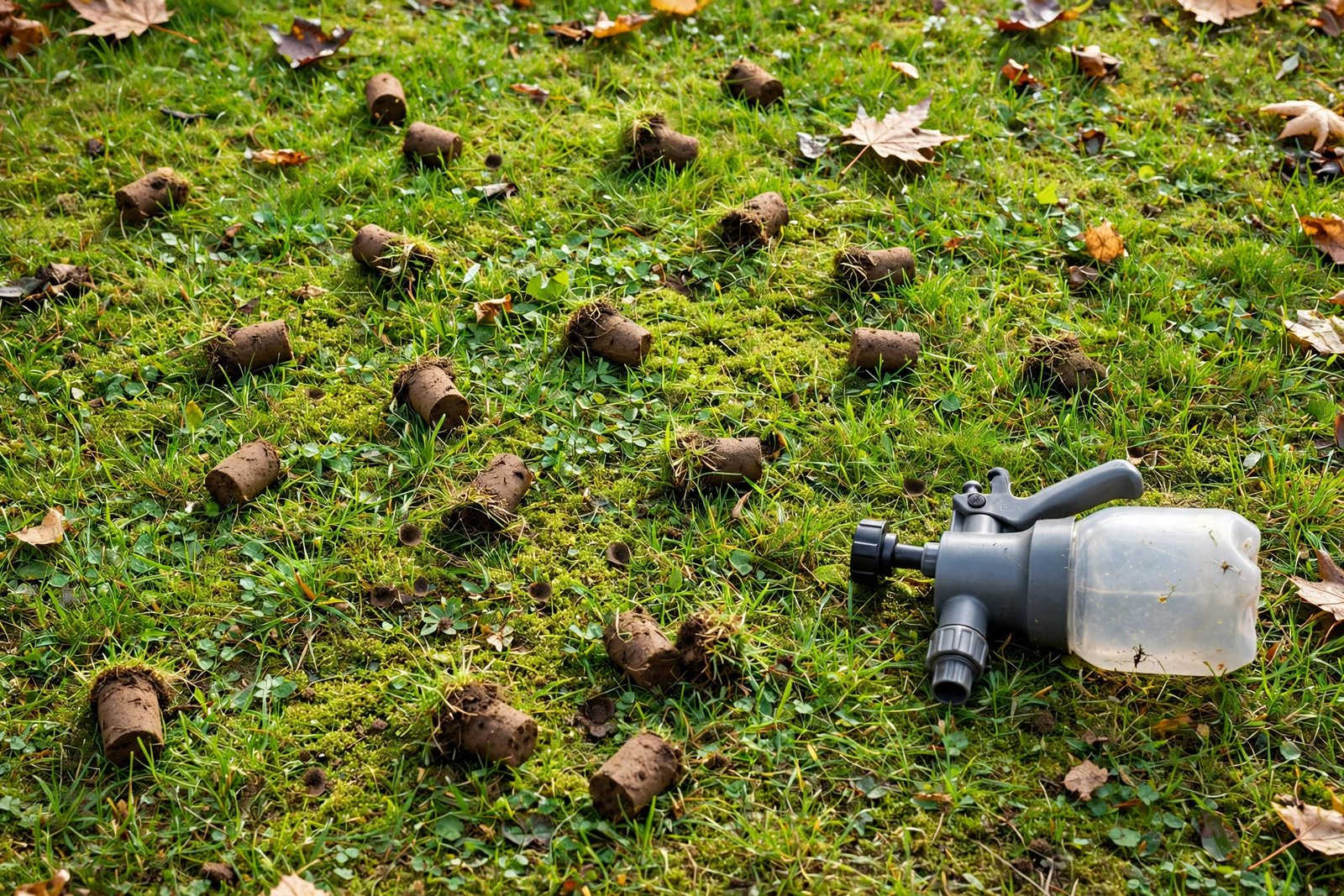
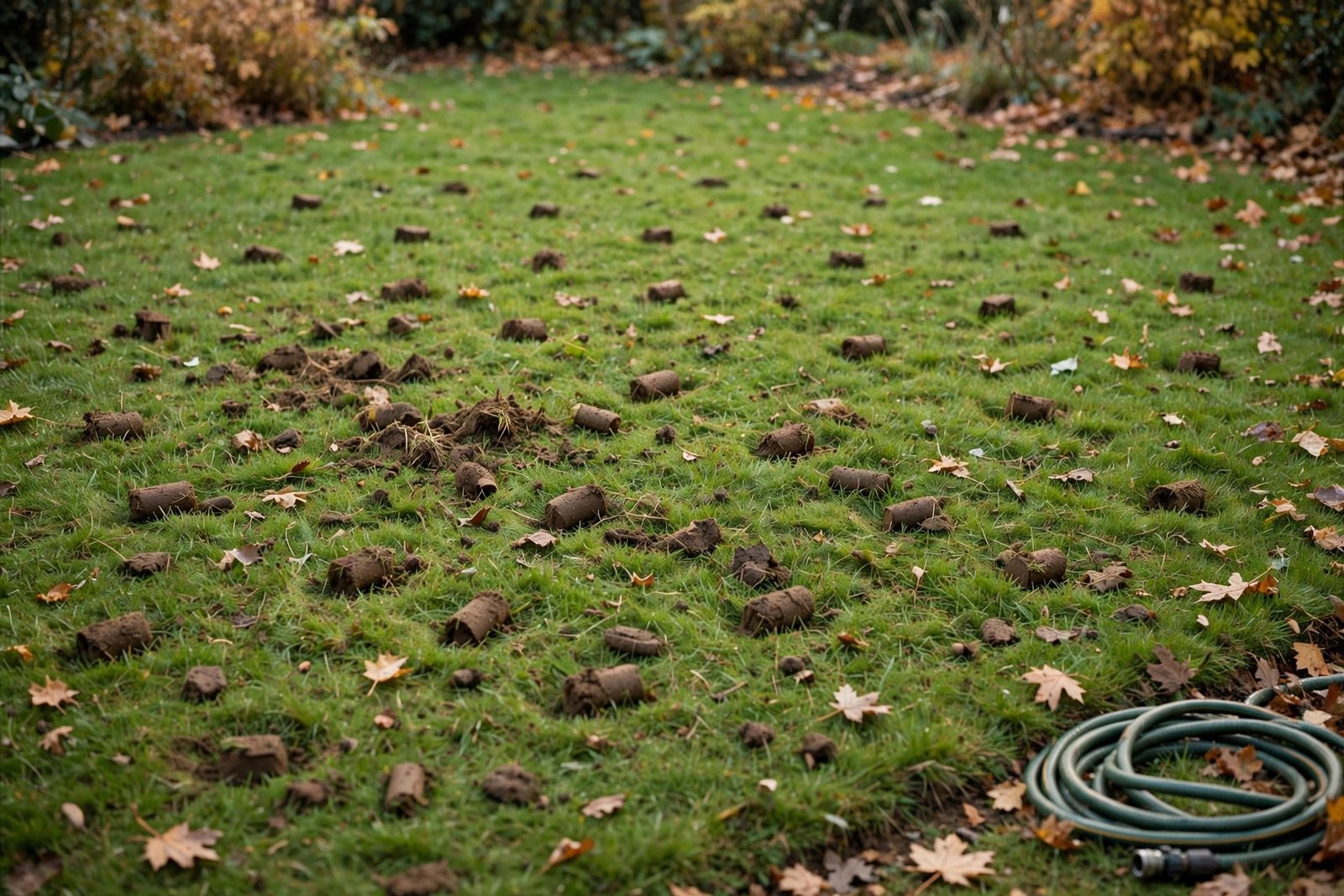
Those little soil cylinders scattered across the lawn look untidy, and the temptation is to rake them up. Do not. Left alone, they break down over one to three weeks with rain, watering, and mowing, and the soil filters back into the turf as a light, free topdressing. Breaking them up with a mower pass once they have dried is fine; hauling them away throws out the very soil you just opened up, along with the microorganisms in it.
If the plugs really bother you, run over them with a mower once they are dry and crumbly — that speeds the breakdown without removing anything. But the lawn does not need you to hurry this along. Patience here is not neglect; it is the aftercare.
Watering: seeded and unseeded lawns are different jobs
Whether you overseeded changes the watering plan completely, so be honest about which lawn you have.
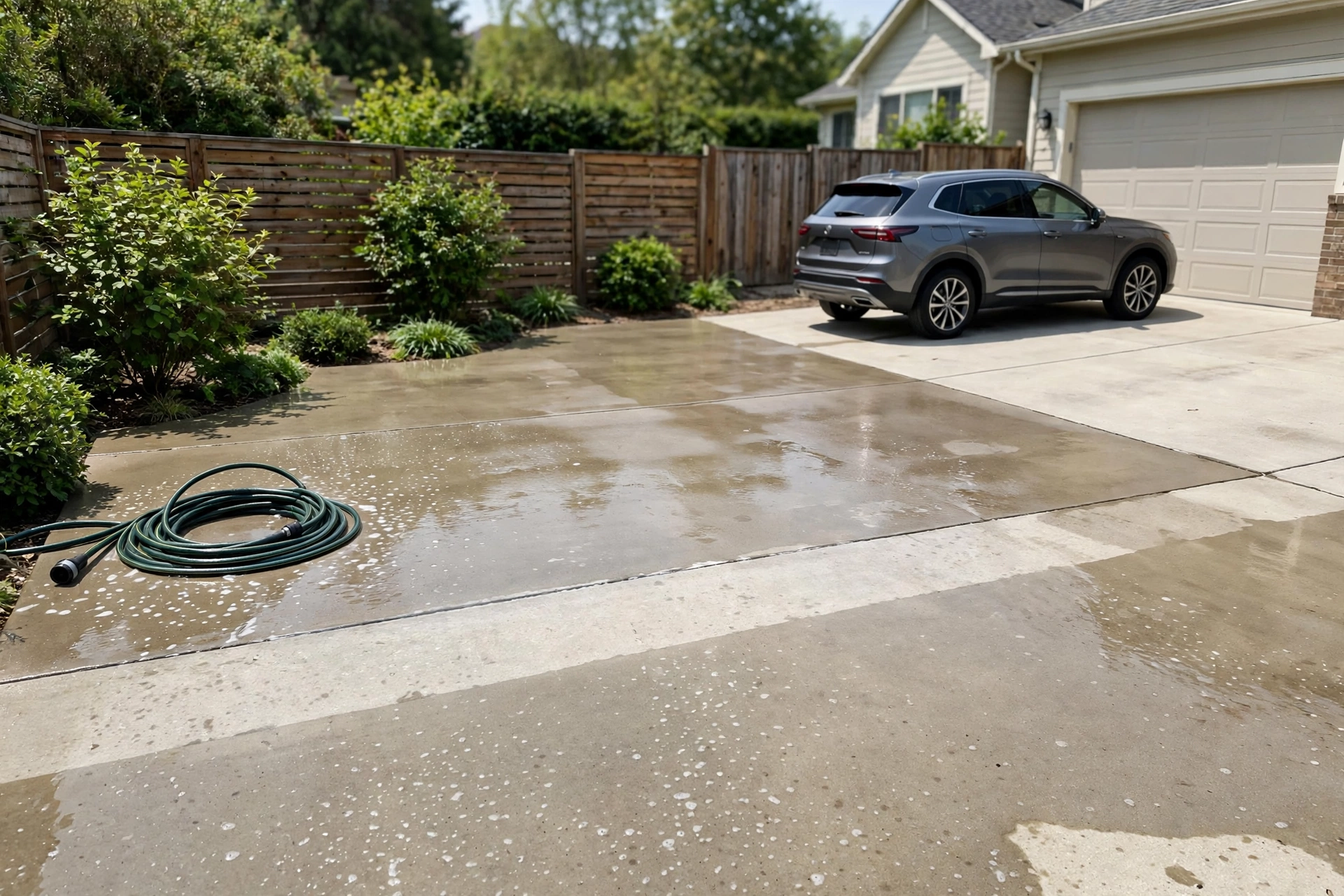
If you did not overseed, your lawn’s watering needs barely change. Resume your normal deep-and-infrequent routine — roughly an inch of water a week including rainfall is the usual cool-season target — and let the open holes do their work. The aeration itself does not demand extra water; it just makes the water you apply more effective, since it reaches the root zone instead of running off a sealed surface.
If you did overseed, water becomes the whole job for the next few weeks. Seed that has started drinking cannot pause: if it dries out after germination begins, it dies rather than waiting for the next watering. Keep the top layer of soil consistently damp with short, gentle sessions once or twice a day for the first two weeks, adding a second session on hot or windy days and skipping a session when rain has done the work. Once the new grass is up and growing, taper gradually — fewer sessions, a little longer each time — so roots chase moisture downward instead of staying shallow.
In both cases, the enemy is puddling. Soggy soil suffocates seed and roots alike. If water stands, skip the session and check whether the area is graded to drain.
Seed while the holes are open
If you plan to overseed, do it promptly — the same day as aeration if you can, or within a couple of days. The open holes are the seedbed: seed that falls into them gets the soil contact it needs to germinate, and the plugs breaking down around it give it a light covering. Wait a week and the holes start to close, the advantage fades, and you are seeding onto a surface again instead of into one.
You do not need to overseed every time you aerate. A dense lawn with no thin spots gains little from extra seed. Aerate for the soil, overseed for the bare patches — and if you are unsure which order the two jobs go in, our guide to aerating before or after overseeding settles it. A light application of starter fertilizer with new seed is reasonable if your soil test or lawn program calls for it; feeding blindly after aeration is not a recovery plan.
The first mow: go by height, not by date
This is where most people rush it. Do not pick a mowing day off the calendar. Wait until the grass — the new grass, if you overseeded — has grown to about one-third taller than your target mowing height, then mow it back to that height. If your target is 3 inches, that means mowing when the grass reaches about 4 inches. That height rule, recommended by University of Maryland Extension for new turf, is a better guide than any number of days, because it responds to how your lawn actually grew.
When the day comes, mow with a sharp blade and take off no more than one-third of the blade at once. A dull blade tears young grass instead of cutting it, which stresses seedlings and opens them to disease. Mow when the lawn is dry and firm enough that the mower does not rut soft soil or pull up seedlings, and bag or not as you prefer — clippings left on a newly aerated lawn are harmless and help the plugs break down. For the full timing picture, see our guide to how soon you can mow after aerating.
What to hold off on
A few ordinary lawn jobs become mistakes in the weeks after aeration. Do not apply a pre-emergent weed preventer after overseeding — it stops grass seed just as effectively as it stops crabgrass, and it does not know the difference. Delay broadleaf weed sprays until the new seedlings are established and have been mowed a few times. Keep heavy traffic, play, and equipment off newly seeded areas while they establish; a path worn through seedlings in week two is a bare patch again by week six.
Topdressing, on the other hand, pairs beautifully with aeration. A thin layer of compost worked into open holes feeds the soil biology that the aeration woke up. If that appeals to you, our guide to topdressing after aerating covers materials and depth, and if your lawn needs feeding after the recovery period, our fertilizer after aerating guide covers the options.
What recovery looks like
In the first week, expect the lawn to look worse: plugs on the surface, uneven color, maybe some footprint marks. By weeks two and three, the plugs should be breaking down, the surface evening out, and — if you seeded — fine new grass filling the thin spots. If a seeded area shows nothing after three weeks of steady moisture, the seed likely dried out during a gap in watering or washed away in a heavy rain; those spots can be touched up while the season still allows, since you now know exactly which step to fix.
Aeration is not a rescue by itself. It is an opening. Water, seed, and patience do the rest, and a lawn that gets all three after aeration is a visibly different lawn by the next season.