Landscape & Leisure is reader-supported. When you buy through links on our site, including Botanical Interests seed links, we may earn a commission at no extra cost to you. Prices change, so click through to confirm current pricing.
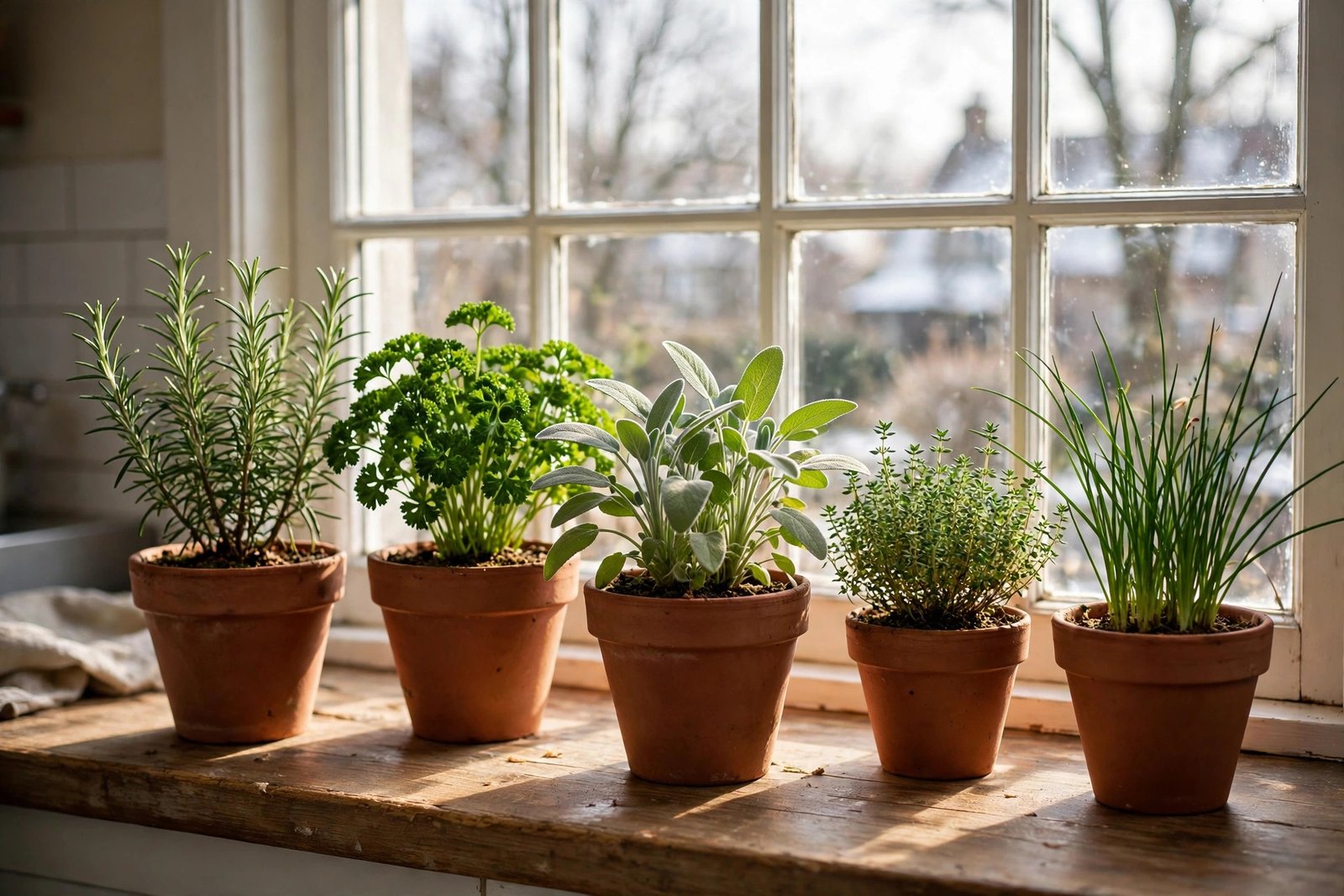
You know the bag. The parsley you bought on Sunday is limp by Wednesday, the chives are slimy by Friday, and you paid grocery prices for the privilege. A windowsill pot fixes that particular annoyance, and winter is the right moment to start it: sow now, snip all cold season, and move the survivors outside when spring finally shows up.
Not every herb earns a windowsill, though. The winners below all share three things: they tolerate a pot, they keep producing when you cut them, and their own seed listings say they grow indoors in winter. That last part matters, because plenty of herbs will survive a windowsill without ever thriving on one.
| Herb | Winter windowsill fit | What you snip | Germination | Rating |
|---|---|---|---|---|
| Moss Curled Parsley | Excellent — listed for indoor winter growing | Curly leaves for cooking and garnish | Give it patience; it is the slow starter here | 5.0 out of 5 (12 reviews) |
| Garlic Chives | Excellent — listed for indoor winter growing | Flat, garlicky leaves and buds | 10–15 days | 4.2 out of 5 (25 reviews) |
| Common Chives | Excellent — listed for year-round indoor harvest | Slender onion-flavored leaves | 10–15 days | 3.4 out of 5 (31 reviews) |
| Italian Genovese Basil | Good, in a warm, sunny window | Large leaves for pesto and cooking | 5–10 days | 4.5 out of 5 (72 reviews) |
| Chef’s Herb Garden Bundle | Twelve packets, several windowsill-friendly | A full kitchen-herb shelf at once | Varies by variety | 4.9 out of 5 (18 reviews) |
Best Overall: Moss Curled Parsley
If you plant exactly one winter herb, make it this one. Moss Curled parsley is cold-tolerant enough to grow through fall and into winter, its curly leaves are milder than flat-leaf types, and it is genuinely pretty in a pot — the kind of plant that earns its windowsill even before you cook with it. Buyers rate it a perfect 5.0 out of 5 across 12 reviews.
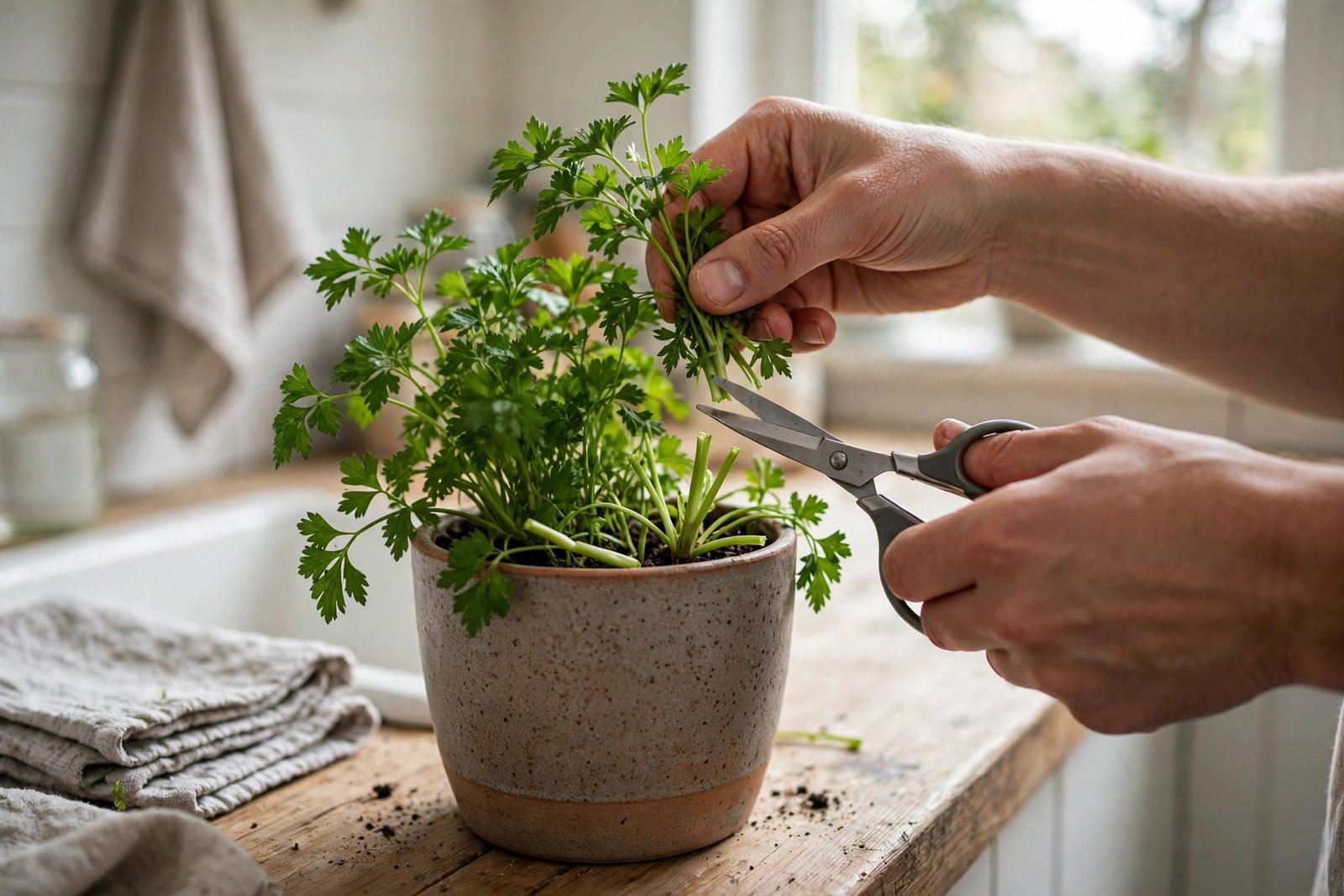
Parsley asks for one thing in return: patience at the start. It is slower to get going than the chives below, so sow a little thickly and resist the urge to declare the pot a failure in week one. Once it is up, pick the outer leaves and let the center keep growing, and one pot will season soups, potatoes, and grain bowls for months.
Moss Curled Parsley Seeds
Cold-tolerant, curly, and mild — the winter windowsill workhorse, rated 5.0 out of 5.
Runner-Up: Garlic Chives
Garlic chives are the weeknight hero of this list. The flat leaves carry a gentle garlic flavor with hints of honey and onion, which means they go straight into stir-fries, scrambled eggs, soups, and noodles without a trip to peel anything. The plant is a perennial that comes back every year, and it is listed as good for containers and indoor growing all winter long.
Harvest by cutting the outer spears once they reach at least 6 inches, back to 2 inches above soil level, and the plant answers with fresh, tender growth. One trade-off: some gardeners recommend leaving garlic chives unharvested in their first year so the plant can strengthen. If you want instant gratification, start two pots and let one rest.
Garlic Chives Seeds
Perennial, garlicky, and endlessly snippable — the herb that earns its keep on a weeknight.
Best for Beginners: Common Chives
Common chives are the easiest herb on this list to keep alive, full stop. Bright green, slender, hollow leaves with a mild onion flavor; pinkish-purple pom-pom flowers in late spring if you let them bloom; and a plant that comes back year after year and can be dug up and divided when the clump gets too large. Its own listing says to grow it indoors for year-round harvest.
The honest caveat is in the ratings: 3.4 out of 5 across 31 reviews, the lowest on this list, with some buyers reporting seeds that never sprouted. That is a germination gamble, not a growing problem — sow generously, keep the soil evenly moist until seedlings appear in 10–15 days, and thin nothing, since thinning is not required. Once they are up, chives practically take care of themselves.
Common Chives Seeds
The easiest herb to keep alive — sow generously, snip often, and let it come back every year.
Best for Pesto: Italian Genovese Basil
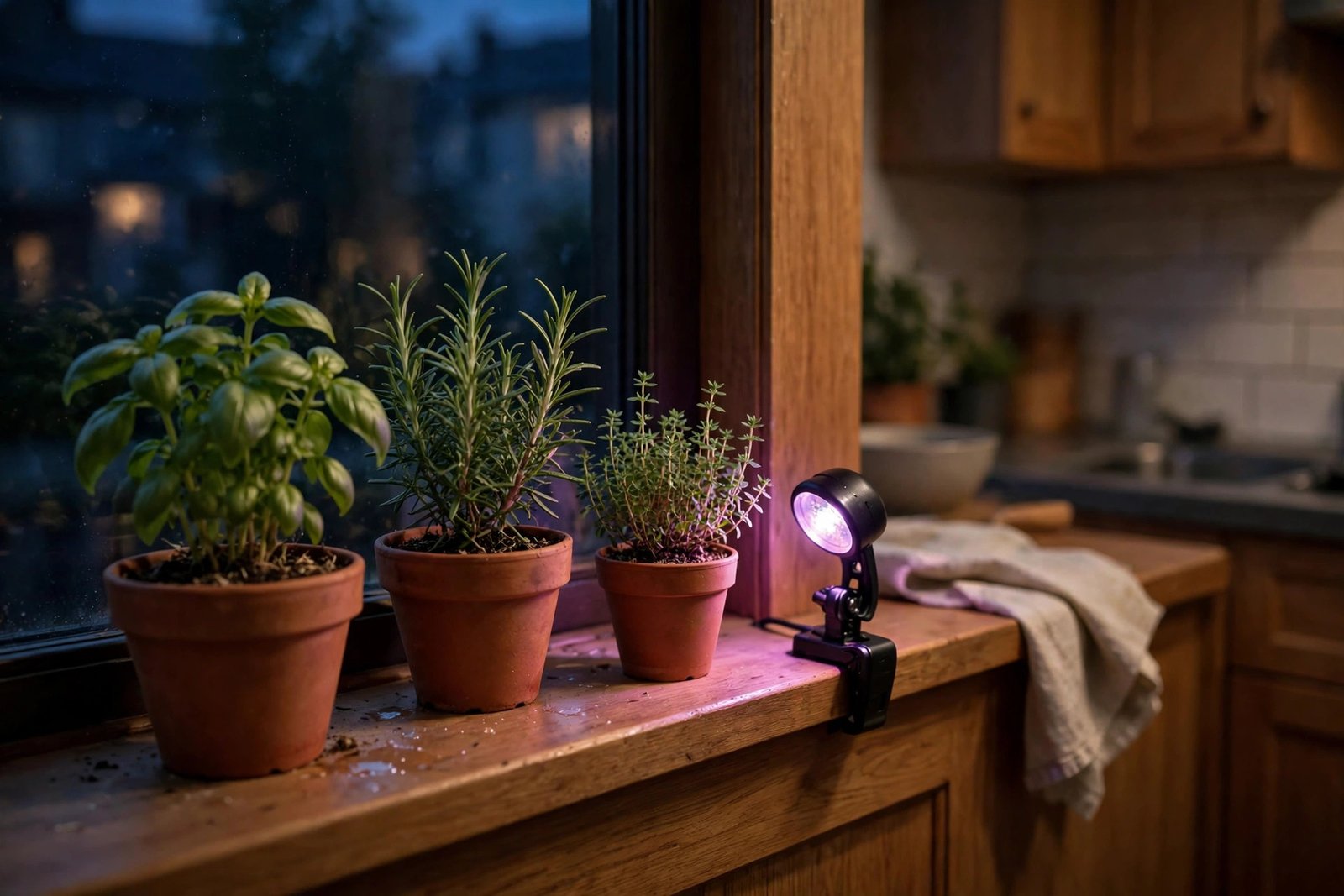
Genovese is the true Italian pesto basil, with large, dark green, almond-shaped leaves and the traditional fragrance that supermarket basil only hints at. In a warm, sunny window, it can grow indoors in winter — but that warm and sunny part is doing real work. Basil is very frost sensitive, and a cold draft off the glass will punish it faster than any other herb here.
Give it your brightest, warmest sill, sow at a quarter inch deep, and expect sprouts in 5–10 days. Harvest up to a third of the plant at a time, always before it flowers, and the flavor stays sweet. The trade-off is appetite: basil wants more light and warmth than the chives and parsley, so if your only window faces north, read the grow-light comparison before you commit.
Italian Genovese Basil Seeds
The true Genoa pesto basil — big fragrant leaves, if you can give it a warm, sunny window.
Best Bundle: Chef’s Herb Garden Seed Bundle
If you would rather stock the whole sill at once, this bundle packs twelve packets into one box: dill, sage, common chives, common mint, thyme, fennel, cilantro, tarragon, moss curled parsley, rosemary, Genovese basil, and Greek oregano. Buyers rate it 4.9 out of 5 across 18 reviews, and it covers both this article’s windowsill picks and the herbs you will want when the pots move outside in spring.
The catch is honest and simple: not all twelve are winter-windowsill herbs. Start the parsley, chives, mint, and basil indoors now, and hold the rest for spring sowing. Bought as a bundle, it is the cheapest way to stop buying limp grocery herbs in every flavor at once.
Chef’s Herb Garden Seed Bundle
Twelve kitchen herbs in one box, rated 4.9 out of 5 — start the windowsill four now, save the rest for spring.
The Honest Skip: Mint From Seed, for a First Windowsill
Mint deserves a mention here because it tempts everyone, and it is the one herb to hold off on if this is your first winter sill. Common Mint Seeds are rated 3.8 out of 5 across 20 reviews, and a recurring theme in those reviews is slow, finicky germination: the seeds take their time, and some never get going at all. Once established, mint is easy and reliable — but a first-time winter grower wants a win in week two, not a patience test.
Two more mint rules if you do plant it later: keep it in its own pot, always, because mint spreads with enthusiasm, and give it the sunniest spot you have. Start with parsley and chives this winter, add mint when you have a success or two under your belt.
How to Start
Sow the chives and parsley now, in pots with drainage holes, and keep the soil evenly moist until seedlings appear. Full how-to — light, water, and harvest — is in Growing Herbs on a Windowsill: Light, Water, and Harvest, and if your windows are dim, Windowsill vs. Grow Lights for Indoor Herbs settles whether a light is worth buying before you spend a dollar on one.
Bottom Line
Start with moss curled parsley and a pot of chives. They are cheap, they forgive a beginner, and they turn a January Tuesday into a night you cook with something green you grew yourself. Add basil only if you have a warm, sunny window to give it — and skip mint from seed until your sill has already proved itself.