Landscape & Leisure is reader-supported. When you buy through links on our site, including Botanical Interests seed links, we may earn a commission at no extra cost to you. Prices change, so click through to confirm current pricing.
There’s a two-week window in spring when the soil finally holds 60 degrees and the seed rack stops being a wish list. Bok choy belongs in that window — not in a tray on the windowsill, and not in the ground a month later when the heat has already arrived. Get the timing right and a packet of seed turns into weeks of stir-fry greens. Get it wrong and the plants rush past you before you’ve picked a leaf.
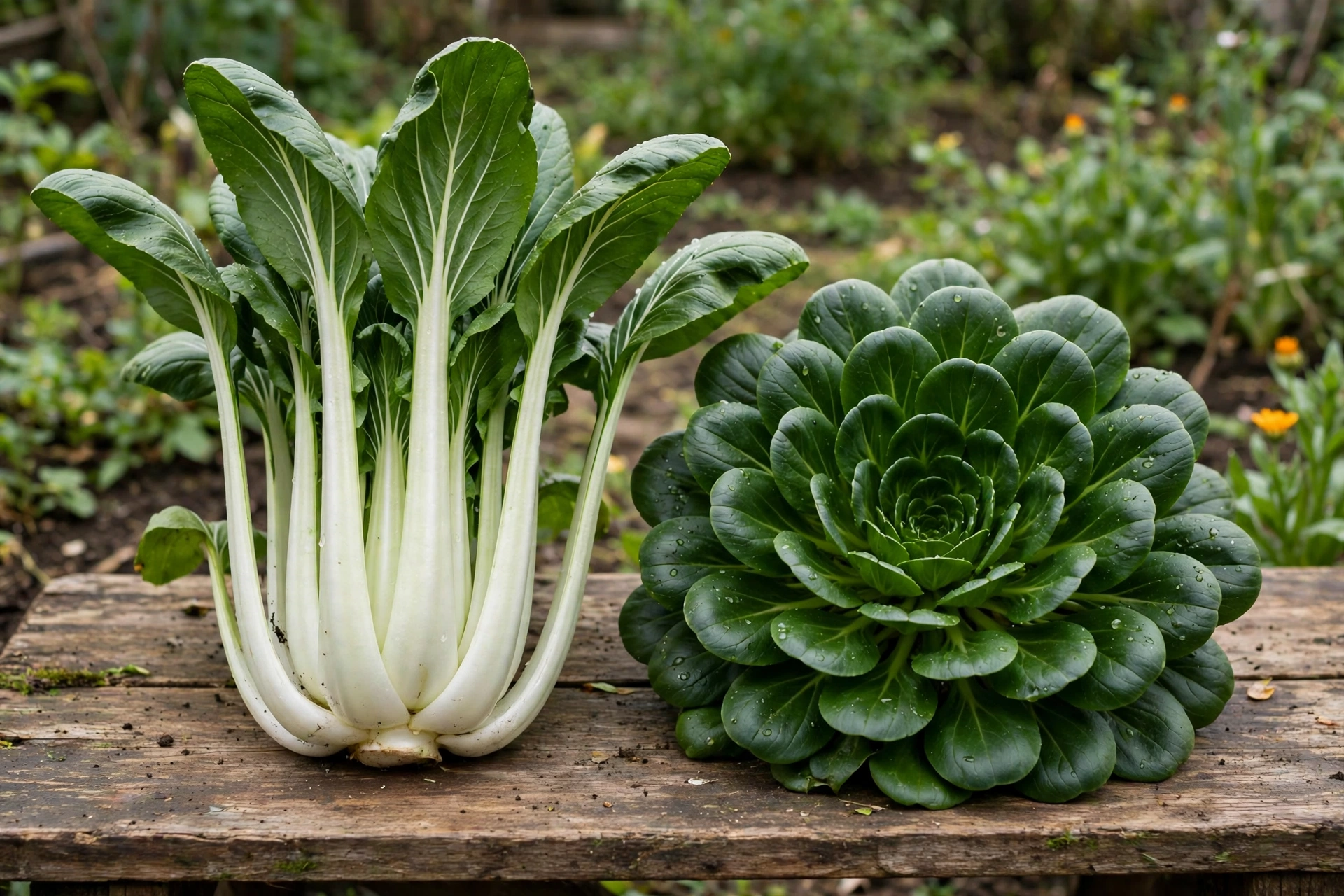
Bok choy, tatsoi, and their mustard cousin Gai Choy all grow the same way: fast, direct-sown, and picked leaf by leaf. The four varieties in our roundup of the best Asian greens share one sowing approach, with tatsoi on a slightly later clock and Gai Choy wanting a little more room between plants. Here’s how the timing, the spacing, and the harvest fit together.
Why Direct Sow, Not Transplants
Bok choy moves fast. Choko matures in 50 to 55 days, tatsoi in 45, Toy Choy in as few as 30 — so fast that Botanical Interests doesn’t recommend starting any of them indoors. A tray step buys nothing when the plant is ready a month after sowing, and moving seedlings outdoors costs you the very days you’re trying to save.
Gai Choy gives you a second reason to skip the tray: Botanical Interests warns that transplant stress can make it bolt, sending it to flower before you’ve harvested a leaf. Sow it where it will grow and leave it alone. The same logic holds for the rest — direct sow, in the bed, and let the roots stay put.
When to Sow
The soil tells you when, not the calendar. Wait until the soil is at least 60 degrees, then sow Choko, Toy Choy, and Gai Choy two to four weeks before your average last frost date. Choko and Toy Choy prefer it warmer — ideally 75 to 85 degrees — while Gai Choy takes the same window. Tatsoi runs a touch later: one to two weeks after your last frost, in soil of at least 60 degrees and ideally 65 to 75.
Then sow again. Every one of these greens can be sown a second time in late summer for a fall crop, and that’s the sowing that matters most for tatsoi — it withstands temperatures down to 15 degrees, so a late-summer sowing keeps producing when the rest of the garden has quit. Gai Choy rewards the patient sower most of all: sow every three weeks until ten to twelve weeks before your first fall frost, and the harvest runs in a steady line instead of one big flush. For more on planning that second season, see our late-summer planting guide.
Spacing and Thinning
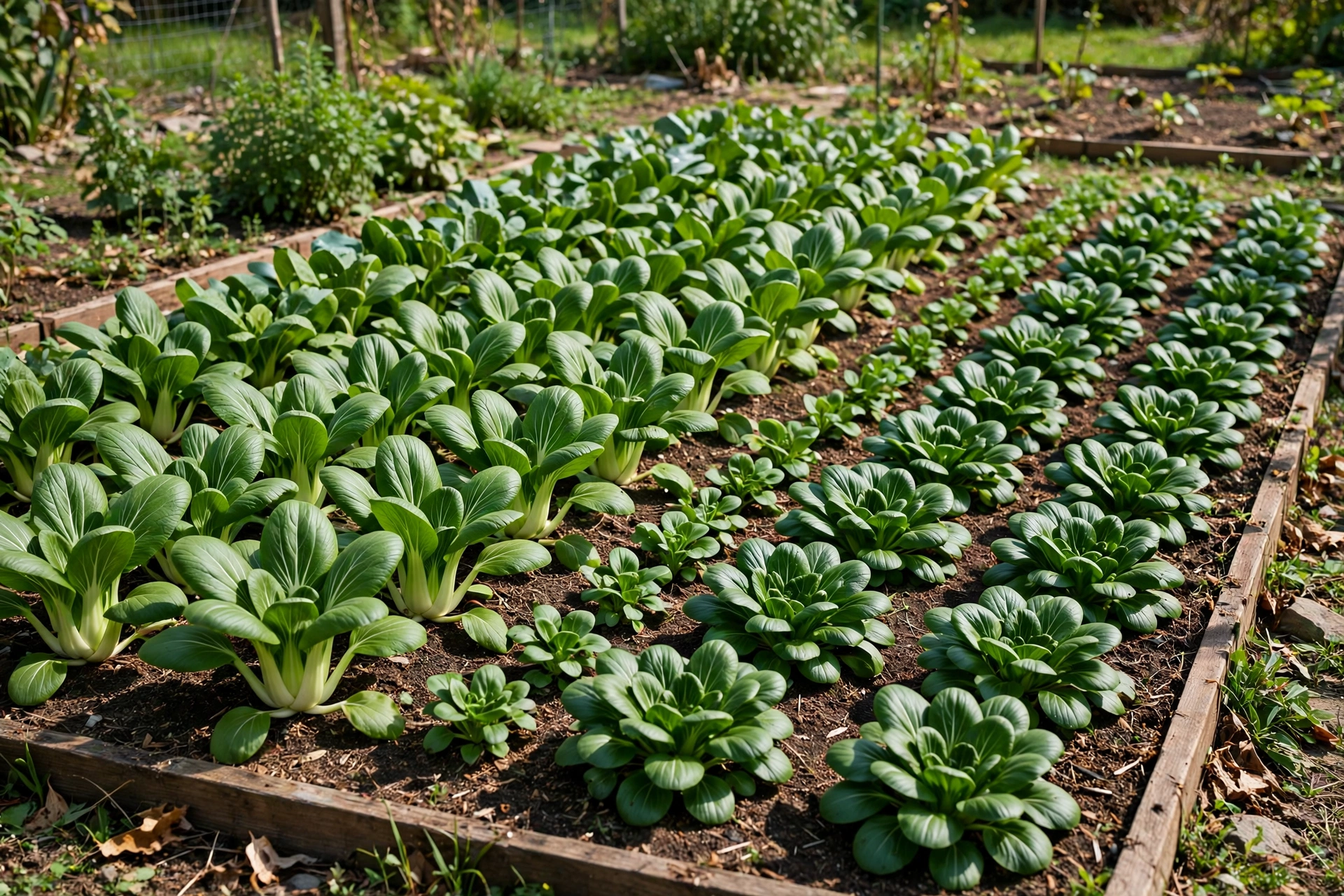
The sowing recipe is the same across the bok choys: a group of three seeds every six inches, a quarter inch deep, in rows twelve inches apart. When the seedlings are two inches tall, thin to one plant every six inches — keep the strongest and pull the rest. Crowded bok choy stays small and never fills out, and the thinnings are edible, so the thinning pass doubles as the first tiny harvest.
Gai Choy wants a little more elbow room: groups of three seeds every six to ten inches, thinned to one plant every six to ten inches once the seedlings are three inches tall, in rows twelve to eighteen inches apart. Give it that space and the heads have room to form; crowd it and you get leaves without the crunch.
| Variety | When to sow | Spacing | Thin to | Days to maturity |
|---|---|---|---|---|
| Bok Choy Choko | 2–4 weeks before last frost | 3 seeds every 6″ | 1 every 6″ at 2″ tall | 50–55 days |
| Rosette Tatsoi | 1–2 weeks after last frost | 3 seeds every 6″ | 1 every 6″ at 2″ tall | 45 days |
| Toy Choy | 2–4 weeks before last frost | 3 seeds every 6″ | 1 every 6″ at 2″ tall | 30–35 days |
| Gai Choy Mustard | 2–4 weeks before last frost | 3 seeds every 6″–10″ | 1 every 6″–10″ at 3″ tall | 40–60 days |
The Cut-and-Come-Again Harvest
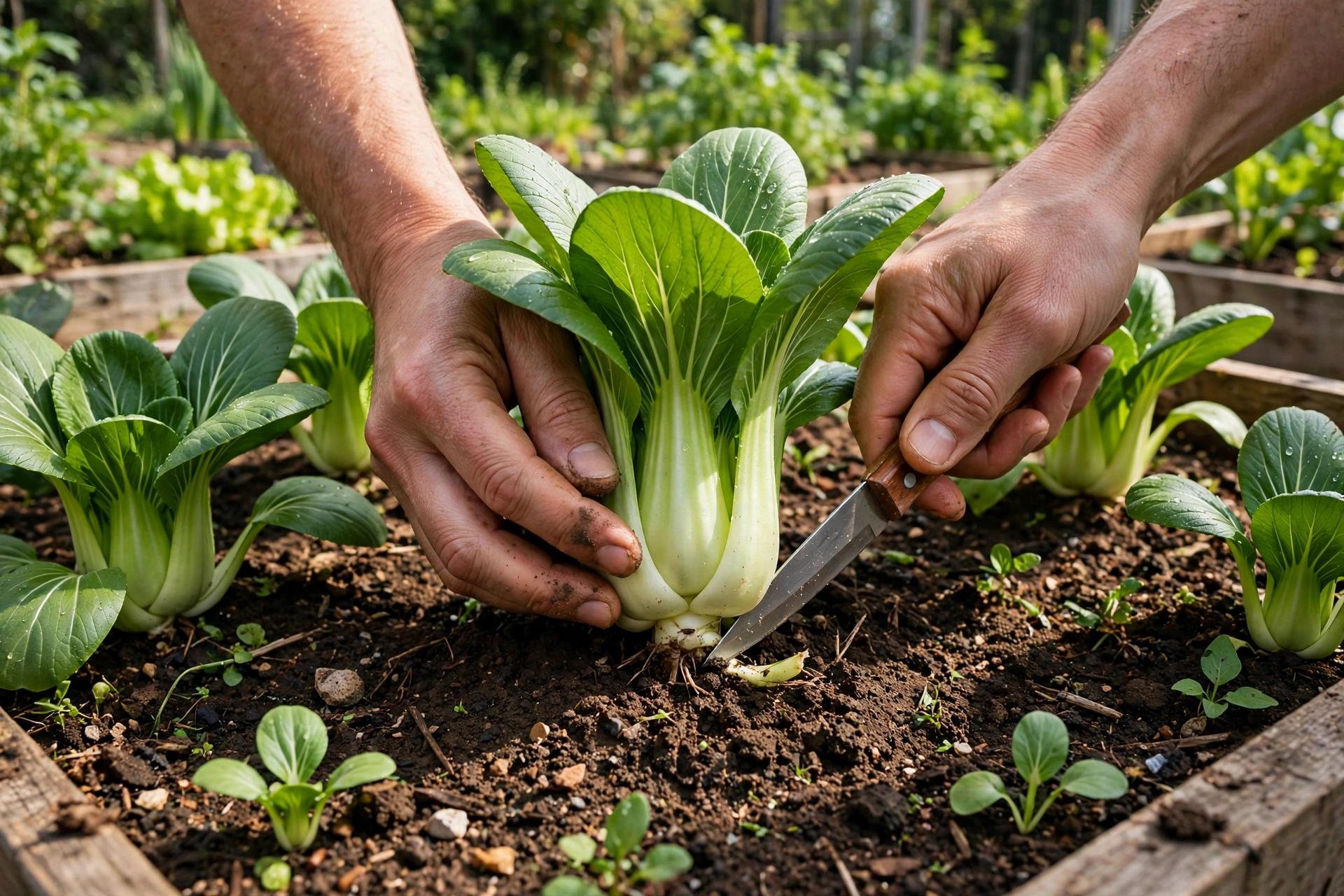
Here’s the part that makes bok choy worth the bed space: you don’t have to wait for the whole plant. Harvest individual outer leaves as the plant grows, and the center keeps pushing new growth — the same cut-and-come-again habit that makes our salad greens so productive. Or cut the entire plant at the base when it reaches the size you want. Either way, harvest in the morning if you can, dunk the leaves in cold water, and drain before storing.
Choko is ready to pick at just 4 inches tall, so don’t wait for a full-size head that was never the point — baby leaves are the sweetest cut. Toy Choy, at 5 inches tall all grown up, is a whole-plant harvest by nature: snip it at the base and the next sowing takes its place. Tatsoi’s flat rosette invites the leaf-by-leaf approach, and Gai Choy’s leaves can be picked from 2 inches tall, taking no more than a third of the plant if you want it to regrow.
Which Variety Fits Your Bed
Start with your season. If your summers run hot, Choko is the bok choy bred for it — heat tolerant, steady, and the highest-rated packet in the roundup. If you want dinner fast, Toy Choy is on the table in about a month and fits a container. If your garden keeps going into cold weather, tatsoi is the one that shrugs off frost. And if you want heat in the flavor rather than the weather, Gai Choy mustard brings a pungent bite the bok choys don’t have.
Bok Choy Choko Seeds
Bred for heat tolerance with the highest gardener rating here — the bok choy to plant first.
Toy Choy Bok Choy Seeds
A 5-inch bok choy ready in as few as 30 days — the quickest path from seed to stir-fry.
Rosette Tatsoi Bok Choy Seeds
Withstands temperatures down to 15°F — sow it late and harvest it after frost.
What to Watch Next
Once the first leaves are coming off, the job is mostly watching the calendar. Sow a second round in late summer and the bed keeps producing into fall — tatsoi longest of all. If a Gai Choy plant starts to stretch, cut it and eat it; the next sowing is already on its way. Keep picking the outer leaves first, and the plants keep growing.