Landscape & Leisure is reader-supported. When you buy through links on our site, including Botanical Interests seed links, we may earn a commission at no extra cost to you. Prices change, so click through to confirm current pricing.
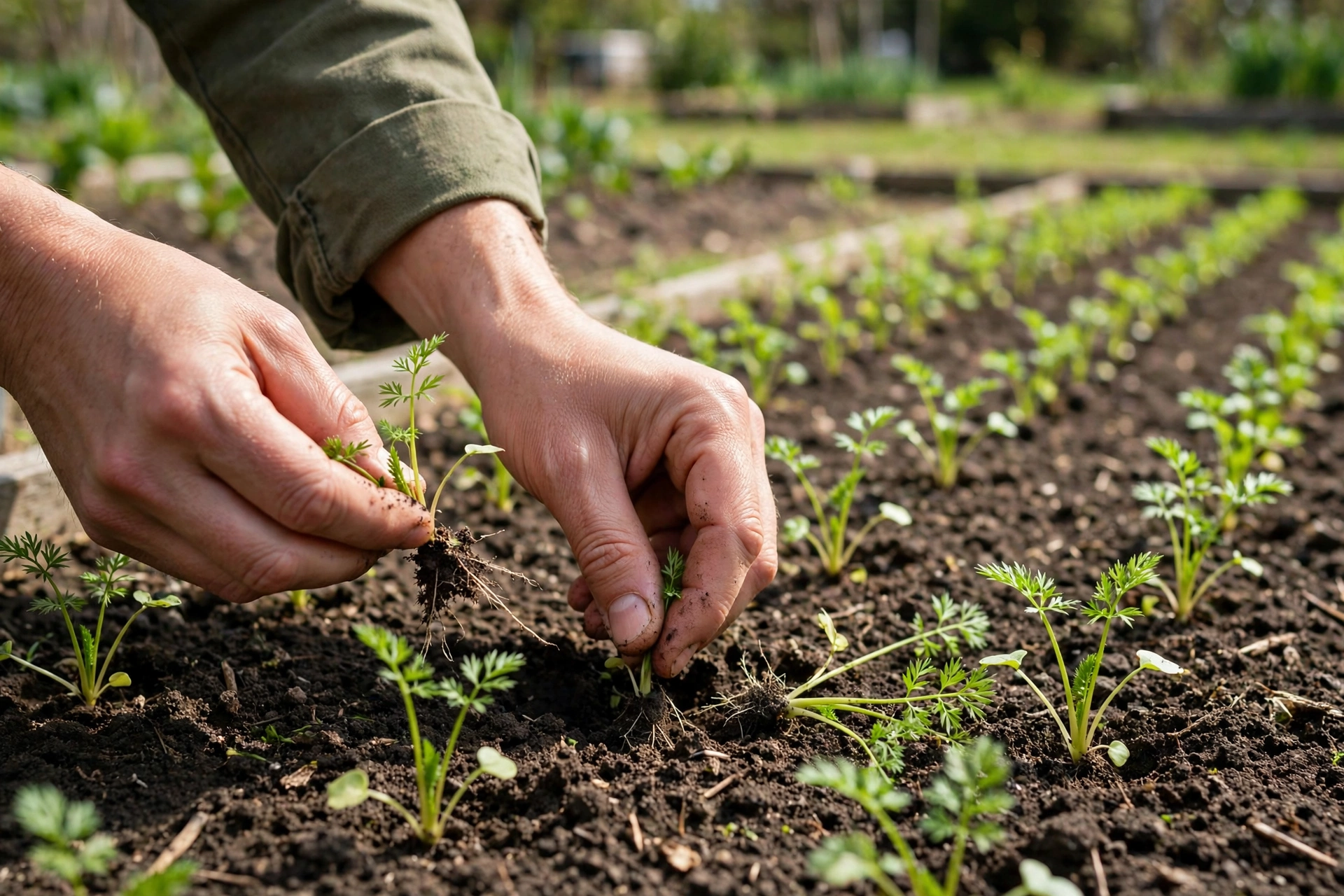
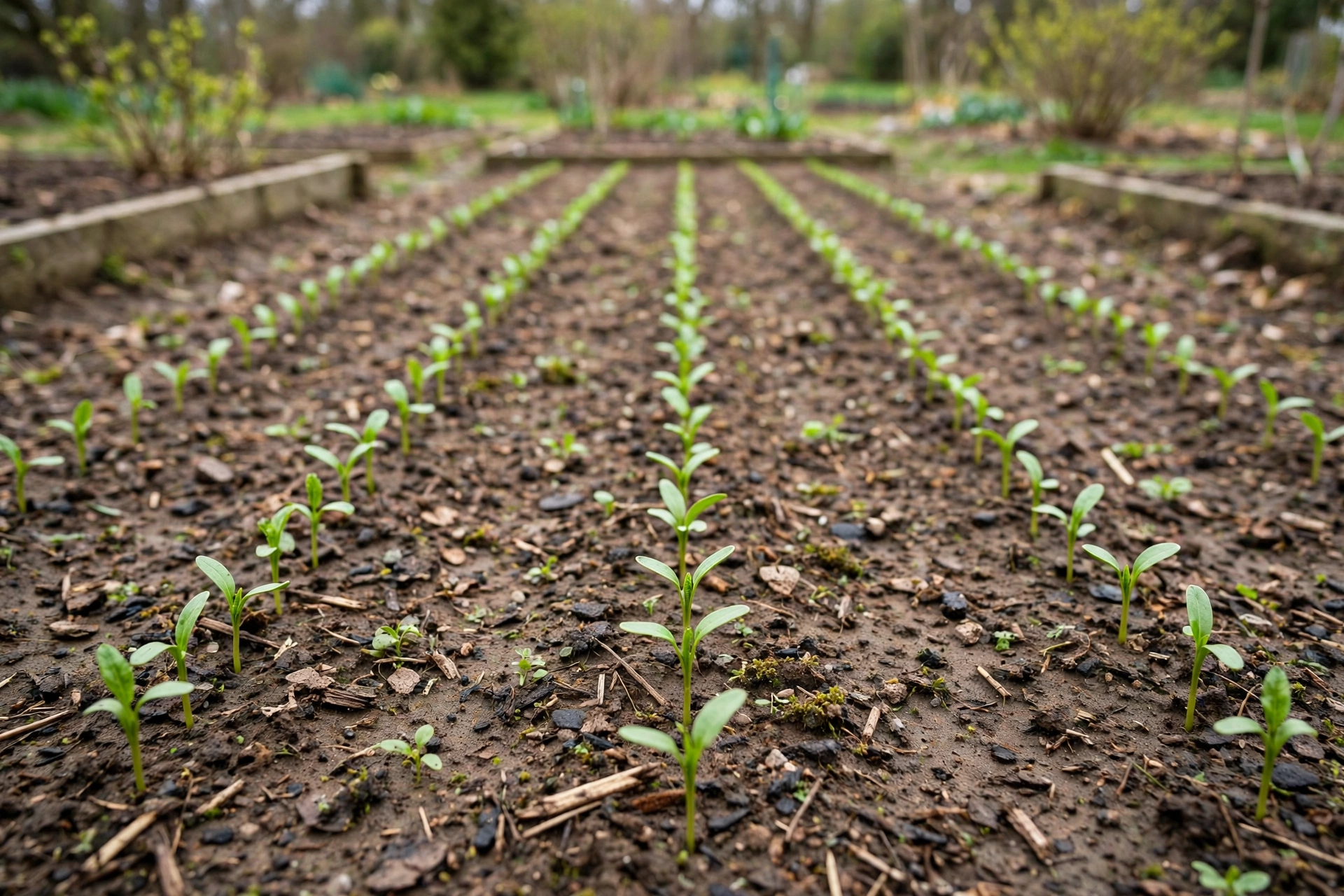
Three weeks after sowing, the parsnip row is still bare dirt — and the turnips next to it have been up for a fortnight. Or the tops look fine all summer, and the roots you finally dig up in October split into two legs like a pair of trousers. Both problems have a short list of causes, and they are almost always fixable at the next sowing. Here is how to tell which one you have, and what to change.
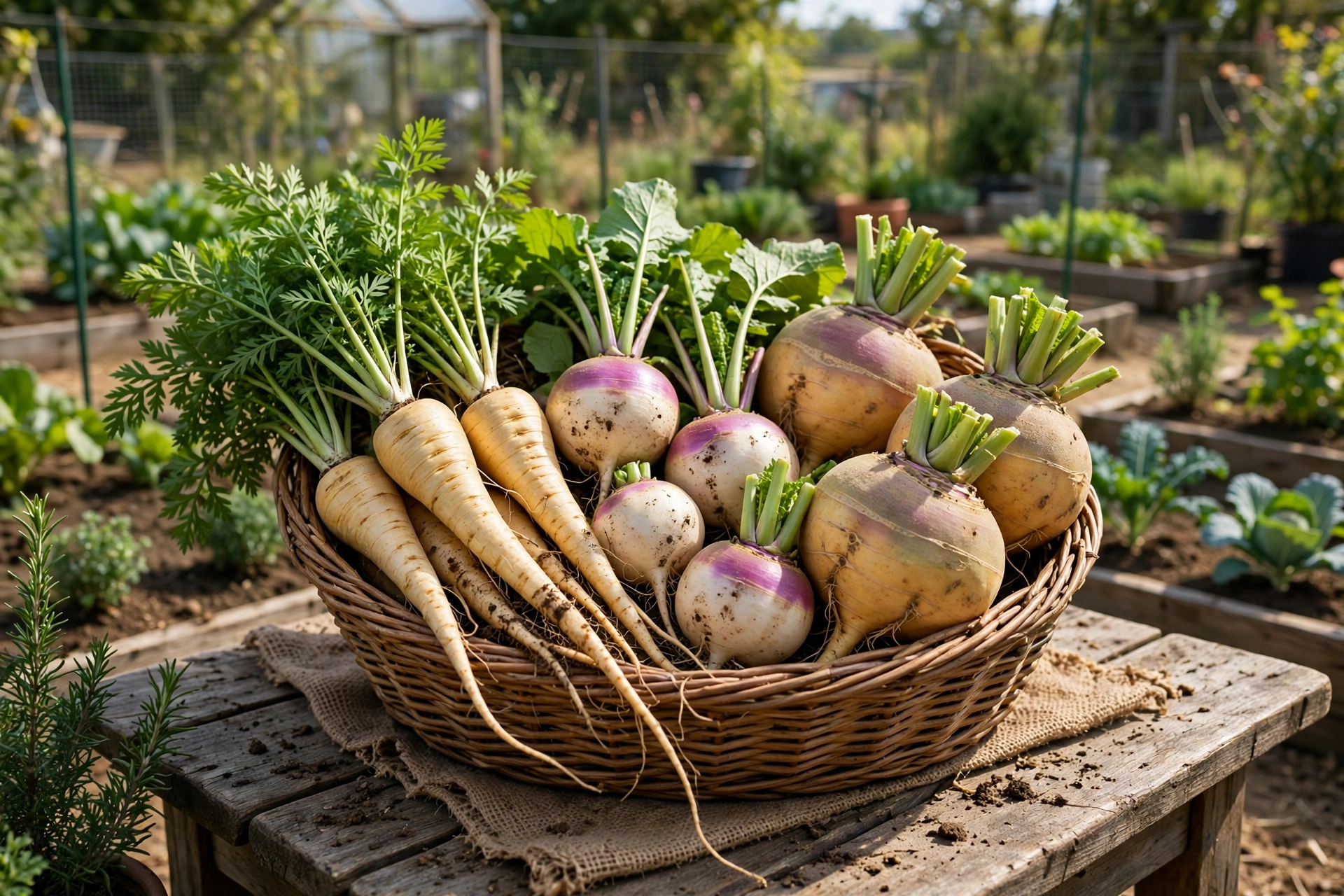
For which varieties to buy, see our roundup of the best parsnips, turnips, and rutabagas to grow from seed, and for the full sowing method, see our guide to growing parsnips and turnips.
Why Won’t My Parsnips Germinate?
Parsnip germination fails more often than any other common vegetable, and the causes rank in a clear order. Work through them before you re-sow.
1. The seed is old. Parsnip seed loses viability faster than most vegetable seed, so a packet left over from two seasons ago is a weaker bet than a fresh one. This is the first suspect when nothing comes up at all. The fix is simple: buy fresh seed each year, and sow the whole packet rather than saving half for next spring.
2. The soil was too cold — or it dried out. Parsnip seed wants soil between 50 and 70 degrees, and it needs that top half inch to stay moist for the whole 10 to 25 days it takes to germinate. A dry spell in week two can end germination before it starts. Check before you re-sow: dig up a seed and look. If it is swollen and split, it is still working — leave it alone. If it is dry and unchanged, the bed dried out, and re-sowing into moist soil is the fix.
3. You sowed too deep. Parsnip seed goes half an inch deep — no more. Deeper seed runs out of energy before it breaks the surface, and it is the easiest mistake to make with a small seed in a big bed. Re-sow at the right depth and press the soil down gently so the seed has firm contact.
4. A crust formed over the row. Heavy rain followed by sun bakes the soil surface into a lid that a slow parsnip seedling cannot push through. The fix is the radish trick: sow a few fast-sprouting radish seeds along the row when you sow the parsnips. The radishes come up in days, mark the line, and break the crust for the parsnips behind them. Pull the radishes as soon as the parsnips germinate.
If you have waited the full 25 days with no sign of life and the seed checks out dry, re-sow — there is still time if you are inside the four-months-before-frost window. Soaking the seed in water for 12 to 24 hours before sowing helps the next round along.
Javelin Parsnip Seeds — the parsnip to re-sow with: excellent canker resistance, a perfect 5.0 gardener rating, and a sweet flavor that improves after frost. Soak the seed before sowing and mark the row with radishes.
Javelin Parsnip Seeds
A canker-resistant hybrid with a perfect gardener rating — the parsnip to plant when you have lost one before.
Why Are My Parsnips Forked?

The tops look fine, the roots come up split. Forking means the growing tip of the taproot hit something it could not get through, or was damaged, and the root branched to get around it. The causes, ranked:
1. Stones or compacted soil. This is the most common cause. A parsnip root grows a foot long and straight down; a stone, a hard clay lump, or a compacted layer in its path forces it to split. The fix is preparation, not rescue: loosen the bed at least 12 inches deep before sowing, and pick out stones, sticks, and hard clods as you go. If your native soil is heavy clay, a raised bed with loose, deep soil is the reliable answer.
2. Fresh manure or heavy feeding. Do not sow parsnips where fresh manure was just applied. Rich pockets of nitrogen in the soil damage the growing tip and draw the root sideways, and the result is the same split. Use well-aged compost instead, worked in before sowing — never fresh manure in the parsnip bed.
3. Transplanting. Parsnip roots are sensitive to disturbance, which is why starting them indoors is not recommended. A seedling moved from a pot to the bed often grows a forked root from the shock alone. Direct sow, every time.
4. Uneven watering. Roots that split open lengthwise, rather than forking at the tip, are usually telling you about water — soil swinging from very wet to very dry cracks the root as it swells and shrinks. Keep the bed evenly moist, especially while the roots are sizing up in late summer.
Forked parsnips are still good eating — peel them, cut around the forks, and cook them the same way. The same causes fork carrots, too, so if your carrots split the same way, the bed is the problem, not the variety. See our guide to why carrots fork for the same diagnosis in a carrot bed.
All American Parsnip Seeds — the main-crop parsnip: thickens in as little as 95 days, roots up to 12 inches, one packet sows up to 28 feet. Give it a deep, stone-free bed and it grows straight.
All American Parsnip Seeds
The most-reviewed parsnip here, thickening early with roots up to a foot long — the main-crop parsnip.
Why Are My Turnips Small or Woody?
Turnips fail differently from parsnips, and the diagnosis is shorter. If the roots are small, you almost certainly did not thin — turnips sown in a group of three every 4 to 6 inches need thinning to one plant per spot, or they crowd each other into marbles. If the roots are woody or hot-tasting, you left them too long: harvest baby turnips at 2 inches across in about 30 days, and full-size roots of 4 to 5 inches in 40. Past 5 inches the quality drops for raw eating, though the roots are still fine cooked. And if the tops are huge and the roots are skinny, the plants are too close together — thin harder next time, and take no more than a quarter of the leaves at once when you harvest greens.
Market Express Turnip (White Lady) Seeds — the fast root: baby turnips in 30 days, full size in 40, with edible greens. Sow it alongside the parsnips so a slow parsnip row still leaves you something to eat in a month.
Market Express Turnip Seeds (White Lady)
A mild Japanese salad turnip ready in a month — the fast root to sow while the parsnips take their time.
What to Try Next
Parsnips reward a fresh packet, a deep stone-free bed, and a gardener willing to wait 25 days for a sprout. If this year’s row failed, change one thing at a time next sowing: fresh seed first, then the bed, then the depth. And sow the turnips alongside — a fast root in the same bed is the best insurance against a slow one, and the best reminder that the garden is working even while the parsnips take their time.