Landscape & Leisure is reader-supported. When you buy through links on our site, including Botanical Interests seed links, we may earn a commission at no extra cost to you. Prices change, so click through to confirm current pricing.
By late spring the soil has finally warmed past 50 degrees, the last frost is behind you, and the seed rack still holds the slow roots — parsnips, turnips, rutabaga — waiting for someone patient enough to sow them. They are worth the wait, but only if they go in right the first time: these roots do not forgive a move, a crowded row, or a shallow bed. Get the sowing right and the rest of the season mostly takes care of itself.
For which varieties to buy, see our roundup of the best parsnips, turnips, and rutabagas to grow from seed. If your parsnips never sprout or come up forked, see why parsnips won’t germinate — and forked roots, fixed.
Why These Roots Want to Be Direct-Sown
A root vegetable grows its harvest underground, and anything that disturbs the young taproot shows up later as a fork, a split, or a stunted root. That is why Botanical Interests does not recommend starting parsnips or turnips indoors — the roots are sensitive to disturbance, and a transplanted seedling rarely grows straight. Rutabaga is the same story: sow it where it will grow, because moving it sets the roots back by weeks.
Direct sowing has a second advantage with parsnips in particular. The seed is slow — 10 to 25 days to germinate — and a seedling started indoors spends that whole slow stretch in a pot, then still has to survive the move. Sown in the bed, it takes its time where it belongs. The one thing direct sowing asks of you is a bed that is ready: loose, deep, and free of stones, because a parsnip root that hits a rock will go around it, and around is how forks happen.
When to Sow Each One
These three roots do not share a calendar, and sowing them all on the same day is the most common way to waste two of them. Parsnips go in late spring or early summer, about four months before your average first fall frost, in soil between 50 and 70 degrees. They need the long season — 95 to 125 days — and they need it to end in cold weather, because frost is what makes them sweet.
Turnips are the flexible one. Sow two to four weeks before your average last frost, once the soil reaches 50 degrees and ideally 65 to 80, then sow again every two weeks, up to eight to ten weeks before your first fall frost. A 30-day crop does not need a perfect window — it needs a series of small ones. Rutabaga wants the fall, not the spring: count back about 90 days from your first fall frost and sow so the roots size up as the weather cools. In mild climates, parsnips can also be sown in fall for a spring harvest.
Sowing, Step by Step
1. Loosen the bed a foot deep. Work the soil at least 12 inches down and pick out stones, sticks, and hard clods. A parsnip root grows a foot long; if the soil gives up at six inches, the root will fork or stop. Do not add fresh manure to the bed — it causes forking. Well-aged compost is fine.
2. Sow at the right depth. Parsnip seed goes half an inch deep, in groups of 3 seeds every 3 inches, in rows 18 inches apart. Turnip seed goes a quarter inch deep, in groups of 3 every 4 to 6 inches, also in rows 18 inches apart. Rutabaga seed goes half an inch deep, about 2 inches apart, in rows 14 to 18 inches apart. Shallow seed dries out; deep seed never comes up.
3. Mark the parsnip row. Parsnips take up to 25 days to show, and an unmarked row gets weeded by accident or forgotten entirely. Sow a few fast-sprouting radish seeds along the row — they come up in days, mark the line, and break the soil crust for the parsnips behind them. Pull the radishes as soon as the parsnips germinate.
4. Keep the bed evenly moist. Parsnip seed dries out fast in the top half inch of soil, and a dry spell in week two can end germination before it starts. Water gently and often until seedlings appear, and do not let a crust form over the row.
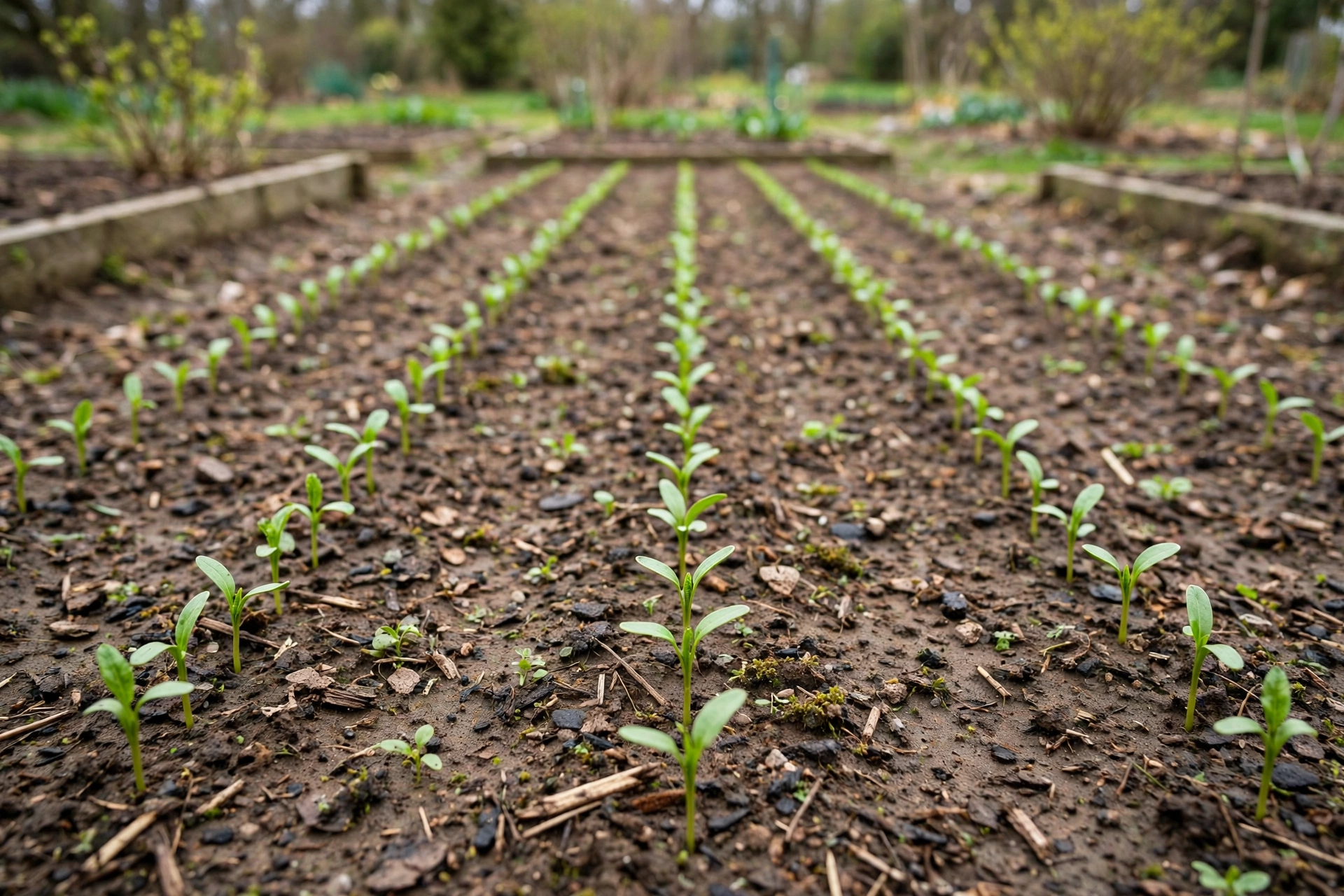
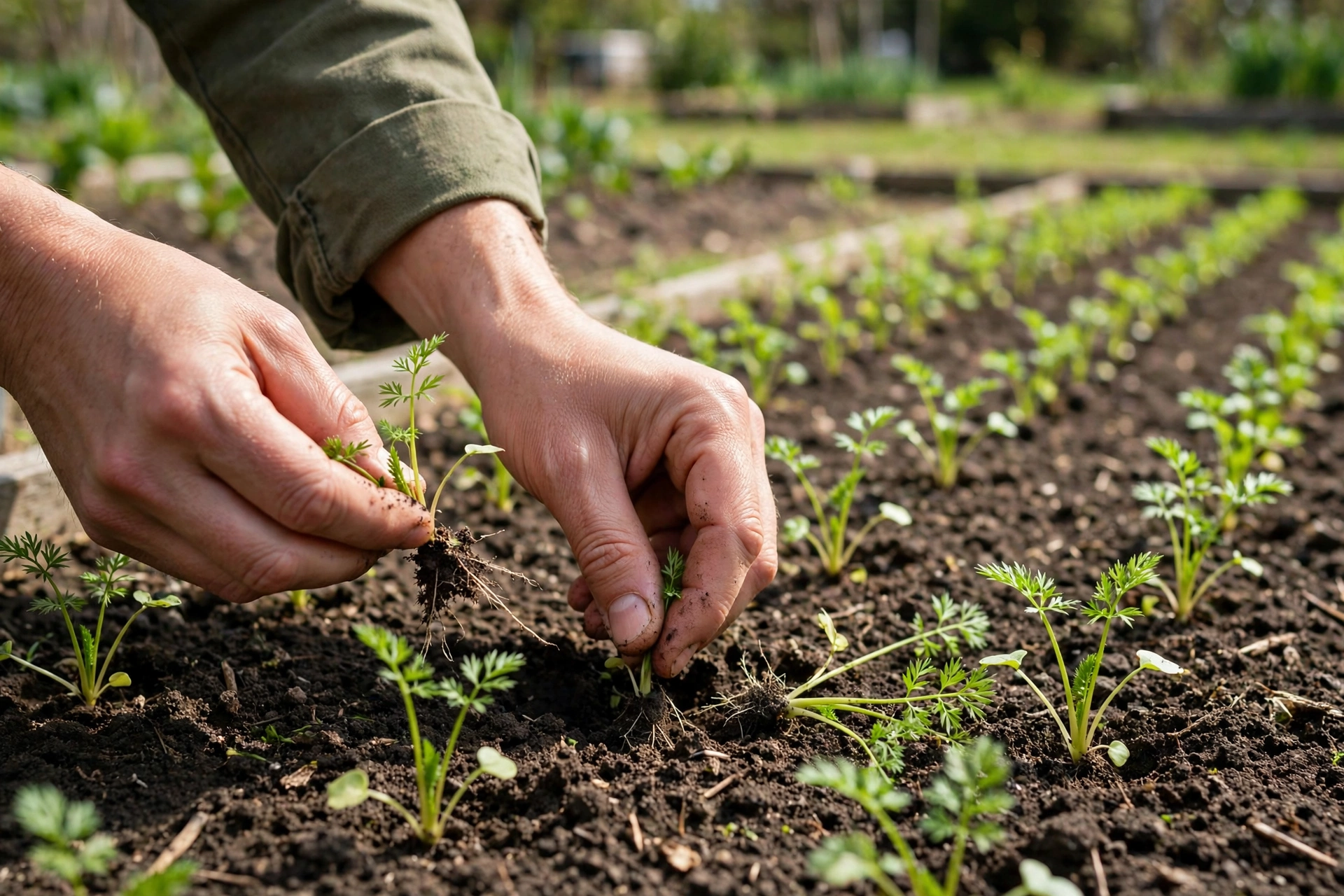
5. Thin to one plant per spot. When parsnip seedlings are 4 inches tall, thin to one plant every 3 inches. Thin turnips to one plant every 4 to 6 inches, and rutabagas to about 6 inches apart once they are a few inches tall. Crowded roots stay skinny — rutabagas especially grow big tops and thin roots when they are packed in. Snip the extras at soil level rather than pulling them, so you do not disturb the roots you are keeping.
The Germination Wait
Parsnips test your patience more than any other seed in the vegetable garden. Ten to twenty-five days is normal, and nothing you do will make it much faster — but two things help. Soak the seed in water for 12 to 24 hours before sowing, which softens the coat and gets moisture inside sooner. And sow fresh seed: parsnip seed loses viability faster than most vegetable seed, so a packet left over from two seasons ago is a weaker bet than a new one.
Turnips are the opposite: 5 to 10 days, and you will see them before you have time to worry. Rutabaga takes about a week to two weeks. If nothing has appeared after the expected window, check the soil before you re-sow — dig up a seed and look. If it is swollen and split, it is still working. If it is dry and unchanged, the bed dried out, and re-sowing into moist soil is the fix.
| Crop | Sow depth | Thin to | Germination | Days to maturity |
|---|---|---|---|---|
| Parsnip | ½” | 1 every 3″ | 10–25 days | 95–125 days |
| Turnip | ¼” | 1 every 4″–6″ | 5–10 days | 30–40 days |
| Rutabaga | ½” | About 6″ apart | 7–15 days | 80–120 days |
Harvest: Let the Frost Do the Work
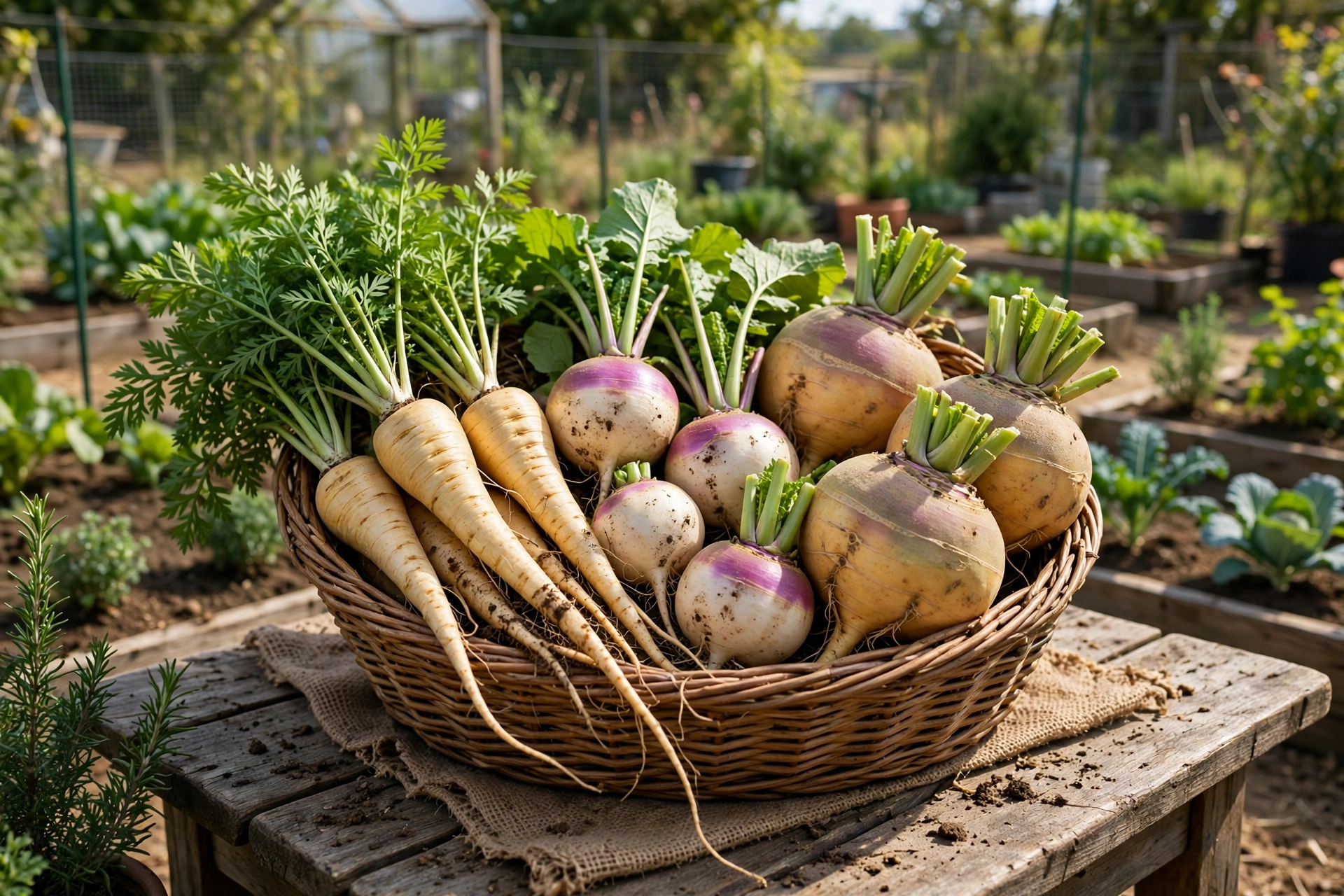
Parsnips are the one crop where waiting is the whole technique. Leave them in the ground for at least two weeks after a hard fall frost — cold turns their stored starch to sugar, and roots harvested after frost are noticeably sweeter than roots pulled early. Dig them with a shovel or garden fork, working wide so you do not cut the root, and if you want to hold them longer, store at 32 to 34 degrees for two weeks before using. You can also leave parsnips in the soil over winter under a few inches of soil and a heavy straw mulch, and pull them in early spring before new tops start growing — spring roots are especially tender and sweet, but once the tops start growing the roots turn fibrous, so do not wait past that point.
Turnips want the opposite treatment: pull them young. Baby turnips at 2 inches across are ready in about 30 days, and full-size roots of 4 to 5 inches are ready in 40. Past 5 inches the quality drops for raw eating, though larger roots are still fine cooked. Take the greens, too — harvest no more than a quarter of a plant’s leaves at a time and the roots will keep growing. Rutabagas are ready when the roots reach 3 to 5 inches across, usually three to four months after sowing, and their flavor sweetens after a light frost or two. They store well, which is the point of growing them: a fall harvest that keeps into winter.
All American Parsnip Seeds — the main-crop parsnip: thickens in as little as 95 days, roots up to 12 inches, one packet sows up to 28 feet. If you are planting one parsnip, plant this one.
All American Parsnip Seeds
The most-reviewed parsnip here, thickening early with roots up to a foot long — the main-crop parsnip.
Market Express Turnip (White Lady) Seeds — the fast root: baby turnips in 30 days, full size in 40, with edible greens. Sow it alongside the parsnips so you have something to eat while they take their time.
Market Express Turnip Seeds (White Lady)
A mild Japanese salad turnip ready in a month — the fast root to sow while the parsnips take their time.
American Purple Top Rutabaga Seeds — the storage root: 4- to 6-inch roots with a sweet, mellow flavor, best after cool weather, and a crop that keeps once it is out of the ground.
American Purple Top Rutabaga Seeds
A sweet, mellow root that stores like a potato and tastes best after cool weather — the fall pantry pick.
What to Watch Next
The sign the sowing worked shows up at the second thinning: an evenly spaced row, one plant every 3 inches for parsnips and every 4 to 6 for turnips, with the extras snipped cleanly, and room for the roots to grow straight. The one mistake that undoes all of it is pulling parsnips before the frost: an early parsnip is a starchy parsnip, and no amount of cooking puts the sweetness back in. Wait for the cold, dig with a fork, and let the season finish what you started. For more on growing root vegetables from seed, see our guide to direct-sowing root vegetables.