Landscape & Leisure is reader-supported. When you buy through links on our site, including Botanical Interests seed links, we may earn a commission at no extra cost to you. Prices change, so click through to confirm current pricing.
Most people buy the heat mat first and figure out the rest later. It is the cheapest piece of the seed-starting setup, it promises faster germination, and it feels like the kind of small purchase that cannot go wrong. Then March arrives, the mat sits under a tray of lettuce that would have sprouted on a cool shelf anyway, and the peppers — the one crop that actually needed the warmth — are still sitting in their packets because nobody bought the light.
The mat is worth it, but only for the right seeds. This comparison settles which ones, what the mat actually does, and when the $29.99 is better spent on a tray instead. The full setup around it is in our seed-starting station guide, and the supplies roundup compares every piece in the kit.
What the Mat Actually Does
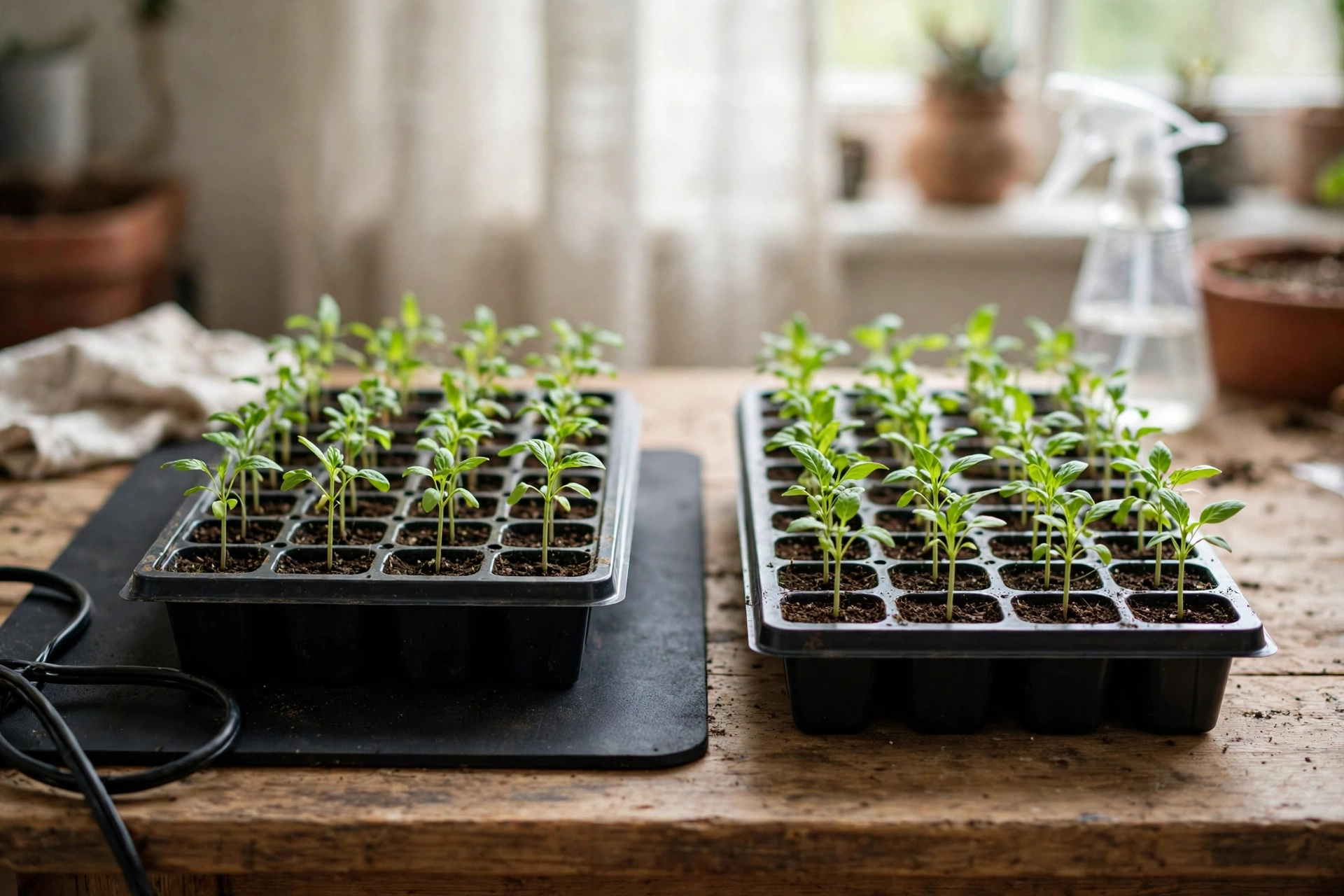
The Epic Seed Starting Heat Mat is a ten-by-twenty-and-three-quarter-inch sheet of heavy-duty PVC that fits a 1020 tray exactly. It draws 20 watts — less than a standard light bulb — and lifts the soil ten to twenty degrees above room temperature. Roll it out, set the tray on top, plug it into a standard outlet. Bottom heat speeds germination, increases growth, and raises the odds that a seed comes up at all.
That is the whole mechanism, and it is worth understanding before you buy: the mat warms the soil, not the air, and warm soil is what a seed reads as spring. A tray on a cold windowsill in a 60-degree room has soil in the fifties, and a pepper seed in fifty-degree soil sits there and waits. On the mat, that same soil runs in the seventies, and the seed gets moving. Gardeners rate the mat 4.7 from 50 reviews, and the recurring theme is the one you would expect: seeds came up faster.
The Seeds That Need It
Peppers, eggplant, and tomatoes are the heat-lovers, and they are the reason the mat exists. Eggplant seed takes ten to twenty days just to germinate, and it wants warm soil for every one of those days — our eggplant timing guide puts the indoor start at ten to twelve weeks before last frost, with heat under the tray from day one. Peppers are the same story on a slightly shorter clock, covered in our pepper timing guide. Tomatoes germinate more readily than either, but they still come up faster and more evenly on warm soil, which matters when you are trying to get a whole flat up at the same size.
If any of those three are on your list, buy the mat. It is $29.99 once, it uses 20 watts, and it will still be on your shelf in ten years. A single tray of peppers that germinates evenly instead of straggling over three weeks is worth more than the mat costs — and a tray that never comes up at all costs you the season, not just the packet.
Pros: lifts soil 10–20°F on 20 watts; fits a 1020 tray exactly; 4.7 from 50 reviews; $29.99.
Cons: no thermostat or timer — one steady setting, so you manage it by unplugging.
BUY IT FOR HEAT-LOVERS
Epic Seed Starting Heat Mat
Ten to twenty degrees of bottom heat for peppers, eggplant, and tomatoes — the fix for a cold windowsill.
The Seeds That Don’t
Lettuce, peas, greens, and brassicas germinate fine at room temperature, and a mat under them gains nothing while it dries the mix out faster. These are cool-season crops that evolved to sprout in cold spring soil, and warm soil does not make them sprout better — it makes them sprout, dry out, and stall. Put the mat under a tray of lettuce and you have spent $29.99 to create a problem the lettuce did not have.
The rule is simple enough to remember: if the crop loves heat in the garden, it wants heat under the tray. Peppers, eggplant, and tomatoes love heat. Lettuce, peas, and kale do not. When in doubt, the packet tells you — a germination temperature on the warm side of 70 means the mat earns its keep, and a cool-season crop tells you so by sprouting in a week on a plain shelf.
With the Mat vs Without: The Short Version
| Crop | Without the mat | With the mat | Verdict |
|---|---|---|---|
| Peppers | Slow, uneven, sometimes nothing | Fast, even germination | Buy the mat |
| Eggplant | 10–20 days, or stalled in cool soil | Steady germination on warm soil | Buy the mat |
| Tomatoes | Comes up, but unevenly | Faster, more even flat | Worth it |
| Lettuce and greens | Sprouts fine at room temperature | Dries the mix faster, gains nothing | Skip the mat |
| Peas and brassicas | Cool-season crops, sprout readily | No benefit; extra heat, extra drying | Skip the mat |
The Catch: No Thermostat, No Timer
The one real knock on the Epic mat is control. There is no thermostat and no timer — it runs at one steady setting until you unplug it. That is fine during germination, when steady warmth is exactly what the seed wants, and it is a problem after the seeds are up, when continued bottom heat dries the mix and pushes soft growth. The fix is manual and simple: unplug the mat the day your seedlings emerge. Its job is germination, not growing on, and once the seeds are up the light takes over. That is the trade-off for $29.99. For most home gardeners, the unplug is not much of a burden.
The Setup the Mat Belongs To
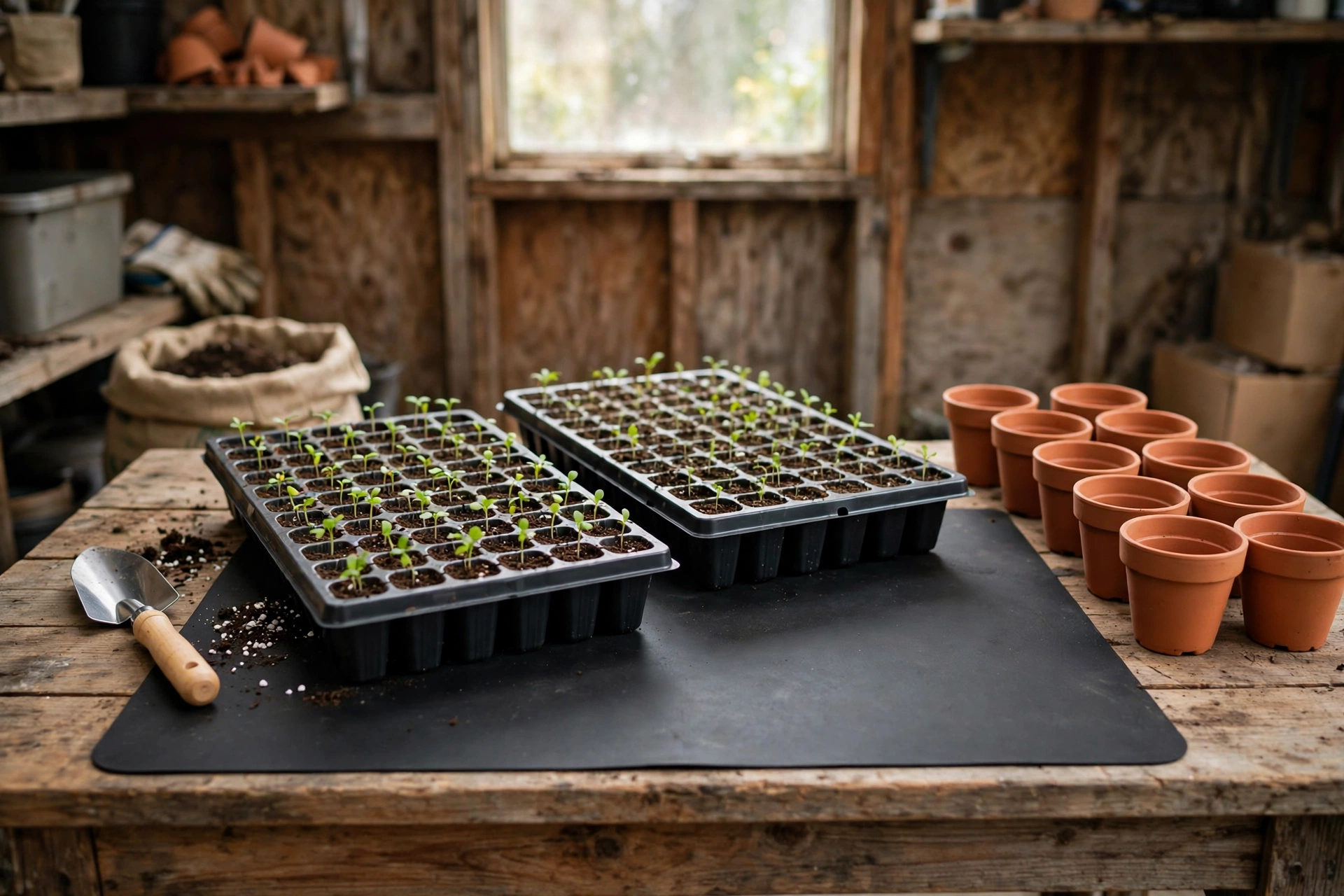
A mat without a tray underneath it is a warm rectangle on a shelf, so the rest of the setup matters. The 1020 bottom tray is what the mat is sized to fit — ten by twenty and three-quarter inches, exactly — and it is the piece that turns the mat into a system: it holds the water, it lets you water from below, and it carries a full flat of cell trays as one unit. At $14.99, with a 4.9 rating from 414 reviews, it is the cheapest piece in the roundup and the one you will use every day of the season.
Pros: holds a full flat of cell trays; makes bottom watering easy; $14.99; 4.9 from 414 reviews.
Cons: it is a tray, not a system — on its own it does nothing, and it needs the cell trays to earn its keep.
BEST VALUE
Epic 1020 Universal Bottom Tray
The $14.99 base the whole setup sits in — and the piece that makes bottom watering effortless.
On top of the tray sit the 6-cell trays: thick recycled plastic, five times thicker than a standard tray, air-pruning slots in every cell, finger holes for pushing seedlings out without tearing them. Twelve fit one bottom tray. Gardeners rate them 4.9 from 579 reviews, and a six-tray pack runs $19.99.
Pros: 500% thicker than standard trays, with air-pruning slots and finger holes; 4.9 from 579 reviews; twelve fit one bottom tray.
Cons: a six-tray pack is more than a one-window gardener needs in a year — split it with a neighbor.
BEST OVERALL
Epic 6-Cell Seed Starting Trays
The tray everything else is built around — thick, reusable, and sized for a full flat of seedlings.
Bottom Line
Buy the mat if peppers, tomatoes, or eggplant are on your list — $29.99 once, 20 watts to run, and the difference between a flat that comes up together and a tray that straggles or never sprouts. Skip it if you only start lettuce, peas, and greens, and put the money toward a second bottom tray instead. And whichever way you go, unplug it the day the seeds emerge, and let the light take over from there. If your seeds have failed before, our guide to why seeds fail to germinate covers the other reasons a tray stays empty.