The light starts coming back before the ground does, and that gap is the whole reason to start peppers indoors. By the time the soil outside is warm enough for them, a pepper sown directly would still be a seedling — so Zone 4 gardeners give them a head start under lights, and the only question is when to begin.
The date to work backward from
Peppers go outside only after the last frost, and in Zone 4 that falls around mid-May. Count back about eight weeks from the day you plan to transplant, and you land in mid-March — that is the week to sow. Sow much earlier and the plants outgrow their pots before the garden is ready; sow later and the first peppers ripen after the season has already started to turn.
The calendar gives you the shape of the season, and your own last-frost date fills in the exact day. A county extension office or a frost-date lookup by ZIP code gives it to you. If your date runs a week or two later than mid-May, shift the sowing date by the same amount — the eight weeks stay the same. Our seed-starting date calculator works the same math for any crop and any frost date.
What peppers need to germinate
Pepper seeds are slow and they want warmth. Sow them a quarter-inch deep in seed-starting mix, keep the mix damp, and give them bottom heat near 80°F — a heat mat is the simplest way to get there. At that warmth, seedlings usually appear in about a week. In a cool room they take much longer, so the mat earns its keep.
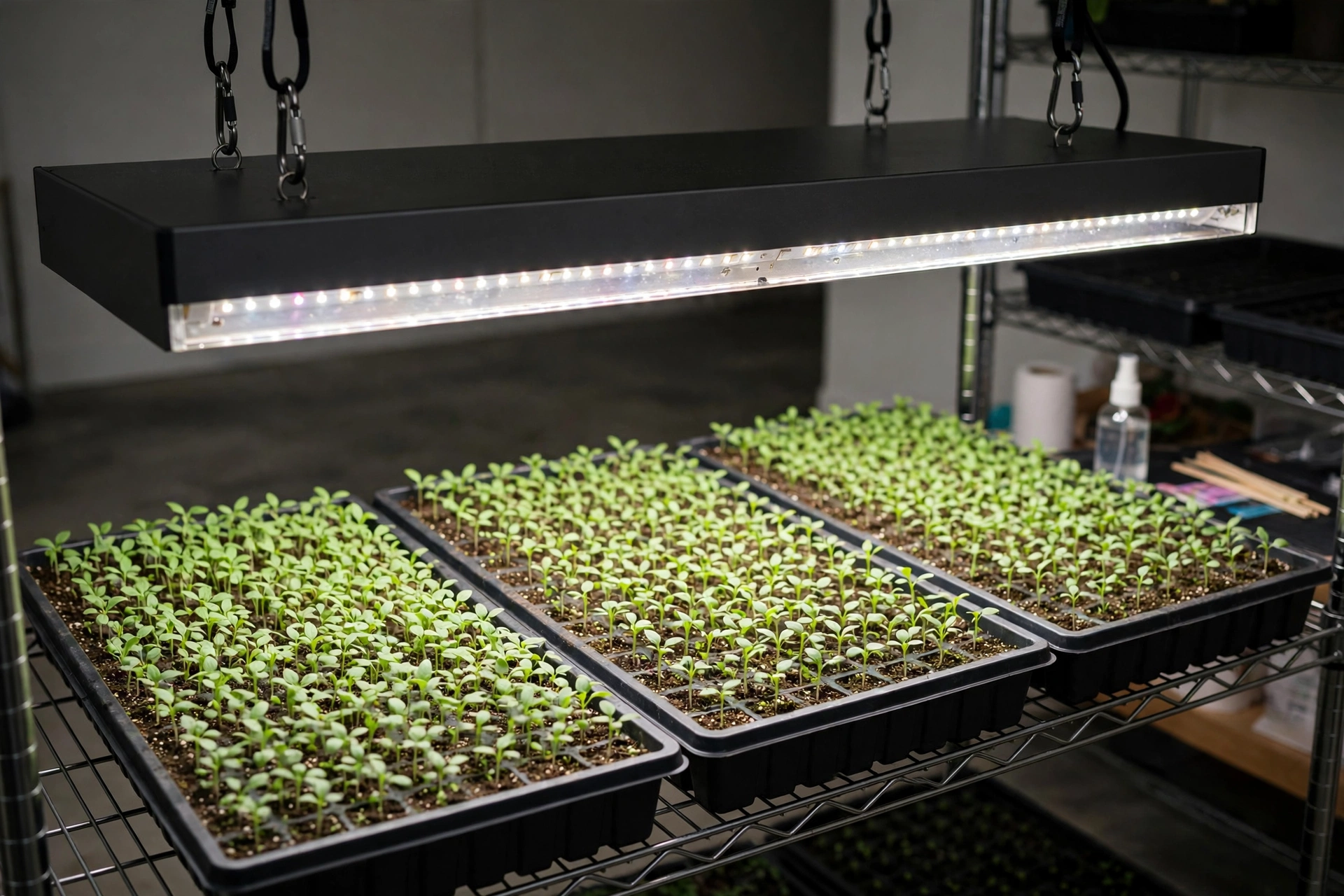
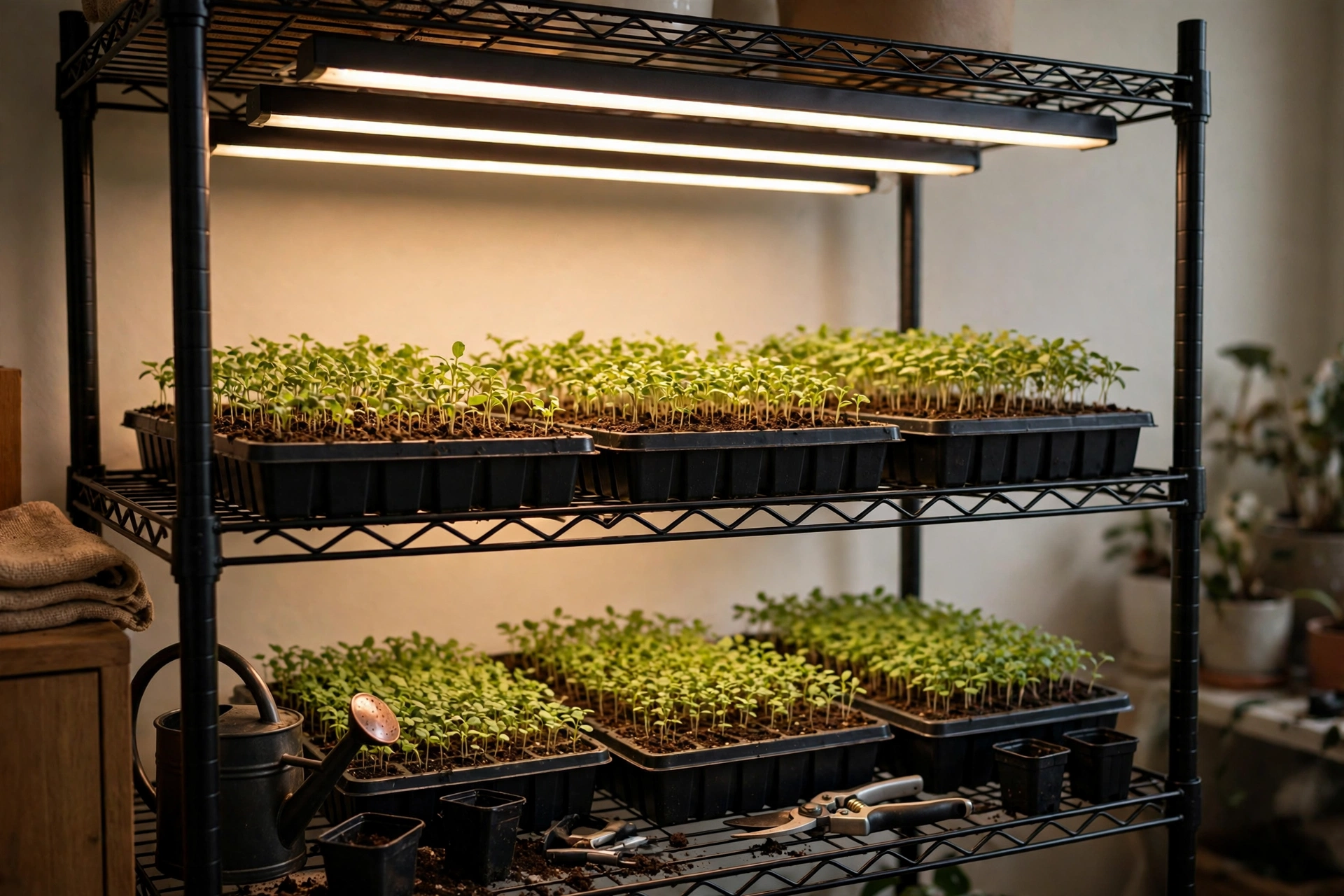
Once they sprout, take the tray off the heat and give the seedlings strong light close above them — 2 to 4 inches for fluorescent or LED bars, on a timer for 14 to 16 hours a day. Peppers stretch toward weak light like any other seedling, so keep the light close from the start. Our guide to fixing leggy seedlings covers the rescue if yours have already stretched, and our grow light roundup covers which light fits your setup.
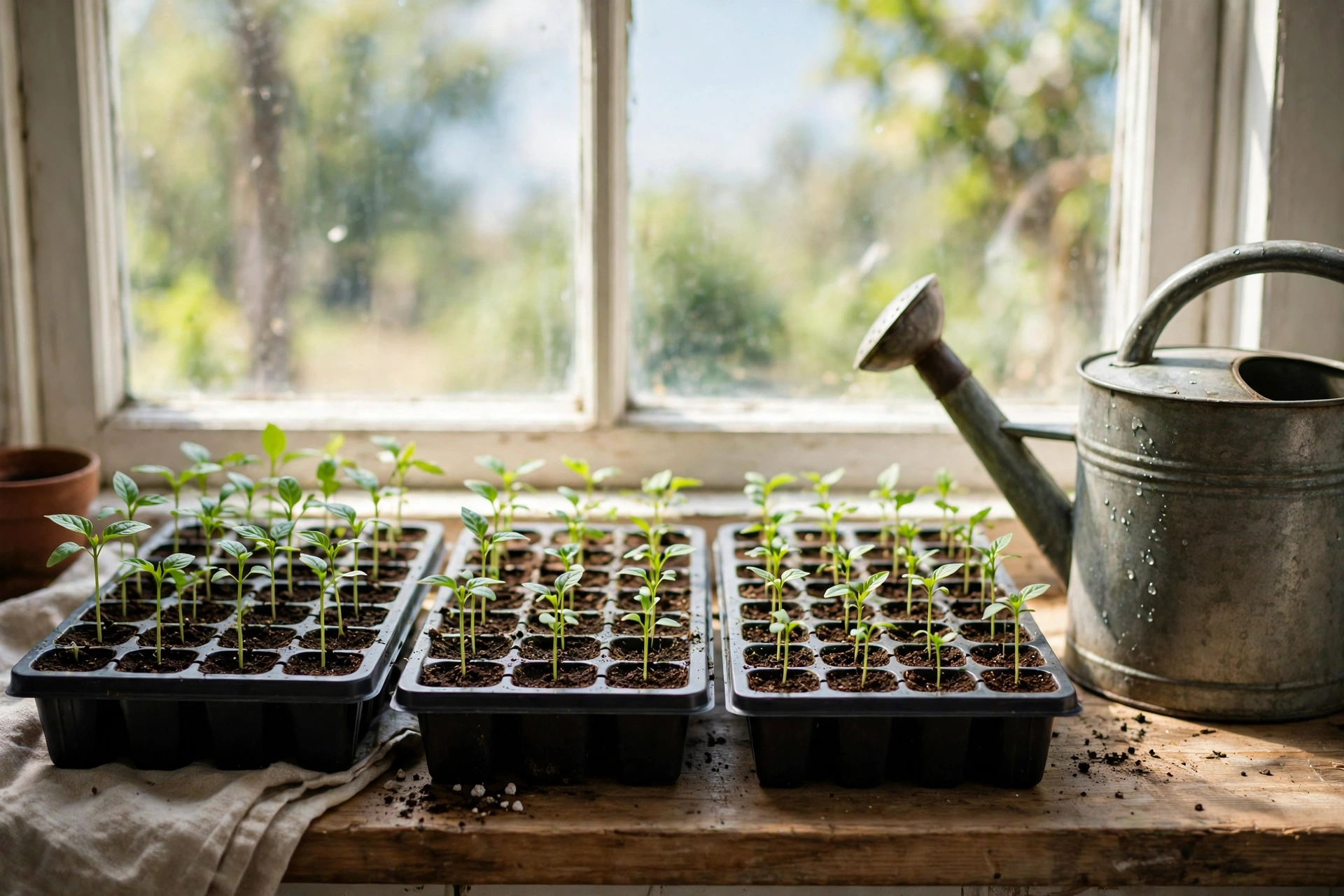
When the seedlings show their first true leaves, move them into 4-inch pots of seed-starting mix. Give them room, and they will spend the next few weeks growing the sturdy stems they need for the garden.
Moving them outside
Peppers are the last warm-season crop to leave the house, and the soil decides the day. Wait until the soil is at least 60°F and the nights stay warm — a pepper set out into cold soil sits still for weeks and never quite catches up. Two weeks before transplanting, start hardening the plants off: a few hours outside in the shade, a little longer each day, until they can stay out overnight without trouble.
Our guide to hardening off seedlings walks through the two-week routine step by step, and our seed-starting station guide covers the trays, lights, and heat that make the whole setup work. If you are starting from the beginning, our beginner’s guide to starting seeds indoors covers sowing itself.
The season in three moves
Sow in mid-March, keep them warm and close to the light, and set them out once the soil is warm — eight weeks of patience indoors buys a full season of peppers outside.