The seedlings came up fine, and then they kept going up — tall, pale stems leaning toward the window, leaves spaced so far apart the plants look like they are reaching for something they cannot find. They are. Leggy seedlings are stretching for light, and once you know what to look for, the cause is usually obvious.
What causes leggy seedlings
Three things stretch a seedling, and they often work together. Light is the usual culprit, but warmth and crowding can do the same damage, so it pays to sort out which one you are looking at before you change anything.
1. Not enough light — the most likely cause
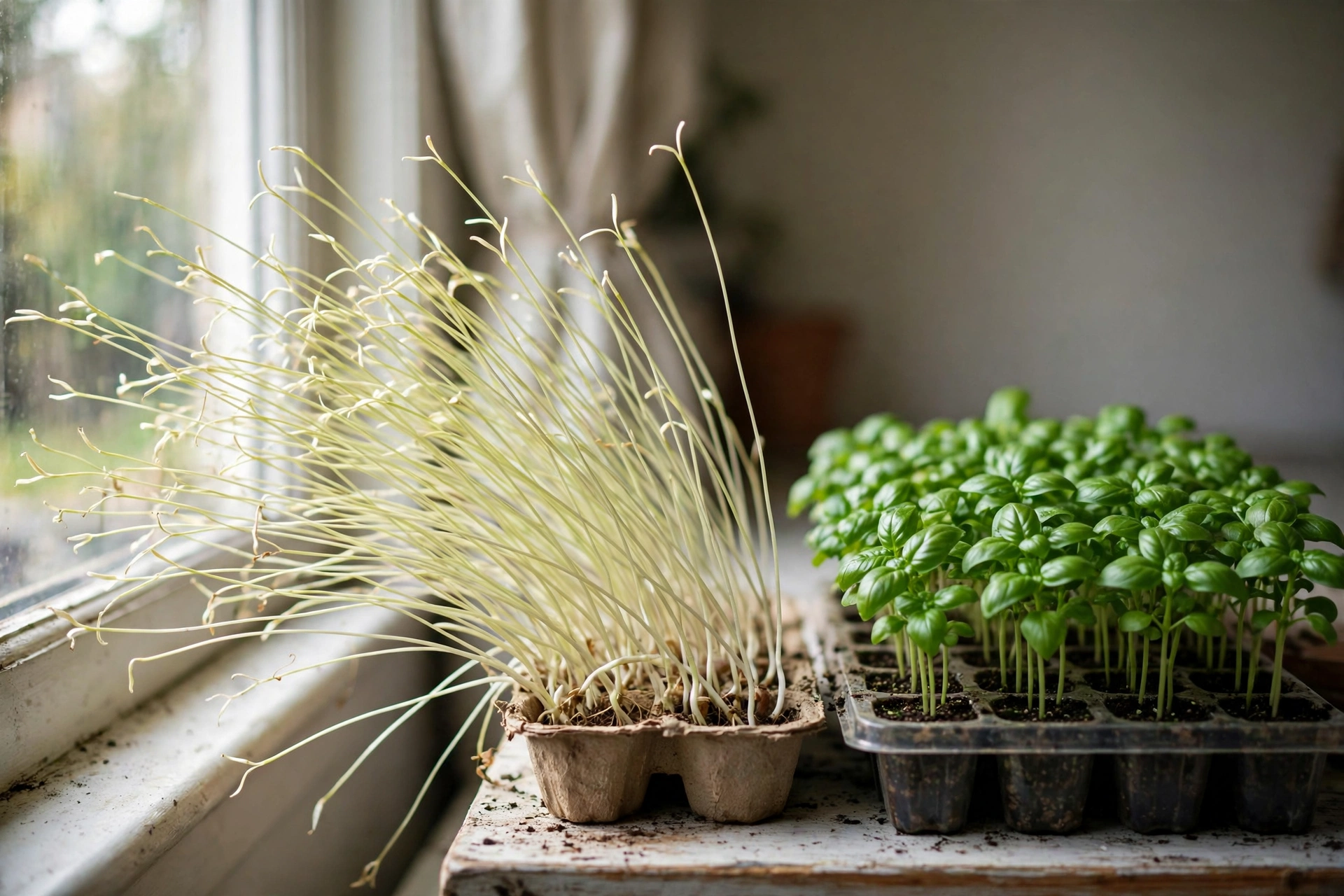
This is the cause most of the time. Seedlings need strong light from directly above, and a windowsill — even a south-facing one — rarely delivers it; the light is weaker than it looks and it comes from the side, so stems bend and stretch toward it. The tell is the direction: stems lean hard toward the window, and the newest leaves are pale. If your seedlings look like that, light is the problem, and the fix below starts tonight.
2. Too warm after sprouting
Heat helps seeds germinate, and then it works against you. A tray left on a heat mat or near a warm vent after sprouting grows fast and soft, with long stems and thin leaves. The tell is the look: stems are long but the leaves are a healthy green, and the tray sits somewhere warm. If that matches, light may be fine and warmth is doing the stretching.
3. Crowded or overwatered
Seedlings packed shoulder to shoulder stretch to outgrow each other, and a tray kept constantly wet grows soft stems that flop. The tell is the crowd: stems tangle, lower leaves yellow, and the surface of the mix never dries between waterings. Thin the tray and let the mix dry a little between waterings, and the next batch stays short.
How to fix leggy seedlings
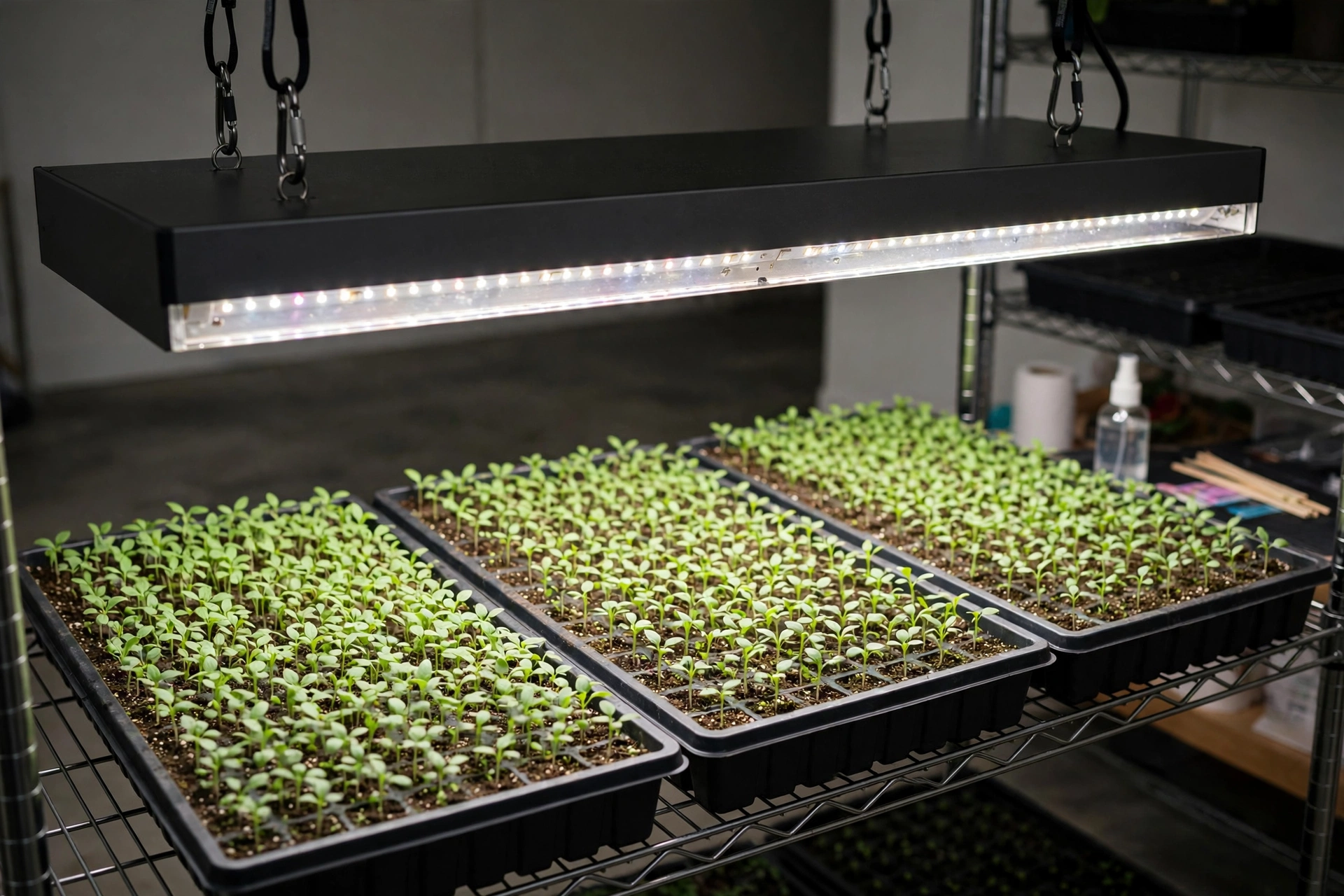
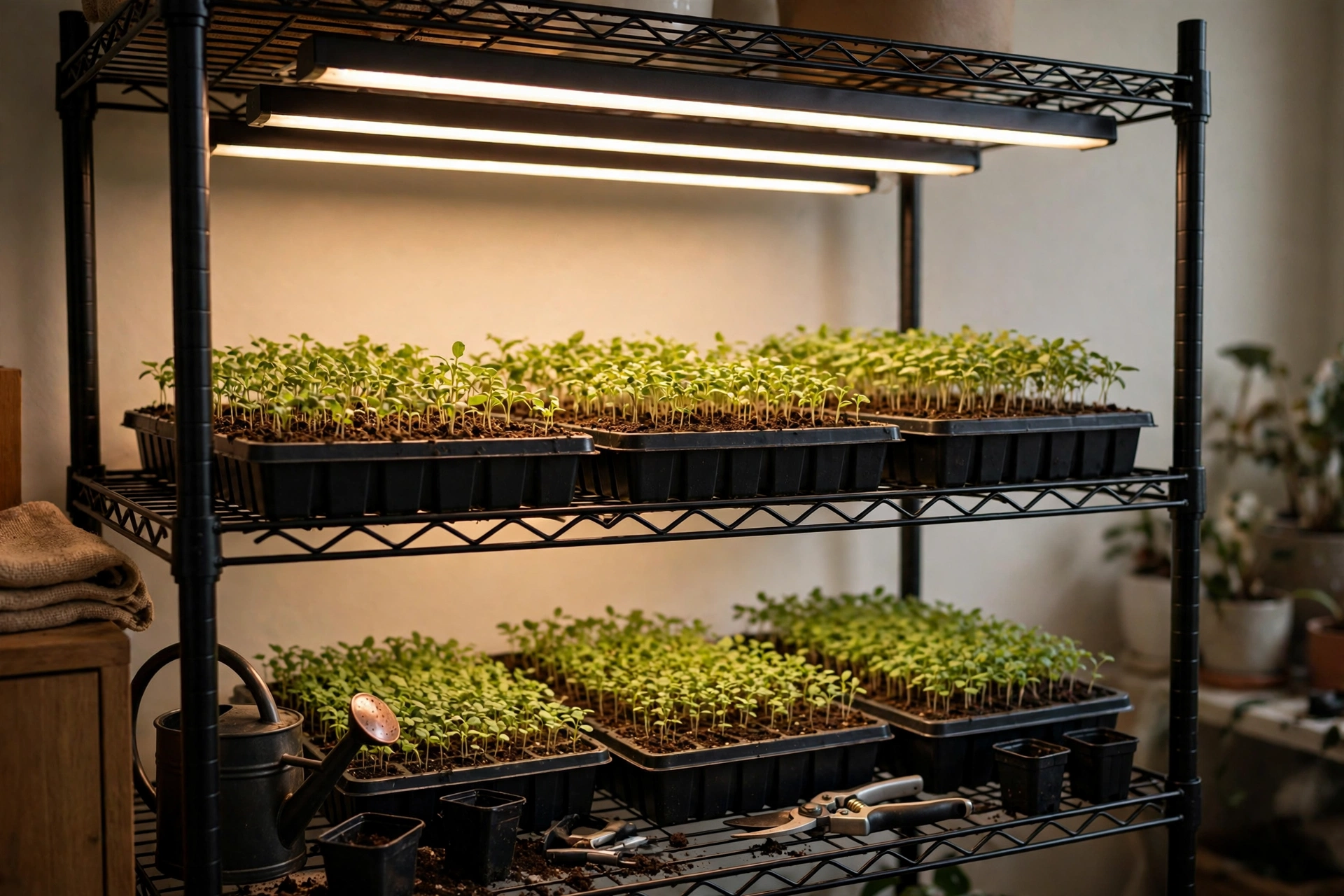
Move the light closer. Hang fluorescent or LED bars 2 to 4 inches above the seedlings and raise them as the plants grow. That gap is the whole trick — close enough that the light is strong, far enough that it never scorches a leaf. Our guide to how high grow lights should hang works through the setup for different fixtures, and our grow light roundup covers which light fits which setup.
Give them 14 to 16 hours of light. Put the lights on a timer for 14 to 16 hours a day, with a dark night in between, because seedlings need darkness to grow properly. A sunny windowsill plus a few hours of lamp light will not do it — the lamp has to carry the full 14 to 16 hours itself.
Cool the room down once seeds sprout. Take trays off the heat mat as soon as seeds sprout and move them somewhere cooler, around normal room temperature. Warmth gets the seeds going, but once they sprout, cooler air is what keeps the stems short and sturdy.
Thin crowded cells. Snip the weakest seedling in each cell at soil level, leaving the strongest one room to grow. Pulling them out disturbs the roots of the one you keep.
Give them air. A small fan on low, a few feet away, keeps the air moving, and stems grow sturdier when they feel a little air movement — the same signal wind gives plants outdoors. Keep it indirect; a blast straight at the tray dries the mix out.
Can leggy seedlings be saved?
Most of them, yes — once the light is fixed, new growth comes in short and sturdy, and the stretched stem below it stops mattering. Tomatoes are the easiest rescue of all: when you pot a leggy tomato up, bury the stem deeper, and it grows roots along the buried part. Most other seedlings will not do that, so do not bury peppers or squash the same way — for them, the fix is the light, and the next sowing is the fresh start.
If a seedling has flopped over and the stem has gone thin and brown at the base, it is damping off rather than stretching, and that seedling is done. Start a fresh cell, keep the mix damp rather than wet, and give the new sowing the light it needs from day one. Our seed-starting station guide and our beginner’s guide to starting seeds indoors cover the setup that keeps the next tray healthy.
What healthy seedlings look like
Give the tray close light, a timer, and cool air, and the new leaves come in close together on short, sturdy stems. That is the sign the fix worked. Keep the lights 2 to 4 inches above the tops as the plants grow, and the next tray will never need rescuing.