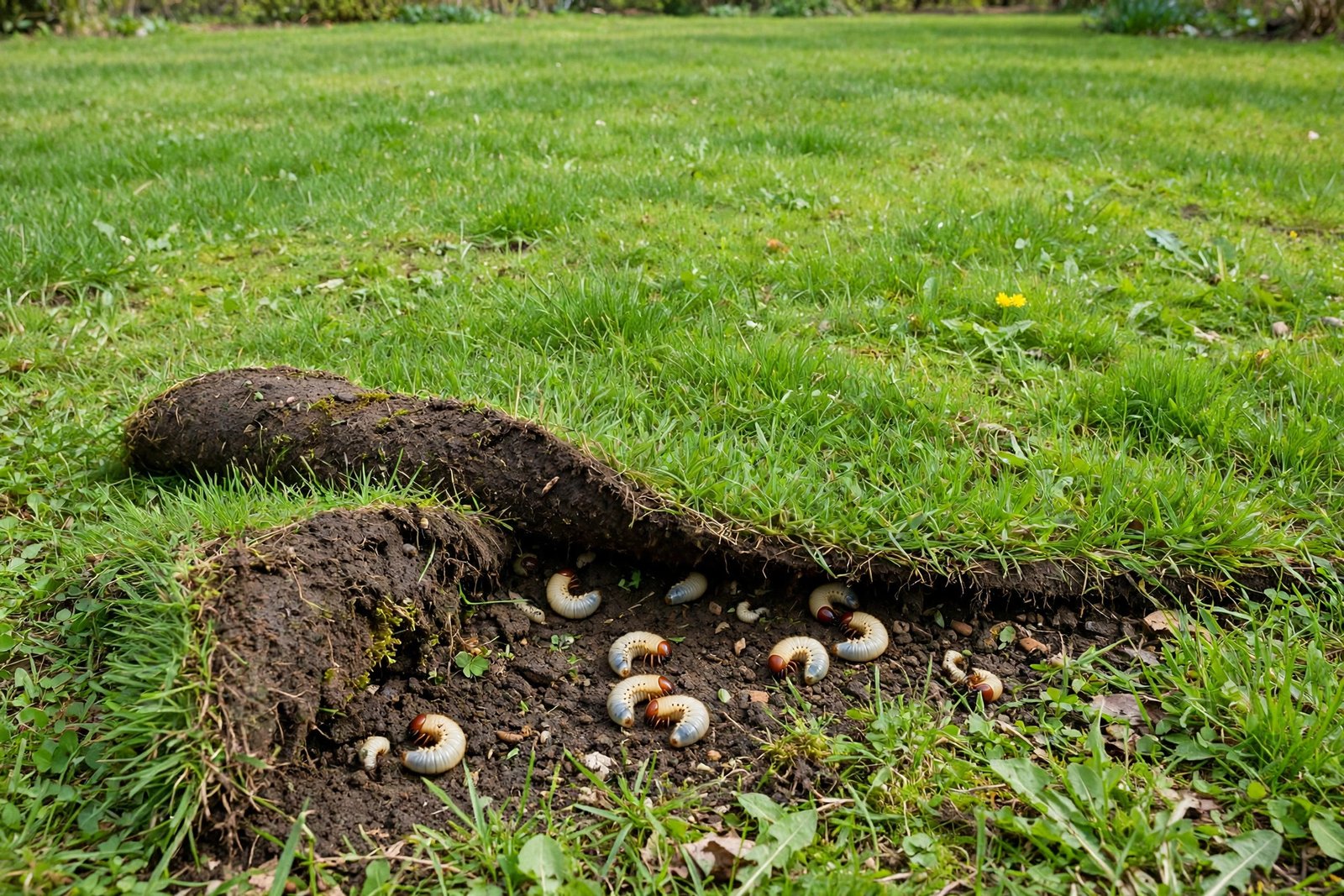
A lawn with grub damage gives itself away in a specific way: irregular brown patches in late summer that do not respond to water, and turf that lifts and peels back like a loose carpet because the roots underneath are simply gone. If that was your lawn last season, the diagnosis is already made — and the useful thing to know is that the treatment for it is not applied when you see it. By the time grubs are big enough to destroy roots, the prevention window closed months earlier. Grub control is two different jobs wearing one name, and spring belongs to the first of them.
First, confirm the lawn actually has a grub story
Not every brown patch is grubs, and preventer spread on a lawn that never had them is money spent treating a symptom you imagined. The check is mechanical: cut three sides of a square foot of turf at the edge of a damaged area, fold it back, and count the white, C-shaped grubs in the soil beneath. Healthy, well-watered lawns tolerate up to about 10 grubs per square foot without visible damage, a threshold extension services use because the grass outgrows the feeding. Counts well above that — or any count in a lawn that peeled last year — justify treatment. The full identification walkthrough, including the look-alikes, is in how to find out if you have grubs in your lawn.
The life cycle sets the calendar
Japanese beetles and chafers lay their eggs in the lawn in summer. The eggs hatch into small grubs that feed through late summer and fall — that is when the carpet-peeling damage happens — then overwinter deep in the soil and finish feeding briefly in spring before pupating. Two facts in that cycle do all the strategic work. The destructive feeding is done by young grubs in late summer and fall, and young grubs are far easier to kill than large ones. Prevention, therefore, means having the product in the soil before the eggs hatch, waiting for the grubs that are coming rather than chasing the ones you can see.
The preventive window: spring, and earlier than you think
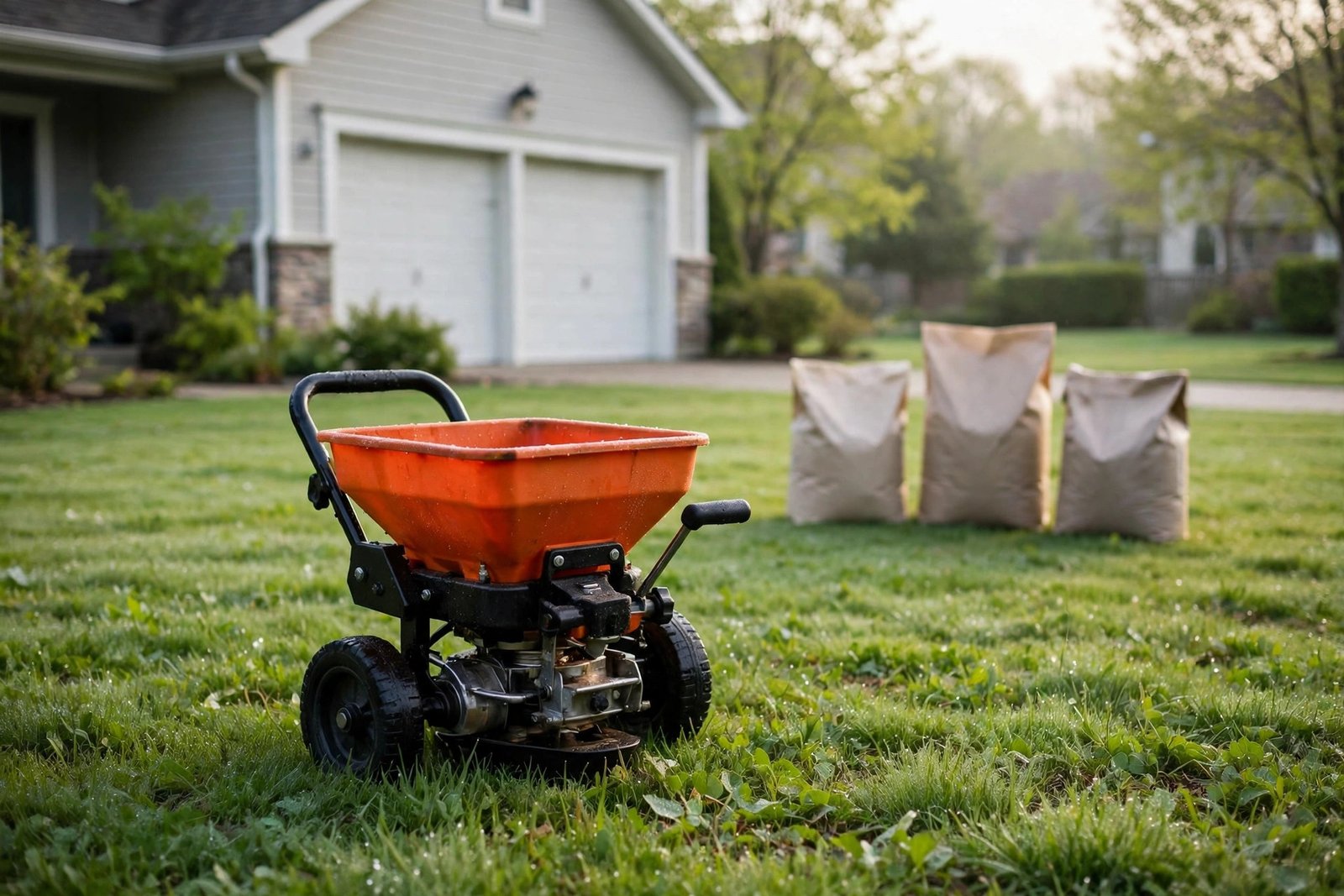
Chlorantraniliprole — the active in Scotts GrubEx — is the forgiving preventive, and it needs the longest head start. It moves into the soil and root zone slowly, so it goes down in spring, well ahead of egg hatch, and it must be watered in. Its virtue is persistence and a gentle profile for bees and earthworms relative to older chemistry; its demand is that you act before there is anything to see. If grubs took your lawn last year, this is your spring product, and this is its season.
Imidacloprid preventives work on a tighter schedule, applied closer to egg hatch in early summer, because they break down faster in the soil. Applied in spring on the chlorantraniliprole timetable, an imidacloprid product can fade before the eggs it was meant for have hatched. Same shelf at the store, different clocks — the label’s timing window is the product, in a real sense.
Both preventives share one non-negotiable: water them in, roughly half an inch, soon after application. The target zone is the soil where eggs will hatch, and granules sitting on top of the thatch protect nothing.
The curative window is a different product entirely
If late summer arrives with active damage — grubs present, turf lifting, counts above threshold — that is a job for a curative insecticide such as trichlorfon, applied when grubs are feeding near the surface and watered in immediately. Curatives do nothing as spring preventives and preventives do little against large fall grubs, and confusing the two is how homeowners conclude that grub control does not work. It works. It just refuses to work on the wrong schedule. In the spring lawn care hub, grub prevention sits in the late-spring steps — after the lawn is growing, before the beetles fly.
Spring grubs you find while digging: leave them be
One diagnostic caution for spring specifically. The large grubs you turn up while gardening in spring are last year’s survivors, close to pupating, feeding very little now, and nearly impossible to kill with insecticides at that size. Finding a few is not a call for a curative application — it is information. It tells you beetles laid eggs in your lawn last summer, which makes you a candidate for the preventive window described above, applied for the generation arriving this summer. That distinction — treating the next generation in spring rather than the current one — is the whole logic of grub timing, and it is where this job fits the spring lawn care calendar.
Frequently asked questions
My lawn has never had grub damage. Should I prevent anyway? No. Do the square-foot check in a few spots in late summer; if counts stay under threshold and the turf is rooted tight, skip the product and keep the information for next year.
Birds and skunks are digging at my lawn. Is that grubs? Often, yes — skunks especially excavate for grubs at night, and their digging is a fair early-warning sign. Confirm with the turf check before treating; animals also dig for earthworms, which you want to keep.
Does grub preventer hurt the lawn or the soil life? Chlorantraniliprole is notably selective and is the gentlest of the options here. None of these products, used at label rates and watered in, set a lawn back — the grubs they prevent do considerably worse.
If grubs peeled your lawn last year, put chlorantraniliprole down this spring and water it in, and let the product wait in the soil for a generation that has not hatched yet. If you have never seen damage, check before you spend. Grub control rewards the lawn owner who treats the calendar instead of the symptom — every time.