This Weekend in Your Yard: November 21–22, 2026
The light goes early now, and it goes all at once — one minute the yard is copper, the next it is blue and finished for the day. Late November has its own kind of quiet: the beds are mostly bare, the last leaves are down or determined to stay up, and whatever is still green out there has earned it. This weekend is not about starting anything grand. It is about closing the season kindly, in the short bright hours, so that spring finds a yard that was put to bed on purpose.
Find your region below and work its short list. Every task here is conditional in the way late November always is: if your ground has already frozen hard, some of this waits or skips entirely, and if your soil still digs easily, you have more weekend than the calendar suggests.
Northeast
Zones 5–7 are watching the ground turn stubborn, and the work this weekend is the kind you do with cold fingers and a clear conscience. If the soil still gives under a fork, finish emptying the beds: spent tomato and squash vines go to the municipal pile or the hot compost, never onto next year’s bed, because overwintering foliage is where next summer’s diseases spend the winter rent-free.
Mulch the garlic and the strawberries — after the cold, not before
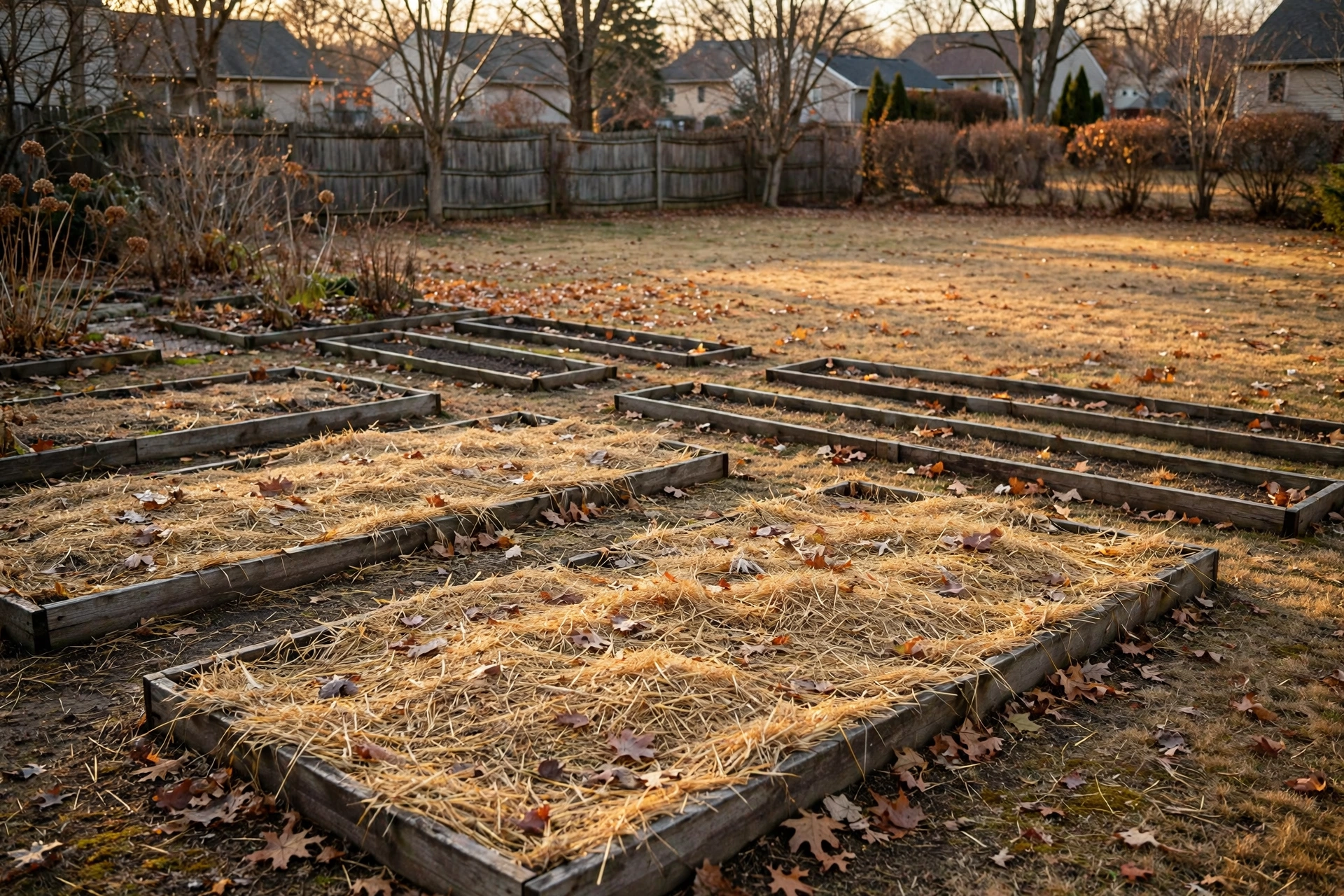
Garlic planted last month and the strawberry bed both want their winter blanket only once the ground has chilled and stayed chilled, because mulch laid over warm soil invites rodents to move in for the season and can coax growth that the next freeze will punish. A loose four inches of straw or shredded leaves, laid this weekend in most of Zone 6 and 7 and a little earlier in Zone 5, is the whole job — and if you are still deciding between garlic types for a last-minute row, the hardneck and softneck differences are worth two minutes before you buy.
Drain and store the hoses
Whatever else the weekend holds, walk every hose to its highest point, let it run empty downhill, coil it loose, and get it under cover, because a hose left charged in a hard freeze splits along its length and you find out in April. Outdoor faucets get shut off from inside where the house allows it, and the spigot left open to drain.
Southeast
Zones 7–9 are in the gentle half of the year, when the vegetable garden changes casts instead of closing. The summer crops are done, but the cool-season cast — kale, collards, carrots, lettuce — is settling in happily, and this weekend suits the slow work of feeding the soil they are growing in.
Sow a cover crop on every empty bed
Any bed that will sit empty until spring earns a stand of crimson clover or annual ryegrass this weekend, sown into soil that is still warm enough to germinate it. The roots hold the bed against winter rain, the tops shade out the winter weeds, and in spring you turn under a green manure instead of buying fertility in a bag. Beds still carrying fall vegetables can wait; the empty ones should not.
Keep the fall greens watered through dry spells
November rain in the Southeast can vanish for two weeks at a stretch, and young greens sulk quietly rather than complain. An inch of water a week, delivered in one deep soaking, keeps roots growing down instead of waiting at the surface, and a light row cover on the nights that threaten frost carries tender lettuce through without drama.
Midwest
Zones 4–6 have the shortest margin in the country this weekend: the ground may still be workable on Saturday and iron by Thanksgiving. Spend the workable hours on the jobs that frozen ground cancels outright, and let everything else be a pleasant extra.
Plant the last bulbs where the soil still digs
Tulips and daffodils that are still sitting in their bags are not lost — if a spade still goes in, they can still go in, planted at three times their height in depth and watered once to settle the soil. Bulbs in frozen ground are a different story, and those are better potted up and held in an unheated garage than forced into ice. What decides it is not the date; it is whether the soil crumbles or rings.
Protect the roses and young trees before the deep cold
Once a hard freeze has knocked the leaves off, mound eight to ten inches of soil or compost over the crown of each hybrid tea rose, and wrap the trunks of young, thin-barked trees with a light-colored guard against sunscald, because the winter injury that splits a young maple rarely happens on the coldest night — it happens on the bright afternoon after it. Knowing which of your remaining vegetables shrug off a light frost also tells you what still needs covering this weekend and what can simply be harvested and finished.
South Central
Zones 7–8, from Texas across to the Gulf, are gardening in the season everyone else is dreaming about. The heat has finally relented, the soil is kind, and this weekend’s list is planting, not protecting.
Set out onions, garlic, and the winter greens
Short-day onion transplants and garlic cloves planted now root through the cool months and size up in spring, and a fresh sowing of spinach, mustard, and lettuce every two weeks keeps the cutting garden continuous rather than feast-and-famine. Work compost into the beds as you plant, while the soil is open and easy, and mulch lightly to hold the moisture that winter winds pull out of raised beds.
Plant a tree — this is your season for it
Fall planting gives a tree a whole cool season of root growth before summer asks anything of its leaves, which is why Texas and Gulf gardeners are told to plant trees now rather than in the spring rush. Dig wide rather than deep, set the root flare at grade, water deeply once, and mulch in a broad ring that keeps the mower and the string trimmer at a respectful distance.
Mountain West
Zones 4–7 at elevation live with the widest swings in the country — a Saturday in the fifties can hand off to a Monday below zero — so this weekend’s work is about water and protection, in that order.
Water the trees and shrubs deeply if the fall has been dry
Evergreens keep losing water through their needles all winter, and they can only replace it from soil that went into the freeze moist. If your autumn has been dry, give trees and shrubs one long, slow soaking this weekend while the ground is still open, paying attention to anything planted this year and anything on a south or west exposure. Dry roots freeze harder than moist ones; this single watering is the cheapest winter insurance a high-country garden gets.
Finish the sprinkler blowout and check the mulch line
Any irrigation line not yet blown out is living on borrowed time at elevation, so finish that job before the next deep freeze rather than after it. Then walk the beds once: mulch that has thinned to bare soil over crowns and roots gets topped back up to three or four inches, pulled a few inches clear of trunks and stems.
Pacific West
Zones 7–9 along the coast are entering the rainy season that does next summer’s watering in advance, and the weekend’s work follows the rain rather than fighting it.
Sow wildflower and lawn seed where the rains can raise it
Fall-sown wildflower seed and overseeded lawn patches germinate in the cool, wet weeks ahead and establish roots while almost nothing is competing with them. Scatter, rake in lightly, and let the season’s rain do what no sprinkler schedule matches. Bare soil anywhere else in the garden wants the same logic in cover-crop form, so winter storms move water through roots instead of carrying your topsoil toward the street.
Clean the gutters and settle the patio for the wet months
The first big storms find every neglected gutter, so clear them this weekend while the ladders are still a choice rather than an emergency. Cushions and anything that mildews should already be stored dry — if yours are still out, storing them properly now is the difference between a spring patio and a spring shopping trip. A swept patio, drained planters moved out of the freeze pockets, and tools wiped and oiled finish the weekend’s list.
Where this week’s list comes from
This edition was aggregated from a few authoritative seasonal checklists: the University of Minnesota Extension November garden checklist, the Chicago Botanic Garden’s November checklist, Texas A&M AgriLife’s fall vegetable gardening guidance, and Garden Design’s November checklist for the Pacific Northwest. Where a task could not be supported by those sources, it was left out.