This site contains product affiliate links. We may receive a commission if you make a purchase after clicking on one of these links.
This is the weekend the year turns. The light goes early, the porch light comes on earlier, and the yard has that particular late-October look — leaves down or coming down, the beds going quiet, the grass holding its last green. The garden feels it before you do, the way it does every year.
You know this weekend. It is the one where you stand in the yard with a coffee going cold and take stock: what still matters, and what can wait until spring. Most of it can wait. A few things can’t — the planting window that closes when the ground freezes, the last mow before the snow, the hoses drained while it is still a ten-minute job and not a repair. That is the whole list, and it is short on purpose.
Find your region below. The timing goes by your own ground — whether it has frozen, whether you have had a hard freeze, what zone you are in — so if a window has already closed where you live, skip it and move on. Next weekend will have its own list.
Jump to your region: Northeast · Southeast · Midwest · South Central · Mountain West · Pacific West
Northeast
Zones 3 through 7. Frost is here or close, and the ground has not frozen solid yet in most places.
Plant garlic this weekend, if you have not
Garlic goes in four to six weeks before the ground freezes, and that window is closing across the Northeast. The Farmers’ Almanac regional fall guide lists garlic among the crops still worth planting in northern states this late, and the Chicago Botanic Garden notes that fall bulbs can go in into November as long as the ground has not frozen — if your soil is still workable, plant now, and if it is frozen, the window has passed. Not sure whether you are too late? Is it too late to plant garlic in late October? walks through the timing by zone.
Mulch the leaves with the mower
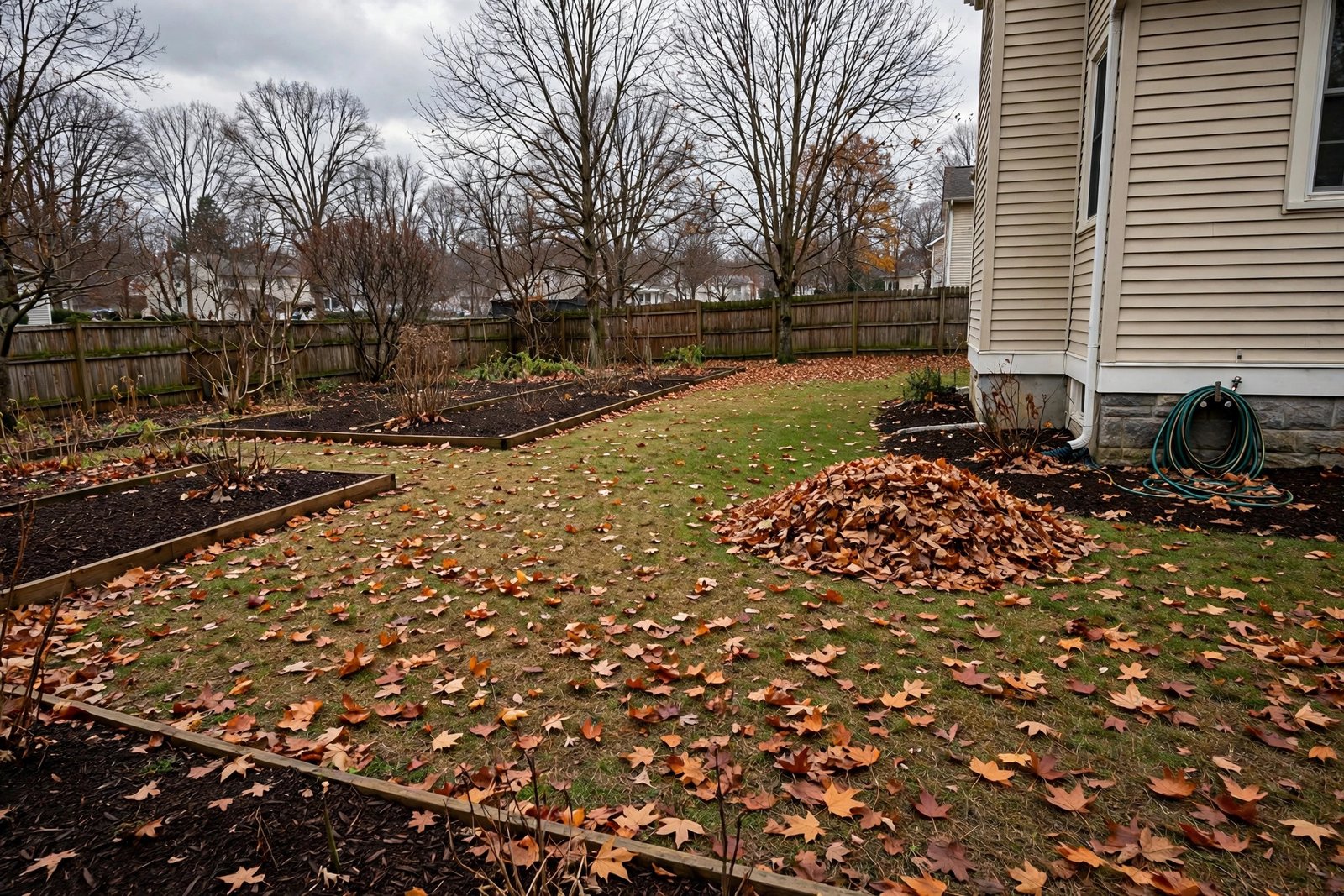
University of Minnesota Extension’s November garden checklist puts it simply: mulch tree leaves as you mow, even if the grass has stopped growing. If the leaves are so thick you see more leaf than grass, collect them from that point on and compost them or use them elsewhere. Shredded leaves make good mulch for beds, and the Chicago Botanic Garden’s November list recommends saving shredded leaves to mulch perennial beds once the ground has frozen.
If the leaf volume is winning, how to choose a leaf mulcher covers what actually matters in a machine for this job.
Drain the hoses and put the tender pots away
While you are out there, the Chicago Botanic Garden’s November checklist says to disconnect outdoor water sources before temperatures drop below freezing and drain hoses before storing them indoors. Do it this weekend, while it is still a ten-minute job and not a repair. The same list says to clean ceramic, cement, and terra-cotta containers and store them somewhere frost-free.
Southeast
Zones 7 through 9. The fall vegetable garden is the main event, and the first frost is a local question, not a regional one.
Keep planting cool-season vegetables
In the Mid-Atlantic and Southeast, the Farmers’ Almanac regional guide lists collards, kale, mustard greens, lettuce, radishes, turnips, beets, and carrots as fall plantings that often run from late summer into fall, depending on local frost dates. Broccoli and cabbage transplants are still useful where enough growing time remains, and in the upper Southeast, where the ground is still workable and the freeze is weeks out, garlic planted now still has time to root before winter. Check your own first-frost average and the days to maturity on the packet, and count backward. A frost date is an average, not a promise.
Keep watering what you just planted
New plantings face winter dryness more than cold, so water deeply and less often, and keep watering until the ground temperature reaches about 40 degrees, paying particular attention to anything recently planted. Drain the hoses and put them away after the watering is done, so they do not freeze and burst.
Midwest
Zones 3 through 5. The lawn calendar is nearly done, the garlic window is nearly shut, and the trees still want water.
Take the last mow, and consider dormant seeding
University of Minnesota Extension’s November checklist says to keep mulching leaves as you mow, gradually lower the mowing height, and not go below two inches, which helps mulch leaves and may reduce snow mold. November is also, in UMN’s words, a great time to dormant seed a lawn that needs improving or renovating: seed goes down right before snowfall and waits until spring. The full seasonal picture is in the Minnesota lawn care calendar, and Minnesota frost dates by zone gives the freeze timing the whole list hangs on.
Garlic now or not this year
This is the last weekend the garlic window is open across most of the Upper Midwest, so plant this weekend if the ground is workable — after this, the window is next year’s.
Water the trees until the soil freezes
UMN’s November checklist is direct on this: continue watering deeply during dry periods until the soil freezes, typically late November to mid-December in Minnesota. Moist soil cools more slowly than dry soil, and roots need more time to adjust than the tops of the plants do. Established trees and shrubs need it just as much as newly planted ones. While you are out there, UMN also recommends fencing or white tree guards on young, thin-barked trees to protect against animals and winter sun.
South Central
Zones 7 through 9, Texas and Oklahoma. Fall is a second growing season here, not a wind-down.
Harvest is the main job
Texas A&M AgriLife Extension’s Fall Vegetable Gardening Guide for Texas treats fall gardening as a real season with its own planting dates by region, and notes that planting at the proper time is probably the most important factor in a successful fall garden. Mid-October through the end of November is the garlic window in Central Texas, and fall plantings of peas, broccoli, cabbage, leafy greens, carrots, and garlic are all in season. Harvest greens, carrots, radishes, turnips, and brassicas as they come ready.
Have frost cloth ready for tender greens
Nights cool fast even when afternoons stay warm, and a single early frost can take tender greens with no warning. Keep frost cloth or row cover on hand and use it when a freeze threatens. Mulch root crops before hard freezes arrive. The fall garden rewards the gardener who checks the overnight low, not the afternoon high.
Plant trees and shrubs while the weather is cool
Cool days and warm soil make fall a good time to get woody plants established before dormancy. Water new plantings well, and add leaves to the compost pile as they fall. November is soil-building season: compost and organic matter added now have all winter to start breaking down.
Mountain West
Zones 3 through 7, with elevation doing more than latitude to set the season. Assume your microclimate beats any regional average.
Fall bulbs before the ground freezes
In northern states and at high elevations, the Farmers’ Almanac regional guide keeps the late-fall list short: quick crops you can harvest young, plus garlic for next summer and spring bulbs while the ground is still workable. If your ground is still workable this weekend, they go in now. If the ground has frozen or the soil is waterlogged from early snow, wait for spring. Do not fight frozen soil.
Water evergreens and young trees during dry spells
UMN Extension’s November guidance applies well beyond Minnesota: keep watering trees and shrubs deeply during dry periods until the soil freezes. In the Mountain West, dry fall air plus frozen soil is how evergreens come out of winter brown. Water while you can, and protect young trunks from animals and sun with fencing or white guards.
Shred the leaves, then mulch after the ground freezes
Mulch-mow the leaves now, and hold the heavy bed mulch until the ground has frozen completely. The Chicago Botanic Garden’s November list recommends two to three inches of shredded leaves, composted manure, or garden compost on perennial borders and beds after the ground has completely frozen. Mulching too early, while the soil is still warm, can delay dormancy and invite rodents to nest in the warm layer.
Pacific West
Zones 8 through 10 on the coast, colder inland. Rain is returning, and the planting window is still open.
Spring bulbs now
Garden Design’s November checklist for the Pacific Northwest keeps November busy: spring-flowering bulbs can still go in, and garlic goes in this month. In coastal Zones 8 and 9, bulbs can often be planted into December as long as the soil is not frozen or waterlogged, so buy bulbs now for the best selection and plant them promptly.
Decide on the dahlias
Garden Design’s checklist notes that Pacific Northwest growers differ on when to dig dahlias, and that the flower farm Floret digs in early November, after the foliage has died back. If your bed drains well and you mulch heavily, dahlias can overwinter in the ground in milder coastal spots. If your soil stays wet all winter, dig the tubers, dry them, and store them somewhere cool and dark. Either way, decide this weekend. Wet soil plus a freeze is what rots them.
Let the leaves work, and clean up the fruit drops
Leaves in garden beds can be left to decompose naturally, Garden Design notes, feeding the soil as they break down. Rake them off the lawn and off plants they are smothering, shred them with the mower, and put them back on shrub borders as winter mulch. Clean up fallen fruit around fruit trees to reduce disease and pest problems, keep weeds and grasses around the trees to a minimum, and add a layer of compost around the orchard to replenish nutrients.
If the leaf volume is more than the mower can handle, how to choose a leaf mulcher covers the options.
Where this week’s list comes from
This format runs on a few sources that already do the regional synthesizing, not on trawling every county office. This week’s five: the University of Minnesota Extension November garden checklist, the Chicago Botanic Garden November checklist, the Farmers’ Almanac fall vegetables by region, Texas A&M AgriLife Extension’s Fall Vegetable Gardening Guide for Texas, and Garden Design’s November checklist for the Pacific Northwest. Where a task could not be supported by one of those five, it was left out.
Do the short list for your region. Put the tools away clean. The garden will keep for one more week, and so will you.