This post contains affiliate links. If you buy through them, we may earn a commission at no extra cost to you.
The rental quote looks cheap until the clock, the truck, and the second trip join the bill. A walk-behind core aerator rents by the half day, the machine weighs more than most people expect, and the lawn still needs seed and water afterward, so the number on the rental counter is never the whole cost of aeration.
Here is what each route actually costs, what the money buys, and where the break-even points sit.
The four ways to pay for aeration
Renting puts a commercial walk-behind core aerator in your yard for a few hours. Buying spreads one purchase across every season you own the machine. Hiring a pro trades money for a finished job with no lifting. Working by hand costs almost nothing in cash and a great deal in time, which is a fair trade only on small ground.
| Method | Typical cost | Best for |
|---|---|---|
| Rent a walk-behind core aerator | $75–$120 for 4 hours | One-off jobs on small to mid-size lawns |
| Buy a tow-behind plug aerator | About $250–$350 once | Half-acre and larger lawns you aerate yearly |
| Buy a manual core aerator | About $40–$70 once | Small lawns and single compacted paths |
| Hire a pro | Commonly $75–$250 per visit by lawn size | Anyone who values the weekend more than the savings |
What renting really costs
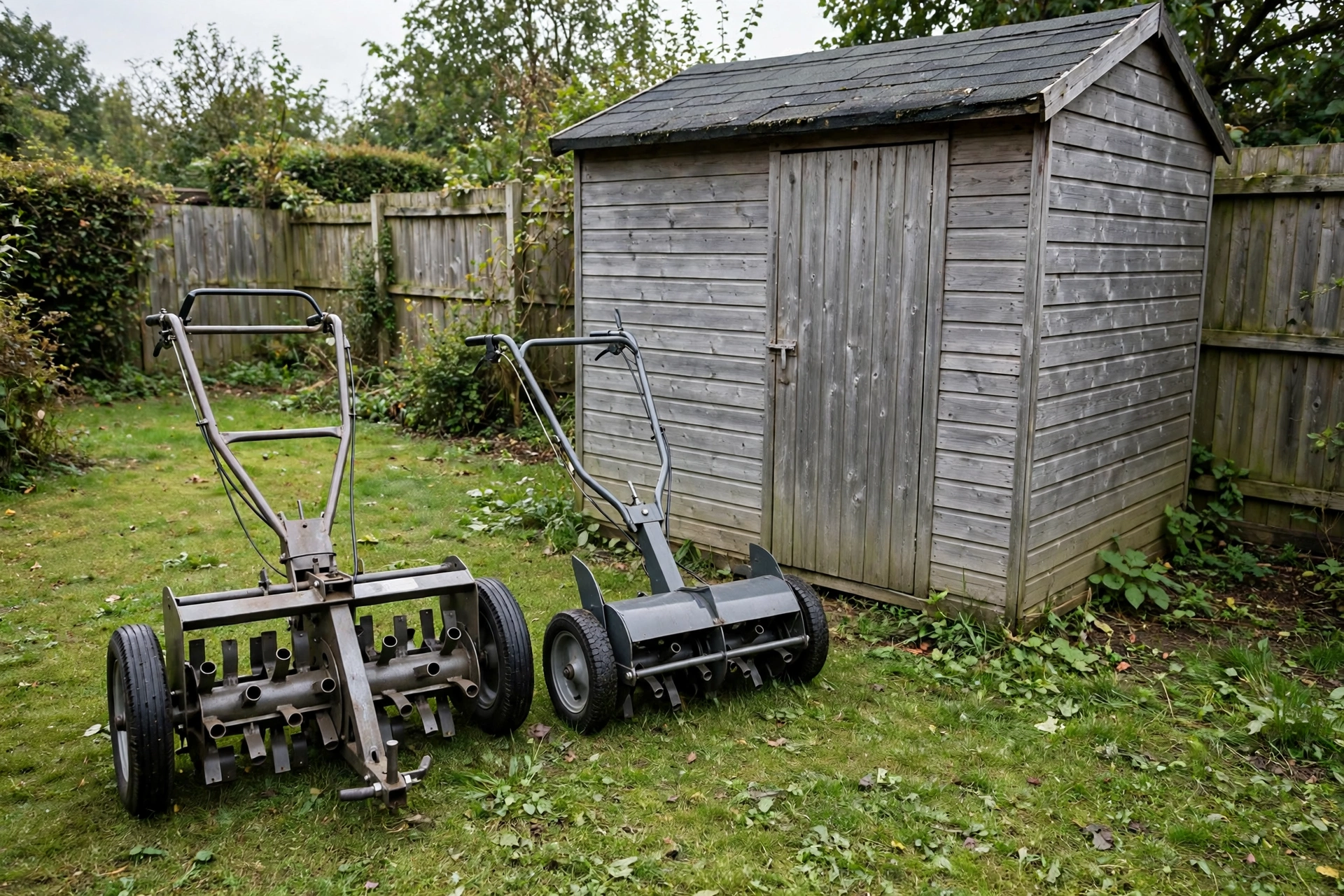
The rental itself runs $75–$120 for four hours for a walk-behind plug aerator, and tow-behind rentals, where a yard offers them, run $60–$100 per day. Those are the counter prices. The real bill adds a truck or trailer if your vehicle cannot carry a machine that often weighs 200 pounds or more, a deposit hold, and the pressure of a ticking clock while the soil is either perfect or not.
Renting still wins for a one-time job, a lawn you are about to sell, or a yard small enough to finish inside the half-day window. Our full rent vs buy a lawn aerator breakdown walks through the timing problem in detail, because the cheapest rental is the one you return having actually finished.
The buying math, done honestly
A tow-behind plug aerator costs about what three rental days cost. Aerate once a year and the machine pays for itself in roughly its third fall, and every year after that the job costs you an hour of towing and nothing else. The math only works if you already own something that can pull it, because a riding mower or lawn tractor bought for the purpose changes the arithmetic completely.
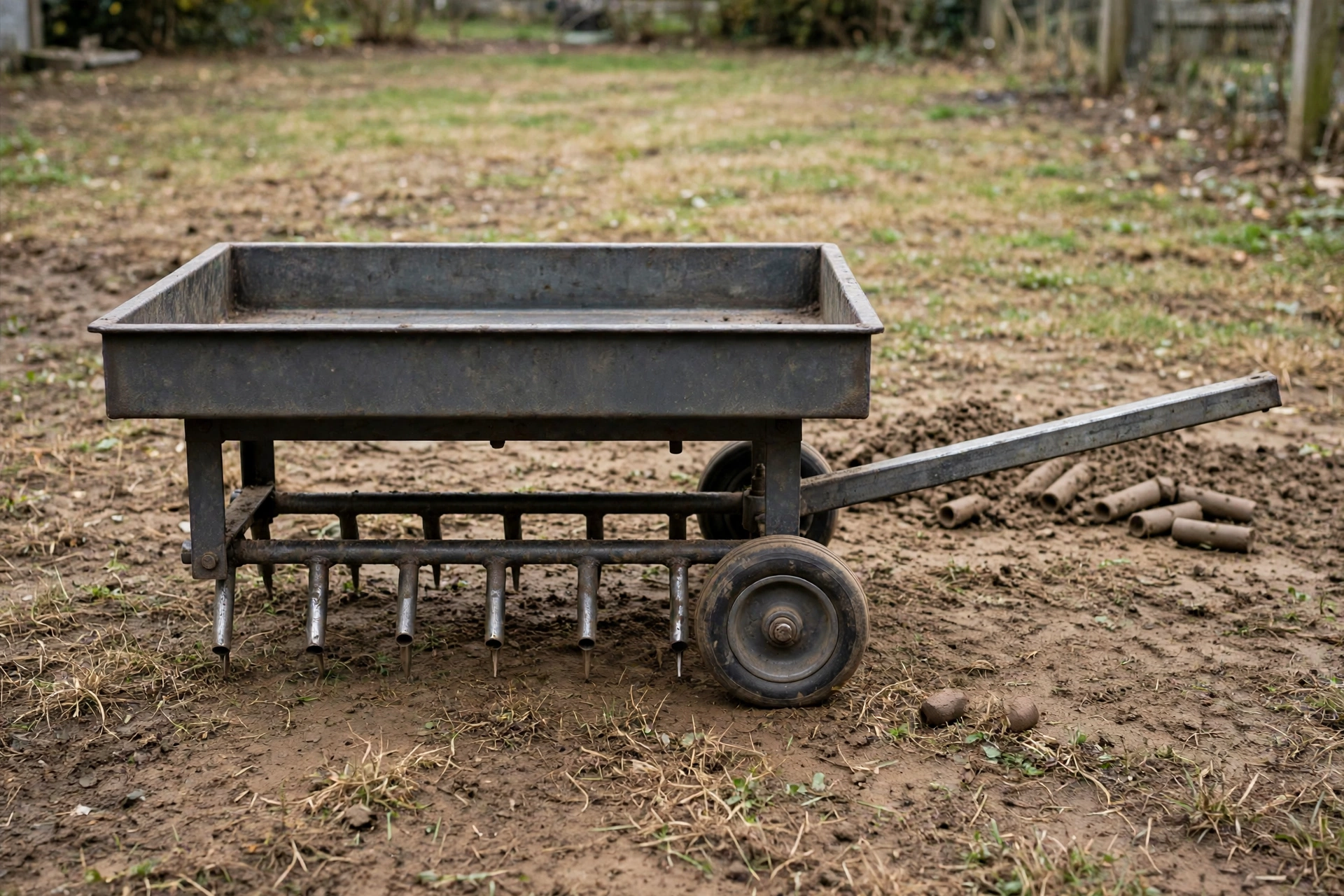
The tow-behind most homeowners end up with is a 48-inch plug aerator with a weight tray, and the Agri-Fab 45-0299 is the standard example: 32 galvanized coring spoons, plugs up to 3 inches deep, and a tray that holds up to 140 pounds of added weight for hard ground.
Agri-Fab 45-0299 48-Inch Tow-Behind Plug Aerator
48-inch width, 32 coring spoons, and a 140-pound weight tray — the machine the rental math keeps pointing at.
Smaller yards change the answer. A manual coring tool at $40–$70 handles a small lawn and the worn path by the gate, and our guide to the best manual aerators for small lawns covers the ones worth owning. Comparing machines side by side, the best tow-behind lawn aerators roundup lays out widths and weight trays across the main options.
What a pro charges, and what it includes
Professional aeration commonly runs $75–$250 for a typical suburban lawn, priced by size and by whether overseeding is bundled. The quote usually covers the machine, the labor, and the cleanup decision about plugs, which stay on the lawn either way. What it does not cover is your watering afterward, and a freshly aerated, seeded lawn needs consistent moisture for weeks, so budget the water bill into any route you choose.
Hiring out makes the most sense the year the lawn needs aeration, overseeding, and starter fertilizer all in one tight fall window and your weekends are already spoken for. The pro premium buys timing, and timing is most of what makes aeration work.
The costs nobody puts in the quote
Seed is the big one. Aeration paired with overseeding, which is how most lawns get the full benefit, adds the price of seed for your lawn’s size, and thin lawns need the higher end of the seeding rate. Water is the second: keeping seed moist means light watering once or twice a day until it germinates. Neither cost changes which aeration route is cheapest, but both belong in the season’s real total.
Frequency matters too. Most compacted lawns need aeration once a year until the soil loosens, then every two to three years, which is the pattern in our guide to how often you should aerate your lawn. A lawn on a three-year cycle rents forever without regrets; a lawn on a yearly cycle buys its machine back fast.
The verdict
Rent for a one-off job or a small lawn you can finish in four hours. Buy the tow-behind if you own a tractor, aerate yearly, and have half an acre or more — it pays for itself in about three falls. Hire the pro the year timing matters more than money. Paying for aeration any of these ways beats paying for seed that lands on concrete-hard soil and never had a chance.