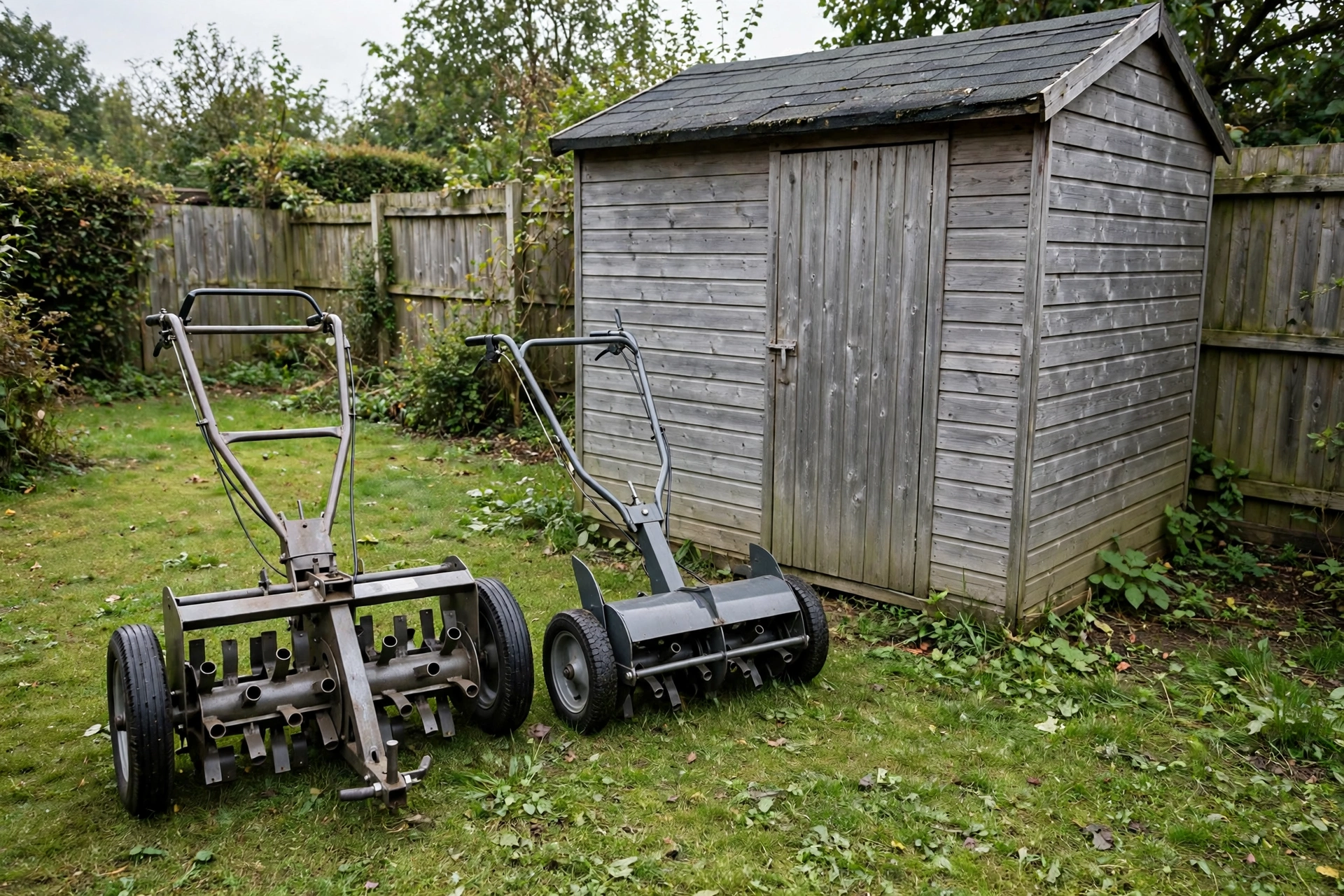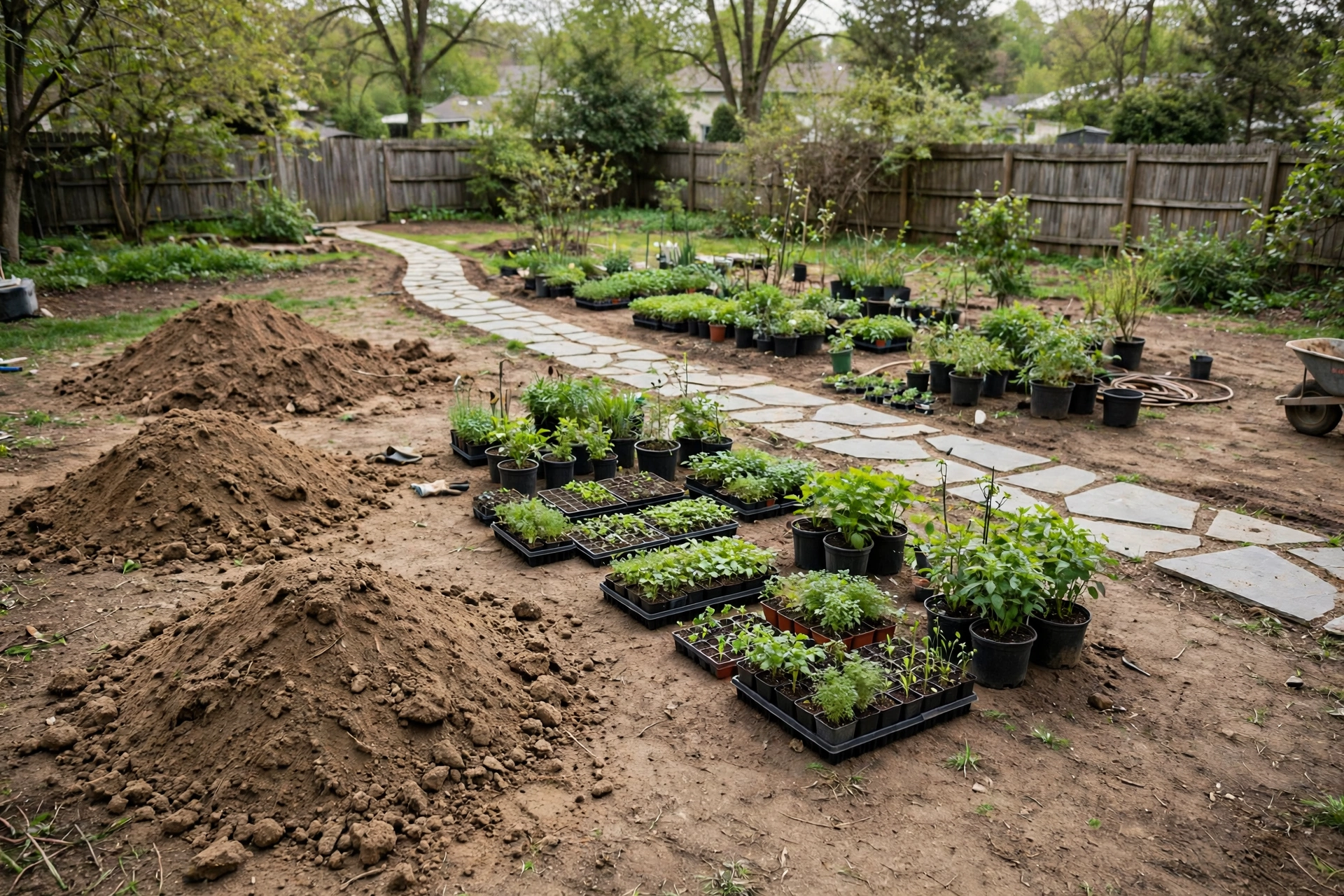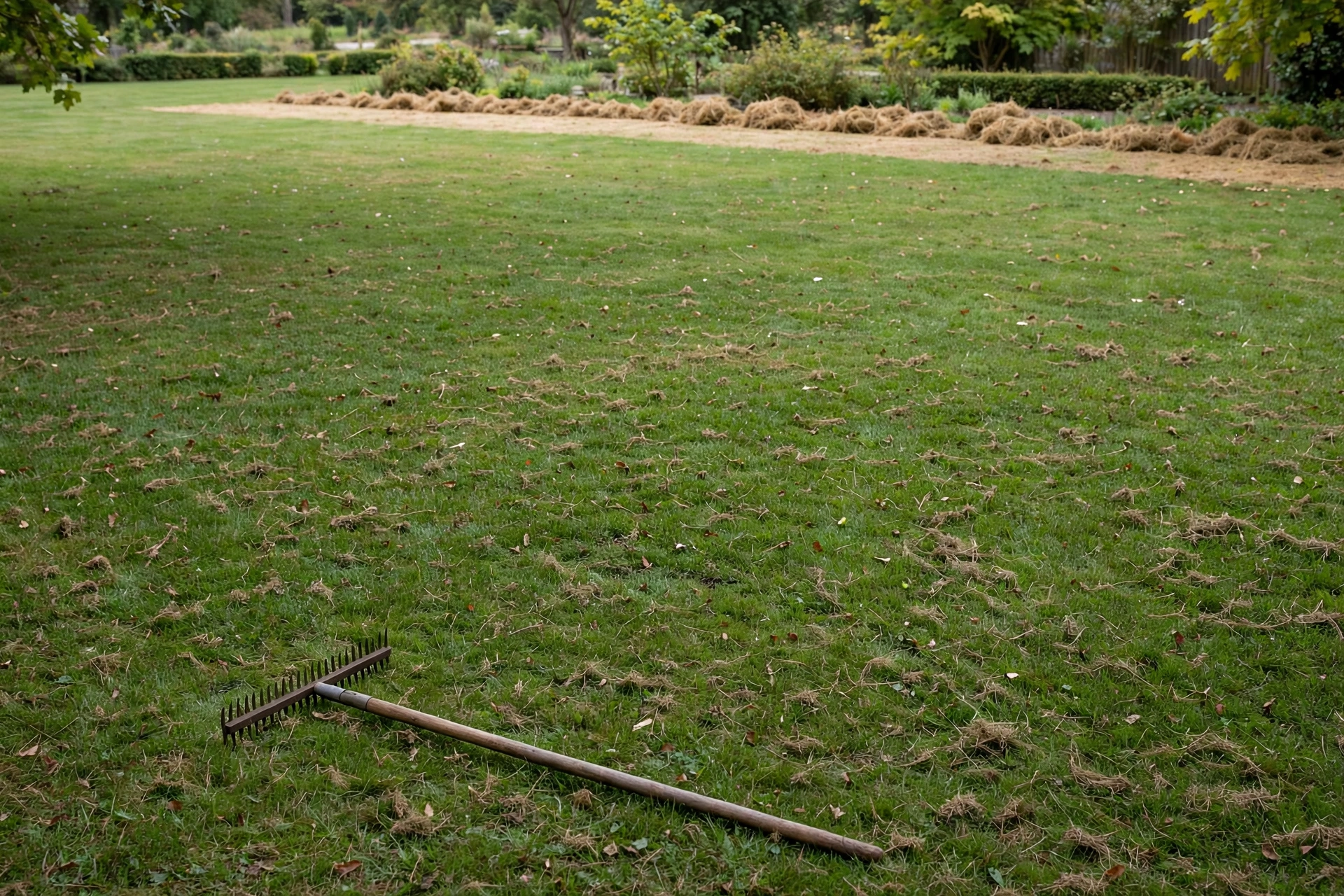
By early fall your lawn is done hiding what summer did to it. The worn path by the gate stays bare, water sits on the surface after a rain instead of soaking in, and the grass that is left looks tired in a way fertilizer never quite fixes, which is exactly the picture that says the soil underneath has packed tight.
Fall is when you answer it, and the window is wider than most people fear and narrower than most people assume.
Why fall is the aeration season for cool-season lawns
Kentucky bluegrass, tall fescue, and perennial ryegrass grow hardest in fall, when warm soil meets cooler air. Roots push deep while the top growth slows, so holes opened now get colonized by roots instead of sitting empty. Summer weeds are fading, which means seed dropped into those holes competes with far less, and the lawn gets two cool seasons of recovery, fall and then spring, before heat tests it again.
Warm-season lawns play by a different calendar. Bermuda, zoysia, and St. Augustine aerate in late spring and early summer, while they are growing at full speed, never heading into dormancy.
The window, in soil terms
Aerate while the grass is actively growing and the ground is soft enough to pull a full plug. For most cool-season lawns that means soil temperatures roughly between 50 and 65 degrees Fahrenheit, which in much of the country lands from late August through October depending on how far north you sit. The working rule is to finish at least four weeks before the ground freezes, so roots have time to grow into the opened soil before winter.
Two field checks beat any calendar. The screwdriver test comes first: push a screwdriver into the soil by hand, and if it slides in easily to the handle in a few spots, the moisture is right, while if it refuses or the ground squelches, wait. The growth check comes second: if you are still mowing every week, the grass is still growing enough to recover.
Too early and too late both waste the work
Aerate in the heat of August and the opened holes stress turf that is already struggling, while weed seed finds fresh soil at the worst moment. Aerate after growth stops and the plugs sit in frozen ground all winter, doing little harm and less good, and the seed you spread with it waits dormant until spring instead of establishing roots in fall.
Our spring guide covers the other window, in when to aerate in spring, and spring is a workable second choice for cool-season lawns that missed fall, as long as crabgrass preventer timing gets planned around it.
Pair the day with overseeding
If the lawn is thin, aeration day is seeding day. The holes give seed the soil contact it needs, and fall-grown seedlings root before winter in a way spring seedlings rarely match. The order matters, and aerate before or after overseeding settles it: aerate first, then spread seed across the opened ground.
Water afterward in light, frequent passes while seed germinates, then stretch the intervals as roots deepen. A lawn aerated without seed still benefits, though it gives up the cheapest thickening opportunity of the year.
What to do about the plugs and the weather
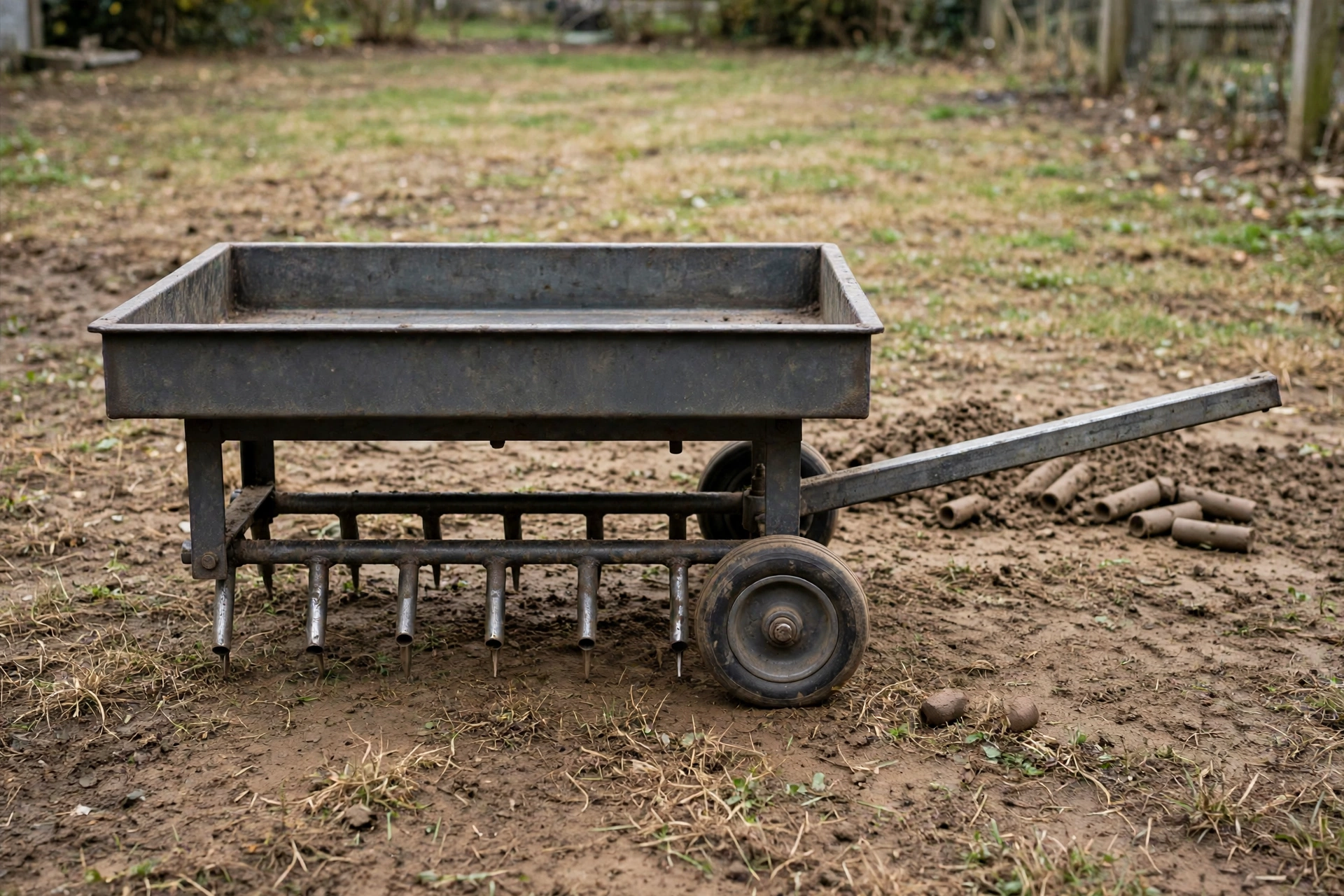
Leave the plugs where they fall. They break down in a week or two of rain and mowing and return their soil to the surface, which is the whole argument in should you pick up aeration plugs or leave them. If a heavy rain is forecast for the same afternoon, wait a day: saturated soil smears instead of plugging, and the reasons are spelled out in can you aerate a wet lawn.
One pass in two directions over the worst areas is plenty for most lawns. You are aiming for plugs 2 to 3 inches deep, spaced a few inches apart across the compacted ground, not a plowed field.
The short answer
Book the job for the weeks when you are still mowing, the screwdriver slides in, and at least a month of growing weather remains ahead of the freeze. For most cool-season lawns that is September into October, and a lawn aerated then, seeded the same day, and kept watered will show you the difference by the time spring mowing starts.