The sample bag sits on the counter next to the seed catalog, and the question is simple: what will the answer actually cost, and is the expensive route buying you anything the cheap one leaves out?
Three routes test a lawn, and they charge for different things. A university extension lab charges for the analysis alone, a mail-in kit bundles analysis with shipping and a written recommendation, and an at-home capsule kit charges once for many small tests. Comparing them by sticker alone misses what each price includes.
University extension labs: the modest-fee route
Most states run a soil testing lab through their university extension service, and the standard lawn-and-garden sample typically carries a modest per-sample fee — roughly the cost of a bag of fertilizer, often less. You collect the sample, mail or drop it off in the lab’s own bag or box, and get a report with levels and lime and fertilizer recommendations.
Fees and turnaround vary by state, and some labs charge extra for organic matter or a full micronutrient panel beyond the standard test. Check your own extension’s current fee schedule before you mail anything, because that schedule — not any article, including this one — is the price you will actually pay.
What the fee does not include is postage, unless your lab is close enough to drop the sample at a county office. Even with shipping added, this route usually lands as the lowest total cost for a full lab-grade report.
Mail-in kits: more per test, more in the box
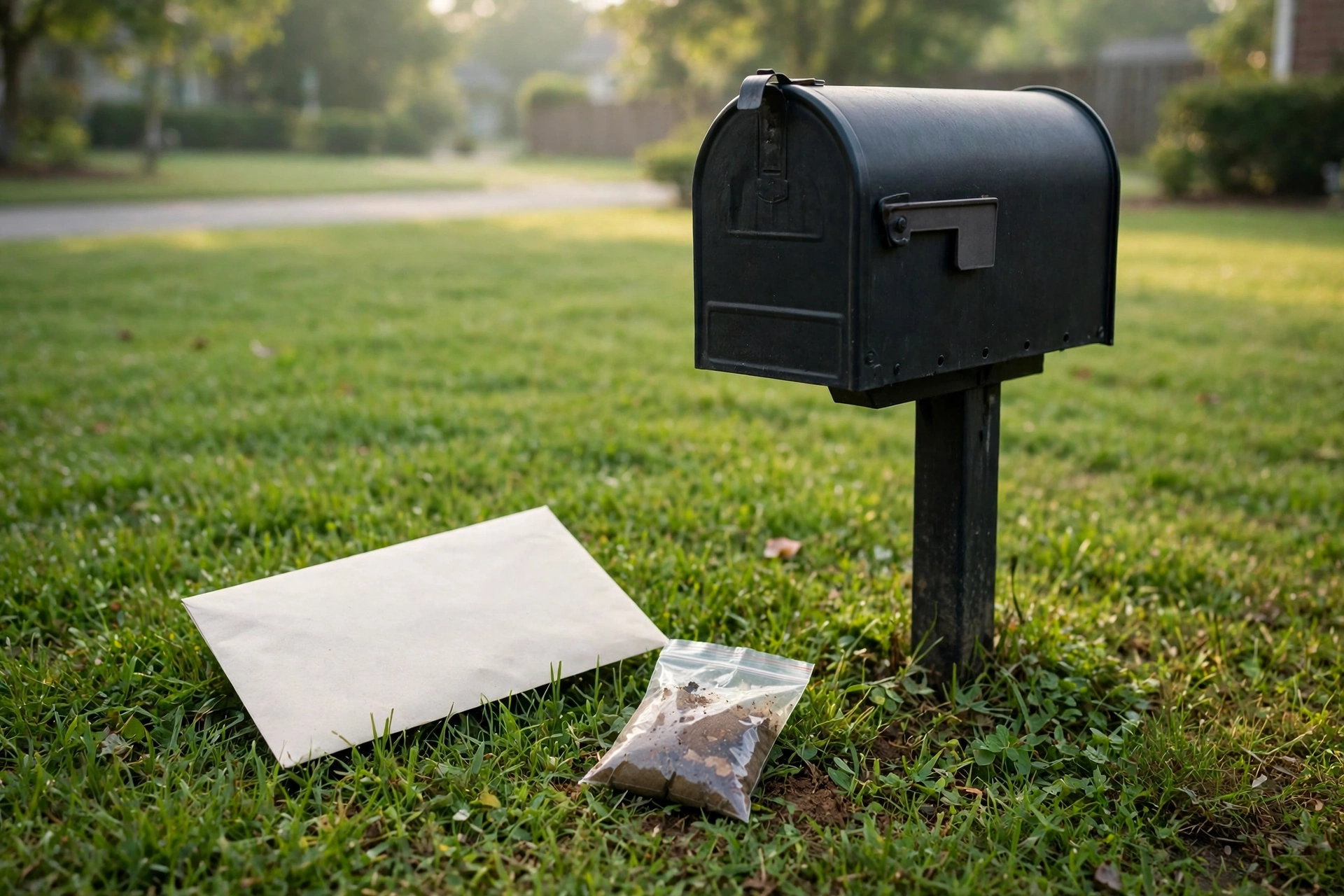
A commercial mail-in kit costs noticeably more than an extension sample — think of it as paying for a small bundle rather than a single analysis. The box typically includes the sample container, prepaid return shipping, the lab work, and a recommendation written for homeowners rather than farmers.
That bundle is the honest reason for the higher price. Prepaid shipping alone can account for a real share of what an extension route leaves you to arrange yourself, and the recommendation arrives formatted around lawn products you can actually buy.
Per test, though, the math stays per test. A yard that needs separate front and back samples doubles the kit cost, while the extension route doubles only its smaller fee — a gap worth knowing before you order. Our comparison of lab soil test vs at-home soil test kit explains what that extra money buys in precision.
At-home capsule kits: the lowest cost per test
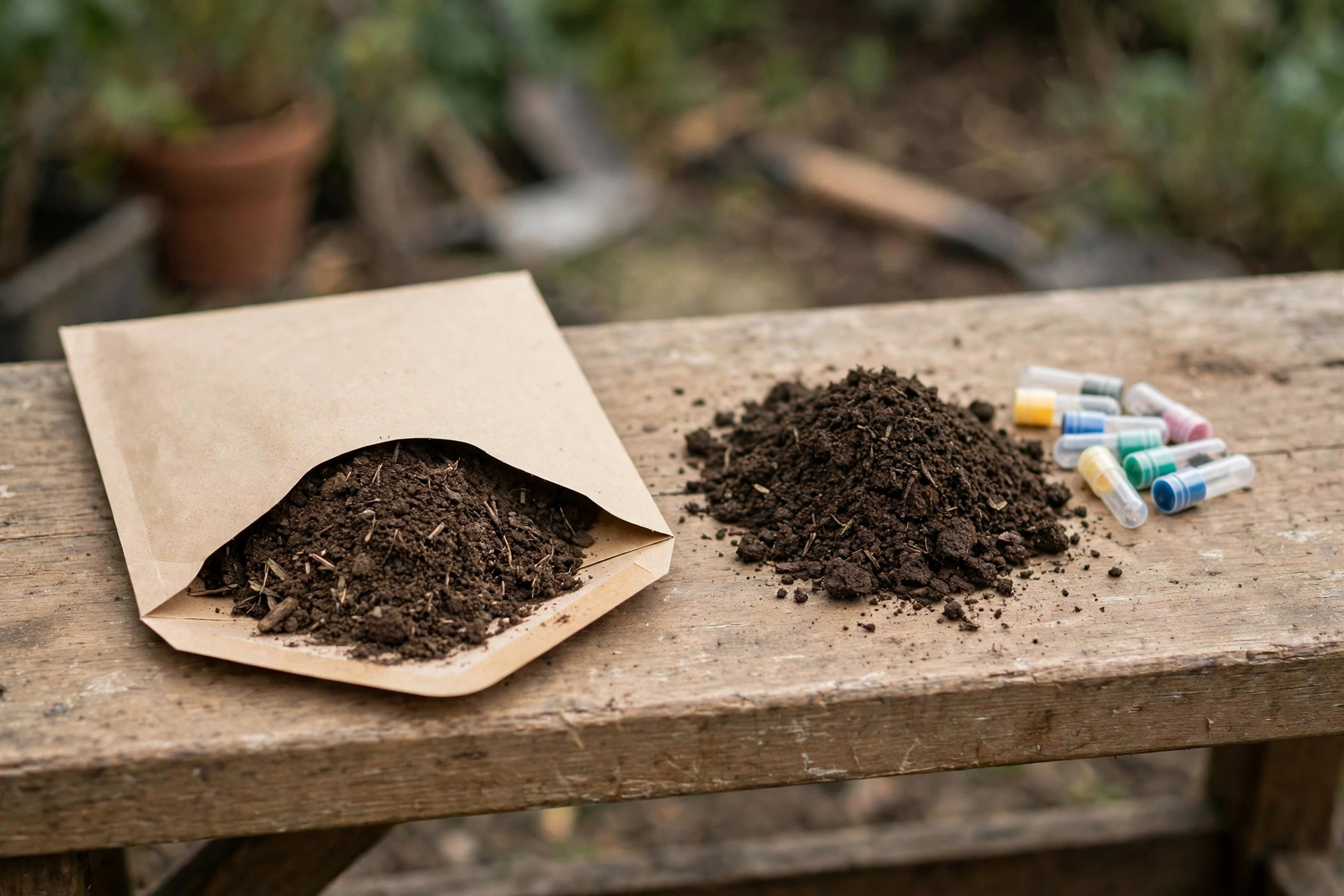
An at-home capsule kit flips the math entirely. One box holds dozens of small tests — 40 in the common 10-per-nutrient format — so the cost per test drops to pocket change once the box is on your shelf.
You pay for that thrift in precision. The readings come as color bands for pH and the three major nutrients rather than measured figures, which makes the kit a screening tool: cheap enough to run whenever a patch looks wrong, not precise enough to dose lime from.
For a household that tests once and amends once, the kit’s low per-test cost barely matters. For one that rechecks pH through the season, it is the only route where frequent testing stays nearly free.
What the money actually buys
Strip away the packaging and every route sells the same three things in different proportions: the analysis itself, the trip the sample takes to reach the lab, and the translation of numbers into a recommendation you can follow at the spreader.
Extension labs price mostly the first of those, which is why their fee stays modest and why you handle the mailing yourself. Mail-in kits price all three, which is why the box costs more and asks less of you. The capsule kit skips the trip and the translation entirely — you are the lab and the interpreter — and its price reflects exactly that.
Seeing the split helps you pay for what you actually need. A gardener comfortable reading a report gains nothing from a kit’s polished recommendation, while a first-time tester may find the extension report’s dense tables worth paying a kit to translate.
The cost nobody lists: testing wrong
The most expensive test is the one that sends you shopping for the wrong amendment. A season of fertilizer bought to fix a problem that was actually low pH costs more than any lab fee on this page, and it leaves the pH — and the pale lawn — exactly where it started.
Sampling well protects the money you do spend. A blended sample of 10–15 cores costs nothing but ten minutes, and our walkthrough of how to take a soil sample for a lawn test covers the pattern, the depth, and the drying step that keep a paid report honest.
Frequency matters to the total too. A lab test every two to three years, with a capsule pH check in between only when something looks off, keeps a decade of testing cheaper than one misdirected spring of bags and amendments.
Which route fits your budget
If you want named kits rather than routes, our roundup of the best soil test kits for lawns compares the mail-in panels and the at-home box directly, with current check-price links instead of printed prices that would be stale by spring.
Start with your state extension lab if one serves your county — a full report for roughly the cost of a bag of fertilizer is the best value in lawn care. Choose a mail-in kit when you want the shipping and the homeowner-ready recommendation handled for you, and keep the capsule kit on the shelf for cheap checks between the real tests.